Robert L. Heneman – författare
Visar alla böcker från författaren Robert L. Heneman. Handla med fri frakt och snabb leverans.
21 produkter
Strategic Reward Management
Design, Implementation, and Evaluation
E-bok, 2000
847 kr
Lägg i varukorg
The contents of this book center around the management of strategic reward systems. In particular, the book focuses in on the following elements of managing a reward system: design, implementation, and evaluation. It is my belief that too much time is spent on the administration of strategic reward …
Merit Pay
Linking Pay to Performance in a Changing World
Av Robert L. Heneman, Jon M. Werner
E-bok, 2000
688 kr
Lägg i varukorg
This book was written to bring together a summary of the current knowledge on merit pay and to further advance understanding of this type of incentive pay plan. When the writing of the first edition was begun in 1989, there were no books devoted exclusively to the subject of merit pay. Thus, this …
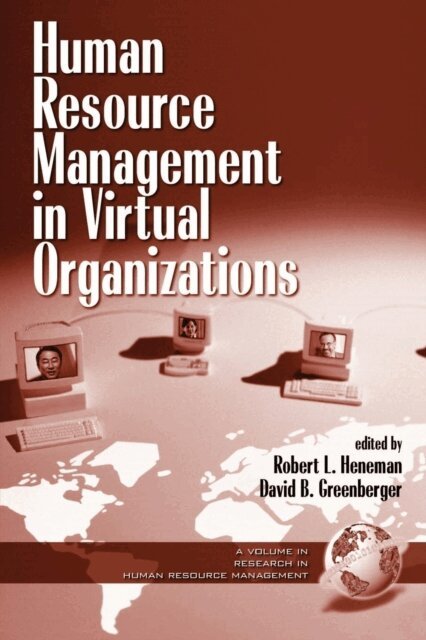
Human Resource Management in Virtual Organizations
Av David B. Greenberger, Robert L. Heneman
E-bok, 2000
787 kr
Lägg i varukorg
Sections covered in this book include: defining virtual organizations and implications for human resource management; outsourcing human resources; job analysis and competency assessment; training and development; performance management; compensation; and negotiations.
Strategic Reward Management
Design, Implementation, and Evaluation
E-bok, 2000
577 kr
Lägg i varukorg
The contents of this book center around the management of strategic reward systems. In particular, the book focuses in on the following elements of managing a reward system: design, implementation, and evaluation. It is my belief that too much time is spent on the administration of strategic reward …
Human Resource Strategies for the High Growth Entrepreneurial Firm
Av Judith Tansky, Robert L. Heneman
E-bok, 2006
472 kr
Lägg i varukorg
This volume not only illustrates the research that is being done in the area of human resources in entrepreneurial firms but it raises many issues that exemplify the complexity of the topic. It is not a case of small versus large firms. There are small established firms, small start-up firms and …
Human Resource Management in Virtual Organizations
Av David B. Greenberger, Robert L. Heneman
E-bok, 2000
514 kr
Lägg i varukorg
Sections covered in this book include: defining virtual organizations and implications for human resource management; outsourcing human resources; job analysis and competency assessment; training and development; performance management; compensation; and negotiations.
Merit Pay
Linking Pay to Performance in a Changing World
Av Robert L. Heneman, Jon M. Werner
E-bok, 2000
449 kr
Lägg i varukorg
This book was written to bring together a summary of the current knowledge on merit pay and to further advance understanding of this type of incentive pay plan. When the writing of the first edition was begun in 1989, there were no books devoted exclusively to the subject of merit pay. Thus, this …
Merit Pay
A Strategic Approach to Linking Pay to Performance
Av Robert L. Heneman, Jon M. Werner m. fl.
E-bok, 2026
582 kr
Lägg i varukorg
The world of work has changed considerably since the second edition of Merit Pay was published. Advances in technology, changes in job design, alternate forms of work processes, and differences in workforce demographics form many of these changes. In addition, compensation (in general) and merit …
Merit Pay
A Strategic Approach to Linking Pay to Performance
Av Steven E. Williams, Jon M. Werner m. fl.
Inbunden, 2026
1412 kr
Lägg i varukorg
The world of work has changed considerably since the second edition of Merit Pay was published. Advances in technology, changes in job design, alternate forms of work processes, and differences in workforce demographics form many of these changes. In addition, compensation (in general) and merit …
Merit Pay
A Strategic Approach to Linking Pay to Performance
Av Robert L. Heneman, Jon M. Werner m. fl.
E-bok, 2026
582 kr
Lägg i varukorg
The world of work has changed considerably since the second edition of Merit Pay was published. Advances in technology, changes in job design, alternate forms of work processes, and differences in workforce demographics form many of these changes. In addition, compensation (in general) and merit …
Merit Pay
A Strategic Approach to Linking Pay to Performance
Av Steven E. Williams, Jon M. Werner m. fl.
Häftad, 2026
542 kr
Lägg i varukorg
The world of work has changed considerably since the second edition of Merit Pay was published. Advances in technology, changes in job design, alternate forms of work processes, and differences in workforce demographics form many of these changes. In addition, compensation (in general) and merit …
Human Resource Strategies for the High Growth Entrepreneurial Firm
Av Judith Tansky, Robert L. Heneman
E-bok, 2006
693 kr
Lägg i varukorg
This volume not only illustrates the research that is being done in the area of human resources in entrepreneurial firms but it raises many issues that exemplify the complexity of the topic. It is not a case of small versus large firms. There are small established firms, small start-up firms and …
Human Resource Strategies for the High Growth Entrepreneurial Firm
Av Robert L. Heneman, Judith Tansky m. fl.
Häftad, 2006
658 kr
Lägg i varukorg
This volume not only illustrates the research that is being done in the area of human resources in entrepreneurial firms but it raises many issues that exemplify the complexity of the topic. It is not a case of small versus large firms. There are small established firms, small start-up firms and …
Human Resource Strategies for the High Growth Entrepreneurial Firm
Av Robert L. Heneman, Judith Tansky m. fl.
Inbunden, 2006
1164 kr
Lägg i varukorg
This volume not only illustrates the research that is being done in the area of human resources in entrepreneurial firms but it raises many issues that exemplify the complexity of the topic. It is not a case of small versus large firms. There are small established firms, small start-up firms and …
Human Resource Management in Virtual Organizations
Av Robert L. Heneman, David B. Greenberger
Häftad, 2000
959 kr
Lägg i varukorg
Sections covered in this book include: defining virtual organizations and implications for human resource management; outsourcing human resources; job analysis and competency assessment; training and development; performance management; compensation; and negotiations.
Human Resource Management in Virtual Organizations
Av Pauline B. Innis, Robert L. Heneman m. fl.
Inbunden, 2000
1585 kr
Lägg i varukorg
Sections covered in this book include: defining virtual organizations and implications for human resource management; outsourcing human resources; job analysis and competency assessment; training and development; performance management; compensation; and negotiations.
Research on Sociocultural Influences on Motivation and Learning
Av Robert L. Heneman, Dennis M. McInerney m. fl.
Häftad, 2004
689 kr
Lägg i varukorg
This volume covers topics including: translation issues in cross-cultural research; African American teachers for African American students; the social mediation of metacognition; and cross-cultural similarities and differences in affective meaning of achievement.
Adolescence and Education
General Issues in the Education of Adolescents
Av Robert L. Heneman, Tim Urdan m. fl.
Häftad, 2000
621 kr
Lägg i varukorg
In this inaugural volume, we solicited chapters from leading scholars in a variety of fields related to education. Our aim was to provide a broad overview of several of the most pressing concerns regarding the education of adolescent students. The volume begins with an historical perspective from …
Strategic Reward Management
Design, Implementation, and Evaluation
Häftad, 2000
803 kr
Lägg i varukorg
The contents of this book center around the management of strategic reward systems. In particular, the book focuses in on the following elements of managing a reward system: design, implementation, and evaluation. It is my belief that too much time is spent on the administration of strategic reward …
Strategic Reward Management
Design, Implementation, and Evaluation
Inbunden, 2002
1309 kr
Lägg i varukorg
The contents of this book center around the management of strategic reward systems. In particular, the book focuses in on the following elements of managing a reward system: design, implementation, and evaluation. It is my belief that too much time is spent on the administration of strategic reward …
Merit Pay
Linking Pay to Performance in a Changing World
Av Robert L. Heneman, Jon M. Werner
Inbunden, 2000
1131 kr
Tillfälligt slut
This book was written to bring together a summary of the current knowledge on merit pay and to further advance understanding of this type of incentive pay plan. When the writing of the first edition was begun in 1989, there were no books devoted exclusively to the subject of merit pay. Thus, this …