Robert L. Herrmann – författare
Visar alla böcker från författaren Robert L. Herrmann. Handla med fri frakt och snabb leverans.
4 produkter
Metabolic Turnover in the Nervous System
Av I. L. Schwartz, W. A. Brodsky m. fl.
E-bok, 2013
734 kr
Lägg i varukorg
Volume V deals with the problems of turnover in the nervous system. "Turnover" is defined in different ways, and the term is used in different contexts. It is used rather broadly in the present volume, and intentionally so. The turnover of macromolecules is only one aspect; here "turnover" in …
Metabolic Turnover in the Nervous System
Av D. A. Rappoport, R. R. Fritz m. fl.
Häftad, 2013
552 kr
Lägg i varukorg
Volume V deals with the problems of turnover in the nervous system. "Turnover" is defined in different ways, and the term is used in different contexts. It is used rather broadly in the present volume, and intentionally so. The turnover of macromolecules is only one aspect; here "turnover" in …
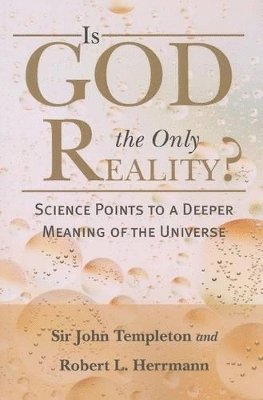
Is God the Only Reality
Science Points Deeper Meaning of Universe
Av John Marks Templeton, Robert L. Herrmann
Häftad, 2013
287 kr
Lägg i varukorg
The great paradox of science in the twentieth century is that the more we learn, the less we seem to know. In this volume, John Templeton and scientist Robert Herrmann address this paradox.Reviewing the latest findings in fields from particle physics to archaeology, from molecular biology to …
Looking Forward, Looking Upward
My Life, My Friendship with Sir John, and the Early Years of the John Templeton Foundation
Häftad, 2013
387 kr
Lägg i varukorg
In this autobiography, Robert L. Herrmann tells the story of his life and his work with Sir John Templeton. Through his reflections on his working relationship with Sir John, Herrmann provides valuable insights into the early years of the John Templeton Foundation. Herrmann collaborated with John …