
Robert M. M. Crawford - Böcker
Visar alla böcker från författaren Robert M. M. Crawford. Handla med fri frakt och snabb leverans.
3 produkter
3 produkter
1 975 kr
Skickas inom 5-8 vardagar
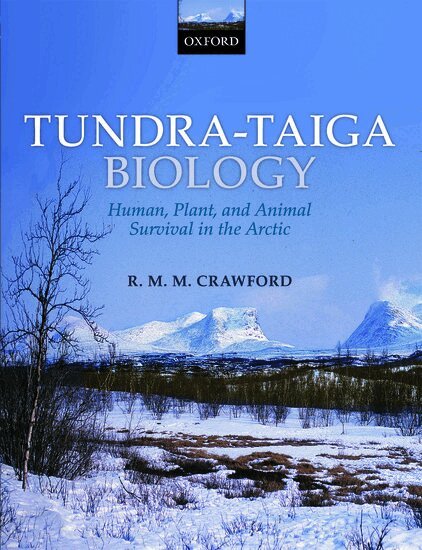
The Arctic Tundra and adjacent Boreal Forest or Taiga support the most cold-adapted flora and fauna on Earth. The evolutionary capacity of both plants and animals to adapt to these thermally limiting conditions has always attracted biological investigation and is a central theme of this book. How the polar biota will adapt to a warmer world is creating significant and renewed interest in this habitat. The Arctic has always been subject to climatic fluctuation and the polar biota has successfully adapted to these changes throughout its evolutionary history. Whether or not climatic warming will allow the Boreal Forest to advance onto the treeless Tundra is one of the most tantalizing questions that can be asked today in relation to terrestrial polar biology. Tundra-Taiga Biology provides a circum-polar perspective of adaptation to low temperatures and short growing seasons, together with a history of climatic variation as it has affected the evolution of terrestrial life in the Tundra and the adjacent forested Taiga. It will appeal to researchers new to the field and to the many students, professional ecologists and conservation practitioners requiring a concise but authoritative overview of the biome. Its accessibility also makes it suitable for undergraduate and graduate students taking courses in tundra, taiga, and arctic ecology.
1 000 kr
Skickas inom 7-10 vardagar
The Arctic Tundra and adjacent Boreal Forest or Taiga support the most cold-adapted flora and fauna on Earth. The evolutionary capacity of both plants and animals to adapt to these thermally limiting conditions has always attracted biological investigation and is a central theme of this book. How the polar biota will adapt to a warmer world is creating significant and renewed interest in this habitat. The Arctic has always been subject to climatic fluctuation and the polar biota has successfully adapted to these changes throughout its evolutionary history. Whether or not climatic warming will allow the Boreal Forest to advance onto the treeless Tundra is one of the most tantalizing questions that can be asked today in relation to terrestrial polar biology. Tundra-Taiga Biology provides a circum-polar perspective of adaptation to low temperatures and short growing seasons, together with a history of climatic variation as it has affected the evolution of terrestrial life in the Tundra and the adjacent forested Taiga. It will appeal to researchers new to the field and to the many students, professional ecologists and conservation practitioners requiring a concise but authoritative overview of the biome. Its accessibility also makes it suitable for undergraduate and graduate students taking courses in tundra, taiga, and arctic ecology.
370 kr
Tillfälligt slut
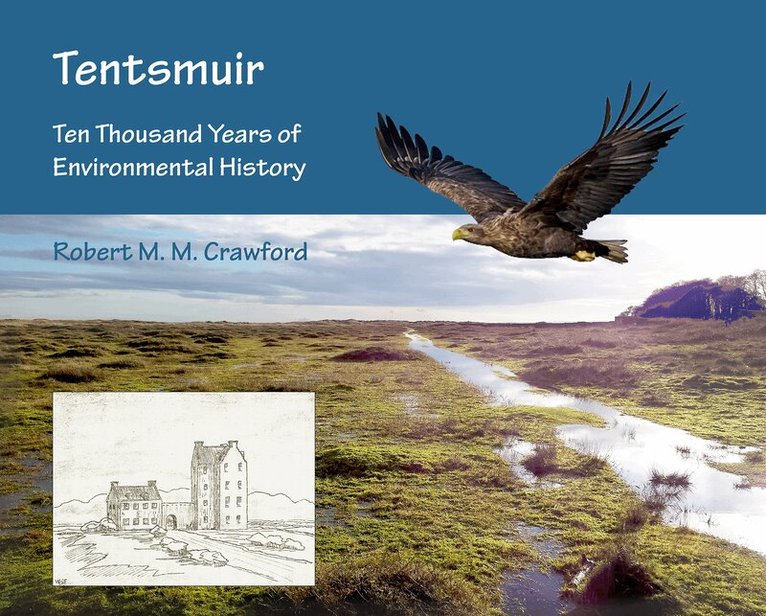
Tentsmuir has been a scene of human activity for over 10,000 years. It witnessed one of the earliest known occurrences in Scotland of Mesolithic hunter-gatherers and has supported human activities throughout the Neolithic and Iron Age. In medieval times it was a home for the Norman nobility, and then a royal hunting forest with highly-valued fishing rights for Scottish Kings. Tentsmuir is prone to flooding in winter due to the front line of dunes blocking drainage to the sea. It provides a natural refuge for a wide range of plants, as well as resident and migrating birds, and other animals, including outstanding populations of butterflies and moths. Consequently, this led to the creation in 1954 of a National Nature Reserve at the north-eastern end of the Tentsmuir Peninsula. Initially, an active period of coastal accretion more than trebled the size of the reserve. Now, however, Tentsmuir is eroding in places. The probability of rising sea levels and increasing exposure to storms may cause a level of destruction such that the physical existence and biological future of Tentsmuir cannot be guaranteed. This book is an attempt to record how even within a limited geographical area, such as this peninsula on the east coast of Scotland, plant and animal communities are constantly reacting to environmental change. Frequently, it is difficult to decide whether or not these changes should be resisted, encouraged, or ignored. Examples are provided of instances where human intervention to counteract change has resulted in negative as well as positive consequences for biodiversity.