Robert M. Maxon - Böcker
Visar alla böcker från författaren Robert M. Maxon. Handla med fri frakt och snabb leverans.
3 produkter
3 produkter
2 022 kr
Skickas inom 10-15 vardagar
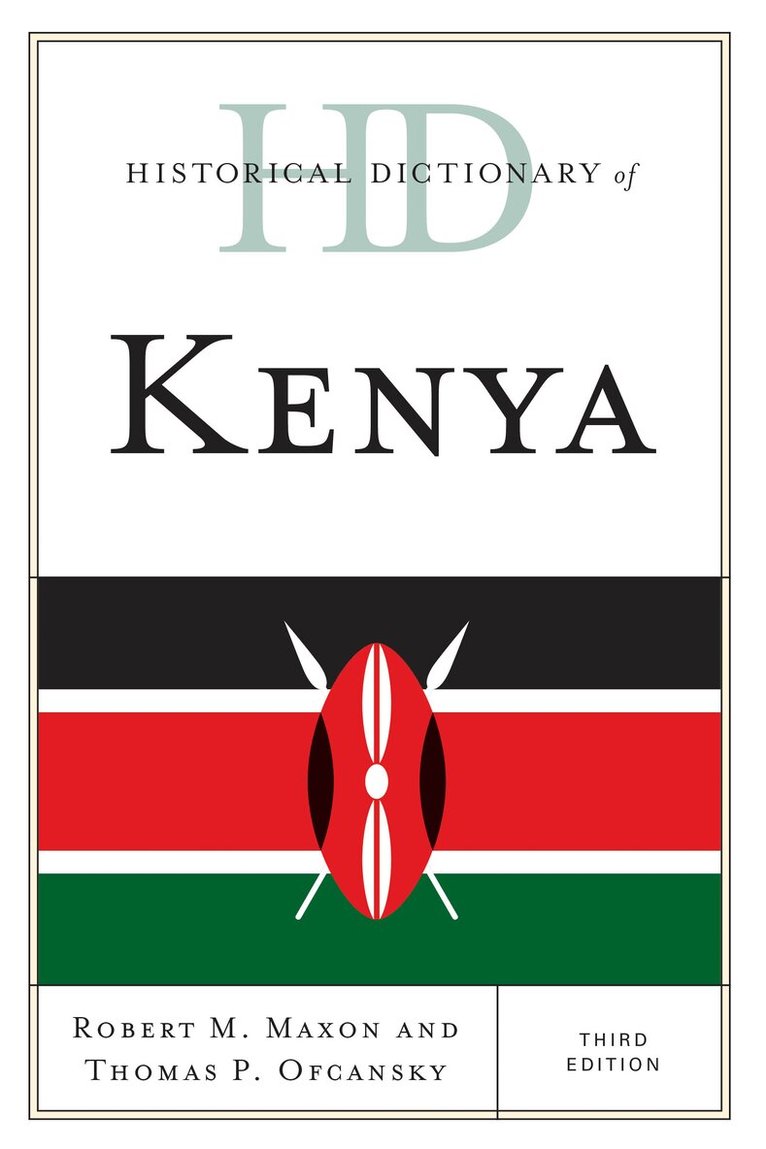
Kenya has a long and complex history that began thousands of years ago. Indeed, some archaeologists contend that the country was the "cradle of mankind" or, at the very least, one of the places that was home to the earliest hominids. In later centuries, Kenya's strategic location astride the Indian Ocean and the East African littoral attracted numerous foreign peoples, some of the most significant of which have been the Americans, Arabs, British, Chinese, French, Germans, and Portuguese. Additionally, Africans from throughout the subcontinent have settled in Kenya to escape conflict or political persecution, while others wanted an opportunity to begin a new life. As a result of being a gateway to the world, the country traditionally has been one of the most important business, cultural, diplomatic, and political centers in Africa. Although it has maintained this reputation during the post-independence period, Kenya, like most African countries, has been plagued by an increasing array of complex economic, political, and social problems. This third edition of Historical Dictionary of Kenya provides a starting point for those interested in any of the phases of Kenya's historical evolution. This is done through a chronology, an introductory essay, appendixes, and an extensive bibliography. The dictionary section has 500 cross-referenced entries on important personalities, politics, economy, foreign relations, religion, and culture. This book is an excellent access point for students, researchers, and anyone wanting to know more about Kenya.
1 500 kr
Skickas inom 7-10 vardagar
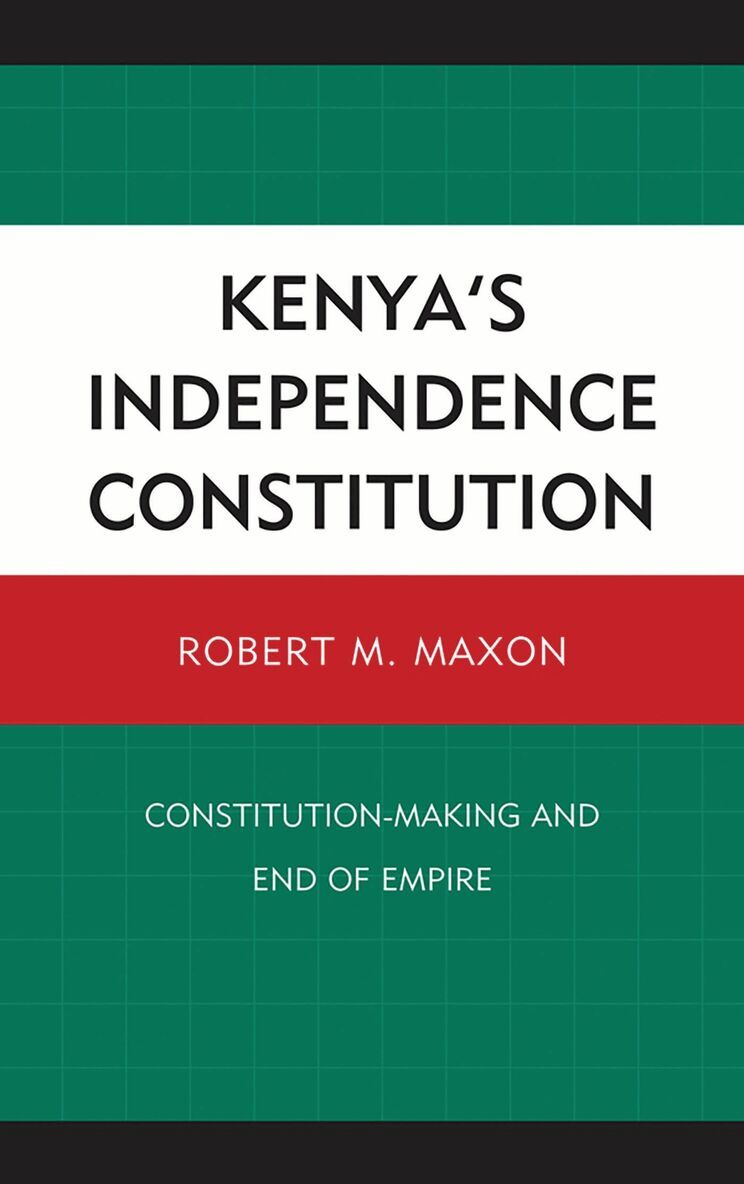
Kenya's Independence Constitution: Constitution-Making and End of Empire is a narrative of the evolution of the constitution that was put into effect as Kenya's history as a colonial possession came to an end. It details the attempts of the colony's political elite and the British Colonial Office to find a constitutional means to move Kenya to the status of independent state. As this process moved forward, political ethnicity assumed central significance. This produced an environment in which demands for a federal constitution, popularly termed majimbo, came to dominate constitutional discourse. Deep disagreement among Kenya's political elite over this issue marked the remainder of the colonial period. That elite, now represented by the Kenya African National Union (KANU) and the Kenya African Democratic Union (KADU), advocated different constitutional paths to independence. KADU's demands for a majimbo constitution dominated discourse during 1962 and early 1963, but deep disagreement characterized the constitutional negotiations. This resulted in a constitution for self-government (introduced on June 1, 1963) that was regional in character but fell short of a federal system. Almost as soon as it came into existence, this constitution faced pressure for substantial change from KANU, the party that won the 1963 general election. As a result, the British government was forced to make alterations in what became the independence constitution. The latter proved a prelude to the destruction of majimbo a year later.Kenya's Independence Constitution provides the first in-depth description of the final stage of colonial Kenya's constitutional evolution. This book not only provides a detailed account of the process of constitution-making, including definitive treatments of the final two constitutional conferences of 1962 and 1963. Utilizing British and Kenya cabinet papers and secret intelligence reports never featured in earlier accounts, the narrative also destroys many of the myt
324 kr
Skickas inom 10-15 vardagar
In this third edition of East Africa: An Introductory History, Robert M. Maxon revisits the diverse eastern region of Africa, including the modern nations of Kenya, Tanzania, and Uganda. With revised sections and a new preface, this comprehensive text surveys East Africa's political, economic, and social history from pre-colonial to modern times. Maxon reveals the physical movement and societal development of and between ethnic groups before the 1890s; the capitalistic impact of European colonialism in the early nineteenth century; and the achievement and aftermath of independence in East Africa during the later part of this century.East Africa: An Introductory History, 3rd and Revised Edition offers the student and scholar: the only revision of this title in over a decade; a complete index and glossary of African terms that promote an effortless navigation of the complex history of this region; over twenty maps and diagrams that provide visual depictions of the development of eastern Africa; detailed geographical and topographical analysis that supplement the historical scope and investigation of this regionEast Africa: An Introductory History documents the transformation of East Africa from the Stone Age to the first decade of the twenty-first century. The book is ideal for any reader interested in unraveling the intricate history of this East Africa, and especially for students coming to the study of this region for the first time.