Robert M. Pallitto - Böcker
Visar alla böcker från författaren Robert M. Pallitto. Handla med fri frakt och snabb leverans.
8 produkter
8 produkter
423 kr
Skickas inom 5-8 vardagar
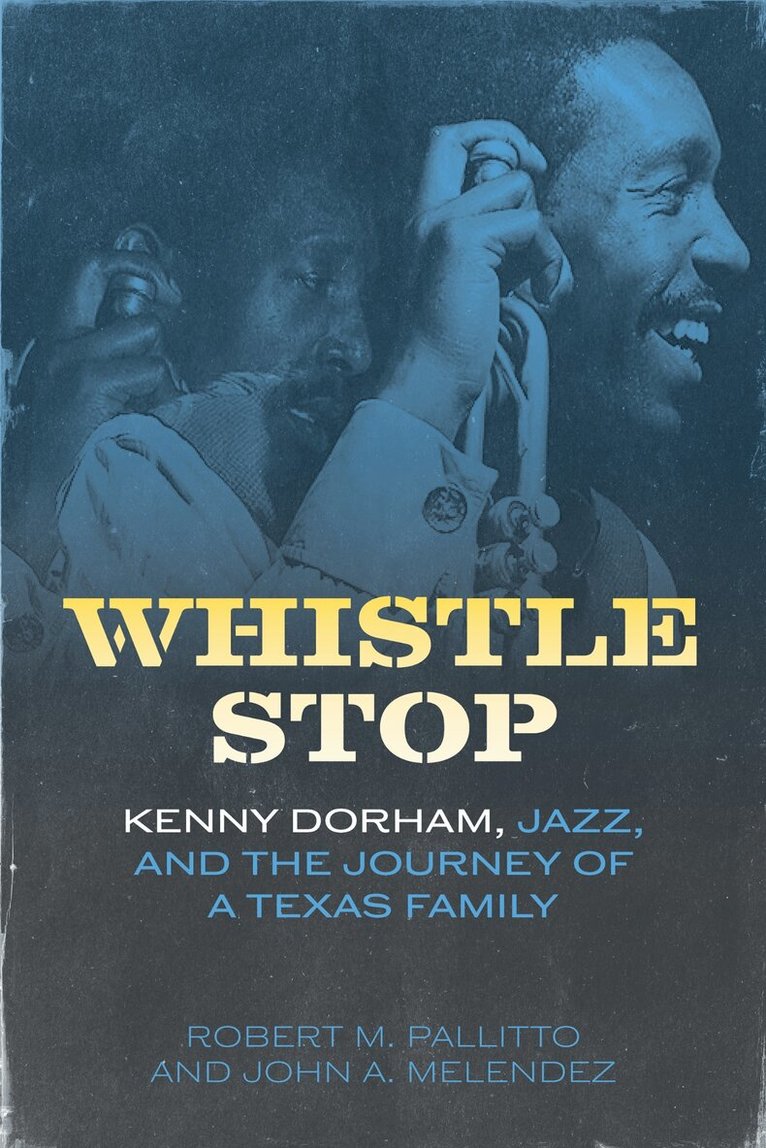
Whistle Stop traces the remarkable life of trumpeter and composer Kenny Dorham (1924–1972), whose journey from rural Texas to the forefront of modern jazz mirrors the broader story of Black resilience and creativity in twentieth-century America. Dorham was born in Freestone County to a sharecropping family whose roots stretch back to Reconstruction, when his great-grandfather owned and farmed land in East Texas. Raised there and in segregated East Austin, Dorham found his voice on the trumpet at Anderson High School, and after brief stops at Wiley College and in the army, he landed in New York just as bebop was transforming American music.Dorham quickly became a cornerstone of that transformation. From performing with Charlie Parker, Art Blakey, and Max Roach to mentoring younger talents like Joe Henderson, he played a defining role in shaping modern jazz. A gifted composer, collaborator, and teacher, Dorham also helped lay the foundation for formal jazz education. Yet despite his immense contributions and the respect given him by other musicians, he remained underrecognized by critics—even as he continued to influence the musical generations that followed him.Drawing on interviews, archival research, and family history, Whistle Stop offers a vivid portrait not only of a jazz innovator, but of a Texas family whose story stretches across emancipation, migration, segregation, and cultural transformation. More than fifty years after his passing, Kenny Dorham’s music and legacy continue to inspire—his whistle stop in jazz history still echoing.
Bargaining with the Machine
Technology, Surveillence, and the Social Contract
Inbunden, Engelska, 2020
847 kr
Skickas inom 5-8 vardagar
Cell phone apps share location information; software companies store user data in the cloud; biometric scanners read fingerprints; employees of some businesses have microchips implanted in their hands. In each of these instances we trade a share of privacy or an aspect of identity for greater convenience or improved security. What Robert M. Pallitto asks in Bargaining with the Machine is whether we are truly making such bargains freely - whether, in fact, such a transaction can be conducted freely or advisedly in our ever more technologically sophisticated world.Pallitto uses the social theory of bargaining to look at the daily compromises we make with technology. Specifically, he explores whether resisting these 'bargains' is still possible when the technologies in question are backed by persuasive, even coercive, corporate and state power. Who, he asks, is proposing the bargain? What is the balance of bargaining power? What is surrendered and what is gained? And are the perceived and the actual gains and losses the same - that is, what is hidden?At the center of Pallitto's work is the paradox of bargaining in a world of limited agency. Assurances that we are in control are abundant whether we are consumers, voters, or party to the social contract. But when purchasing goods from a technological behemoth like Amazon, or when choosing a candidate whose image is crafted and shaped by campaign strategists and media outlets, how truly free, let alone informed, are our choices?The tension between claims of agency and awareness of its limits is the site where we experience our social lives - and nowhere is this tension more pronounced than in the surveillance society. This book offers a cogent analysis of how that complex, contested, and even paradoxical experience arises as well as an unusually clear and troubling view of the consequential compromises we may be making.
285 kr
Skickas inom 7-10 vardagar
Cell phone apps share location information; software companies store user data in the cloud; biometric scanners read fingerprints; employees of some businesses have microchips implanted in their hands. In each of these instances we trade a share of privacy or an aspect of identity for greater convenience or improved security. What Robert M. Pallitto asks in Bargaining with the Machine is whether we are truly making such bargains freely - whether, in fact, such a transaction can be conducted freely or advisedly in our ever more technologically sophisticated world.Pallitto uses the social theory of bargaining to look at the daily compromises we make with technology. Specifically, he explores whether resisting these 'bargains' is still possible when the technologies in question are backed by persuasive, even coercive, corporate and state power. Who, he asks, is proposing the bargain? What is the balance of bargaining power? What is surrendered and what is gained? And are the perceived and the actual gains and losses the same - that is, what is hidden?At the center of Pallitto's work is the paradox of bargaining in a world of limited agency. Assurances that we are in control are abundant whether we are consumers, voters, or party to the social contract. But when purchasing goods from a technological behemoth like Amazon, or when choosing a candidate whose image is crafted and shaped by campaign strategists and media outlets, how truly free, let alone informed, are our choices?The tension between claims of agency and awareness of its limits is the site where we experience our social lives - and nowhere is this tension more pronounced than in the surveillance society. This book offers a cogent analysis of how that complex, contested, and even paradoxical experience arises as well as an unusually clear and troubling view of the consequential compromises we may be making.
626 kr
Skickas inom 5-8 vardagar
State secrets, warrantless investigations and wiretaps, signing statements, executive privilege-the executive branch wields many tools for secrecy. Since the middle of the twentieth century, presidents have used myriad tactics to expand and maintain a level of executive branch power unprecedented in this nation's history. Most people believe that some degree of governmental secrecy is necessary. But how much is too much? At what point does withholding information from Congress, the courts, and citizens abuse the public trust? How does the nation reclaim rights that have been controlled by one branch of government? With Presidential Secrecy and the Law, Robert M. Pallitto and William G. Weaver attempt to answer these questions by examining the history of executive branch efforts to consolidate power through information control. They find the nation's democracy damaged and its Constitution corrupted by staunch information suppression, a process accelerated when "black sites," "enemy combatants," and "ghost detainees" were added to the vernacular following the September 11, 2001, terror strikes.Tracing the current constitutional dilemma from the days of the imperial presidency to the unitary executive embraced by the administration of George W. Bush, Pallitto and Weaver reveal an alarming erosion of the balance of power. Presidential Secrecy and the Law will be the standard in presidential powers studies for years to come.
270 kr
Tillfälligt slut
As seen on The Daily Show, July 24 State secrets, warrantless investigations and wiretaps, signing statements, executive privilege-the executive branch wields many tools for secrecy. Since the middle of the twentieth century, presidents have used myriad tactics to expand and maintain a level of executive branch power unprecedented in this nation's history. Most people believe that some degree of governmental secrecy is necessary. But how much is too much? At what point does withholding information from Congress, the courts, and citizens abuse the public trust? How does the nation reclaim rights that have been controlled by one branch of government? With Presidential Secrecy and the Law, Robert M. Pallitto and William G. Weaver attempt to answer these questions by examining the history of executive branch efforts to consolidate power through information control. They find the nation's democracy damaged and its Constitution corrupted by staunch information suppression, a process accelerated when "black sites," "enemy combatants," and "ghost detainees" were added to the vernacular following the September 11, 2001, terror strikes.Tracing the current constitutional dilemma from the days of the imperial presidency to the unitary executive embraced by the administration of George W. Bush, Pallitto and Weaver reveal an alarming erosion of the balance of power. Presidential Secrecy and the Law will be the standard in presidential powers studies for years to come.
652 kr
Tillfälligt slut
The war on terror has brought to light troubling actions by the United States government which many claim amount to torture. But as this book shows, state-sanctioned violence and degrading, cruel, and unusual punishments have a long and contentious history in the nation. Organized around five broad thematic periods in American history-colonial America and the early republic; slavery and the frontier; imperialism, Jim Crow, and World Wars I and II; the Cold War, Vietnam, and police torture; and the war on terror-this annotated documentary history traces the low and high points of official attitudes toward state violence. Robert M. Pallitto provides a critical introduction, historical context, and brief commentary and then lets the documents speak for themselves. The result is a nearly 400-year history that traces the continuities and changes in debates over the meaning of torture and state violence in the U.S. and shows where state actions and policies have pushed and exceeded constitutional and international normative limits. Rigorously researched-and sometimes chilling-this volume is the first comprehensive reference work on state violence and torture in the U.S.
342 kr
Skickas inom 7-10 vardagar
The war on terror has brought to light troubling actions by the United States government which many claim amount to torture. But as this book shows, state-sanctioned violence and degrading, cruel, and unusual punishments have a long and contentious history in the nation. Organized around five broad thematic periods in American history-colonial America and the early republic; slavery and the frontier; imperialism, Jim Crow, and World Wars I and II; the Cold War, Vietnam, and police torture; and the war on terror-this annotated documentary history traces the low and high points of official attitudes toward state violence. Robert M. Pallitto provides a critical introduction, historical context, and brief commentary and then lets the documents speak for themselves. The result is a nearly 400-year history that traces the continuities and changes in debates over the meaning of torture and state violence in the U.S. and shows where state actions and policies have pushed and exceeded constitutional and international normative limits. Rigorously researched-and sometimes chilling-this volume is the first comprehensive reference work on state violence and torture in the U.S.
1 144 kr
Skickas
Whistle Stop traces the remarkable life of trumpeter and composer Kenny Dorham (1924–1972), whose journey from rural Texas to the forefront of modern jazz mirrors the broader story of Black resilience and creativity in twentieth-century America. Dorham was born in Freestone County to a sharecropping family whose roots stretch back to Reconstruction, when his great-grandfather owned and farmed land in East Texas. Raised there and in segregated East Austin, Dorham found his voice on the trumpet at Anderson High School, and after brief stops at Wiley College and in the army, he landed in New York just as bebop was transforming American music.Dorham quickly became a cornerstone of that transformation. From performing with Charlie Parker, Art Blakey, and Max Roach to mentoring younger talents like Joe Henderson, he played a defining role in shaping modern jazz. A gifted composer, collaborator, and teacher, Dorham also helped lay the foundation for formal jazz education. Yet despite his immense contributions and the respect given him by other musicians, he remained underrecognized by critics—even as he continued to influence the musical generations that followed him.Drawing on interviews, archival research, and family history, Whistle Stop offers a vivid portrait not only of a jazz innovator, but of a Texas family whose story stretches across emancipation, migration, segregation, and cultural transformation. More than fifty years after his passing, Kenny Dorham’s music and legacy continue to inspire—his whistle stop in jazz history still echoing.