Robert Maribe Branch – författare
Visar alla böcker från författaren Robert Maribe Branch. Handla med fri frakt och snabb leverans.
49 produkter
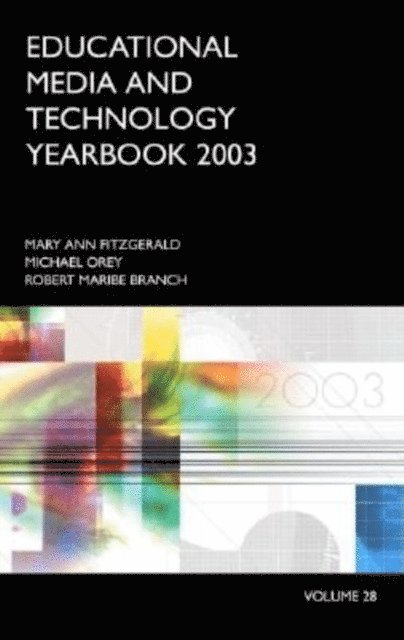
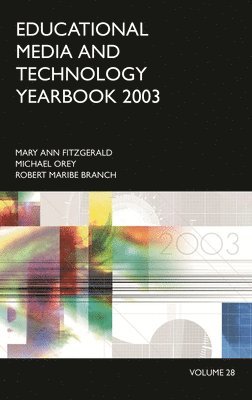
Educational Media and Technology Yearbook 2003
Volume 28
Av Mary Ann Fitzgerald, Michael Orey m. fl.
E-bok, 2003
1334 kr
Lägg i varukorg
The 28th volume of the Educational Media and Technology Yearbook describes current developments and trends in the field of instructional technology. Prominent themes for this volume include e-learning, collaboration, the standards reform movement, and a critical look at the field in its historical …
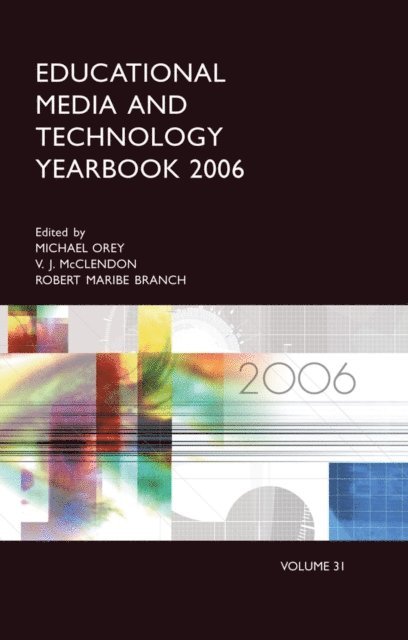
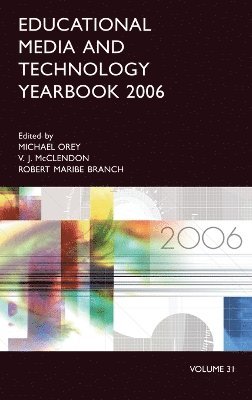
Educational Media and Technology Yearbook 2006
Volume 31
Av Robert Maribe Branch, Michael Orey m. fl.
E-bok, 2006
1212 kr
Lägg i varukorg
The 2006 volume of the 31 year old Educational Media and Technology Yearbook series continues the legacy of its predecessors. It highlights the major trends of the previous year, noting both renewed interest in multicultural perspectives and the ever-growing interest in online learning. It …
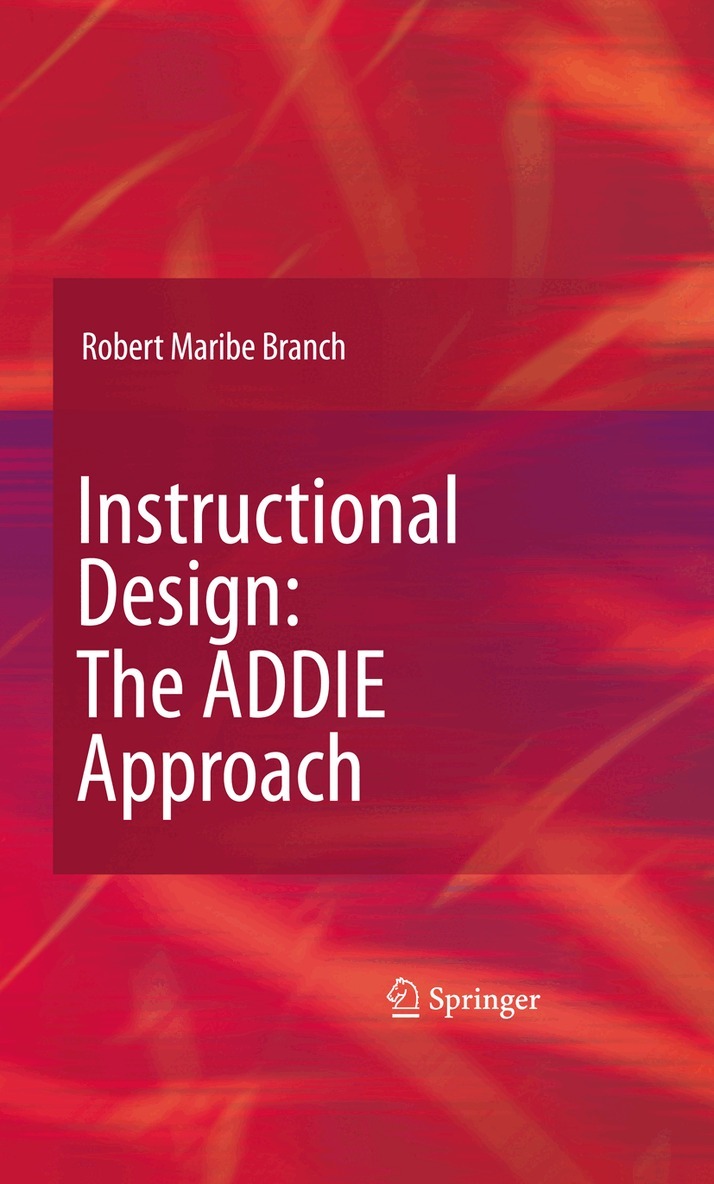
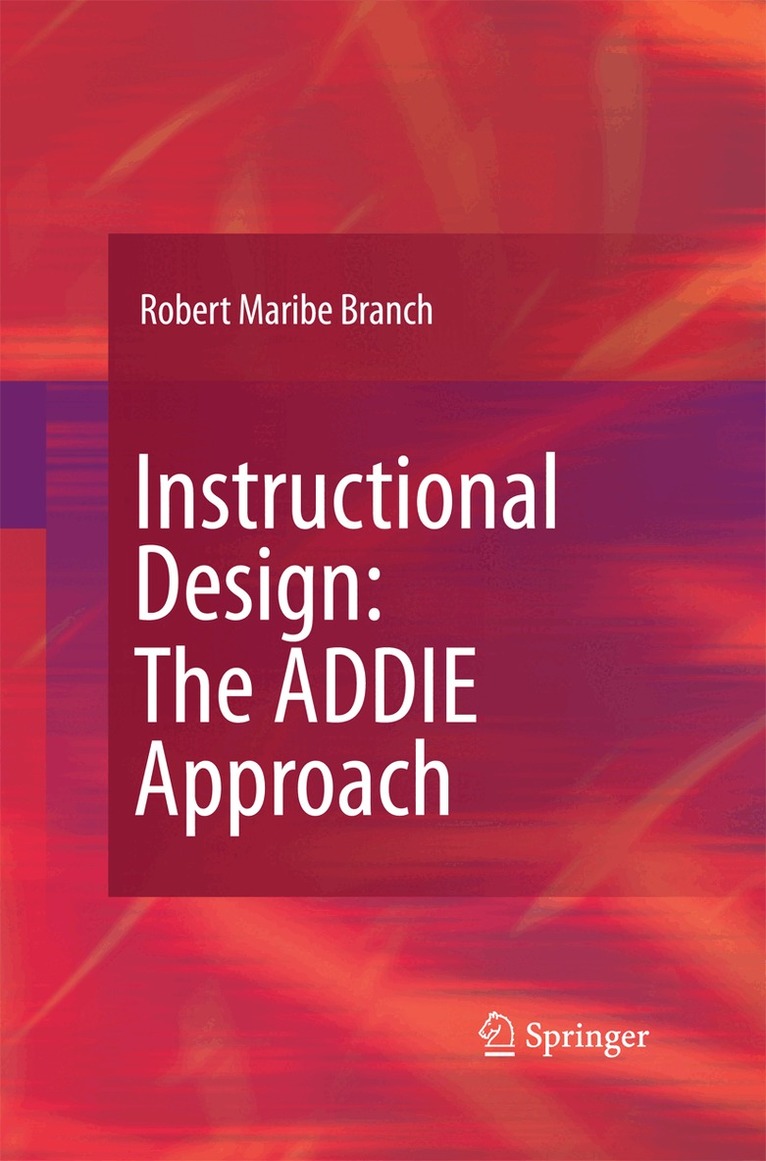
Instructional Design: The ADDIE Approach
Inbunden, 2009
1022 kr
Lägg i varukorg
The Analyze, Design, Develop, Implement, and Evaluate (ADDIE) process is used to introduce an approach to instruction design that has a proven record of success. Instructional Design: The ADDIE Approach is intended to serve as an overview of the ADDIE concept. The primary rationale for this book is …
Instructional Design: The ADDIE Approach
E-bok, 2009
1215 kr
Lägg i varukorg
The Analyze, Design, Develop, Implement, and Evaluate (ADDIE) process is used to introduce an approach to instruction design that has a proven record of success. Instructional Design: The ADDIE Approach is intended to serve as an overview of the ADDIE concept. The primary rationale for this book is …
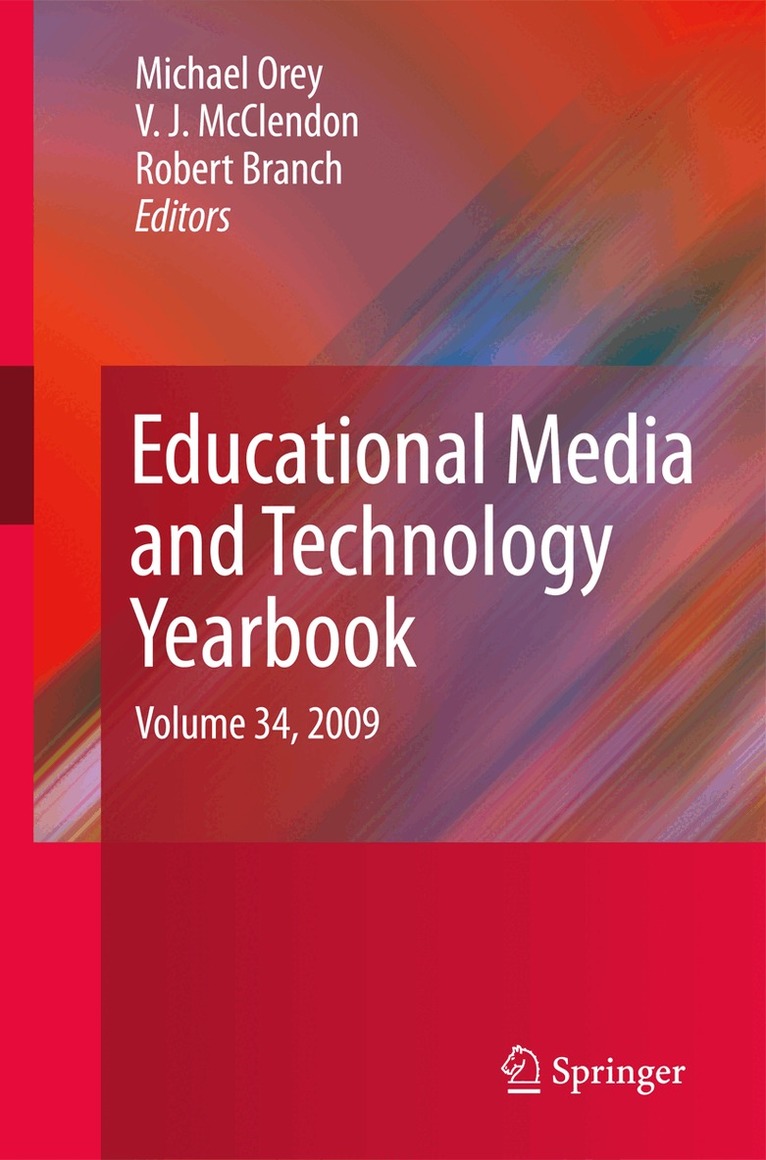
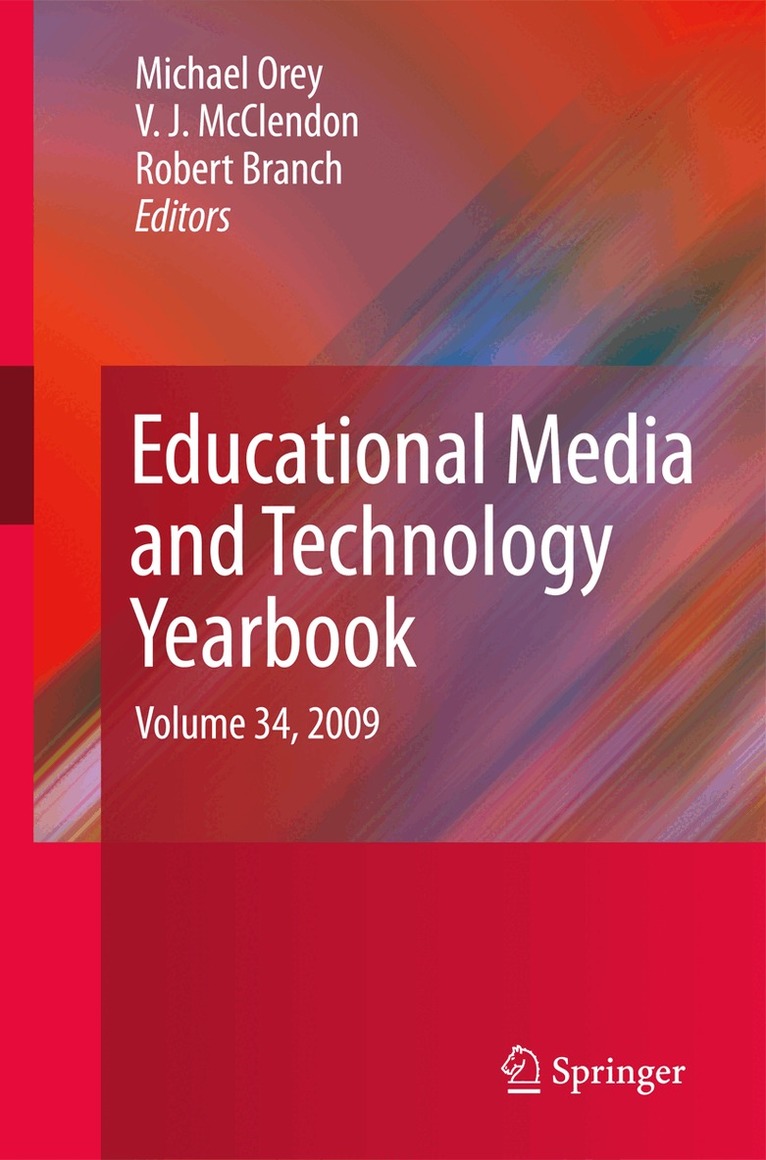
Educational Media and Technology Yearbook
Volume 34, 2009
Av Michael Orey, V. J. McClendon m. fl.
Inbunden, 2009
1593 kr
Lägg i varukorg
The Educational Media and Technology Yearbook has become a standard reference in many libraries and professional collections. Examined in relation to its comp- ion volumes of the past, it provides a valuable historical record of current ideas and developments in the ?eld. Part I, “Trends and …
Educational Media and Technology Yearbook
Volume 34, 2009
Av Robert Maribe Branch, V. J. McClendon m. fl.
E-bok, 2009
2051 kr
Lägg i varukorg
The Educational Media and Technology Yearbook has become a standard reference in many libraries and professional collections. Examined in relation to its comp- ion volumes of the past, it provides a valuable historical record of current ideas and developments in the ?eld. Part I, “Trends and …
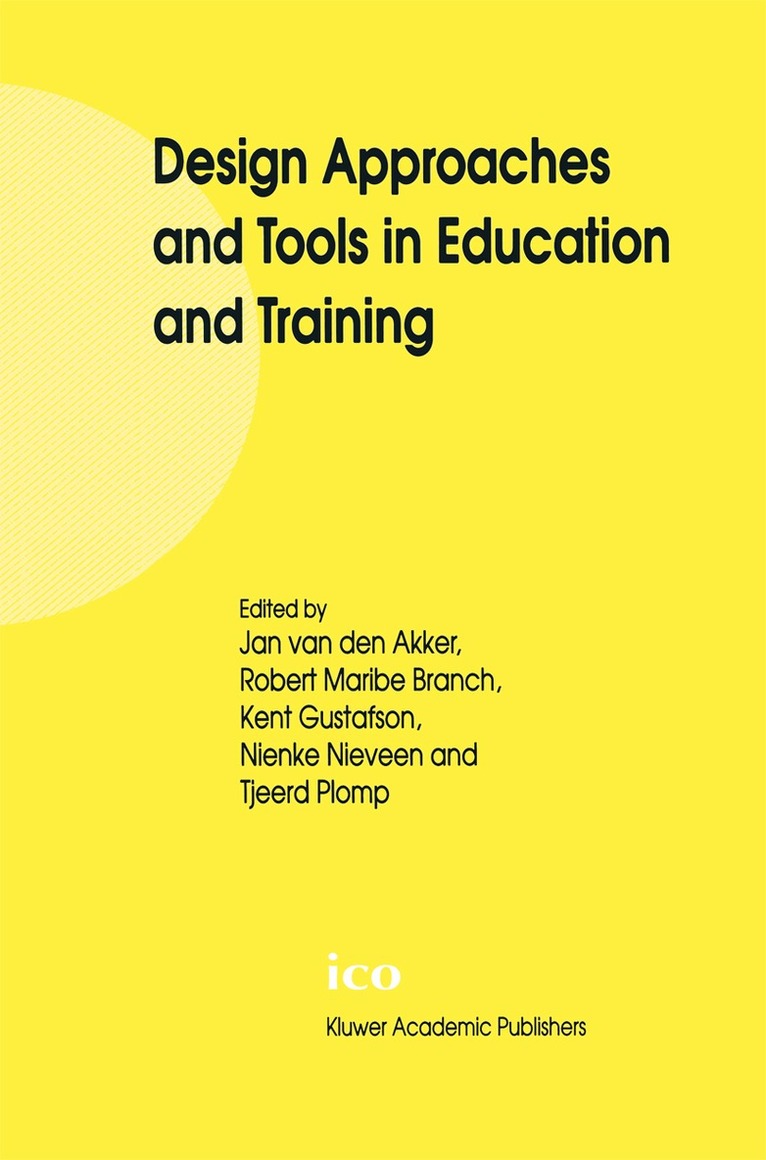
Design Approaches and Tools in Education and Training
Av Jan van den Akker, Robert Maribe Branch m. fl.
Inbunden, 1999
1095 kr
Lägg i varukorg
In our contemporary learning society, expectations about the contribution of education and training continue to rise. Moreover, the potential of information and communication technology (ICT) creates many challenges. These trends affect not only the aims, content and processes of learning, they …
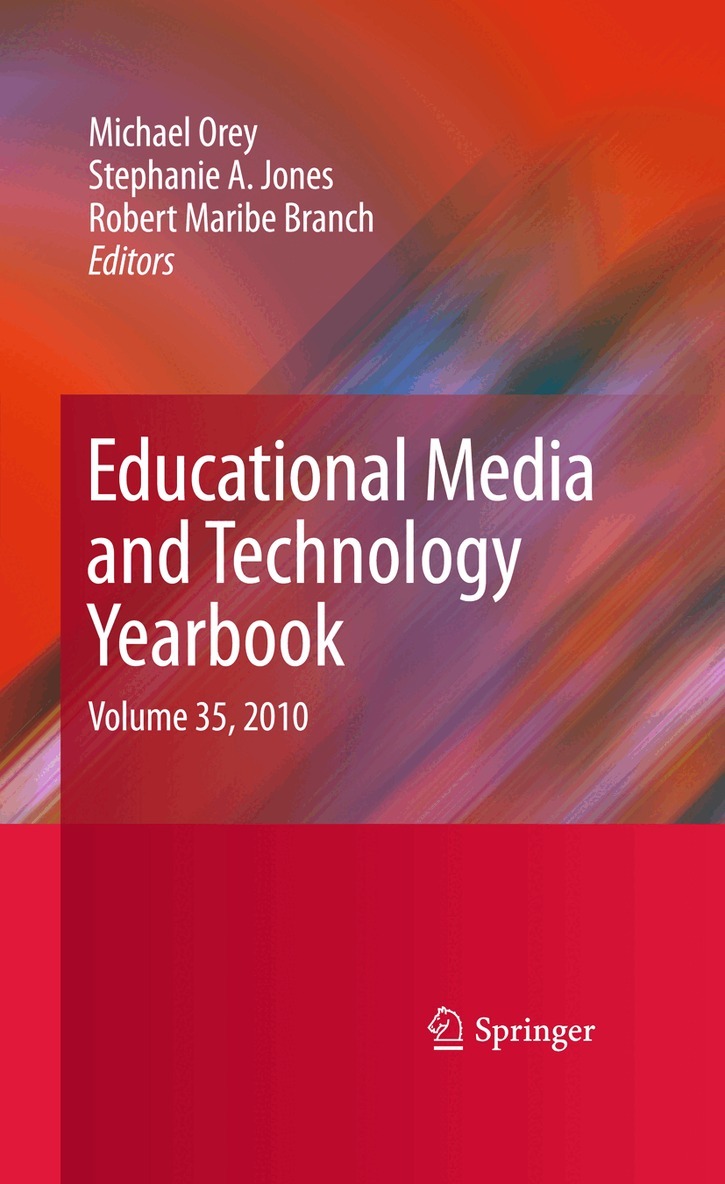
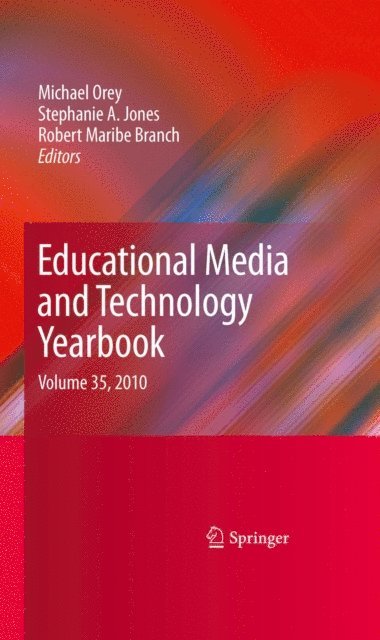
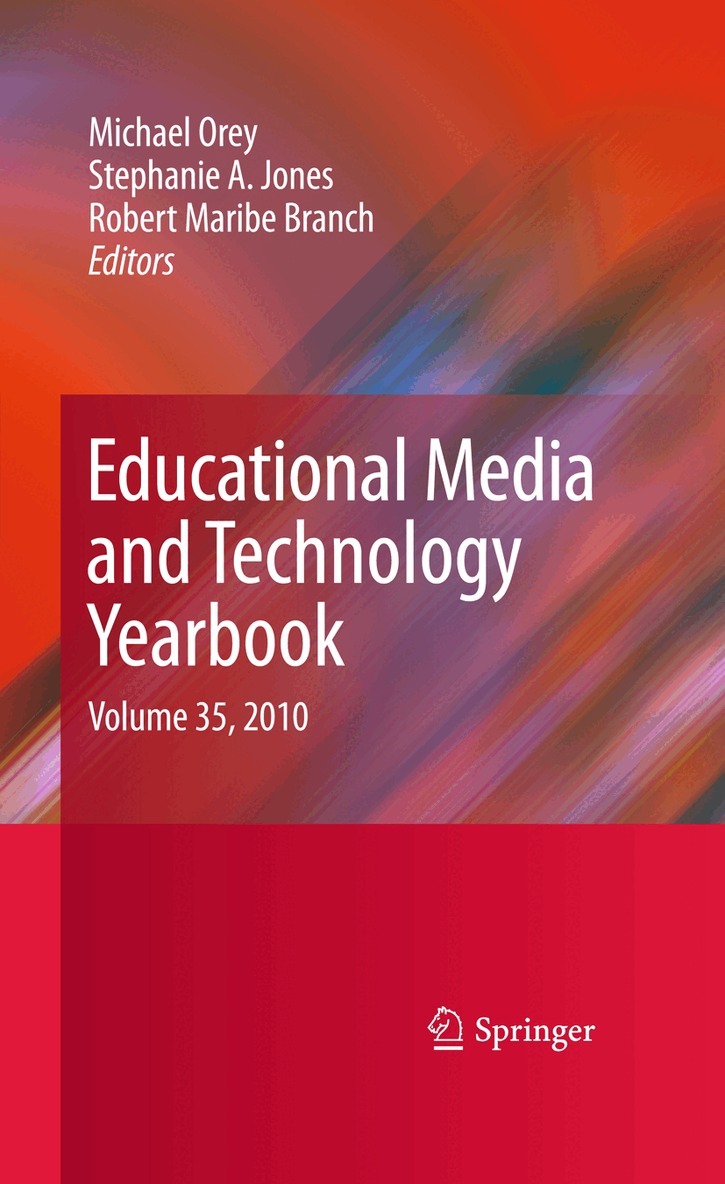
Educational Media and Technology Yearbook
Volume 35, 2010
Av Michael Orey, Stephanie A. Jones m. fl.
Inbunden, 2010
1593 kr
Lägg i varukorg
TheaudiencefortheYearbookconsistsofmediaandtechnologyprofessionalsin schools,highereducation,andbusinesscontexts. Topicsofinteresttoprofessi- alspracticingintheseareasarebroad,astheTableofContentsdemonstrates. The themeunifyingeachofthechaptersinthebookistheuseoftechnologytoenable …
Educational Media and Technology Yearbook
Volume 35, 2010
Av Robert Maribe Branch, Stephanie A. Jones m. fl.
E-bok, 2010
2051 kr
Lägg i varukorg
Educational Media and Technology Yearbook
Volume 34, 2009
Av Michael Orey, V. J. McClendon m. fl.
Häftad, 2010
1639 kr
Lägg i varukorg
The Educational Media and Technology Yearbook has become a standard reference in many libraries and professional collections. Examined in relation to its comp- ion volumes of the past, it provides a valuable historical record of current ideas and developments in the ?eld. Part I, “Trends and …
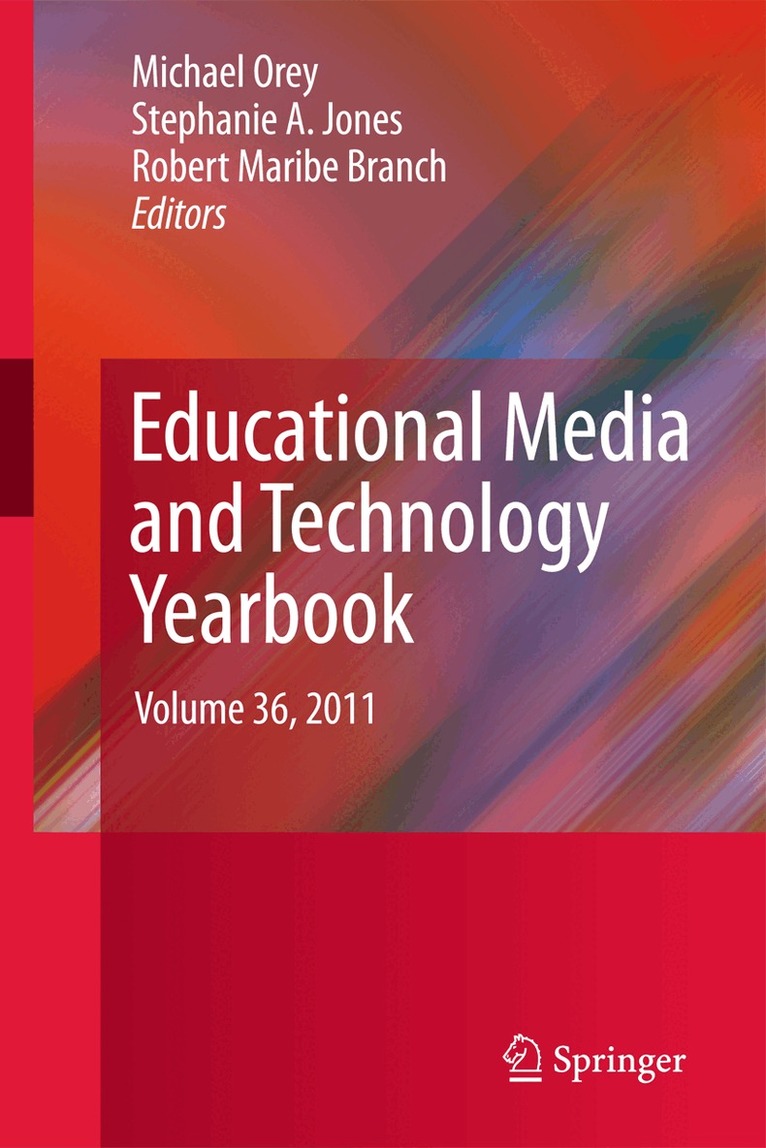
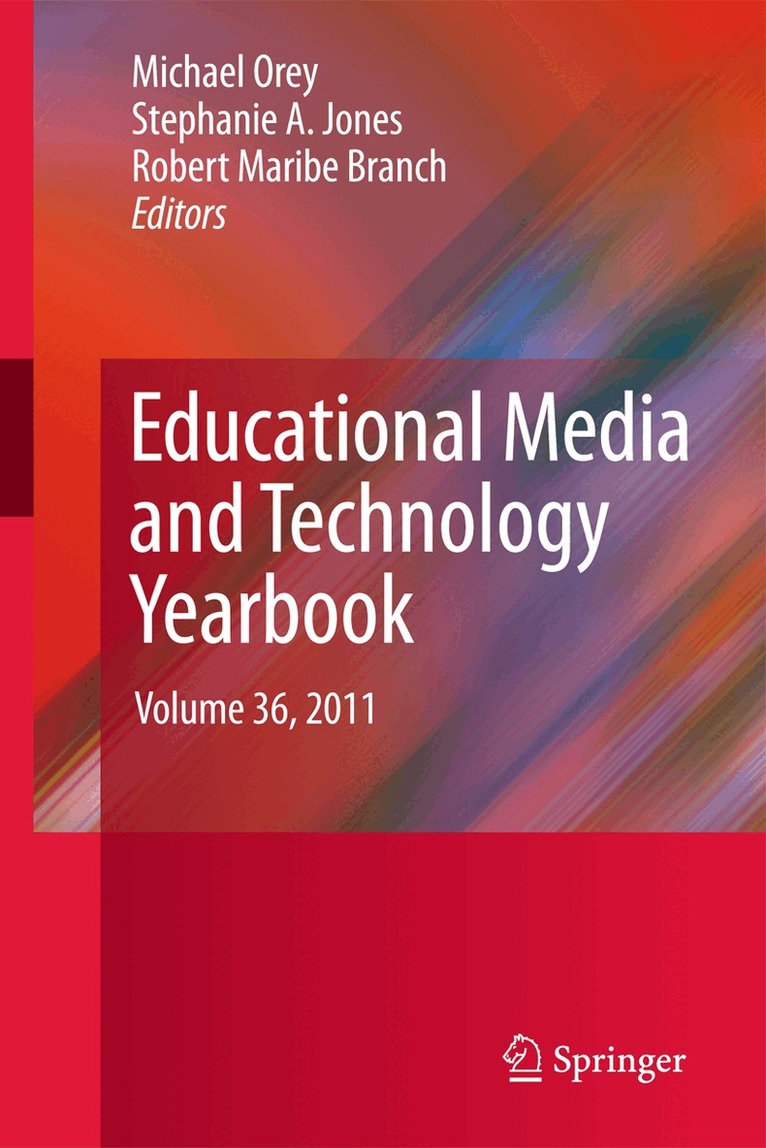
Educational Media and Technology Yearbook
Volume 36, 2011
Av Michael Orey, Stephanie A. Jones m. fl.
Inbunden, 2011
1064 kr
Lägg i varukorg
The Educational Media and Technology Yearbook is dedicated to theoretical, empirical and practical approaches to educational media development. All chapters are invited and selected based on a variety of strategies to determine current trends and issues in the field. The 2011 edition will highlight …
Educational Media and Technology Yearbook
Volume 36, 2011
Av Robert Maribe Branch, Stephanie A. Jones m. fl.
E-bok, 2011
1387 kr
Lägg i varukorg
The Educational Media and Technology Yearbook is dedicated to theoretical, empirical and practical approaches to educational media development. All chapters are invited and selected based on a variety of strategies to determine current trends and issues in the field. The 2011 edition will highlight …
Educational Media and Technology Yearbook
Volume 35, 2010
Av Michael Orey, Stephanie A. Jones m. fl.
Häftad, 2012
1593 kr
Lägg i varukorg
TheaudiencefortheYearbookconsistsofmediaandtechnologyprofessionalsin schools,highereducation,andbusinesscontexts. Topicsofinteresttoprofessi- alspracticingintheseareasarebroad,astheTableofContentsdemonstrates. The themeunifyingeachofthechaptersinthebookistheuseoftechnologytoenable …
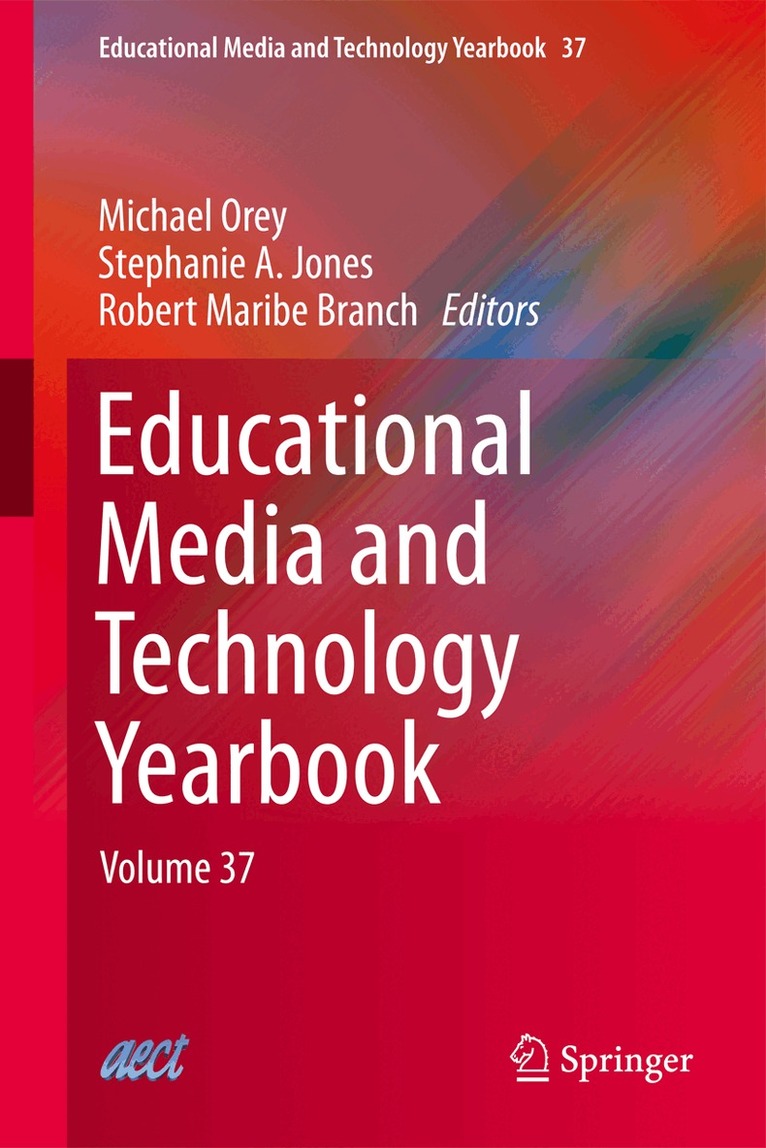
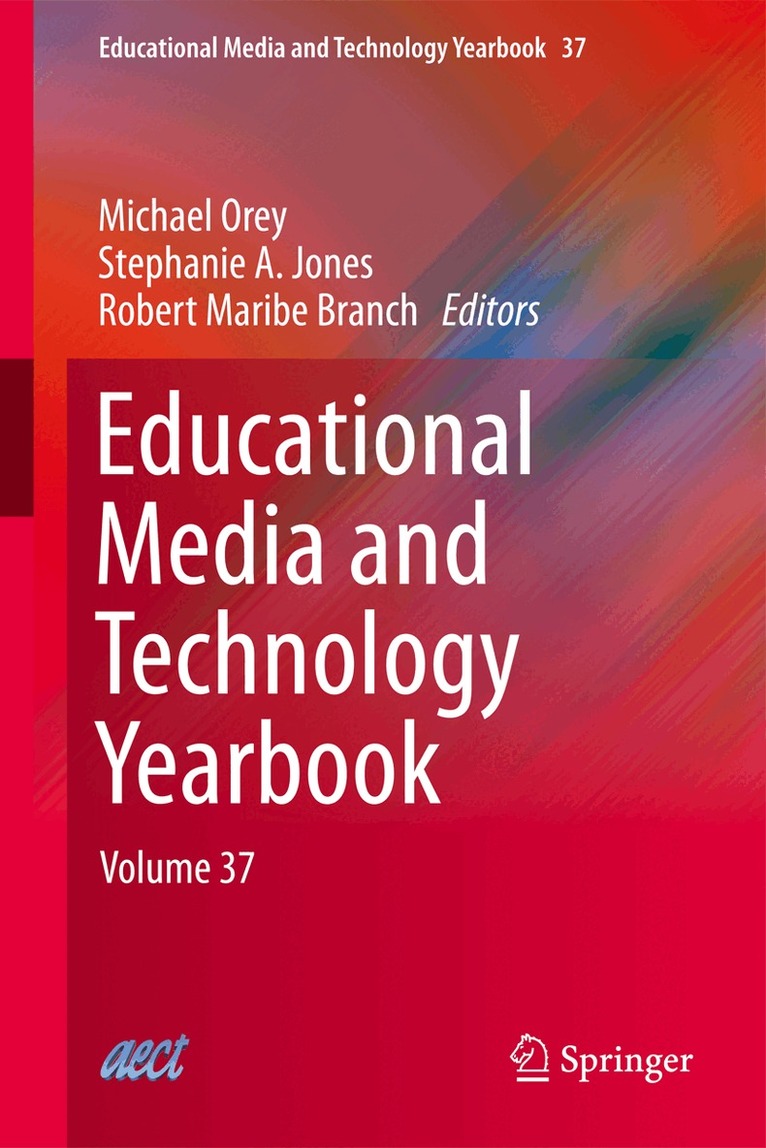
Educational Media and Technology Yearbook
Volume 37
Av Michael Orey, Stephanie A. Jones m. fl.
Inbunden, 2012
1593 kr
Lägg i varukorg
As digital devices play a more critical role in daily life than ever, more opportunities arise for innovative learning technologies—a trend on full display in the Educational Media and Technology Yearbook for 2012. This latest edition, volume 37, from the Association for Education, …
Educational Media and Technology Yearbook
Volume 37
Av Robert Maribe Branch, Stephanie A. Jones m. fl.
E-bok, 2012
2051 kr
Lägg i varukorg
As digital devices play a more critical role in daily life than ever, more opportunities arise for innovative learning technologies—a trend on full display in the Educational Media and Technology Yearbook for 2012. This latest edition, volume 37, from the Association for Education, …
Instructional Design: The ADDIE Approach
Häftad, 2014
866 kr
Lägg i varukorg
The Analyze, Design, Develop, Implement, and Evaluate (ADDIE) process is used to introduce an approach to instruction design that has a proven record of success. Instructional Design: The ADDIE Approach is intended to serve as an overview of the ADDIE concept. The primary rationale for this book is …
Educational Media and Technology Yearbook
Volume 37
Av Michael Orey, Stephanie A. Jones m. fl.
Häftad, 2014
1593 kr
Lägg i varukorg
As digital devices play a more critical role in daily life than ever, more opportunities arise for innovative learning technologies—a trend on full display in the Educational Media and Technology Yearbook for 2012. This latest edition, volume 37, from the Association for Education, …
Educational Media and Technology Yearbook
Volume 36, 2011
Av Michael Orey, Stephanie A. Jones m. fl.
Häftad, 2014
1064 kr
Lägg i varukorg
The Educational Media and Technology Yearbook is dedicated to theoretical, empirical and practical approaches to educational media development. All chapters are invited and selected based on a variety of strategies to determine current trends and issues in the field. The 2011 edition will highlight …
Educational Media and Technology Yearbook 2000
Volume 25
Inbunden, 2000
965 kr
Lägg i varukorg
Published in cooperation with the ERIC Clearinghouse on Information and Technology and the AECT, this volume of EMTY provides essential and timely information that helps educational technologists, librarians, and media specialists practice their profession in a dynamic and changing field. Respected …
Educational Media and Technology Yearbook 2001
Volume 26
Av Robert Maribe Branch, Robert Maribe Branch m. fl.
Inbunden, 2001
1239 kr
Lägg i varukorg
Published in cooperation with the ERIC Clearinghouse on Information and Technology and AECT, this volume of EMTY provides essential and timely information to help educational technologists, librarians, and media specialists practice their profession in a dynamnic and changing field. Focusing on …
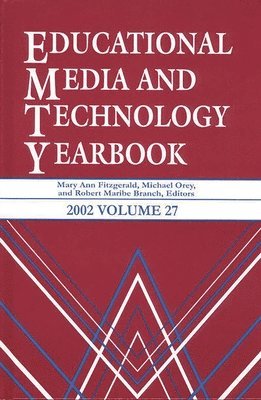
Educational Media and Technology Yearbook 2002
Volume 27
Av Mary Ann Fitzgerald, Michael Orey m. fl.
Inbunden, 2002
1239 kr
Lägg i varukorg
The 27th volume of the Educational Media and Technology Yearbook describes current developments and trends in the field of instructional technology. Prominent themes for this volume include e-learning, collaboration, the standards reform movement, and a critical look at the field in its historical …
Educational Media and Technology Yearbook 2003
Volume 28
Av Mary Ann Fitzgerald, Michael Orey m. fl.
Inbunden, 2003
1239 kr
Lägg i varukorg
The 28th volume of the Educational Media and Technology Yearbook describes current developments and trends in the field of instructional technology. Prominent themes for this volume include e-learning, collaboration, the standards reform movement, and a critical look at the field in its historical …
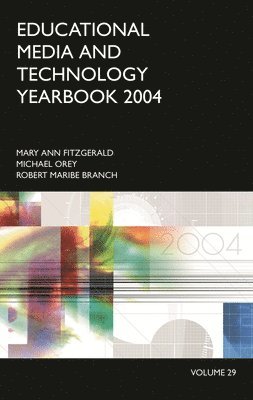
Educational Media and Technology Yearbook 2004
Volume 29
Av Michael Orey, Mary Ann Fitzgerald m. fl.
Inbunden, 2004
1256 kr
Lägg i varukorg
The 29th volume of the Educational Media and Technology Yearbook describes current developments and trends in the field of instructional technology. Prominent themes for this volume include e-learning, collaboration, and communities of practice. This volume will be useful fo media and technology …
Educational Media and Technology Yearbook 2006
Volume 31
Av Robert Maribe Branch, Michael Orey m. fl.
Inbunden, 2006
1102 kr
Lägg i varukorg
The 2006 volume of the 31 year old Educational Media and Technology Yearbook series continues the legacy of its predecessors. It highlights the major trends of the previous year, noting both renewed interest in multicultural perspectives and the ever-growing interest in online learning. It …
Educational Media and Technology Yearbook 2007
Volume 32
Av Michael Orey, Robert Maribe Branch
Inbunden, 2007
1102 kr
Lägg i varukorg
The 2007 volume of the 32-year-old Educational Media and Technology Yearbook series continues the legacy of its predecessors. It highlights the major trends of the previous year, which cluster around student-centered pedagogy (fueled by the No Child Left Behind legislation) as well as advances in …
Educational Media and Technology Yearbook 2008
Volume 33
Av Robert Maribe Branch, Michael Orey m. fl.
Inbunden, 2008
1102 kr
Lägg i varukorg
The 2008 volume of the 33-year-old Educational Media and Technology Yearbook series continues the legacy of its predecessors. It highlights the major trends of the previous year, with a focus on instructional technology education. It features the winning paper of AECT's ECT Foundation's Qualitative …
Educational Media and Technology Yearbook
Volume 41
Häftad, 2018
1276 kr
Lägg i varukorg
The Educational Media and Technology Yearbook has become a standard reference in many libraries and professional collections. It provides a valuable historical record of current ideas and developments in the field. Part One of this updated volume, “Trends and Issues in Learning, Design, and …
Educational Media and Technology Yearbook
Volume 42
Av Robert Maribe Branch, Hyewon Lee m. fl.
Inbunden, 2019
1593 kr
Lägg i varukorg
This is Volume 42 of the Educational Media and Technology Yearbook. For the past 40 years, our Yearbook has contributed to the field of Educational Technology in presenting contemporary topics, ideas, and developments regarding diverse technology tools for educational purposes. Our Yearbook has …
Educational Media and Technology Yearbook
Volume 42
Av Sheng Shiang Tseng, Hyewon Lee m. fl.
E-bok, 2019
1986 kr
Lägg i varukorg
This is Volume 42 of the Educational Media and Technology Yearbook. For the past 40 years, our Yearbook has contributed to the field of Educational Technology in presenting contemporary topics, ideas, and developments regarding diverse technology tools for educational purposes. Our Yearbook has …
Educational Media and Technology Yearbook
Volume 42
Av Robert Maribe Branch, Hyewon Lee m. fl.
Häftad, 2020
1593 kr
Lägg i varukorg
This is Volume 42 of the Educational Media and Technology Yearbook. For the past 40 years, our Yearbook has contributed to the field of Educational Technology in presenting contemporary topics, ideas, and developments regarding diverse technology tools for educational purposes. Our Yearbook has …