Robert McMahon - Böcker
Visar alla böcker från författaren Robert McMahon. Handla med fri frakt och snabb leverans.
11 produkter
11 produkter
1 188 kr
Skickas inom 7-10 vardagar
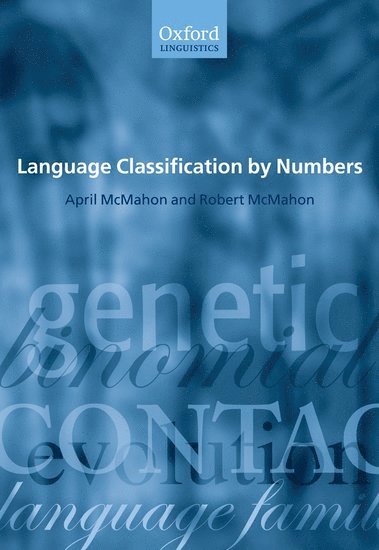
This book considers how languages have traditionally been divided into families, and asks how they should be classified in the future. It tests current theories and hypotheses, shows how new ideas can be formulated, and offers a series of demonstrations that the new techniques applied to old data can produce convincing results. It will be of great practical interest to all those concerned with the classification and diffusion of languages in fields such as comparative linguistics, archaeology, genetics, and anthropology.
885 kr
Skickas inom 5-8 vardagar
This book considers how languages have traditionally been divided into families, and asks how they should classified in the future. It describes and applies computer programs from biology and evolutionary genetics to data about languages and shows how the power of the computer can be harnessed to throw light on long-standing problems in historical linguistics. It tests current theories and hypotheses, shows how new ideas can be formulated, and offers a series of demonstrations that the new techniques applied to old data can produce convincing results that are sometimes startlingly at odds with accepted wisdom. April and Robert McMahon combine the expertise and perspectives of an historical linguist and a geneticist. They analyse the links between linguistic and population genetics, and consider how far language can be used to discover and understand the histories and interrelations of human populations. They explore the origins and formation of the Indo-European languages and examine less well studied languages in South America. Their book will be of great practical importance to students and researchers in historical and comparative linguistics and will interest all those concerned with the classification and diffusion of languages in fields such as archaeology, genetics, and anthropology. Its approachable style will appeal to general readers seeking to know more about the relationship between linguistic and human history.
1 890 kr
Skickas inom 3-6 vardagar
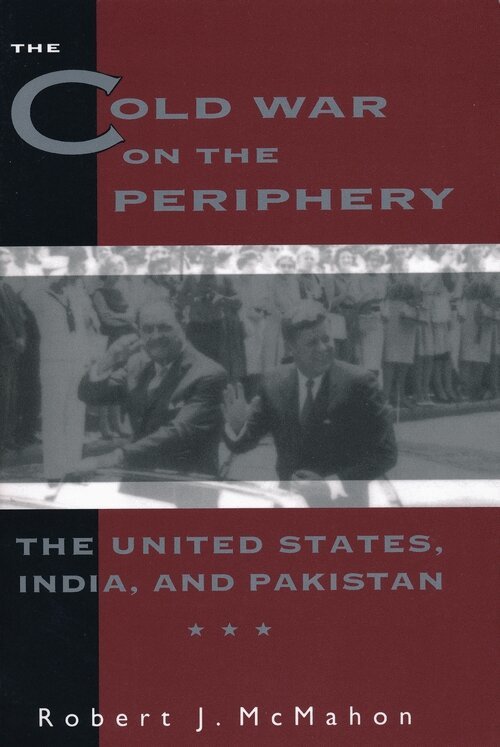
Focusing on the two tumultuous decades framed by Indian independence in 1947 and the Indo-Pakistani war of 1965, The Cold War on the Periphery explores the evolution of American policy toward the subcontinent. McMahon analyzes the motivations behind America's pursuit of Pakistan and India as strategic Cold War prizes. He also examines the profound consequences-for U.S. regional and global foreign policy and for South Asian stability-of America's complex political, military, and economic commitments on the subcontinent. McMahon argues that the Pakistani-American alliance, consummated in 1954, was a monumental strategic blunder. Secured primarily to bolster the defense perimeter in the Middle East, the alliance increased Indo-Pakistani hostility, undermined regional stability, and led India to seek closer ties with the Soviet Union.Through his examination of the volatile region across four presidencies, McMahon reveals the American strategic vision to have been "surprinsgly ill defined, inconsistent, and even contradictory" because of its exaggerated anxiety about the Soviet threat and America's failure to incorporate the interests and concerns of developing nations into foreign policy. The Cold War on the Periphery addresses fundamental questions about the global reach of postwar American foreign policy. Why, McMahon asks, did areas possessing few of the essential prerequisites of economic-military power become objects of intense concern for the United States? How did the national security interests of the United States become so expansive that they extended far beyond the industrial core nations of Western Europe and East Asia to embrace nations on the Third World periphery? And what combination of economic, political, and ideological variables best explain the motives that led the United States to seek friends and allies in virtually every corner of the planet? McMahon's lucid analysis of Indo-Pakistani-Americna relations powerfully reveals how U.S. policy was driven, as he puts it, "by a series of amorphous-and largely illusory-military, strategic, and psychological fears" about American vulnerability that not only wasted American resources but also plunged South Asia into the vortex of the Cold War.
307 kr
Skickas inom 7-10 vardagar
Focusing on the two tumultuous decades framed by Indian independence in 1947 and the Indo-Pakistani war of 1965, The Cold War on the Periphery explores the evolution of American policy toward the subcontinent. McMahon analyzes the motivations behind America's pursuit of Pakistan and India as strategic Cold War prizes. He also examines the profound consequences-for U.S. regional and global foreign policy and for South Asian stability-of America's complex political, military, and economic commitments on the subcontinent. McMahon argues that the Pakistani-American alliance, consummated in 1954, was a monumental strategic blunder. Secured primarily to bolster the defense perimeter in the Middle East, the alliance increased Indo-Pakistani hostility, undermined regional stability, and led India to seek closer ties with the Soviet Union.Through his examination of the volatile region across four presidencies, McMahon reveals the American strategic vision to have been "surprinsgly ill defined, inconsistent, and even contradictory" because of its exaggerated anxiety about the Soviet threat and America's failure to incorporate the interests and concerns of developing nations into foreign policy. The Cold War on the Periphery addresses fundamental questions about the global reach of postwar American foreign policy. Why, McMahon asks, did areas possessing few of the essential prerequisites of economic-military power become objects of intense concern for the United States? How did the national security interests of the United States become so expansive that they extended far beyond the industrial core nations of Western Europe and East Asia to embrace nations on the Third World periphery? And what combination of economic, political, and ideological variables best explain the motives that led the United States to seek friends and allies in virtually every corner of the planet? McMahon's lucid analysis of Indo-Pakistani-Americna relations powerfully reveals how U.S. policy was driven, as he puts it, "by a series of amorphous-and largely illusory-military, strategic, and psychological fears" about American vulnerability that not only wasted American resources but also plunged South Asia into the vortex of the Cold War.
2 191 kr
Skickas inom 3-6 vardagar
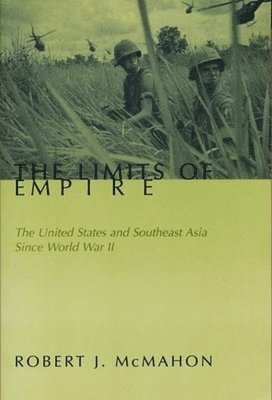
In the years following World War II, as the United States began to focus on the global containment of communism, few regions of the world were considered as much of a potential battleground as Southeast Asia. Robert McMahon contends that policymakers exaggerated the significance of the region within the global power balance, dangerously overextending the United States and resulting in the tragedy of the Vietnam War.The first book to situate the Vietnam War in its broad, regional context, The Limits of Empire offers the most complete picture to date of how U.S. strategies of containment and empire-building spiraled out of control in Southeast Asia. Additionally, McMahon's analysis goes further than any previous study of U.S. security policy in Southeast Asia by following it through to the present, investigating how the demoralizing experience of Vietnam radically undermined U.S. enthusiasm for the region in a strategic sense. By conceptualizing the U.S. strategic mission as empire-building rather than merely containment, this book offers an insightful new way to understand America's failure in Vietnam--and also why this grim miscalculation did not lead to the balance-of-power catastrophe that some U.S. officials had forecasted. The Limits of Empire touches upon such broad theoretical concerns as the appeal of nationalist, anti-Western currents to Third World peoples; the inadequacy of empires as a means of asserting control over non-Western peoples; and the chasm between America's postwar ambitions and the sobering realization of the limits of its power.
299 kr
Skickas inom 7-10 vardagar
In the years following World War II, as the United States began to focus on the global containment of communism, few regions of the world were considered as much of a potential battleground as Southeast Asia. Robert McMahon contends that policymakers exaggerated the significance of the region within the global power balance, dangerously overextending the United States and resulting in the tragedy of the Vietnam War.The first book to situate the Vietnam War in its broad, regional context, The Limits of Empire offers the most complete picture to date of how U.S. strategies of containment and empire-building spiraled out of control in Southeast Asia. Additionally, McMahon's analysis goes further than any previous study of U.S. security policy in Southeast Asia by following it through to the present, investigating how the demoralizing experience of Vietnam radically undermined U.S. enthusiasm for the region in a strategic sense. By conceptualizing the U.S. strategic mission as empire-building rather than merely containment, this book offers an insightful new way to understand America's failure in Vietnam--and also why this grim miscalculation did not lead to the balance-of-power catastrophe that some U.S. officials had forecasted. The Limits of Empire touches upon such broad theoretical concerns as the appeal of nationalist, anti-Western currents to Third World peoples; the inadequacy of empires as a means of asserting control over non-Western peoples; and the chasm between America's postwar ambitions and the sobering realization of the limits of its power.
1 295 kr
Skickas inom 7-10 vardagar
How did the biological, brain and behavioural structures underlying human language evolve? When, why and where did our ancestors become linguistic animals, and what has happened since? This book provides a clear, comprehensive but lively introduction to these interdisciplinary debates. Written in an approachable style, it cuts through the complex, sometimes contradictory and often obscure technical languages used in the different scientific disciplines involved in the study of linguistic evolution. Assuming no background knowledge in these disciplines, the book outlines the physical and neurological structures underlying language systems, and the limits of our knowledge concerning their evolution. Discussion questions and further reading lists encourage students to explore the primary literature further, and the final chapter demonstrates that while many questions still remain unanswered, there is a growing consensus as to how modern human languages have arisen as systems by the interplay of evolved structures and cultural transmission.
396 kr
Skickas inom 7-10 vardagar
How did the biological, brain and behavioural structures underlying human language evolve? When, why and where did our ancestors become linguistic animals, and what has happened since? This book provides a clear, comprehensive but lively introduction to these interdisciplinary debates. Written in an approachable style, it cuts through the complex, sometimes contradictory and often obscure technical languages used in the different scientific disciplines involved in the study of linguistic evolution. Assuming no background knowledge in these disciplines, the book outlines the physical and neurological structures underlying language systems, and the limits of our knowledge concerning their evolution. Discussion questions and further reading lists encourage students to explore the primary literature further, and the final chapter demonstrates that while many questions still remain unanswered, there is a growing consensus as to how modern human languages have arisen as systems by the interplay of evolved structures and cultural transmission.
677 kr
Skickas inom 5-8 vardagar
Designed to encourage critical thinking about history, the Major Problems in American History series introduces students to both primary sources and analytical essays on important topics in U.S. history. Major Problems in the History of the Vietnam War incorporates new research expands its coverage of the experiences of average soldiers.
223 kr
Skickas inom 5-8 vardagar
Environmental Protection Agency
Structuring Motivation in a Green Bureaucracy -- The Conflict Between Regulatory Style and Cultural Identity
Inbunden, Engelska, 2006
1 690 kr
Skickas inom 7-10 vardagar
By utilising the lenses of institutions and culture -- examining the relationship between regulator and regulated, dominant regulatory style, and interaction with the institutions of government -- this book challenges the contemporary wisdom that recommends holistic and integrated institutional forms that result in the decimation of existing cultural identifications. No sense of bureaucratic mission can be established where cultural identifications have been destroyed, regardless of the ingenuity of the institutional form adopted. The absence of such bureaucratic mission results in green bureaucracies that are likely to fail in the pursuit of organisational goals. Examining motivations shows why cultural identifications within an organisation must be congruent with institutional structures so that these identifications can be established.