Robert Michael Goldman - Böcker
Visar alla böcker från författaren Robert Michael Goldman. Handla med fri frakt och snabb leverans.
4 produkter
4 produkter
289 kr
Skickas inom 10-15 vardagar
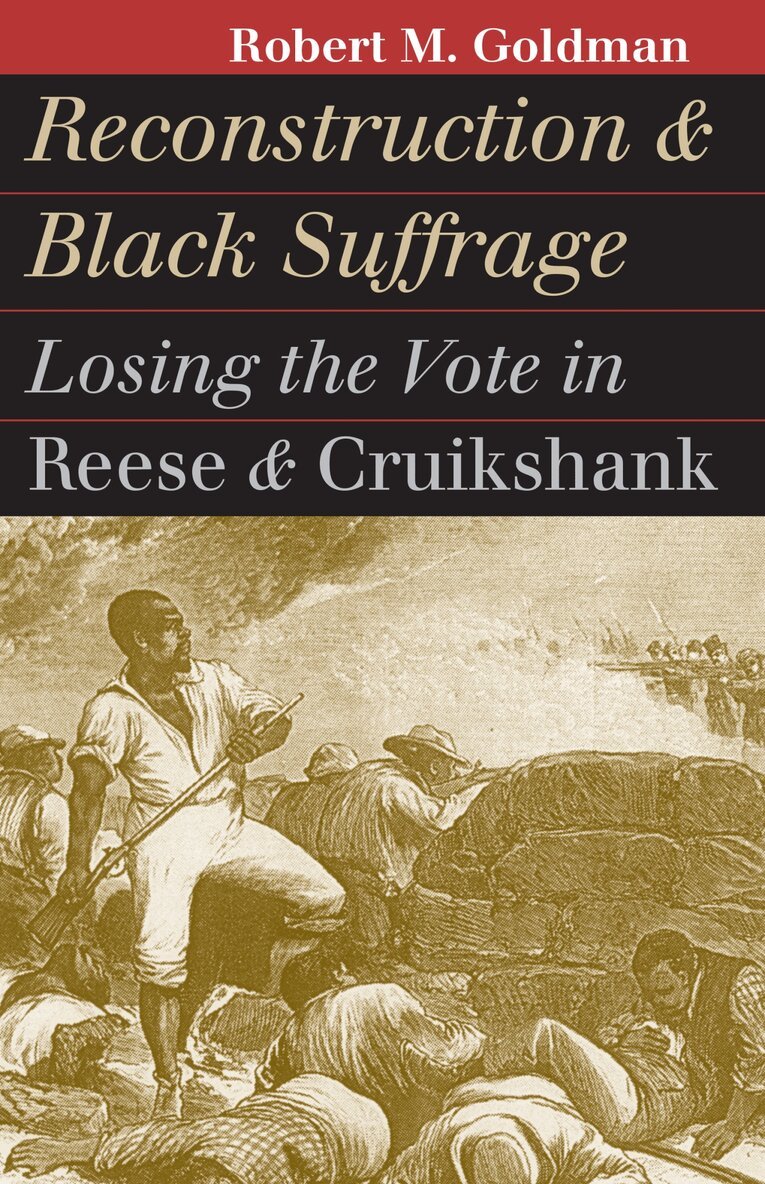
On Easter Sunday in 1873, more than one hundred black men were gunned down in Grant Parish, Louisiana, for daring to assert their right to vote. Several months earlier, in Lexington, Kentucky, another black man was denied the right to vote for simply failing to pay a poll tax. Both events typified the intense opposition to the federal guarantee of black voting rights. Both events led to landmark Supreme Court decisions. And, as Robert Goldman shows, both events have much to tell us about an America that was still deeply divided over the status of blacks during the Reconstruction era. Goldman deftly highlights the cases of United States v. Reese and United States v. Cruikshank within the context of an ongoing power struggle between state and federal authorities and the realities of being black in postwar America. Focusing especially on the so-called Reconstruction Amendments and Enforcement Acts, he argues that the decisions in Reese and Cruikshank signaled an enormous gap between guaranteed and enforced rights. The Court's decisions denied the very existence of any such guarantee and, further, conferred upon the states the right to determine who may vote and under what circumstances. In both decisions, lower court convictions were overturned through suprisingly narrow rulings, despite the larger constitutional issues involved. In Reese the Court justified its decision by voiding only two sections of the Enforcement Acts, while in Cruikshank it merely voided the original indictments as being ""insufficient in law"" by failing to allege that the Grant Parish murders had been explicitly motivated by racial prejudice. Such legalistic reasoning marked the grim beginning of a nearly century-long struggle to reclaim what the Fifteenth Amendment had supposedly guaranteed. As Goldman shows, the Court's decisions undermined the fledgling efforts of the newly formed justice department and made it increasingly difficult to control the racial violence, intimidation, poll taxes, and other less visible means used by white southern Democrats to ""redeem"" their political power. The result was a disenfranchised black society in a hostile and still segregated South. Only with the emergence of a nationwide civil rights movement and the Voting Rights Act of 1965 did things begin to change. Readable and insightful, Goldman's study offers students, scholars, and concerned citizens a strong reminder of what happens when courts refuse to enforce constitutional and legislated law - and what might happen again if we aren't vigilant in protecting the rights of all Americans.
534 kr
Skickas inom 3-6 vardagar
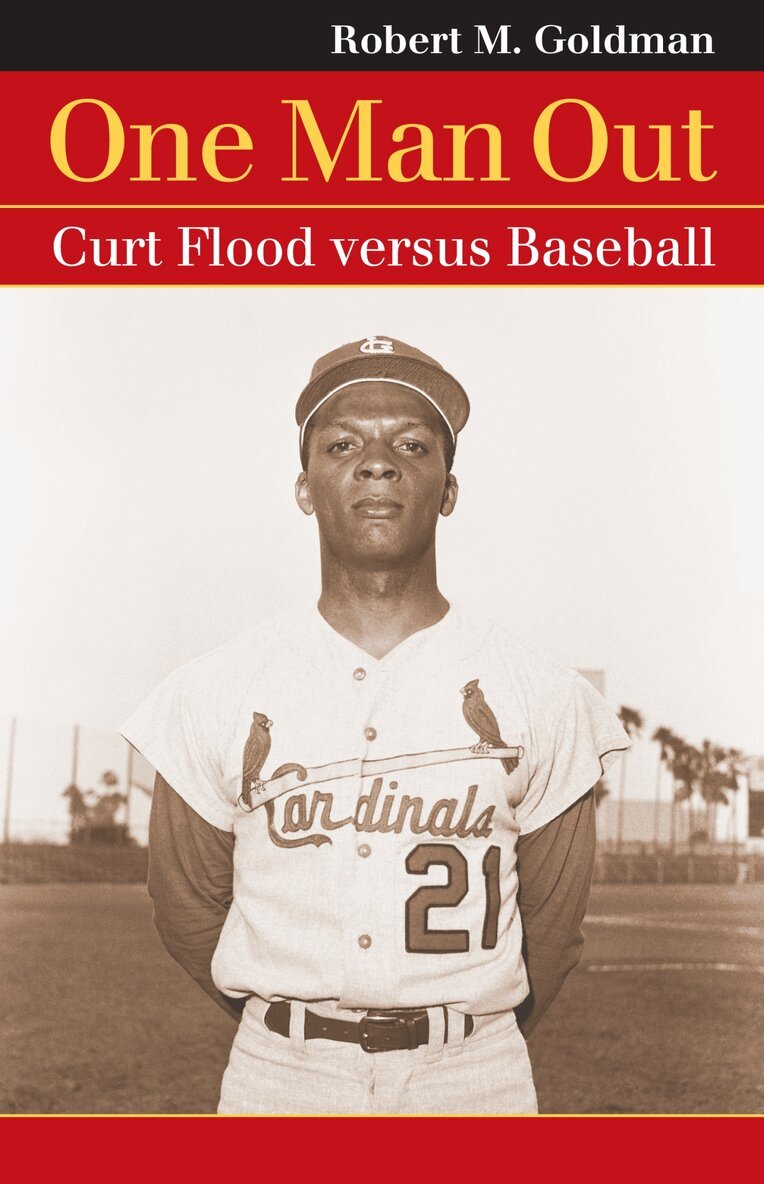
When Curt Flood, all-star center fielder for the St. Louis Cardinals, refused to be traded to the Philadelphia Phillies in 1968, he sent shock waves throughout professional baseball that ultimately reached the Supreme Court. Flood challenged the game's reserve clause system that bound players to teams as if they were property; and while others had previously spoken out against this arrangement, protected by Congress and the courts for a century, he was the first to pursue his grievance as doggedly or as far.Robert Goldman now offers a new look at Flood's efforts to shake the foundations of major league baseball. ""One Man Out"" takes readers back to the pre-steroid era when baseball was as much a passion as a pastime - and when race was often still a factor - to focus on decisions made in the courtrooms rather than the dugouts.Flood claimed that the prevailing system was illegal because it violated the Sherman antitrust laws by allowing teams to monopolize the sport in a way that impeded players' freedom and financial gain - and was even unconstitutional because it, in effect, imposed a form of slavery. Baseball owners countered that players owed their success to the reserve system because it maintained competitive balance among teams and heightened interest in the game, which helped fund their high salaries.Although the Supreme Court ruled against Flood, it left the door open to legislation that would remove baseball's special exemption from antitrust regulation and to future collective bargaining. With its credibility enhanced, the players' union continued negotiations until it finally won a version of free agency very similar to Flood's, with his final vindication coming in the form of the Curt Flood Act of 1998.In replaying the confrontation between Flood and baseball commissioner Bowie Kuhn, Goldman demonstrates that even a lost lawsuit, with its game-like competition, can be a landmark. And by telling the inside story of the case, he highlights a key labor relations issue in America's most popular sport. Concise and balanced, and written in a fast-paced narrative style, ""One Man Out"" reminds students, general readers, and fans that Flood holds a unique and important place in both baseball and American law.
"a Free Ballot and a Fair Count"
The Department of Justice and the Enforcement of Voting Rights in the South , 1877-1893
Inbunden, Engelska, 2001
886 kr
Skickas inom 10-15 vardagar
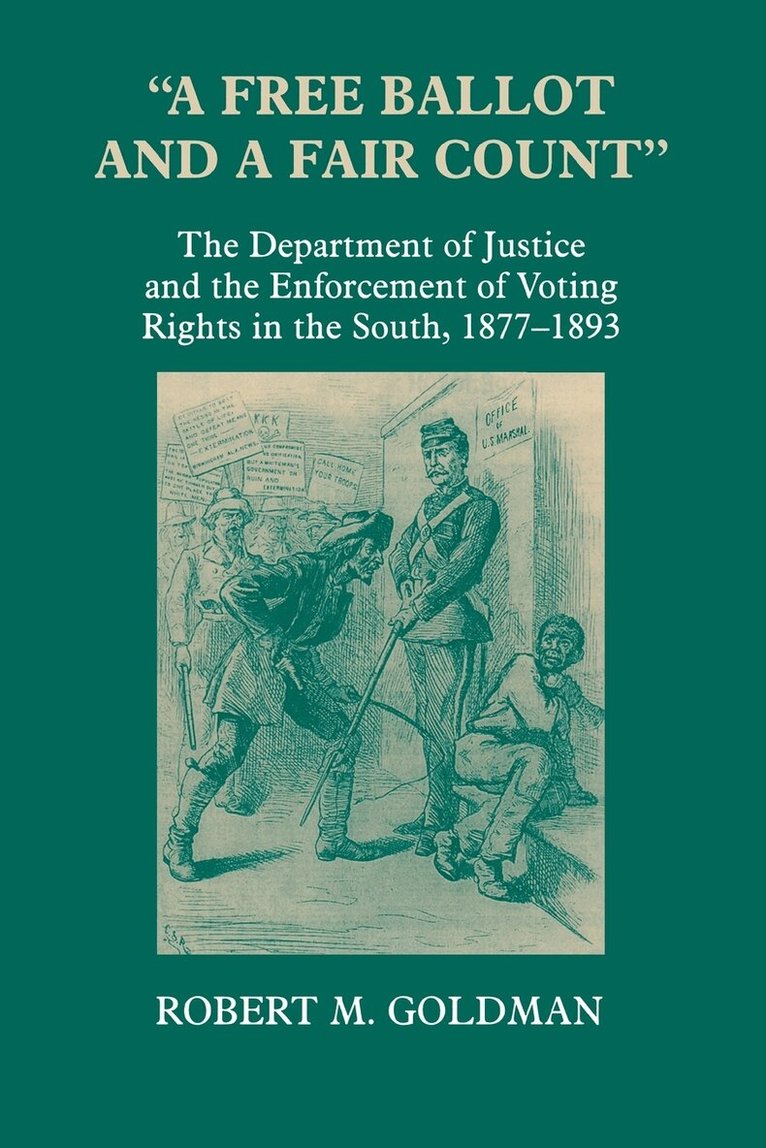
"A Free Ballot and a Fair Count" examines the efforts by the Department of Justice to implement the federal legislation passed by Congress in 1870–71 known as the Enforcement Acts. These laws were designed to enforce the voting rights guarantees for African-Americans under the recently ratified Fifteenth Amendment. The Enforcement Acts set forth a range of federally enforceable crimes aimed at combating white southerners' attempts to deny or restrict black suffrage. There are several aspects of this work that distinguish it from other, earlier works in this area. Contrary to older interpretative studies, Goldman's primary thesis is that, the federal government's attempts to protect black voting rights in the South did not cease with the Supreme Court's hostile rulings in U.S. v. Reese and U.S. v. Cruikshank in 1875. Nor, it is argued, did enforcement efforts cease at the end of Reconstruction and the so-called Compromise of 1877. Rather, federal enforcement efforts after 1877 reflected the continued commitment of Republican Party leaders, for both humanitarian and partisan reasons, to what came to be called "the free ballot and a fair count." Another unique aspect of this book is its focus on the role of the federal Department of Justice and its officials in the South in the continued enforcement effort. Created as a cabinet-level executive department in 1870, the Justice Department proved ill-equipped to respond to the widespread legal and extra-legal resistance to black suffrage by white southern Democrats in the years during and after Reconstruction. The Department faced a variety of internal problems such as insufficient resources, poor communications, and local personnel often appointed more for their political acceptability than their prosecutorial or legal skills. By the early 1890s, when the election laws were finally repealed by Congress, enforcement efforts were sporadic at best and largely unsuccessful. The end of federal involvement, coupled with the wave of southern state constitution revisions, resulted in the disfranchisement of the vast majority of African-American voters in the South by the beginning of the Twentieth Century. It would not be until the 1960s and the "Second Reconstruction" that the federal government, and the Justice Department, would once again attempt to ensure the "free ballot and a fair count".
"a Free Ballot and a Fair Count"
The Department of Justice and the Enforcement of Voting Rights in the South , 1877-1893
Häftad, Engelska, 2001
413 kr
Skickas inom 7-10 vardagar
"A Free Ballot and a Fair Count" examines the efforts by the Department of Justice to implement the federal legislation passed by Congress in 1870–71 known as the Enforcement Acts. These laws were designed to enforce the voting rights guarantees for African-Americans under the recently ratified Fifteenth Amendment. The Enforcement Acts set forth a range of federally enforceable crimes aimed at combating white southerners' attempts to deny or restrict black suffrage. There are several aspects of this work that distinguish it from other, earlier works in this area. Contrary to older interpretative studies, Goldman's primary thesis is that, the federal government's attempts to protect black voting rights in the South did not cease with the Supreme Court's hostile rulings in U.S. v. Reese and U.S. v. Cruikshank in 1875. Nor, it is argued, did enforcement efforts cease at the end of Reconstruction and the so-called Compromise of 1877. Rather, federal enforcement efforts after 1877 reflected the continued commitment of Republican Party leaders, for both humanitarian and partisan reasons, to what came to be called "the free ballot and a fair count." Another unique aspect of this book is its focus on the role of the federal Department of Justice and its officials in the South in the continued enforcement effort. Created as a cabinet-level executive department in 1870, the Justice Department proved ill-equipped to respond to the widespread legal and extra-legal resistance to black suffrage by white southern Democrats in the years during and after Reconstruction. The Department faced a variety of internal problems such as insufficient resources, poor communications, and local personnel often appointed more for their political acceptability than their prosecutorial or legal skills. By the early 1890s, when the election laws were finally repealed by Congress, enforcement efforts were sporadic at best and largely unsuccessful. The end of federal involvement, coupled with the wave of southern state constitution revisions, resulted in the disfranchisement of the vast majority of African-American voters in the South by the beginning of the Twentieth Century. It would not be until the 1960s and the "Second Reconstruction" that the federal government, and the Justice Department, would once again attempt to ensure the "free ballot and a fair count".