Robert N. Bellah - Böcker
Visar alla böcker från författaren Robert N. Bellah. Handla med fri frakt och snabb leverans.
15 produkter
15 produkter
Habits of the Heart, With a New Preface
Individualism and Commitment in American Life
Häftad, Engelska, 2007
518 kr
Skickas inom 3-6 vardagar
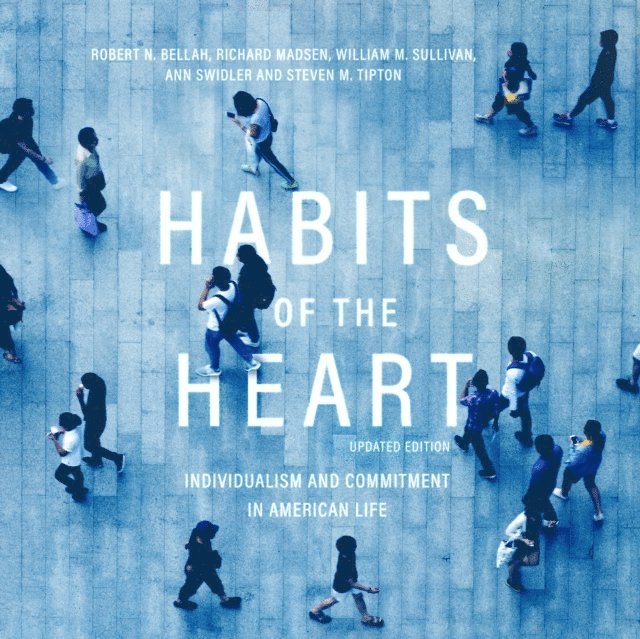
First published in 1985, "Habits of the Heart" continues to be one of the most discussed interpretations of modern American society, a quest for a democratic community that draws on our diverse civic and religious traditions. In a new preface the authors relate the arguments of the book both to the current realities of American society and to the growing debate about the country's future. With this new edition one of the most influential books of recent times takes on a new immediacy.
191 kr
Skickas inom 5-8 vardagar
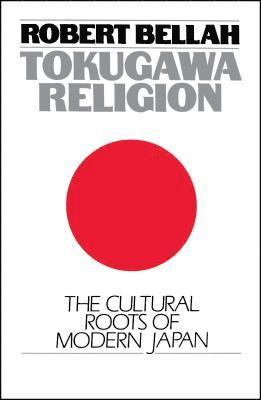
Robert N. Bellah's classic study, Tokugawa Religion does for Japan what Max Weber's The Protestant Ethic and the Spirit of Capitalism did for the West. One of the foremost authorities on Japanese history and culture, Bellah explains how religion in the Tokugawa period (160-1868) established the foundation for Japan's modern industrial economy and dispels two misconceptions about Japanese modernization: that it began with Admiral Perry's arrival in 1868, and that it rapidly developed because of the superb Japanese ability for imitation. In this revealing work, Bellah shows how the native doctrines of Buddhism, Confucianism and Shinto encouraged forms of logic and understanding necessary for economic development. Japan's current status as an economic superpower and industrial model for many in the West makes this groundbreaking volume even more important today than when it was first published in 1957. With a new introduction by the author.
243 kr
Skickas inom 7-10 vardagar
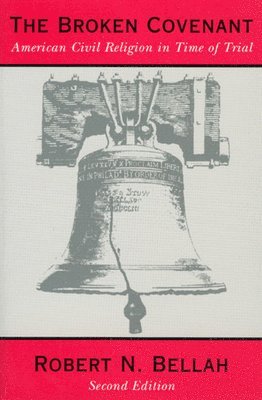
This Second Edition represents Bellah's summation of his views on civil religion in America. In his 1967 classic essay "Civil Rights in America," Bellah argued that the religious dimensions of American society—as distinct from its churches—has its own integrity and required "the same care in understanding that any religion." This edition includes his 1978 article "Religion and the Legitimation of the American Republic," and a new Preface.
243 kr
Skickas inom 7-10 vardagar
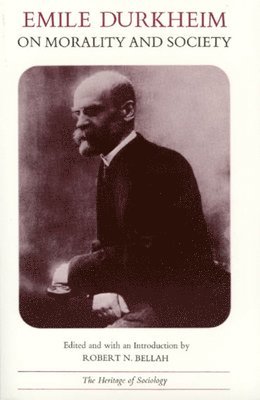
Emile Durkheim is best known in this country as a great sociologist and methodologist. Yet it was Durkheim's reflections on morality and society that spoke most deeply of his vital concerns. In his informative introduction to this work, Robert N. Bellah describes Durkheim as moralist, philosopher, theologian, and prophet, as well as sociologist, and the selections in this volume are representative of these aspects of Durkheim's many-faceted scholarship. The first two selections of the volume set the context for the development of Durkheim's sociology of morality. Section I, "The French Tradition of Social Thought," gives Durkheim's picture of how his sociology is to be situated relative to the general French tradition. Section II, "Sociology and Social Action," shows Durkheim grappling with moral and political issues in his society and indicates the immediate social context of his thinking. The remaining selections indicate some of the major substantive areas of Durkheim's sociology of morality. Section III, taken from The Division of Labor in Society, demonstrates his basically evolutionary approach to the development of moral norms in society. Section IV, "The Learning of Morality," gives examples of Durkheim's work on socialization. Section V, "Social Creativity," deals with the important question of how new moral norms arise in society.
1 108 kr
Skickas inom 7-10 vardagar
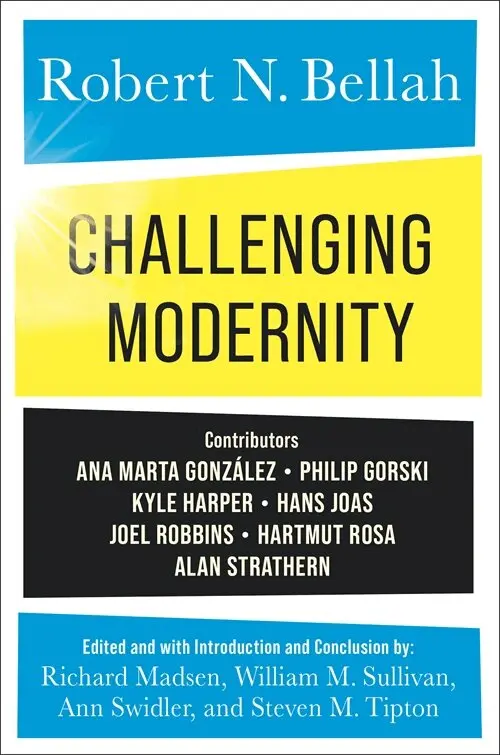
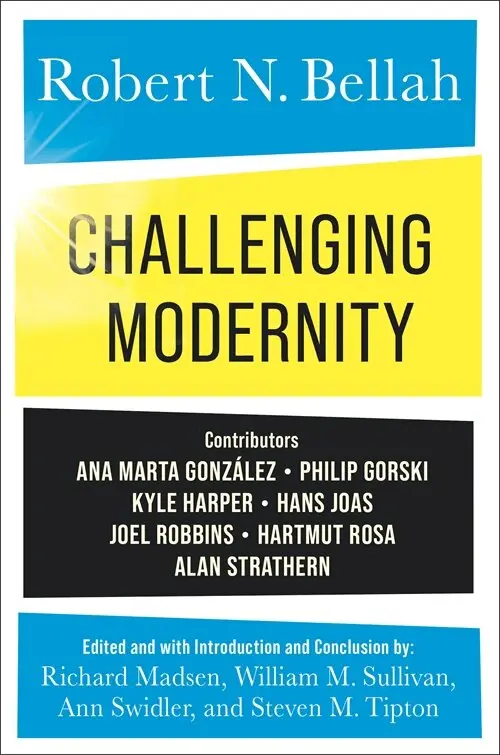
From the 1960s until his death in 2013, Robert N. Bellah was the preeminent figure in the study of religion and society. He broke new ground in mapping the religious dimensions of human experience, from the great breakthroughs of the first millennium BCE to the paradoxes of American civic life. In three final essays, published here for the first time, Bellah grapples with the contradictions of modernity, and seven leading thinkers respond with profound, exhilarating new perspectives on our present predicament.Challenging Modernity critically assesses the modern project to shed light on the tensions between its transcendent aspirations and the perils we now face. Its contributors analyze the roots of the collapse of the political, economic, and cultural institutions that promised perpetual progress but now threaten global catastrophe. Reflecting the range of Bellah’s scholarship, they span the disciplines of history, sociology, anthropology, and philosophy. They extend Bellah’s insight that only deep historical, cultural, and religious understanding can help us meet modernity’s harrowing challenges by sharing responsibility for the global interdependence of our common fate.
282 kr
Skickas inom 7-10 vardagar
From the 1960s until his death in 2013, Robert N. Bellah was the preeminent figure in the study of religion and society. He broke new ground in mapping the religious dimensions of human experience, from the great breakthroughs of the first millennium BCE to the paradoxes of American civic life. In three final essays, published here for the first time, Bellah grapples with the contradictions of modernity, and seven leading thinkers respond with profound, exhilarating new perspectives on our present predicament.Challenging Modernity critically assesses the modern project to shed light on the tensions between its transcendent aspirations and the perils we now face. Its contributors analyze the roots of the collapse of the political, economic, and cultural institutions that promised perpetual progress but now threaten global catastrophe. Reflecting the range of Bellah’s scholarship, they span the disciplines of history, sociology, anthropology, and philosophy. They extend Bellah’s insight that only deep historical, cultural, and religious understanding can help us meet modernity’s harrowing challenges by sharing responsibility for the global interdependence of our common fate.
533 kr
Skickas inom 3-6 vardagar
Beyond Belief collects fifteen celebrated, broadly ranging essays in which Robert Bellah interprets the interplay of religion and society in concrete contexts from Japan to the Middle East to the United States. First published in 1970, Beyond Belief is a classic in the field of sociology of religion.
290 kr
Skickas inom 7-10 vardagar
One of the most influential sociologists living today, Robert N. Bellah began his career as a Japan specialist, and has continued to contribute to the field over the past thirty years. Imagining Japan is a collection of some of his most important writings, including essays that consider the entire sweep of Japanese history and the character of Japanese society and religion. Combining intellectual rigor, broad scholarship, and ethical commitment, this book also features a new and extensive introduction that brings together intellectual and institutional dimensions of Japanese history.
400 kr
Skickas inom 7-10 vardagar
Since the mid-1960s, new religious movements—some exotic, some homegrown—have burgeoned all over the United States. A sense of self-awareness and spiritual sensitivity have found expression in the lives of large numbers of people, especially among youth. Why would this happen? What do these movements teach, and what effect do they have on the future? How does religious consciousness relate to other manifestations of social change, such as communal living, group therapy, and radical politics? Beginning in 1971, an extensive research project was undertaken by a team of sociologists, historians, and theologians seeking answers to these questions. Through a combination of interviews and participant observations, they studied new religious and quasi-religious groups in the San Francisco Bay Area, a spawning ground for upwards of one hundred such movements. The New Religious Consciousness opens with reports on three Eastern-based movements: the Healthy, Happy, Holy Organization, Hare Krishna, and Divine Light (more popularly known by the name of its leader, Maharaj Ji). Three quasi-religious movements are then considered: the New Left, the Human Potential Movement (Esalen, EST, Scientology, etc.), and Synanon. Next, three movements having their roots in Western religious traditions are examined: the Christian World Liberation Front (an offshoot of the Jesus Movement), Catholic Charismatic Renewal, and the Church of Satan (whose members believe in witchcraft). Succeeding chapters are devoted to estimating the impact of these movements on established religions and the population at large and to the history of earlier periods of religious ferment in the United States. The book concludes with provocative essays by the editors in which they present separate and differing analyses of the sources, nature, and meaning of the new religious consciousness. A variety of perspectives are represented here: phenomenological, theological, experiential, sociological, and social psychological. The result is a book rich in insight about the nature of new religions. Taken together with a companion volume, Robert Wuthnow's The Consciousness Reformation, also published by University of California Press, The New Religious Consciousness provides the first comprehensive study of American countercultural belief systems. With contributions by:Randall H. AlfredRobert N. BellahCharles Y. GlockBarbara HargroveDonald HeinzGregory JohnsonRalph Lane, Jr.Jeanne MesserRichard OfsheThomas PiazzaLinda K. PritchardDonald StoneAlan TobeyJames WolfeRobert Wuthnow This title is part of UC Press's Voices Revived program, which commemorates University of California Press’s mission to seek out and cultivate the brightest minds and give them voice, reach, and impact. Drawing on a backlist dating to 1893, Voices Revived makes high-quality, peer-reviewed scholarship accessible once again using print-on-demand technology. This title was originally published in 1976.
1 469 kr
Skickas inom 3-6 vardagar
Since the mid-1960s, new religious movements—some exotic, some homegrown—have burgeoned all over the United States. A sense of self-awareness and spiritual sensitivity have found expression in the lives of large numbers of people, especially among youth. Why would this happen? What do these movements teach, and what effect do they have on the future? How does religious consciousness relate to other manifestations of social change, such as communal living, group therapy, and radical politics? Beginning in 1971, an extensive research project was undertaken by a team of sociologists, historians, and theologians seeking answers to these questions. Through a combination of interviews and participant observations, they studied new religious and quasi-religious groups in the San Francisco Bay Area, a spawning ground for upwards of one hundred such movements. The New Religious Consciousness opens with reports on three Eastern-based movements: the Healthy, Happy, Holy Organization, Hare Krishna, and Divine Light (more popularly known by the name of its leader, Maharaj Ji). Three quasi-religious movements are then considered: the New Left, the Human Potential Movement (Esalen, EST, Scientology, etc.), and Synanon. Next, three movements having their roots in Western religious traditions are examined: the Christian World Liberation Front (an offshoot of the Jesus Movement), Catholic Charismatic Renewal, and the Church of Satan (whose members believe in witchcraft). Succeeding chapters are devoted to estimating the impact of these movements on established religions and the population at large and to the history of earlier periods of religious ferment in the United States. The book concludes with provocative essays by the editors in which they present separate and differing analyses of the sources, nature, and meaning of the new religious consciousness. A variety of perspectives are represented here: phenomenological, theological, experiential, sociological, and social psychological. The result is a book rich in insight about the nature of new religions. Taken together with a companion volume, Robert Wuthnow's The Consciousness Reformation, also published by University of California Press, The New Religious Consciousness provides the first comprehensive study of American countercultural belief systems. With contributions by:Randall H. AlfredRobert N. BellahCharles Y. GlockBarbara HargroveDonald HeinzGregory JohnsonRalph Lane, Jr.Jeanne MesserRichard OfsheThomas PiazzaLinda K. PritchardDonald StoneAlan TobeyJames WolfeRobert Wuthnow This title is part of UC Press's Voices Revived program, which commemorates University of California Press’s mission to seek out and cultivate the brightest minds and give them voice, reach, and impact. Drawing on a backlist dating to 1893, Voices Revived makes high-quality, peer-reviewed scholarship accessible once again using print-on-demand technology. This title was originally published in 1976.
459 kr
Skickas inom 10-15 vardagar
The first classics in human history—the early works of literature, philosophy, and theology to which we have returned throughout the ages—appeared in the middle centuries of the first millennium bce. The canonical texts of the Hebrew scriptures, the philosophical writings of Plato and Aristotle, the Analects of Confucius and the Daodejing, the Bhagavad Gita and the teachings of the Buddha—all of these works came down to us from the compressed period of history that Karl Jaspers memorably named the Axial Age.In The Axial Age and Its Consequences, Robert Bellah and Hans Joas make the bold claim that intellectual sophistication itself was born worldwide during this critical time. Across Eurasia, a new self-reflective attitude toward human existence emerged, and with it an awakening to the concept of transcendence. From Axial Age thinkers we inherited a sense of the world as a place not just to experience but to investigate, envision, and alter through human thought and action.Bellah and Joas have assembled diverse scholars to guide us through this astonishing efflorescence of religious and philosophical creativity. As they explore the varieties of theorizing that arose during the period, they consider how these in turn led to utopian visions that brought with them the possibility of both societal reform and repression. The roots of our continuing discourse on religion, secularization, inequality, education, and the environment all lie in Axial Age developments. Understanding this transitional era, the authors contend, is not just an academic project but a humanistic endeavor.
299 kr
Skickas inom 7-10 vardagar
A New York Times Book Review Editors’ ChoiceAn ABC Australia Best Book on Religion and Ethics of the YearDistinguished Book Award, Sociology of Religion Section of the American Sociological AssociationReligion in Human Evolution is a work of extraordinary ambition—a wide-ranging, nuanced probing of our biological past to discover the kinds of lives that human beings have most often imagined were worth living. It offers what is frequently seen as a forbidden theory of the origin of religion that goes deep into evolution, especially but not exclusively cultural evolution.“Of Bellah’s brilliance there can be no doubt. The sheer amount this man knows about religion is otherworldly…Bellah stands in the tradition of such stalwarts of the sociological imagination as Emile Durkheim and Max Weber. Only one word is appropriate to characterize this book’s subject as well as its substance, and that is ‘magisterial.’”—Alan Wolfe, New York Times Book Review“Religion in Human Evolution is a magnum opus founded on careful research and immersed in the ‘reflective judgment’ of one of our best thinkers and writers.”—Richard L. Wood, Commonweal
1 674 kr
Skickas inom 7-10 vardagar
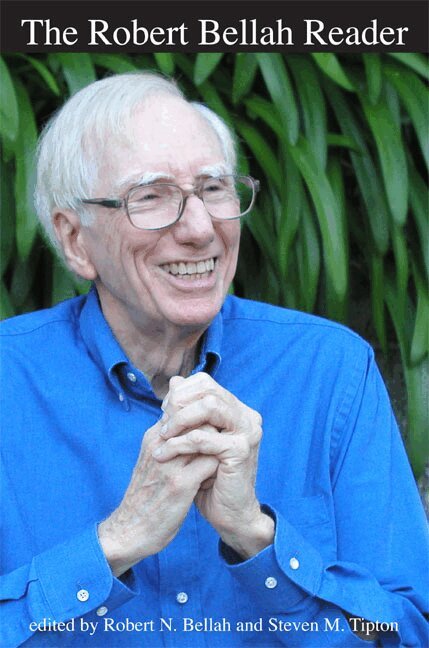
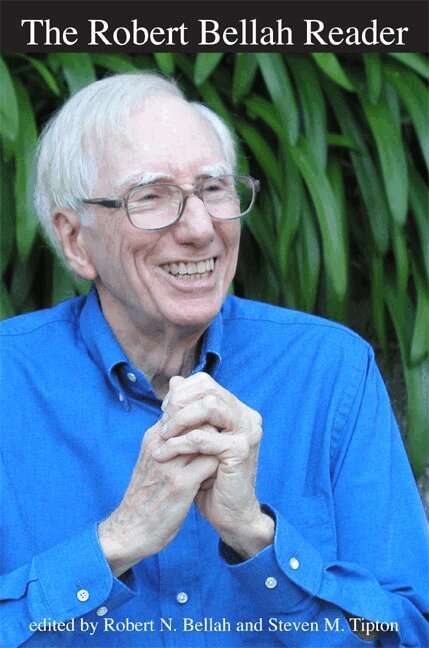
Perhaps best known for his coauthored bestselling books Habits of the Heart and The Good Society, Robert N. Bellah is a truly visionary leader in the social study of religion. For more than four decades, he has examined the role of religion in modern and premodern societies, attempting to discern how religious meaning is formed and how it shapes ethical and political practices. The Robert Bellah Reader brings together twenty-eight of Bellah’s seminal essays. While the essays span a period of more than forty years, nearly half of them were written in the past decade, many in the past few years.The Reader is organized around four central concerns. It seeks to place modernity in theoretical and historical perspective, drawing from major figures in social science, historical and contemporary, from Aristotle and Rousseau through Durkheim and Weber to Habermas and Mary Douglas. It takes the United States to be in some respects the type-case of modernity and in others the most atypical of modern societies, analyzing its common faith in individual freedom and democratic self-government, and its persistent paradoxes of inequality, exclusion, and empire. The Reader is also concerned to test the axiomatic modern assumption that rational cognition and moral evaluation, fact and value, are absolutely divided, arguing instead that they overlap and interact much more than conventional wisdom in the university today usually admits. Finally, it criticizes modernity’s affirmation that faith and knowledge stand even more utterly at odds, arguing instead that their overlap and interaction, obvious in every premodern society, animate the modern world as well.Through such critical and constructive inquiry this Reader probes many of our deepest social and cultural quandaries, quandaries that put modernity itself, with all its immense achievements, at mortal risk. Through the practical self-understanding such inquiry spurs, Bellah shows how we may share responsibility for the world we have made and seek to heal it.
415 kr
Skickas inom 7-10 vardagar
Perhaps best known for his coauthored bestselling books Habits of the Heart and The Good Society, Robert N. Bellah is a truly visionary leader in the social study of religion. For more than four decades, he has examined the role of religion in modern and premodern societies, attempting to discern how religious meaning is formed and how it shapes ethical and political practices. The Robert Bellah Reader brings together twenty-eight of Bellah’s seminal essays. While the essays span a period of more than forty years, nearly half of them were written in the past decade, many in the past few years.The Reader is organized around four central concerns. It seeks to place modernity in theoretical and historical perspective, drawing from major figures in social science, historical and contemporary, from Aristotle and Rousseau through Durkheim and Weber to Habermas and Mary Douglas. It takes the United States to be in some respects the type-case of modernity and in others the most atypical of modern societies, analyzing its common faith in individual freedom and democratic self-government, and its persistent paradoxes of inequality, exclusion, and empire. The Reader is also concerned to test the axiomatic modern assumption that rational cognition and moral evaluation, fact and value, are absolutely divided, arguing instead that they overlap and interact much more than conventional wisdom in the university today usually admits. Finally, it criticizes modernity’s affirmation that faith and knowledge stand even more utterly at odds, arguing instead that their overlap and interaction, obvious in every premodern society, animate the modern world as well.Through such critical and constructive inquiry this Reader probes many of our deepest social and cultural quandaries, quandaries that put modernity itself, with all its immense achievements, at mortal risk. Through the practical self-understanding such inquiry spurs, Bellah shows how we may share responsibility for the world we have made and seek to heal it.
280 kr
Skickas inom 5-8 vardagar