Robert N. Proctor - Böcker
Visar alla böcker från författaren Robert N. Proctor. Handla med fri frakt och snabb leverans.
11 produkter
11 produkter
427 kr
Skickas inom 11-20 vardagar
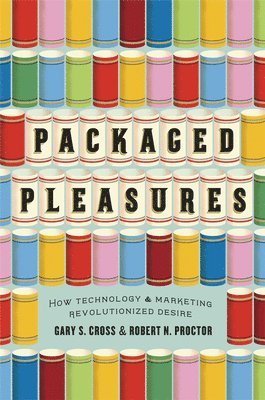
From the candy bar to the cigarette, records to roller coasters, a technological revolution during the last quarter of the nineteenth century precipitated a colossal shift in human consumption and sensual experience. Food, drink, and many other consumer goods came to be mass-produced, bottled, canned, condensed, and distilled, unleashing new and intensified surges of pleasure, delight, thrill - and addictions. In Packaged Pleasures, Gary S. Cross and Robert N. Proctor delve into an unchartered chapter of American history, shedding new light on the origins of modern consumer culture and how technologies have transformed human sensory experience. In the space of only a few decades, junk foods, cigarettes, movies, recorded sound, and thrill rides brought about a revolution in what it means to taste, smell, see, hear, and touch. New techniques of boxing, labeling, and tubing gave consumers virtually unlimited access to pleasures they could simply unwrap and enjoy. Manufacturers generated a seemingly endless stream of sugar-filled, high-fat foods that were delicious but detrimental to health. Mechanically rolled cigarettes entered the market and quickly addicted millions.And many other packaged pleasures dulled or displaced natural and social delights. Yet many of these same new technologies also offered convenient and effective medicines, unprecedented opportunities to enjoy music and the visual arts, and more hygienic, varied, and nutritious food and drink. For better or for worse, sensation became mechanized, commercialized, and, to a large extent, democratized by being made cheap and accessible. Cross and Proctor have delivered an ingeniously constructed history of consumerism and consumer technology that will make us all rethink some of our favorite things.
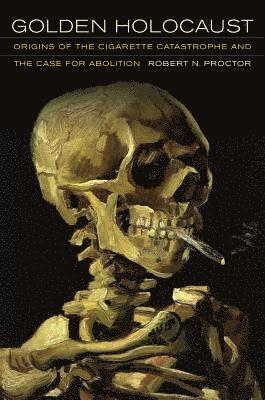
Golden Holocaust
Origins of the Cigarette Catastrophe and the Case for Abolition
Inbunden, Engelska, 2012
331 kr
Skickas inom 7-10 vardagar
The cigarette is the deadliest artifact in the history of human civilization. It is also one of the most beguiling, thanks to more than a century of manipulation at the hands of tobacco industry chemists. In "Golden Holocaust", Robert N. Proctor draws on reams of formerly-secret industry documents to explore how the cigarette came to be the most widely-used drug on the planet, with six trillion sticks sold per year. He paints a harrowing picture of tobacco manufacturers conspiring to block the recognition of tobacco-cancer hazards, even as they ensnare legions of scientists and politicians in a web of denial. Proctor tells heretofore untold stories of fraud and subterfuge, and he makes the strongest case to date for a simple yet ambitious remedy: a ban on the manufacture and sale of cigarettes.
331 kr
Skickas inom 7-10 vardagar
Scholars exploring the history of science under the Nazis have generally concentrated on the Nazi destruction of science or the corruption of intellectual and liberal values. Racial Hygiene focuses on how scientists themselves participated in the construction of Nazi racial policy. Robert Proctor demonstrates that the common picture of a passive scientific community coerced into cooperation with the Nazis fails to grasp the reality of what actually happened—namely, that many of the political initiatives of the Nazis arose from within the scientific community, and that medical scientists actively designed and administered key elements of National Socialist policy.The book presents the most comprehensive account to date of German medical involvement in the sterilization and castration laws, the laws banning marriage between Jews and non-Jews, and the massive program to destroy “lives not worth living.” The study traces attempts on the part of doctors to conceive of the “Jewish problem” as a “medical problem,” and how medical journals openly discussed the need to find a “final solution” to Germany’s Jewish and gypsy “problems.”Proctor makes us aware that such thinking was not unique to Germany. The social Darwinism of the late nineteenth century in America and Europe gave rise to theories of racial hygiene that were embraced by enthusiasts of various nationalities in the hope of breeding a better, healthier, stronger race of people. Proctor also presents an account of the “organic” health movement that flourished under the Nazis, including campaigns to reduce smoking and drinking, and efforts to require bakeries to produce whole-grain bread. A separate chapter is devoted to the emergence of a resistance movement among doctors in the Association of Socialist Physicians. The book is based on a close analysis of contemporary documents, including German state archives and more than two hundred medical journals published during the period.Proctor has set out not merely to tell a story but also to urge reflection on what might be called the “political philosophy of science”—how movements that shape the policies of nations can also shape the structure and priorities of science. The broad implications of this book make it of consequence not only to historians, physicians, and people concerned with the history and philosophy of science, but also to those interested in science policy and medical ethics.
919 kr
Skickas inom 10-15 vardagar
Why have scientists shied away from politics, or defended their work as value free? How has the ideal of neutrality come to dominate the world of science? These are some of the central questions that Robert Proctor addresses in his study of the politics of modern science.Value-Free Science? emphasizes the importance of understanding the political origins and impact of scientific ideas. Proctor lucidly demonstrates how value-neutrality is a reaction to larger political developments, including the use of science by government and industry, the specialization of professional disciplines, and the efforts to stifle intellectual freedoms or to politicize the world of the academy.The first part of the book traces the origins of value-neutrality prior to the eighteenth century. Plato and Aristotle saw contemplative thought as superior to practical action, and this separation of theory and practice is still invoked today in defense of "neutral science." In the seventeenth century the Baconian search for useful knowledge allowed a new and closer tie between theory and practice, but it also isolated moral knowledge from natural philosophy. Another version of neutrality was introduced by the mechanical conception of the universe, in which the idea of a benevolent, human-centered cosmos was replaced with a "devalorized" view of nature.The central part of the book explores the exclusion of politics and morals with the emergence of the social sciences. Proctor highlights the case of Germany, where the ideal of value-neutrality was first articulated in modern form by social scientists seeking to attack or defend Marxism, feminism, and other social movements. He traces the rise and fall of positivist ethical and economic theory, showing that arguments for value-free science often mask concrete political maneuvers. Finally, he reviews critiques of science that have been voiced in recent debates over critical issues in agricultural science, military research, health and medicine, and biological determinism.This provocative book will interest anyone seeking ways to reconcile the ideals of scientific freedom and social responsibility.
302 kr
Skickas inom 10-15 vardagar
What don't we know, and why don't we know it? What keeps ignorance alive, or allows it to be used as a political instrument? Agnotology—the study of ignorance—provides a new theoretical perspective to broaden traditional questions about "how we know" to ask: Why don't we know what we don't know? The essays assembled in Agnotology show that ignorance is often more than just an absence of knowledge; it can also be the outcome of cultural and political struggles. Ignorance has a history and a political geography, but there are also things people don't want you to know ("Doubt is our product" is the tobacco industry slogan). Individual chapters treat examples from the realms of global climate change, military secrecy, female orgasm, environmental denialism, Native American paleontology, theoretical archaeology, racial ignorance, and more. The goal of this volume is to better understand how and why various forms of knowing do not come to be, or have disappeared, or have become invisible.
303 kr
Skickas inom 5-8 vardagar
274 kr
Skickas inom 5-8 vardagar
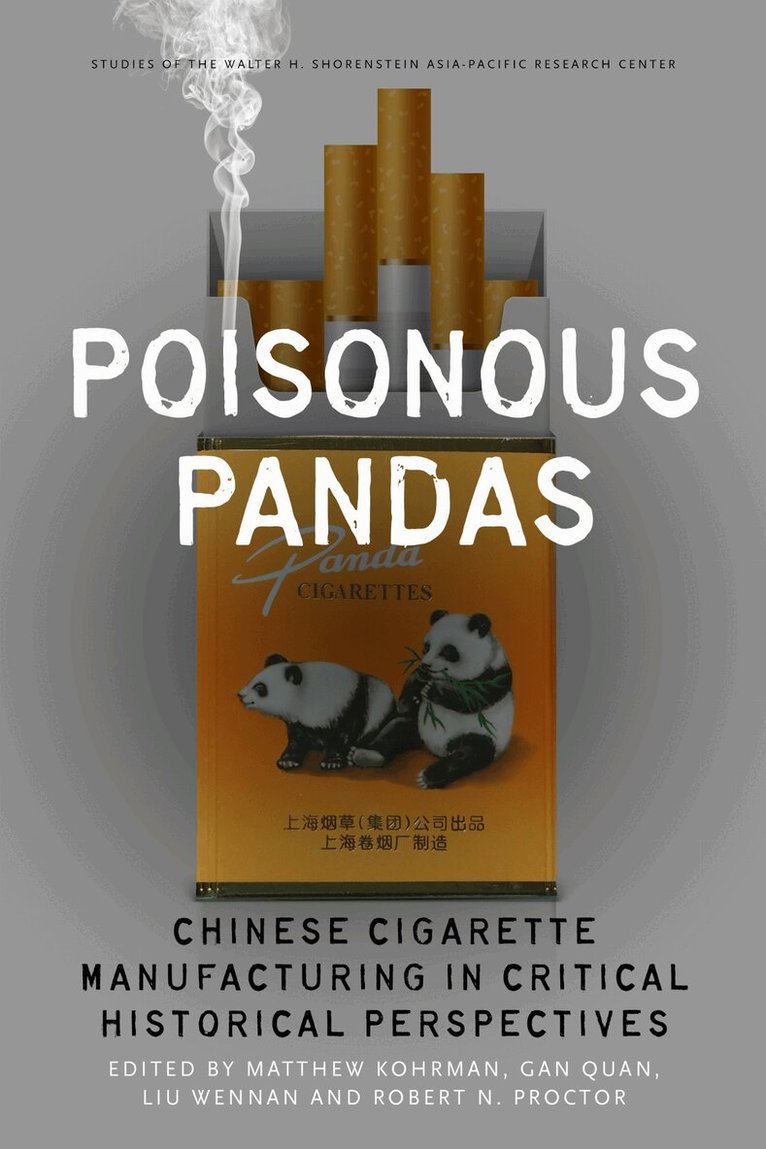
Poisonous Pandas
Chinese Cigarette Manufacturing in Critical Historical Perspectives
Inbunden, Engelska, 2018
1 302 kr
Skickas inom 7-10 vardagar
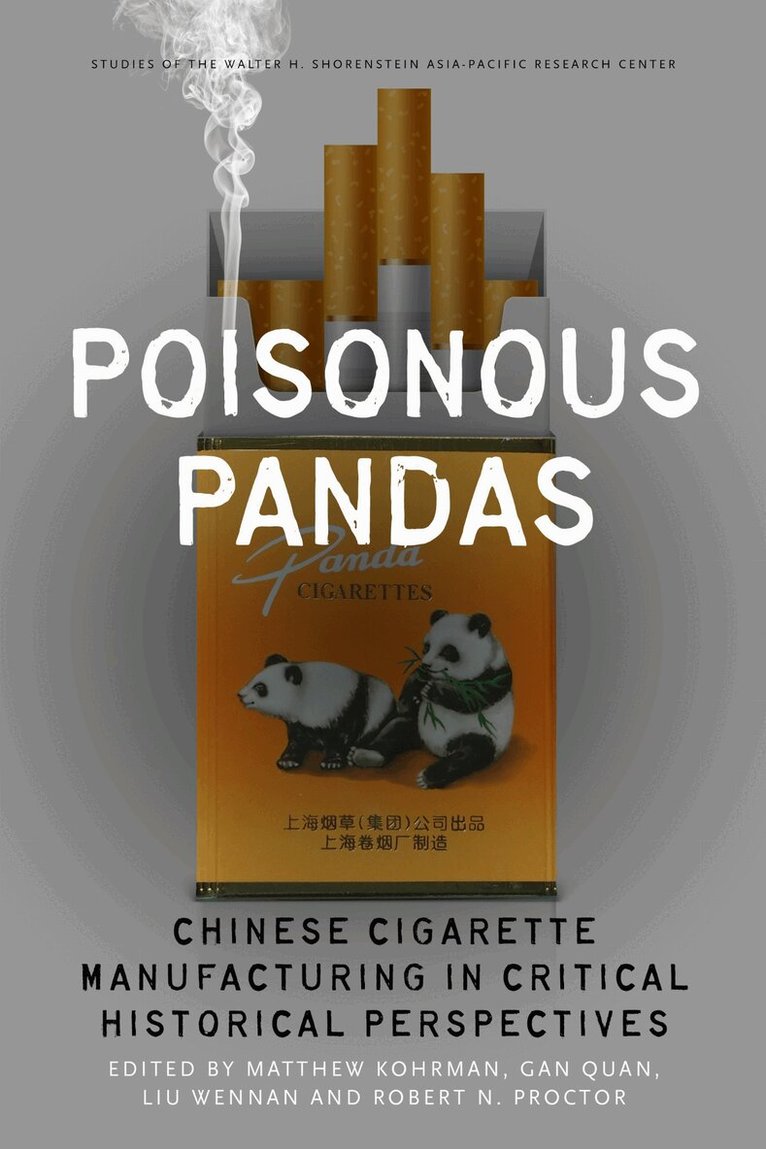
A favorite icon for cigarette manufacturers across China since the mid-twentieth century has been the panda, with factories from Shanghai to Sichuan using cuddly cliché to market tobacco products. The proliferation of panda-branded cigarettes coincides with profound, yet poorly appreciated, shifts in the worldwide tobacco trade. Over the last fifty years, transnational tobacco companies and their allies have fueled a tripling of the world's annual consumption of cigarettes. At the forefront is the China National Tobacco Corporation, now producing forty percent of cigarettes sold globally. What's enabled the manufacturing of cigarettes in China to flourish since the time of Mao and to prosper even amidst public health condemnation of smoking? In Poisonous Pandas, an interdisciplinary group of scholars comes together to tell that story. They offer novel portraits of people within the Chinese polity—government leaders, scientists, tax officials, artists, museum curators, and soldiers—who have experimentally revamped the country's pre-Communist cigarette supply chain and fitfully expanded its political, economic, and cultural influence. These portraits cut against the grain of what contemporary tobacco-control experts typically study, opening a vital new window on tobacco—the single largest cause of preventable death worldwide today.
Poisonous Pandas
Chinese Cigarette Manufacturing in Critical Historical Perspectives
Häftad, Engelska, 2018
317 kr
Skickas inom 7-10 vardagar
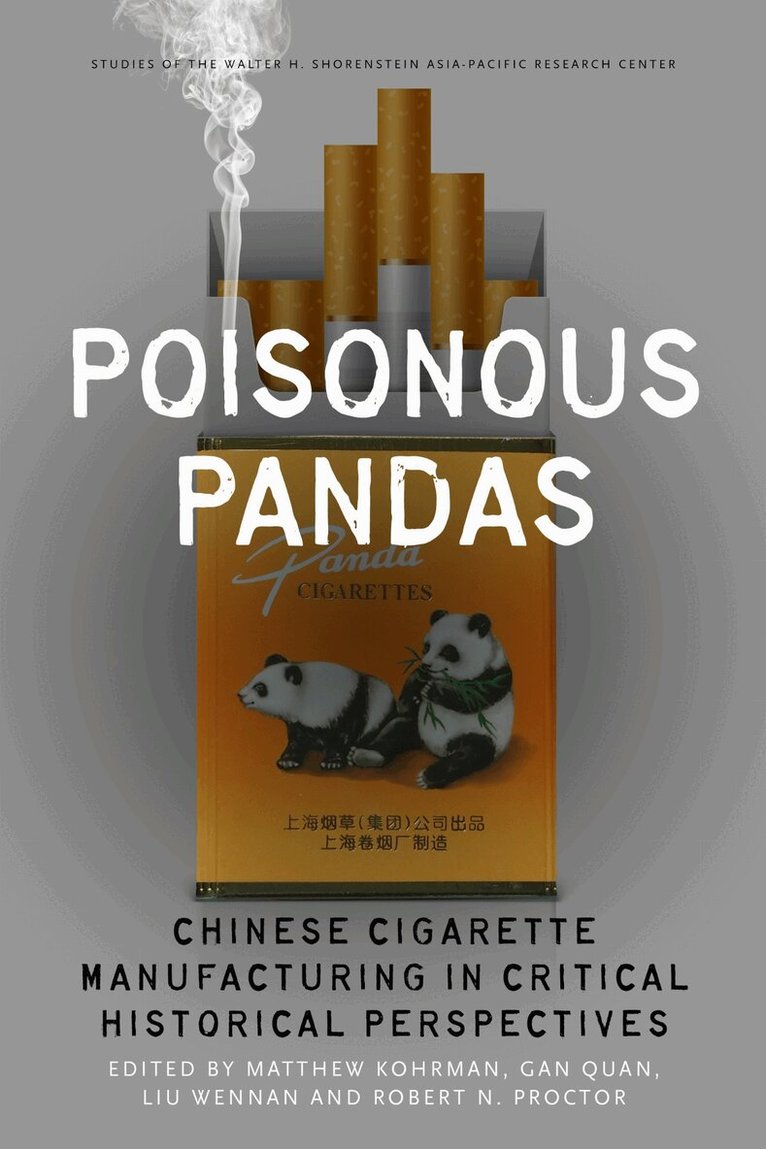
A favorite icon for cigarette manufacturers across China since the mid-twentieth century has been the panda, with factories from Shanghai to Sichuan using cuddly cliché to market tobacco products. The proliferation of panda-branded cigarettes coincides with profound, yet poorly appreciated, shifts in the worldwide tobacco trade. Over the last fifty years, transnational tobacco companies and their allies have fueled a tripling of the world's annual consumption of cigarettes. At the forefront is the China National Tobacco Corporation, now producing forty percent of cigarettes sold globally. What's enabled the manufacturing of cigarettes in China to flourish since the time of Mao and to prosper even amidst public health condemnation of smoking? In Poisonous Pandas, an interdisciplinary group of scholars comes together to tell that story. They offer novel portraits of people within the Chinese polity—government leaders, scientists, tax officials, artists, museum curators, and soldiers—who have experimentally revamped the country's pre-Communist cigarette supply chain and fitfully expanded its political, economic, and cultural influence. These portraits cut against the grain of what contemporary tobacco-control experts typically study, opening a vital new window on tobacco—the single largest cause of preventable death worldwide today.
1 140 kr
Skickas inom 7-10 vardagar
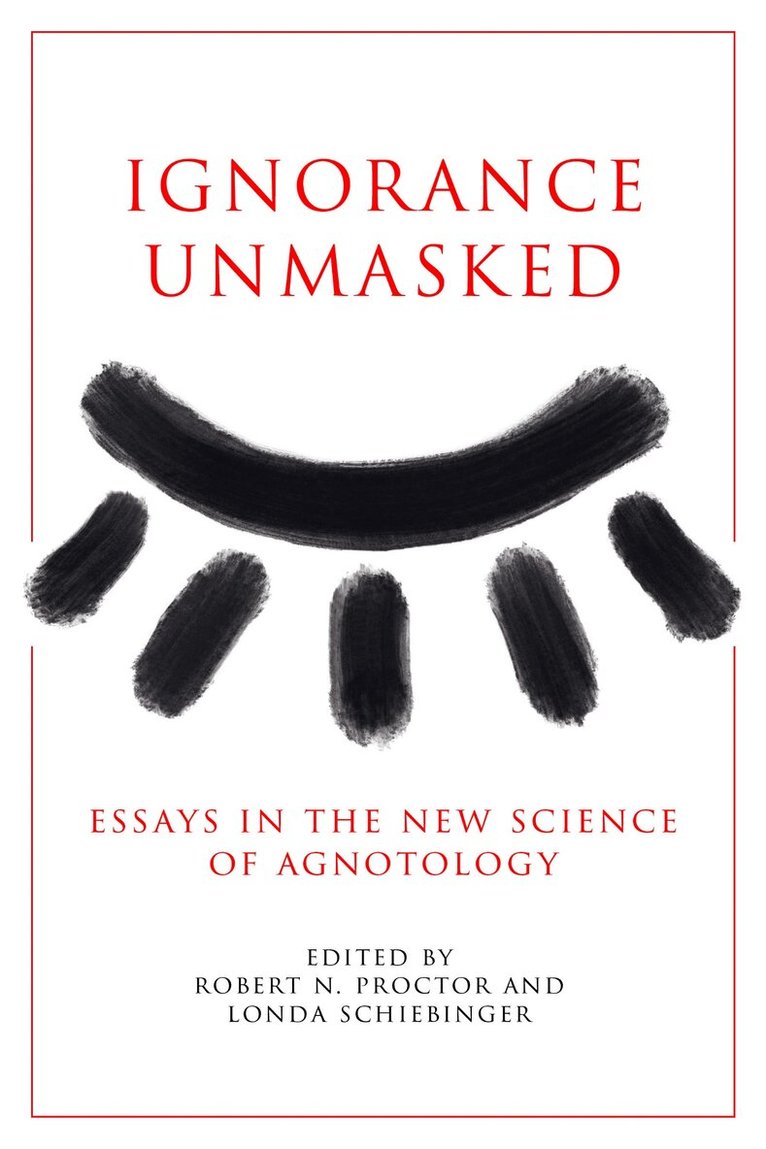
We live in an age of ignorance. This book offers a guide to how we got here—and how we might escape.From obfuscations of climate science to the myriad deceptions inhering in language, Ignorance Unmasked explores how agnotology—the study of ignorance—can help us better grasp: Why don't we know what we don't know? What are the obstacles to knowledge, and how might those be overcome?Ignorance has countless agents and authors; it gets deliberately manufactured and widely disseminated. In a provocative set of essays, this book engages climate change and public health, algorithmic amplification of misinformation, deep fakes and data obsolescence, the origins of free market fundamentalism and gun industry deceptions, along with the ignorance produced by military trauma, sugar and meat agnotology, environmental malfeasance, and the forgetting of the Nakba. It helps us better understand how and why knowledge gets erased, and how rectifying such ignorance can enlarge human liberties and planetary health. Contributors: Nadia Abu El-Haj, Daniel Akselrad, Erik M. Conway, John Donohue, Hany Farid, Benjamin Franta, Peter Galison, Jennifer Jacquet, Caroline A. Jones, Robert Lustig, Naomi Oreskes, Robert N. Proctor, Rosemary Sayigh, Londa Schiebinger, and Nanna Bonde Thylstrup
277 kr
Skickas inom 7-10 vardagar
We live in an age of ignorance. This book offers a guide to how we got here—and how we might escape.From obfuscations of climate science to the myriad deceptions inhering in language, Ignorance Unmasked explores how agnotology—the study of ignorance—can help us better grasp: Why don't we know what we don't know? What are the obstacles to knowledge, and how might those be overcome?Ignorance has countless agents and authors; it gets deliberately manufactured and widely disseminated. In a provocative set of essays, this book engages climate change and public health, algorithmic amplification of misinformation, deep fakes and data obsolescence, the origins of free market fundamentalism and gun industry deceptions, along with the ignorance produced by military trauma, sugar and meat agnotology, environmental malfeasance, and the forgetting of the Nakba. It helps us better understand how and why knowledge gets erased, and how rectifying such ignorance can enlarge human liberties and planetary health. Contributors: Nadia Abu El-Haj, Daniel Akselrad, Erik M. Conway, John Donohue, Hany Farid, Benjamin Franta, Peter Galison, Jennifer Jacquet, Caroline A. Jones, Robert Lustig, Naomi Oreskes, Robert N. Proctor, Rosemary Sayigh, Londa Schiebinger, and Nanna Bonde Thylstrup