Robert Paarlberg - Böcker
Visar alla böcker från författaren Robert Paarlberg. Handla med fri frakt och snabb leverans.
7 produkter
7 produkter
505 kr
Skickas inom 7-10 vardagar
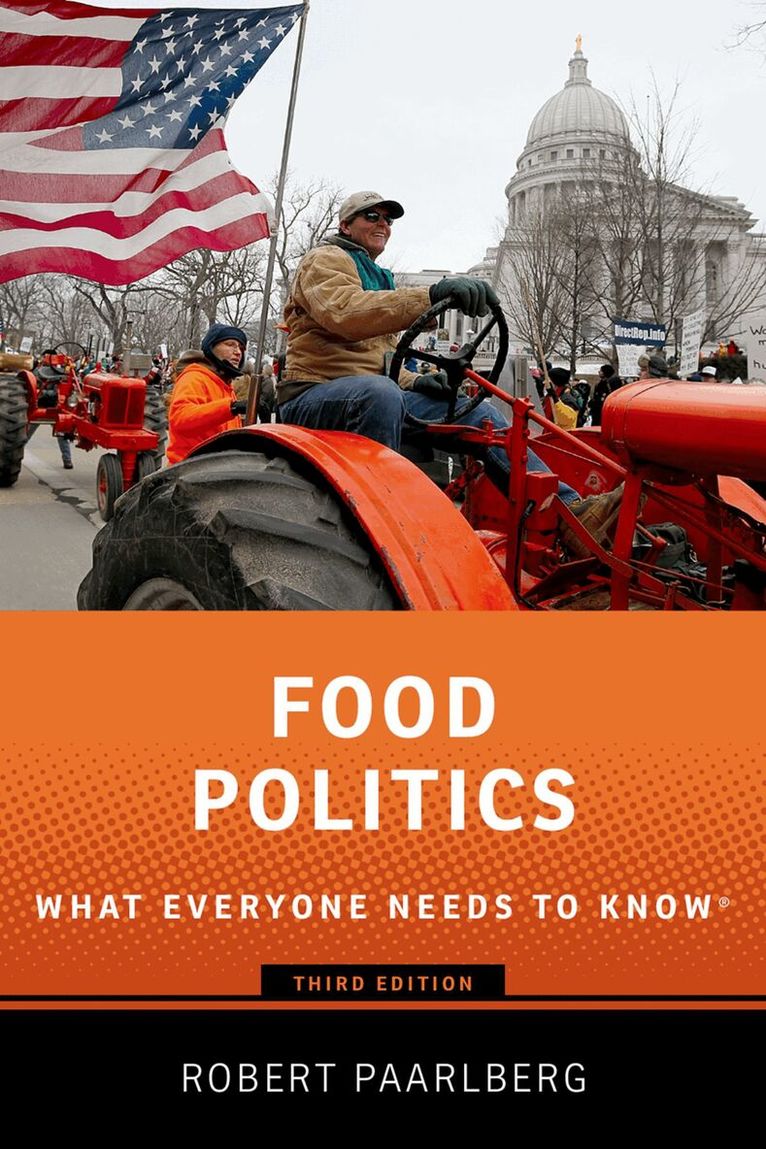
Covering the many important changes in food markets and food politics that have shaped both global and local farming and eating over the past decade, this compact and authoritative primer lays out everything you need to know to understand today's global food landscape.The politics of food is changing fast. In rich countries, obesity is now a more serious problem than hunger. Consumers once satisfied with cheap and convenient food now want food that is also safe, nutritious, fresh, and grown by local farmers using fewer chemicals. Heavily subsidized and underregulated commercial farmers are facing stronger push back from environmentalists and consumer activists, and food companies are under the microscope. Where does power lie in this increasingly complex global food system? Moreover, what is the future of food politics, both in the United States and beyond? The third edition of Food Politics: What Everyone Needs to Know® has been thoroughly updated to reflect the latest developments and research on today's global food landscape, including the realities of food markets, farm production methods, food manufacturing, and dietary health challenges. New material covers the rise of China in world food markets and global food politics, the unabated and increasing risks to farming from climate change, the impact COVID-19 had on incomes and hunger, the equally shocking impact from the war in Ukraine on food prices and trade, and surprising scientific and technical breakthroughs such as the genome editing of crops (CRISPR) and the marketing of cell-cultured (animal-free) meats. As well, each chapter has been updated with new data on population growth, hunger and food security, trade conflicts, humanitarian aid, carbon farming, regenerative agriculture, holistic grazing, animal welfare, genetically engineered food, and more. Discussing the politics and policies that continue to shape our contemporary food system, Robert Paarlberg challenges myths and critiques more than a few of today's fashionable beliefs about farming and food. For those ready to have their thinking about food politics informed, but also challenged, this is the book to read.
142 kr
Skickas
Covering the many important changes in food markets and food politics that have shaped both global and local farming and eating over the past decade, this compact and authoritative primer lays out everything you need to know to understand today's global food landscape.The politics of food is changing fast. In rich countries, obesity is now a more serious problem than hunger. Consumers once satisfied with cheap and convenient food now want food that is also safe, nutritious, fresh, and grown by local farmers using fewer chemicals. Heavily subsidized and underregulated commercial farmers are facing stronger push back from environmentalists and consumer activists, and food companies are under the microscope. Where does power lie in this increasingly complex global food system? Moreover, what is the future of food politics, both in the United States and beyond? The third edition of Food Politics: What Everyone Needs to Know® has been thoroughly updated to reflect the latest developments and research on today's global food landscape, including the realities of food markets, farm production methods, food manufacturing, and dietary health challenges. New material covers the rise of China in world food markets and global food politics, the unabated and increasing risks to farming from climate change, the impact COVID-19 had on incomes and hunger, the equally shocking impact from the war in Ukraine on food prices and trade, and surprising scientific and technical breakthroughs such as the genome editing of crops (CRISPR) and the marketing of cell-cultured (animal-free) meats. As well, each chapter has been updated with new data on population growth, hunger and food security, trade conflicts, humanitarian aid, carbon farming, regenerative agriculture, holistic grazing, animal welfare, genetically engineered food, and more. Discussing the politics and policies that continue to shape our contemporary food system, Robert Paarlberg challenges myths and critiques more than a few of today's fashionable beliefs about farming and food. For those ready to have their thinking about food politics informed, but also challenged, this is the book to read.
185 kr
Skickas inom 5-8 vardagar
The politics of food is changing fast. In rich countries, obesity is now a more serious problem than hunger. Consumers once satisfied with cheap and convenient food now want food that is also safe, nutritious, fresh, and grown by local farmers using fewer chemicals. Heavily subsidized and underregulated commercial farmers are facing stronger push back from environmentalists and consumer activists, and food companies are under the microscope. Meanwhile, agricultural success in Asia has spurred income growth and dietary enrichment, but agricultural failure in Africa has left one-third of all citizens undernourished - and the international markets that link these diverse regions together are subject to sudden disruption. The second edition of Food Politics has been thoroughly updated to reflect the latest developments and research on today's global food landscape, including biofuels, the international food market, food aid, obesity, food retailing, urban agriculture, and food safety. The second edition also features an expanded discussion of the links between water, climate change, and food, as well as farming and the environment. New chapters look at livestock, meat and fish and the future of food politics. Paarlberg's book challenges myths and critiques more than a few of today's fashionable beliefs about farming and food. For those ready to have their thinking about food politics informed and also challenged, this is the book to read.
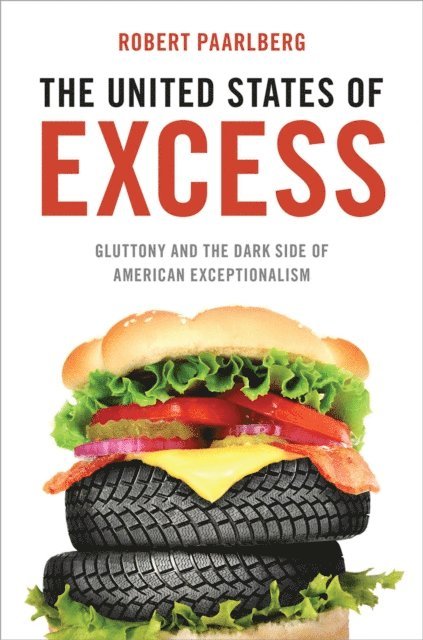
The United States of Excess
Gluttony and the Dark Side of American Exceptionalism
Inbunden, Engelska, 2015
294 kr
Skickas inom 5-8 vardagar
Americans take pride in their "exceptionalism," not always aware that exceptional excess is part of the package. Compared to other wealthy countries, for example, America stands out as a gluttonous over-consumer: emitting twice as much carbon dioxide per capita as the average for the 27 nations of the European Union, and boasting obesity prevalence numbers that are double the industrial world average. But this is not all; America is also exceptional in the weakness of its national policy efforts to correct the challenges of obesity and climate change. For Paarlberg, these three failures -- in food and fuel consumption and policy response -- can be linked to the country's unusual material and demographic circumstances, singular political institutions, and unique political culture. American society is defined by the ideals of personal freedom and material abundance, conditions that elected leaders must always pledge to enhance, not diminish. Thus, as Paarlberg argues, democratic governments are unable to take effective preventative action against either climate change or obesity. Both crises will continue to worsen, forcing governments to gradually shift from their posturing of taking preventative action toward implicit acceptance and costly adaptation measures. As Paarlberg shows in America's Excess, the US's pivot toward adaptation is important because it will produce dramatically unequal outcomes both at home and abroad. An effort to live with accelerating climate change may be feasible for the United States over a decade or two, when investments in adaptive technologies and infrastructures become affordable, but it will increase the vulnerability of poor countries that are unable to protect themselves. An American decision to live with obesity produces a different kind of inequity. It does little harm to foreign nations, but it will worsen outcomes for the obesity-prone segment of America's population, especially racial minorities and the poor.Under such circumstances, and absent an unforeseen techno-scientific breakthrough in medicine or energy, the new challenge of good government will be to ensure equity between the wealthy and poor when making public investments to treat obesity or to protect vulnerable communities from extreme weather.
806 kr
Skickas inom 11-20 vardagar
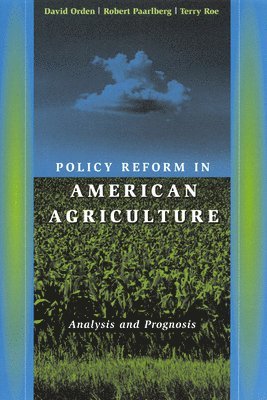
Despite substantial transformations in American agriculture, farm programme spending remains a closely guarded prerogative of United States agricultural policy. This work examines both the history of farm subsidies and the contemporary relevance of traditional farm programmes to today's agricultural industries. The text analyzes the mixed performance of past agricultural support programs, reviews the late-1990s debate concerning farm policies, and critically assesses the often staunch political resistance to much-needed policy reforms. Casting a keen eye toward recent developments on both national and international fronts, the authors consider the ramifications of the 1996 Federal Agriculture Improvement and Reform (FAIR) Act as well as multilateral efforts to gain agricultural reform during the Uruguay Round of GATT. Their prognosis hinges upon both the continued growth and competitiveness of the world market and, perhaps more importantly, the ongoing commitment of congressional reform advocates.
155 kr
Skickas
299 kr
Skickas inom 10-15 vardagar
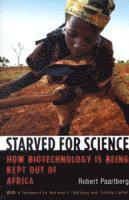
Listen to a short interview with Robert PaarlbergHost: Chris Gondek | Producer: Heron & CraneHeading upcountry in Africa to visit small farms is absolutely exhilarating given the dramatic beauty of big skies, red soil, and arid vistas, but eventually the two-lane tarmac narrows to rutted dirt, and the journey must continue on foot. The farmers you eventually meet are mostly women, hardworking but visibly poor. They have no improved seeds, no chemical fertilizers, no irrigation, and with their meager crops they earn less than a dollar a day. Many are malnourished. Nearly two-thirds of Africans are employed in agriculture, yet on a per-capita basis they produce roughly 20 percent less than they did in 1970. Although modern agricultural science was the key to reducing rural poverty in Asia, modern farm science—including biotechnology—has recently been kept out of Africa. In Starved for Science Robert Paarlberg explains why poor African farmers are denied access to productive technologies, particularly genetically engineered seeds with improved resistance to insects and drought. He traces this obstacle to the current opposition to farm science in prosperous countries. Having embraced agricultural science to become well-fed themselves, those in wealthy countries are now instructing Africans—on the most dubious grounds—not to do the same. In a book sure to generate intense debate, Paarlberg details how this cultural turn against agricultural science among affluent societies is now being exported, inappropriately, to Africa. Those who are opposed to the use of agricultural technologies are telling African farmers that, in effect, it would be just as well for them to remain poor.