Robert R. Williams – författare
Visar alla böcker från författaren Robert R. Williams. Handla med fri frakt och snabb leverans.
20 produkter
20 produkter
E-bok
PDF, Engelska, 20121 442 kr
Läs direkt efter köp
Hegel and Nietzsche are two of the most important figures in philosophy and religion. Robert R. Williams challenges the view that they are mutually exclusive. He identifies four areas of convergence. First, Hegel and Nietzsche express and define modern interest in tragedy as a philosophical topic. Each seeks to correct the traditional philosophical and theological suppression of a tragic view of existence. This suppression of the tragic is required by the moralvision of the world, both in the tradition and in Kant''s practical philosophy and its postulates. For both Hegel and Nietzsche, the moral vision of the world is a projection of spurious, life-negating values that Nietzsche calls the ascetic ideal, and that Hegel identifies as the spurious infinite. Themoral God is the enforcer of morality. Second, while acknowledging a tragic dimension of existence, Hegel and Nietzsche nevertheless affirm that existence is good in spite of suffering. Both affirm a vision of human freedom as open to otherness and requiring recognition and community. Struggle and contestation have affirmative significance for both. Third, while the moral God is dead, this does not put an end to the God-question. Theology must incorporate the death of God as its own theme. Theunion of God and death expressing divine love is for Hegel the basic speculative intuition. This implies a dipolar, panentheistic concept of a tragic, suffering God, who risks, loves, and reconciles. Fourth, Williams argues that both Hegel and Nietzsche pursue theodicy, not as a justification of themoral God, but rather as a question of the meaningfulness and goodness of existence despite nihilism and despite tragic conflict and suffering. The inseparability of divine love and anguish means that reconciliation is no conflict-free harmony, but includes a paradoxical tragic dissonance: reconciliation is a disquieted bliss in disaster.
E-bok
PDF, Engelska, 20171 246 kr
Läs direkt efter köp
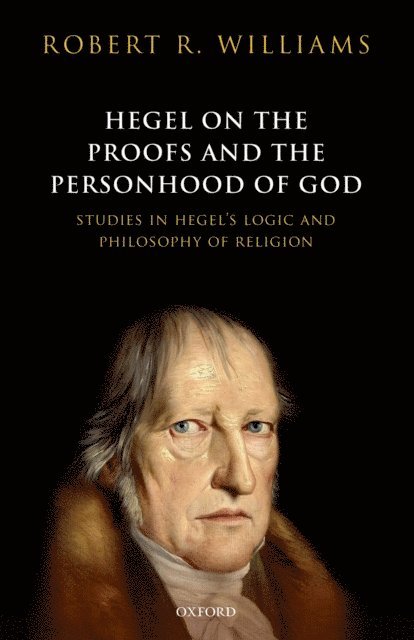
Hegel''s analysis of his culture identifies nihilistic tendencies in modernity i.e., the death of God and end of philosophy. Philosophy and religion have both become hollowed out to such an extent that traditional disputes between faith and reason become impossible because neither any longer possesses any content about which there could be any dispute; this is nihilism. Hegel responds to this situation with a renewal of the ontological argument (Logic) andontotheology, which takes the form of philosophical trinitarianism. Hegel on the Proofs and the Personhood of God examines Hegel''s recasting of the theological proofs as the elevation of spirit to God and defense of their content against the criticisms of Kant and Jacobi. It also considers the issue of divinepersonhood in the Logic and Philosophy of Religion. This issue reflects Hegel''s antiformalism that seeks to win back determinate content for truth (Logic) and the concept of God. While the personhood of God was the issue that divided the Hegelian school into left-wing and right-wing factions, both sides fail as interpretations. The center Hegelian view is both virtually unknown, and the most faithful to Hegel''s project. What ties the two parts of the book together-Hegel''s philosophicaltrinitarianism or identity as unity in and through difference (Logic) and his theological trinitarianism, or incarnation, trinity, reconciliation, and community (Philosophy of Religion)-is Hegel''s Logic of the Concept. Hegel''s metaphysical view of personhood is identified with the singularity (Einzelheit) ofthe concept. This includes as its speculative nucleus the concept of the true infinite: the unity in difference of infinite/finite, thought and being, divine-human unity (incarnation and trinity), God as spirit in his community.
E-bok
Engelska, 20171 246 kr
Läs direkt efter köp
Hegel''s analysis of his culture identifies nihilistic tendencies in modernity i.e., the death of God and end of philosophy. Philosophy and religion have both become hollowed out to such an extent that traditional disputes between faith and reason become impossible because neither any longer possesses any content about which there could be any dispute; this is nihilism. Hegel responds to this situation with a renewal of the ontological argument (Logic) andontotheology, which takes the form of philosophical trinitarianism. Hegel on the Proofs and the Personhood of God examines Hegel''s recasting of the theological proofs as the elevation of spirit to God and defense of their content against the criticisms of Kant and Jacobi. It also considers the issue of divinepersonhood in the Logic and Philosophy of Religion. This issue reflects Hegel''s antiformalism that seeks to win back determinate content for truth (Logic) and the concept of God. While the personhood of God was the issue that divided the Hegelian school into left-wing and right-wing factions, both sides fail as interpretations. The center Hegelian view is both virtually unknown, and the most faithful to Hegel''s project. What ties the two parts of the book together-Hegel''s philosophicaltrinitarianism or identity as unity in and through difference (Logic) and his theological trinitarianism, or incarnation, trinity, reconciliation, and community (Philosophy of Religion)-is Hegel''s Logic of the Concept. Hegel''s metaphysical view of personhood is identified with the singularity (Einzelheit) ofthe concept. This includes as its speculative nucleus the concept of the true infinite: the unity in difference of infinite/finite, thought and being, divine-human unity (incarnation and trinity), God as spirit in his community.
Inbunden, Engelska, 2017
1 759 kr
Skickas inom 5-8 vardagar
Hegel's analysis of his culture identifies nihilistic tendencies in modernity i.e., the death of God and end of philosophy. Philosophy and religion have both become hollowed out to such an extent that traditional disputes between faith and reason become impossible because neither any longer possesses any content about which there could be any dispute; this is nihilism. Hegel responds to this situation with a renewal of the ontological argument (Logic) and ontotheology, which takes the form of philosophical trinitarianism. Hegel on the Proofs and the Personhood of God examines Hegel's recasting of the theological proofs as the elevation of spirit to God and defense of their content against the criticisms of Kant and Jacobi. It also considers the issue of divine personhood in the Logic and Philosophy of Religion. This issue reflects Hegel's antiformalism that seeks to win back determinate content for truth (Logic) and the concept of God. While the personhood of God was the issue that divided the Hegelian school into left-wing and right-wing factions, both sides fail as interpretations. The center Hegelian view is both virtually unknown, and the most faithful to Hegel's project. What ties the two parts of the book together-Hegel's philosophical trinitarianism or identity as unity in and through difference (Logic) and his theological trinitarianism, or incarnation, trinity, reconciliation, and community (Philosophy of Religion)-is Hegel's Logic of the Concept. Hegel's metaphysical view of personhood is identified with the singularity (Einzelheit) of the concept. This includes as its speculative nucleus the concept of the true infinite: the unity in difference of infinite/finite, thought and being, divine-human unity (incarnation and trinity), God as spirit in his community.
Inbunden, Engelska, 2007
1 884 kr
Skickas inom 5-8 vardagar
The Hegel Lectures SeriesSeries Editor: Peter C. Hodgson Hegel's lectures have had as great a historical impact as the works he himself published. Important elements of his system are elaborated only in the lectures, especially those given in Berlin during the last decade of his life. The original editors conflated materials from different sources and dates, obscuring the development and logic of Hegel's thought. The Hegel Lectures series is based on a selection of extant and recently discovered transcripts and manuscripts. The original lecture series are reconstructed so that the structure of Hegel's argument can be followed. Each volume presents an accurate new translation accompanied by an editorial introduction and annotations on the text, which make possible the identification of Hegel's many allusions and sources. Lectures on the Philosophy of Spirit 1827-8Robert Williams provides the first full view of Hegel's Philosophy of Subjective Spirit in his translation of this recently discovered manuscript. Hegel's lectures of 1827 go far beyond the previously published Encyclopedia outline, and provide a new introduction to the Philosophy of Spirit. Since they come from a single source, they are not editorial constructions like the previously published supplemental materials (Zusaetze). The new material provides the only explicit grounding of the concept of right presupposed by the Philosophy of Right, grounds Hegel's account of the virtues in love and mutual recognition, gives further insight into Hegel's theory of madness/dementia, and elaborates Hegel's difficult account of the role of mechanical memory in transcendental deduction of objectivity. The edition should stimulate and open up interest in Hegel's Philosophy of Spirit, a neglected area in Hegel scholarship, but one to which Hegel himself attached special importance and significance.
Inbunden, Engelska, 2012
1 385 kr
Skickas inom 5-8 vardagar
Hegel and Nietzsche are two of the most important figures in philosophy and religion. Robert R. Williams challenges the view that they are mutually exclusive. He identifies four areas of convergence. First, Hegel and Nietzsche express and define modern interest in tragedy as a philosophical topic. Each seeks to correct the traditional philosophical and theological suppression of a tragic view of existence. This suppression of the tragic is required by the moral vision of the world, both in the tradition and in Kant's practical philosophy and its postulates. For both Hegel and Nietzsche, the moral vision of the world is a projection of spurious, life-negating values that Nietzsche calls the ascetic ideal, and that Hegel identifies as the spurious infinite. The moral God is the enforcer of morality. Second, while acknowledging a tragic dimension of existence, Hegel and Nietzsche nevertheless affirm that existence is good in spite of suffering. Both affirm a vision of human freedom as open to otherness and requiring recognition and community. Struggle and contestation have affirmative significance for both. Third, while the moral God is dead, this does not put an end to the God-question. Theology must incorporate the death of God as its own theme. The union of God and death expressing divine love is for Hegel the basic speculative intuition. This implies a dipolar, panentheistic concept of a tragic, suffering God, who risks, loves, and reconciles. Fourth, Williams argues that both Hegel and Nietzsche pursue theodicy, not as a justification of the moral God, but rather as a question of the meaningfulness and goodness of existence despite nihilism and despite tragic conflict and suffering. The inseparability of divine love and anguish means that reconciliation is no conflict-free harmony, but includes a paradoxical tragic dissonance: reconciliation is a disquieted bliss in disaster.
Häftad, Engelska, 2000
330 kr
Skickas inom 5-8 vardagar
In this significant contribution to Hegel scholarship, Robert Williams develops the most comprehensive account to date of Hegel's concept of recognition (Anerkennung). Fichte introduced the concept of recognition as a presupposition of both Rousseau's social contract and Kant's ethics. Williams shows that Hegel appropriated the concept of recognition as the general pattern of his concept of ethical life, breaking with natural law theory yet incorporating the Aristotelian view that rights and virtues are possible only within a certain kind of community. He explores Hegel's intersubjective concept of spirit (Geist) as the product of affirmative mutual recognition and his conception of recognition as the right to have rights. Examining Hegel's Jena manuscripts, his Philosophy of Right, the Phenomenology of Spirit, and other works, Williams shows how the concept of recognition shapes and illumines Hegel's understandings of crime and punishment, morality, the family, the state, sovereignty, international relations, and war.A concluding chapter on the reception and reworking of the concept of recognition by contemporary thinkers including Derrida, Levinas, and Deleuze demonstrates Hegel's continuing centrality to the philosophical concerns of our age.
Häftad, Engelska, 1992
474 kr
Skickas inom 5-8 vardagar
What does it mean to encounter another self, and to be recognized in return?Robert R. Williams offers a powerful and deeply researched exploration of recognition (Anerkennung) as the hidden core of German Idealism. Moving beyond familiar readings, Williams uncovers how Fichte and Hegel develop a rich, intersubjective account of freedom, selfhood, and social life, one that challenges longstanding assumptions about post-Kantian philosophy.Bringing clarity to notoriously difficult texts, Williams reconstructs the emergence of recognition as a dynamic, relational process: from Fichte's notion of the Other as a "summons" to freedom, to Hegel's vision of spirit as a fundamentally social and triadic structure. Along the way, he bridges German Idealism with phenomenology and contemporary debates on the problem of the Other, engaging figures such as Husserl, Sartre, and Levinas.Recognition not only reinterprets Fichte and Hegel, it reshapes how we understand the very foundations of subjectivity, community, and human freedom.
Häftad, Engelska, 2001
450 kr
Skickas inom 5-8 vardagar
Reflects new advances in Hegel scholarship and demonstrates the contemporary relevance of the Philosophy of Right.Beyond Liberalism and Communitarianism is the first collection of essays treating Hegel's social and political philosophy to appear since 1984. Several new books have since been published transcribing Hegel's lectures on the Philosophy of Right. This book reflects these advances in Hegel scholarship and debunks the widely held notion of the totalitarian Hegel. Rather, Hegel's thought is revealed to be an alternative to both liberal individualism and communitarianism. The essays here treat Hegel's critique of morality (Kant), social contract theory, capitalism, poverty, as well as Hegel's views on punishment, freedom, and the ethical character and unity of the idea of the state.
Häftad, Engelska, 1994
337 kr
Skickas inom 3-6 vardagar
Häftad, Engelska, 2020
274 kr
Skickas inom 5-8 vardagar
E-bok
PDF, Engelska, 2020421 kr
Läs direkt efter köp
The Christian Church has continually looked to its beginnings to discover new insights and new strength for the present. Today the interest in early Christianity and its leaders is as lively as it ever was. Those who know these early days never tire in calling today's Church back to the Scriptures and the Spirit directed history of the Church. In this book, Dr. Williams has given the preacher, teacher, and concerned layman a very readable, concise, and helpful guide to the teachings of the early Church leaders. He communicates the exciting quality of Christian theology as it came to expression in the thought and life of men to whom the Christian Church today is greatly in debt, and from whom, with humility, it can continue to learn and find inspirations. The early Church Fathers were concerned, in the words of the Apostle Peter, to make a defense to anyone who called them to account for the hope that was in them. They were concerned, as the Church is today, to understand the faith for themselves and to explain it to those outside the Church. Their answers to the following problems are still relevant: the relationship of God to all the world, redemption, the Trinity, the person of Christ, the relationship between God's will and man's, and the problem of church and state. Today the Church still possesses the faith that overcomes the world and seeks to practice that faith in all of life. Twentieth century Christians can be strengthened in that possession and practice through an acquaintance with the teachings of the early Church Fathers. This book will guide them.
Inbunden, Engelska, 2020
455 kr
Skickas inom 5-8 vardagar
Häftad, Engelska, 2024
161 kr
Skickas inom 5-8 vardagar
Inbunden, Engelska, 2024
240 kr
Skickas inom 5-8 vardagar
Häftad, Engelska, 2025
171 kr
Skickas inom 5-8 vardagar
Inbunden, Engelska, 2025
267 kr
Skickas inom 5-8 vardagar
Inbunden, Engelska, 1992
1 079 kr
Tillfälligt slut
What does it mean to encounter another self, and to be recognized in return?Robert R. Williams offers a powerful and deeply researched exploration of recognition (Anerkennung) as the hidden core of German Idealism. Moving beyond familiar readings, Williams uncovers how Fichte and Hegel develop a rich, intersubjective account of freedom, selfhood, and social life, one that challenges longstanding assumptions about post-Kantian philosophy.Bringing clarity to notoriously difficult texts, Williams reconstructs the emergence of recognition as a dynamic, relational process: from Fichte's notion of the Other as a "summons" to freedom, to Hegel's vision of spirit as a fundamentally social and triadic structure. Along the way, he bridges German Idealism with phenomenology and contemporary debates on the problem of the Other, engaging figures such as Husserl, Sartre, and Levinas.Recognition not only reinterprets Fichte and Hegel, it reshapes how we understand the very foundations of subjectivity, community, and human freedom.
Häftad, Engelska, 2024
150 kr
Tillfälligt slut
Inbunden, Engelska, 2024
259 kr
Tillfälligt slut