Robert Schopp - Böcker
Visar alla böcker från författaren Robert Schopp. Handla med fri frakt och snabb leverans.
6 produkter
6 produkter
987 kr
Skickas inom 10-15 vardagar
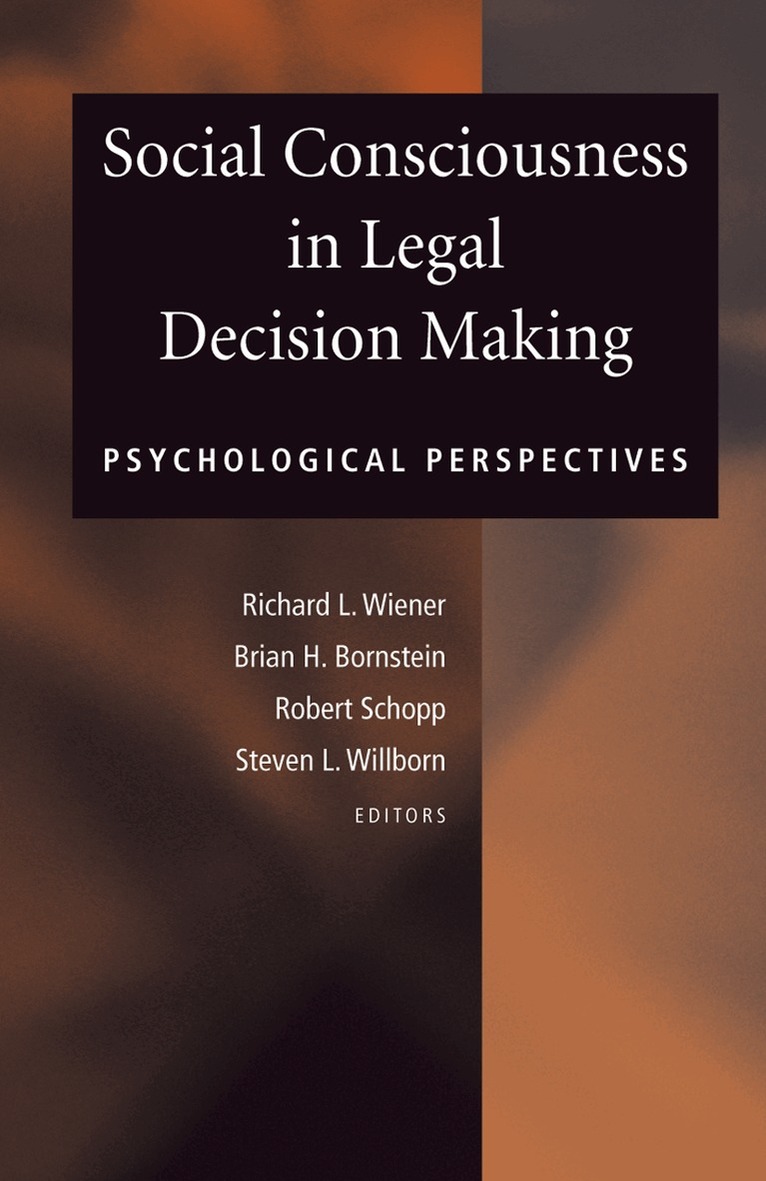
Our basic assumption about the law is that it is designed to operate fairly and openly. But with human beings as the ultimate decision makers, how do we prevent discrimination within the legal arena, and how does the law decide whether others have behaved in a discriminatory manner? Social Consciousness in Legal Decision Making examines four controversial areas involving people’s perceptions of others—racial profiling, affirmative action, workplace harassment, and hate speech/hate crime—from the perspectives of psychology, decision theory, and the law. This book's contributing experts raise these critical questions:How valid are legal assumptions about human behavior?What cognitive processes underlie biased behavior?What do personal experience and situational cues contribute to decision making?How do individuals’ perceptions of the law influence their judgment?Can psychology help legislators write more effective laws?In answering them, the book:Compares rational, descriptive, and normative decision-making models in legal contextsProvides important insights into legal decision making by non-specialists (police, administrators, jurors) Clarifies and broadens the role of social science in the courtsPromotes improved dialogue between the field of psychology and law to create a more socially aware jurisprudence.Social Consciousness in Legal Decision Making invites the legal and psychology communities to work together in solving some of our most pressing social problems.
497 kr
Skickas inom 10-15 vardagar
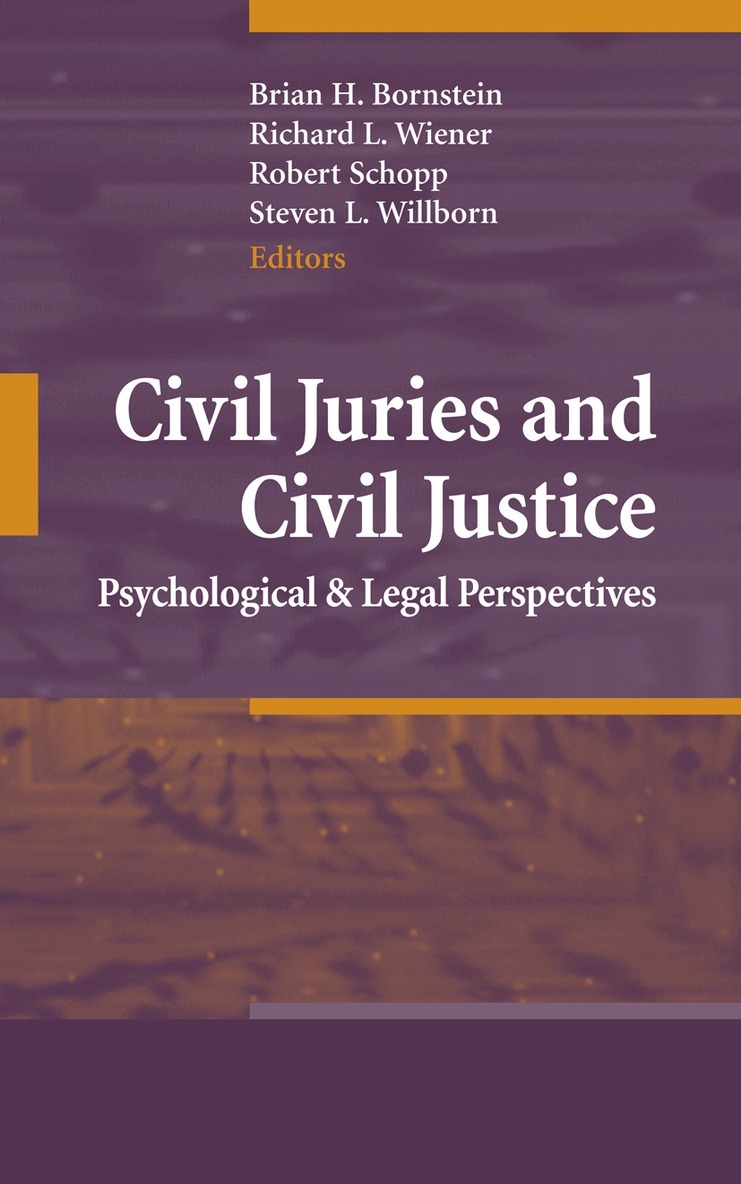
This work seeks to provide answers on tort reform where thus far there have mainly been just questions. A number of post-reform studies have demonstrated that tort reform may not have the desired effects. This important work takes an empirical approach to addressing the issues.
1 183 kr
Skickas inom 10-15 vardagar
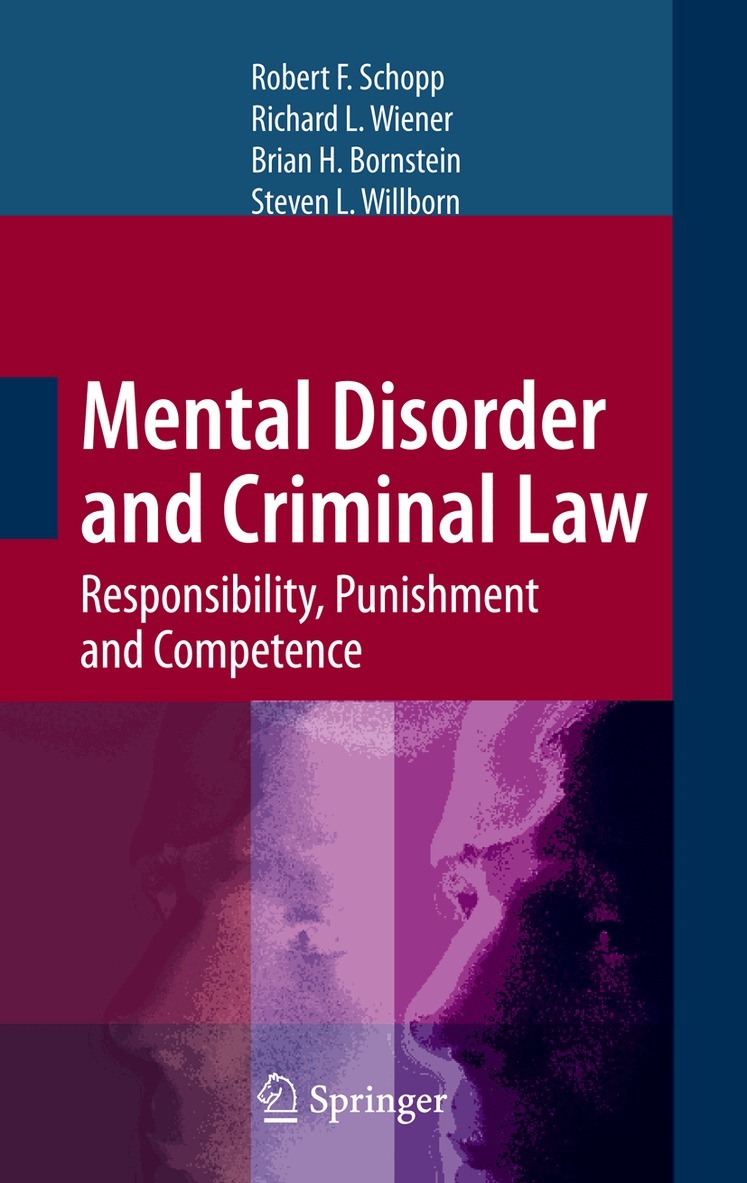
The death penalty has long played a central role in jurisprudence, in terms of identifying the most serious offenses and the most culpable offenders, as well as understanding the mental conditions that may exclude an offender from such a sentence. More recently, the debate has intensified on competency to face [execution], the effects of psychological impairment on that competency, and the role of expert witnesses in establishing criminal culpability. The edited volume, Mental Disorder and Criminal Law authoritatively blends empirical findings and legal expertise with sophisticated reasoning and ethical analysis to promote a deeper understanding of these complex issues at the interface of legal and psychological domains. In short, it explores the concept of (as termed by one chapter author) "protecting well-being while pursuing justice". Contributors to this important volume: (1) Examine the effects of depression at different stages of legal procedure. (2) Offer proposed criteria for [prohibiting] capital punishment [of] the severely mentally ill. (3) Identify moral and procedural concerns in the use of child victims as witnesses.(4) Analyze the balance between present responsibility and future risk. (5) Untangle clinical and ethical issues for clinicians involved in capital sentencing. (6) Clarify the process of psychological evaluation of competence to be executed. (7) Review degrees of psychopathy in the context of criminal culpability. A practice-enhancing reference for forensic psychiatrists and psychologists, and legal professionals, Mental Disorder and Criminal Law challenges readers to reexamine the life-and-death questions at the core of their work.
497 kr
Skickas inom 10-15 vardagar
This work seeks to provide answers on tort reform where thus far there have mainly been just questions. A number of post-reform studies have demonstrated that tort reform may not have the desired effects. This important work takes an empirical approach to addressing the issues.
1 324 kr
Skickas inom 10-15 vardagar
Neither opinion suggests that offenders in these categories cannot be criminally responsible for their offenses, and the Atkins opinion explicitly recognizes that some mentally 2 retarded offenders can qualify as criminally responsible for their offenses.
1 036 kr
Skickas inom 10-15 vardagar
Our basic assumption about the law is that it is designed to operate fairly and openly. But with human beings as the ultimate decision makers, how do we prevent discrimination within the legal arena, and how does the law decide whether others have behaved in a discriminatory manner? Social Consciousness in Legal Decision Making examines four controversial areas involving people’s perceptions of others—racial profiling, affirmative action, workplace harassment, and hate speech/hate crime—from the perspectives of psychology, decision theory, and the law. This book's contributing experts raise these critical questions:How valid are legal assumptions about human behavior?What cognitive processes underlie biased behavior?What do personal experience and situational cues contribute to decision making?How do individuals’ perceptions of the law influence their judgment?Can psychology help legislators write more effective laws?In answering them, the book:Compares rational, descriptive, and normative decision-making models in legal contextsProvides important insights into legal decision making by non-specialists (police, administrators, jurors) Clarifies and broadens the role of social science in the courtsPromotes improved dialogue between the field of psychology and law to create a more socially aware jurisprudence.Social Consciousness in Legal Decision Making invites the legal and psychology communities to work together in solving some of our most pressing social problems.