Richard L. Wiener - Böcker
Visar alla böcker från författaren Richard L. Wiener. Handla med fri frakt och snabb leverans.
17 produkter
17 produkter
979 kr
Skickas inom 10-15 vardagar
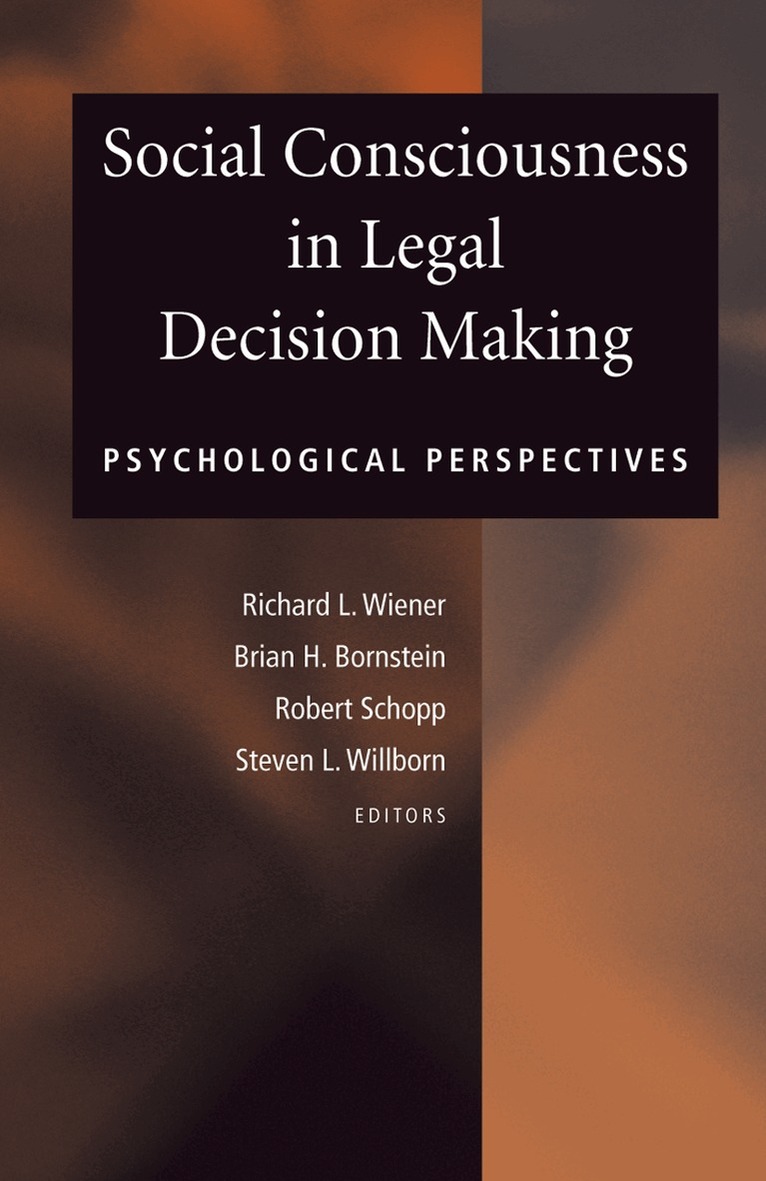
Our basic assumption about the law is that it is designed to operate fairly and openly. But with human beings as the ultimate decision makers, how do we prevent discrimination within the legal arena, and how does the law decide whether others have behaved in a discriminatory manner? Social Consciousness in Legal Decision Making examines four controversial areas involving people’s perceptions of others—racial profiling, affirmative action, workplace harassment, and hate speech/hate crime—from the perspectives of psychology, decision theory, and the law. This book's contributing experts raise these critical questions:How valid are legal assumptions about human behavior?What cognitive processes underlie biased behavior?What do personal experience and situational cues contribute to decision making?How do individuals’ perceptions of the law influence their judgment?Can psychology help legislators write more effective laws?In answering them, the book:Compares rational, descriptive, and normative decision-making models in legal contextsProvides important insights into legal decision making by non-specialists (police, administrators, jurors) Clarifies and broadens the role of social science in the courtsPromotes improved dialogue between the field of psychology and law to create a more socially aware jurisprudence.Social Consciousness in Legal Decision Making invites the legal and psychology communities to work together in solving some of our most pressing social problems.
493 kr
Skickas inom 10-15 vardagar
This work seeks to provide answers on tort reform where thus far there have mainly been just questions. A number of post-reform studies have demonstrated that tort reform may not have the desired effects. This important work takes an empirical approach to addressing the issues.
1 174 kr
Skickas inom 10-15 vardagar
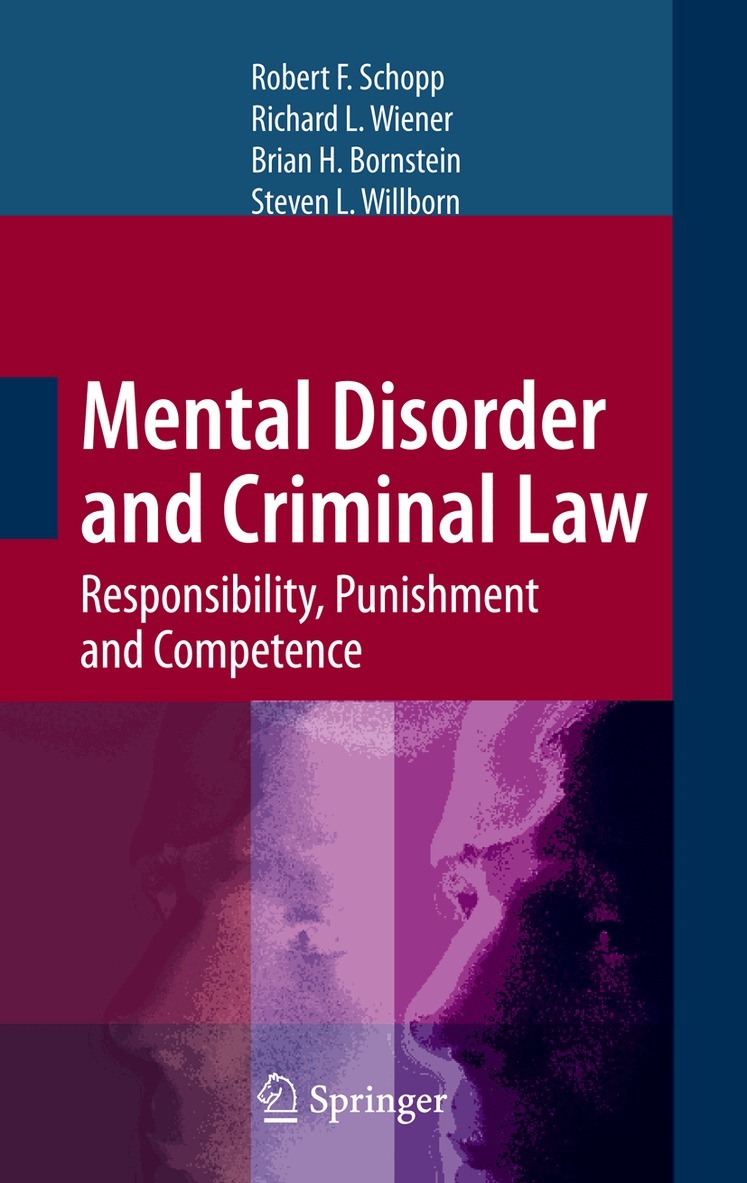
The death penalty has long played a central role in jurisprudence, in terms of identifying the most serious offenses and the most culpable offenders, as well as understanding the mental conditions that may exclude an offender from such a sentence. More recently, the debate has intensified on competency to face [execution], the effects of psychological impairment on that competency, and the role of expert witnesses in establishing criminal culpability. The edited volume, Mental Disorder and Criminal Law authoritatively blends empirical findings and legal expertise with sophisticated reasoning and ethical analysis to promote a deeper understanding of these complex issues at the interface of legal and psychological domains. In short, it explores the concept of (as termed by one chapter author) "protecting well-being while pursuing justice". Contributors to this important volume: (1) Examine the effects of depression at different stages of legal procedure. (2) Offer proposed criteria for [prohibiting] capital punishment [of] the severely mentally ill. (3) Identify moral and procedural concerns in the use of child victims as witnesses.(4) Analyze the balance between present responsibility and future risk. (5) Untangle clinical and ethical issues for clinicians involved in capital sentencing. (6) Clarify the process of psychological evaluation of competence to be executed. (7) Review degrees of psychopathy in the context of criminal culpability. A practice-enhancing reference for forensic psychiatrists and psychologists, and legal professionals, Mental Disorder and Criminal Law challenges readers to reexamine the life-and-death questions at the core of their work.
1 034 kr
Skickas inom 10-15 vardagar
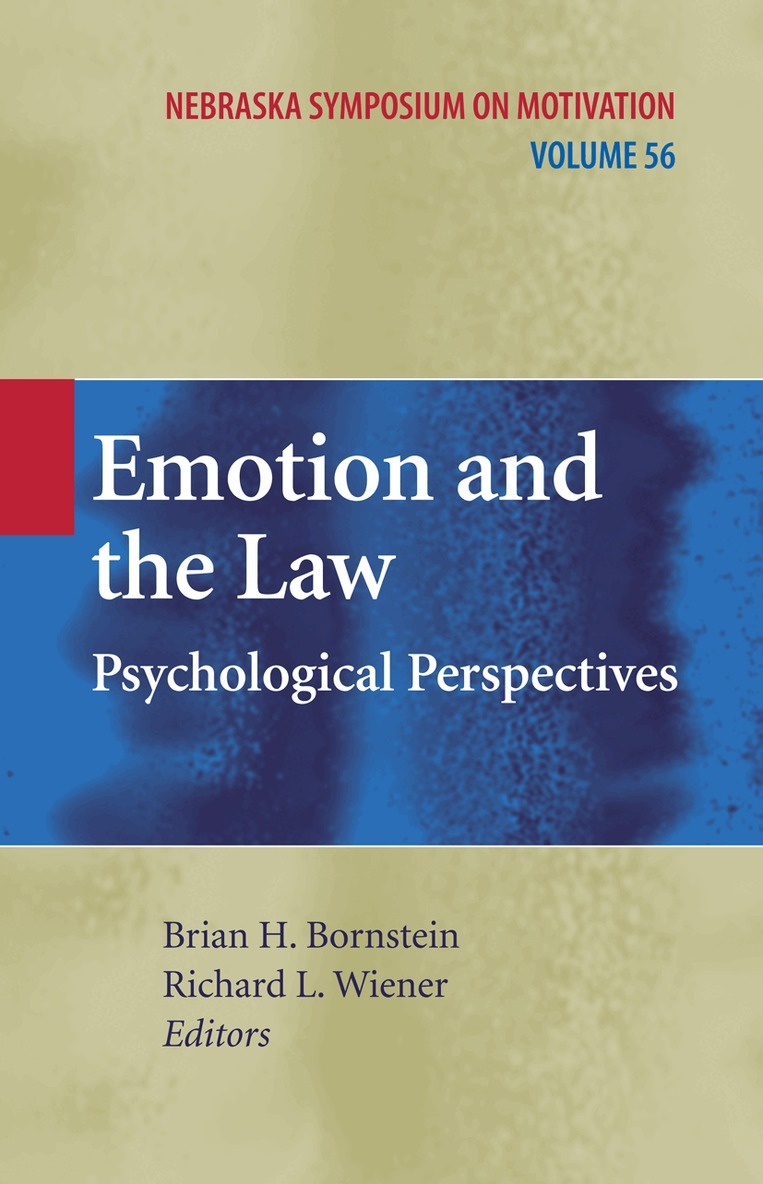
From questions surrounding motives to the concept of crimes of passion, the intersection of emotional states and legal practice has long interested professionals as well as the public—recent cases involving extensive pretrial publicity, highly charged evidence, and instances of jury nullification continue to make the subject particularly timely. With these trends in mind, Emotion and the Law brings a rich tradition in social psychology into sharp forensic focus in a unique interdisciplinary volume. Emotion, mood and affective states, plus patterns of conduct that tend to arise from them in legal contexts, are analyzed in theoretical and practical terms, using real-life examples from criminal and civil cases. From these complex situations, contributors provide answers to bedrock questions—what roles affect plays in legal decision making, when these roles are appropriate, and what can be done so that emotion is not misused or exploited in legal procedures—and offer complementary legal and social/cognitive perspectives on these and other salient issues: Positive versus negative affect in legal decision making, emotion, eyewitness memory, and false memory, the influence of emotions on juror decisions, and legal approaches to its control, a terror management theory approach to the understanding of hate crimes, policy recommendations for managing affect in legal proceedings, additional legal areas that can benefit from the study of emotion.Emotion and the Law clarifies theoretical grey areas, revisits current practice, and suggests possibilities for both new scholarship and procedural guidelines, making it a valuable reference for psycho legal researchers, forensic psychologists, and policymakers.
493 kr
Skickas inom 10-15 vardagar
This work seeks to provide answers on tort reform where thus far there have mainly been just questions. A number of post-reform studies have demonstrated that tort reform may not have the desired effects. This important work takes an empirical approach to addressing the issues.
1 314 kr
Skickas inom 10-15 vardagar
Neither opinion suggests that offenders in these categories cannot be criminally responsible for their offenses, and the Atkins opinion explicitly recognizes that some mentally 2 retarded offenders can qualify as criminally responsible for their offenses.
1 028 kr
Skickas inom 10-15 vardagar
Our basic assumption about the law is that it is designed to operate fairly and openly. But with human beings as the ultimate decision makers, how do we prevent discrimination within the legal arena, and how does the law decide whether others have behaved in a discriminatory manner? Social Consciousness in Legal Decision Making examines four controversial areas involving people’s perceptions of others—racial profiling, affirmative action, workplace harassment, and hate speech/hate crime—from the perspectives of psychology, decision theory, and the law. This book's contributing experts raise these critical questions:How valid are legal assumptions about human behavior?What cognitive processes underlie biased behavior?What do personal experience and situational cues contribute to decision making?How do individuals’ perceptions of the law influence their judgment?Can psychology help legislators write more effective laws?In answering them, the book:Compares rational, descriptive, and normative decision-making models in legal contextsProvides important insights into legal decision making by non-specialists (police, administrators, jurors) Clarifies and broadens the role of social science in the courtsPromotes improved dialogue between the field of psychology and law to create a more socially aware jurisprudence.Social Consciousness in Legal Decision Making invites the legal and psychology communities to work together in solving some of our most pressing social problems.
1 096 kr
Skickas inom 10-15 vardagar
As the average age of our citizens rises, this book argues that success at ameliorating the effects of disability and age-related bias, prejudice, and discrimination requires a psycholegal approach that reconciles legal theory with psychological reality.
1 137 kr
Skickas inom 10-15 vardagar
This volume will be a handbook that treats trial consulting as applied psychology. The purpose of the volume will be to collect the viewpoints of leaders in the field of psychology and law who apply the discipline’s theoretical models, methods, and ethics to assist litigators to try cases in the most effective way possible. As a whole, the collection of chapters will describe the theory, business, and mechanics of trial consulting for those interested in learning and practicing the profession. However, it will do so from the perspective of organized theories of jury-decision making. In other words, the work of juror researchers will inform the recommendations and suggestions in the handbook. The volume consists of six sections, each pertaining to a different topic. Multiple chapters with different authors will cover each topic. The topics and corresponding seven sections will be 1) An Introduction to the Theory and Psychology of Jury Decision-Making, 2) Applied Research Methodologies for Trial Consultants, 3) Education and Ethical Considerations for Trial Consultants, 4) Preparing and Cross Examining Witnesses, 5) Technology and Demonstrative Evidence at Trial, and 6) Special Topics in Trial Consulting. Each section will begin with the editors’ short introduction reviewing that section and explaining its goals, objectives, and content. Separate individuals, recognized as leaders in their areas will write the remaining chapters in each section. These individuals come from the fields of both psychology and law, and represent viewpoints on these topics from a practice-oriented perspective, but a perspective that is emerges from research results. They are affiliated with a number of academic institutions, including University of Nebraska, John Jay College of Criminal Justice, University of Texas, University of Chicago Simon Fraser University, and private law firms.
Del 56 - Nebraska Symposium on Motivation
Emotion and the Law
Psychological Perspectives
Häftad, Engelska, 2010
1 096 kr
Skickas inom 10-15 vardagar
From questions surrounding motives to the concept of crimes of passion, the intersection of emotional states and legal practice has long interested professionals as well as the public—recent cases involving extensive pretrial publicity, highly charged evidence, and instances of jury nullification continue to make the subject particularly timely. With these trends in mind, Emotion and the Law brings a rich tradition in social psychology into sharp forensic focus in a unique interdisciplinary volume. Emotion, mood and affective states, plus patterns of conduct that tend to arise from them in legal contexts, are analyzed in theoretical and practical terms, using real-life examples from criminal and civil cases. From these complex situations, contributors provide answers to bedrock questions—what roles affect plays in legal decision making, when these roles are appropriate, and what can be done so that emotion is not misused or exploited in legal procedures—and offer complementary legal and social/cognitive perspectives on these and other salient issues: Positive versus negative affect in legal decision making, emotion, eyewitness memory, and false memory, the influence of emotions on juror decisions, and legal approaches to its control, a terror management theory approach to the understanding of hate crimes, policy recommendations for managing affect in legal proceedings, additional legal areas that can benefit from the study of emotion.Emotion and the Law clarifies theoretical grey areas, revisits current practice, and suggests possibilities for both new scholarship and procedural guidelines, making it a valuable reference for psycho legal researchers, forensic psychologists, and policymakers.
1 644 kr
Skickas inom 10-15 vardagar
In order to make the criminal court system more effective there has been a growing trend to have courts participate in what is essentially a rehabilitation strategy.
1 137 kr
Skickas inom 10-15 vardagar
This volume will be a handbook that treats trial consulting as applied psychology. The purpose of the volume will be to collect the viewpoints of leaders in the field of psychology and law who apply the discipline’s theoretical models, methods, and ethics to assist litigators to try cases in the most effective way possible. As a whole, the collection of chapters will describe the theory, business, and mechanics of trial consulting for those interested in learning and practicing the profession. However, it will do so from the perspective of organized theories of jury-decision making. In other words, the work of juror researchers will inform the recommendations and suggestions in the handbook. The volume consists of six sections, each pertaining to a different topic. Multiple chapters with different authors will cover each topic. The topics and corresponding seven sections will be 1) An Introduction to the Theory and Psychology of Jury Decision-Making, 2) Applied Research Methodologies for Trial Consultants, 3) Education and Ethical Considerations for Trial Consultants, 4) Preparing and Cross Examining Witnesses, 5) Technology and Demonstrative Evidence at Trial, and 6) Special Topics in Trial Consulting. Each section will begin with the editors’ short introduction reviewing that section and explaining its goals, objectives, and content. Separate individuals, recognized as leaders in their areas will write the remaining chapters in each section. These individuals come from the fields of both psychology and law, and represent viewpoints on these topics from a practice-oriented perspective, but a perspective that is emerges from research results. They are affiliated with a number of academic institutions, including University of Nebraska, John Jay College of Criminal Justice, University of Texas, University of Chicago Simon Fraser University, and private law firms.
1 096 kr
Skickas inom 10-15 vardagar
As the average age of our citizens rises, this book argues that success at ameliorating the effects of disability and age-related bias, prejudice, and discrimination requires a psycholegal approach that reconciles legal theory with psychological reality.
1 644 kr
Skickas inom 10-15 vardagar
In order to make the criminal court system more effective there has been a growing trend to have courts participate in what is essentially a rehabilitation strategy.
979 kr
Skickas inom 10-15 vardagar
Justice, conflict and wellbeing are large topics that occupy researchers from a variety of disciplines, as well as laypeople and policy makers. The three concepts are closely connected: conflict often (though not always) impairs wellbeing, whereas justice often (though not always) enhances it; perceived injustice is a common source of conflict, at multiple levels and calls for justice are a common response to conflict. In addition, each construct has subtypes, such as distributive and procedural justice, individual and group conflict and physical and psychological wellbeing. Although there are established traditions of research on the topics in multiple disciplines, there is little cross-fertilization across disciplines. This volume brings together researchers from social, clinical and educational psychology; law and political science. The unifying theme is how injustice and conflict pose threats to wellbeing, at the micro (individual) and macro (groups and societies) levels. Multi- and interdisciplinary research are at the vanguard of science in the twenty-first century and the present work applies multi and interdisciplinary perspectives to the important real-world topics of justice, conflict and wellbeing.
1 369 kr
Skickas inom 5-8 vardagar
Justice, conflict and wellbeing are large topics that occupy researchers from a variety of disciplines, as well as laypeople and policy makers. The three concepts are closely connected: conflict often (though not always) impairs wellbeing, whereas justice often (though not always) enhances it; perceived injustice is a common source of conflict, at multiple levels and calls for justice are a common response to conflict. In addition, each construct has subtypes, such as distributive and procedural justice, individual and group conflict and physical and psychological wellbeing. Although there are established traditions of research on the topics in multiple disciplines, there is little cross-fertilization across disciplines. This volume brings together researchers from social, clinical and educational psychology; law and political science. The unifying theme is how injustice and conflict pose threats to wellbeing, at the micro (individual) and macro (groups and societies) levels. Multi- and interdisciplinary research are at the vanguard of science in the twenty-first century and the present work applies multi and interdisciplinary perspectives to the important real-world topics of justice, conflict and wellbeing.
1 548 kr
Skickas inom 10-15 vardagar
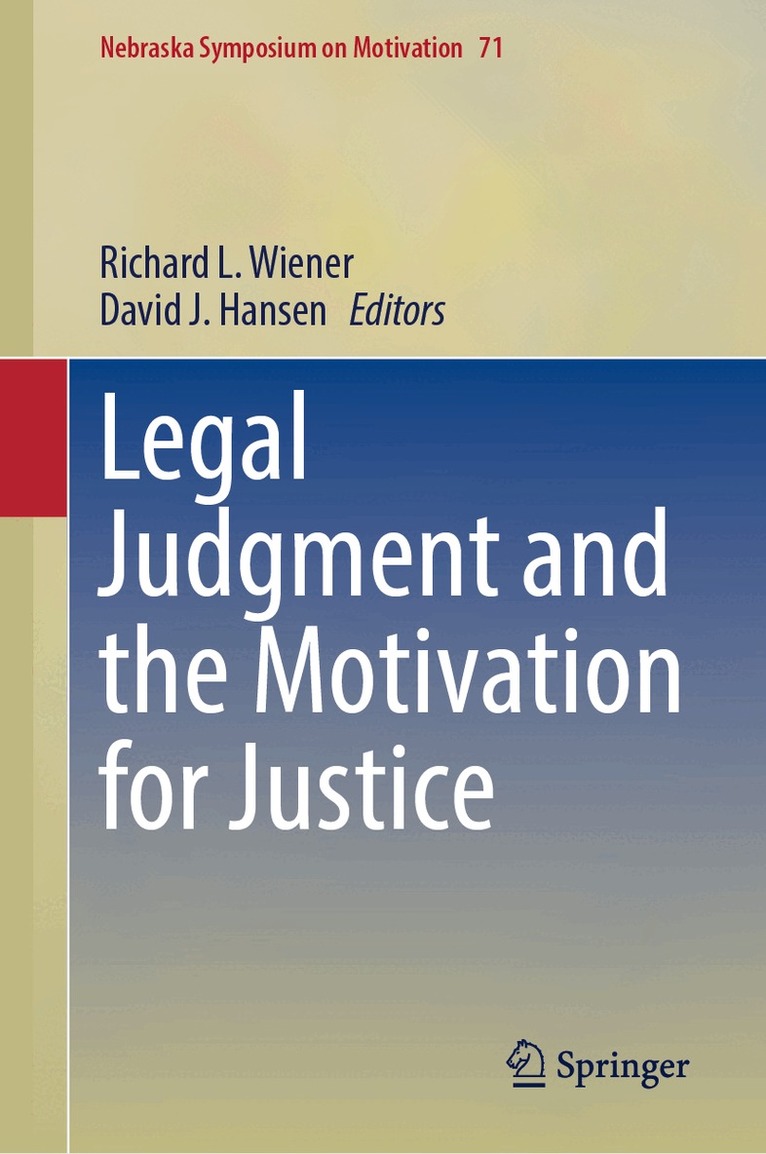
This volume takes as its point of departure that those who work in the area of law and psychology currently possess a great deal of knowledge about the psychology of the legal system, including the way in which the behavior of legislators, judges, jurors, attorneys, litigants, and defendants shapes the outcome of justice. It has also become very clear that the main obstacles to beneficial modifications to the legal system stem from the lack of motivation to seek justice, motivation to change legal process, and motivation to make use of evidence-based decision making. The purpose of this volume is to examine the antecedents of the motivation for justice, describe how that motivation activates and manifests in various legal institutions (i.e., elections, legislatures, courts, and executive offices), and trace the failure of that motivation to influence legal decision making. This will include research and commentary about a) where the motivation for justice comes from when people make legal judgments and decisions, b) how the motivation for justice influences legal judgments and decisions, and c) how legal judgments and decisions influence the motivation for justice in positive and negative ways. This topic is paramount at the current time in our history in view of the apparent breakdown of society’s beliefs in our institutions and trust in the democratic process, which has contributed to a system that has increasingly operated from tribalistic impulse rather than from a richer motivation for authentic justice.