Robert Sheppard - Böcker
Visar alla böcker från författaren Robert Sheppard. Handla med fri frakt och snabb leverans.
19 produkter
19 produkter
647 kr
Skickas inom 3-6 vardagar
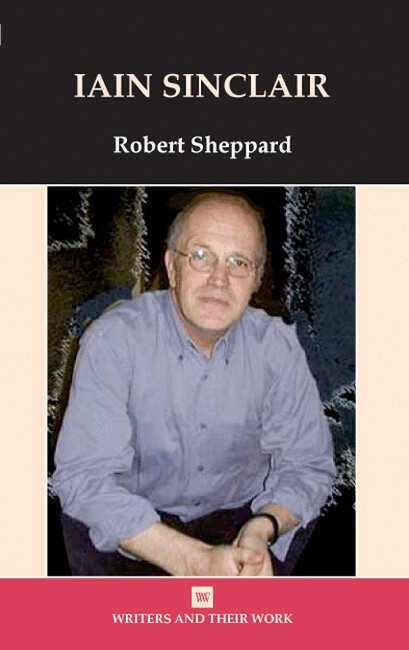
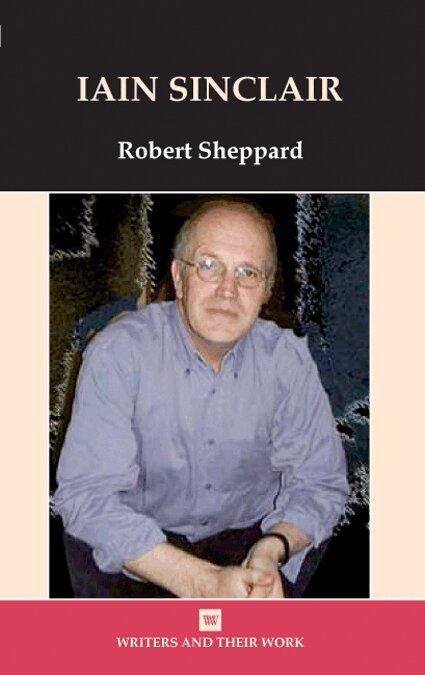
Iain Sinclair has a growing reputation as a novelist and writer of documentary non-fiction. This study covers his major works, but also seeks to trace the connections between the writings and his earlier books of poetry. Indeed, it traces the intertextual curve of Sinclair’s entire oeuvre, and demonstrates that its unity lies in the very desire to make connections between disparate cultural experience, for example between the context of avant garde poetry that Sinclair emerged from, and the world of pulp fiction that he has negotiated as a book dealer and an editor.
271 kr
Skickas inom 5-8 vardagar
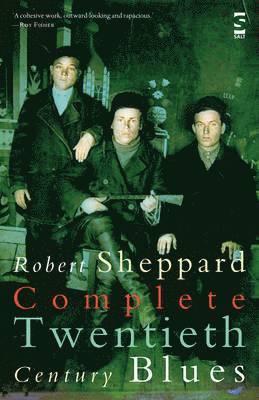
Complete Twentieth Century Blues is the definitive edition of a long network of interrelated texts that the author wrote and assembled as a time-based project between 1989 and the end of the last century. Many of the texts have appeared before, in both pamphlets and in critically acclaimed full-length volumes, but this edition has been revised throughout. It also includes a previously unpublished book-length text on the paintings of Jack B. Yeats, as well as a number of shorter pieces. All now appear in their intended order, and with their connections to other poems made apparent via an index. At the centre of the book is the sequence The Lores, written according to a strict word count and introducing the politics and poetics of ‘creative linkage’ demonstrated throughout. It focuses upon fascism and resistances to it. Running through the volume are the ‘Empty Diaires’ which offer an alternative history of the twentieth century, told through a series of female narrators. Woven between these are poems on blues music, the first Gulf War, Stalin’s poems, failed utopias, the Earl of Rochester, a sci-fi elegy for the human, a translation from Horace, the ideology of Thatcherism, atheist hymns, a hilarious romp with a very rude Robinson Crusoe, homages to various other artists, and an elegy to Frank Sinatra. The hilarious Wayne Pratt spoofs find their final resting place here too. The prose-poem essay, ‘The End of the Twentieth Century’, brings the project to rest with a celebration of the complexity of our powers of human connection.
219 kr
Skickas inom 5-8 vardagar
Warrant Error is not just a book about the war on terror, yet neither does it seek to evade it, but to exceed it. Each sonnet in the four sets of 24 (plus 4 other poems, making a hundred) evokes a little world, as a sonnet ought, and questions it. The poems play with the expectations we have of the form, as much as they use the sonnet sequence's traditional power to switch viewpoint or attention poem by poem. Some of these look hard at the rhetoric of the war on terror and the one of terror, and, via pun, ferocious word-play and reversal, effect an interrogative unpacking more urgent even than in Sheppard's Twentieth Century Blues. Some poems focus upon single times and places-the field of vision as well as the field of battle-with an imagistic precision that suggests that perception is the birth of clear thinking. Others offer counter-music to the global in the local, by focussing on the domestic world of fluid selves, small objects and minor incidents, with a tender and personal tone new to Sheppard's work. Against this, possible worlds and fantastic scenarios are offered to ask, in a speculative but often humorous way, how we got the way we are.As an ambitious whole, Warrant Error wonders whether compassion is still one of the passions and tests the strengths of what the poems call the human covenant against human unfinish, an ethical and aesthetic ideal that aims to suggest that all these stories-real, fantastic, or both-are only our stories so far.To be continued. This is not so much about finding beliefs to endure (into) this dangerous century, but about presenting as poems a shifting ground upon which they will find themselves at war or peace.
219 kr
Skickas inom 5-8 vardagar
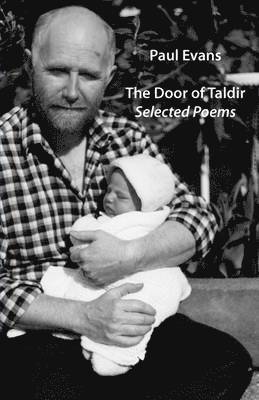
Paul Evans (1945-1991) was a significant member of a group of radical new poets that appeared in England in the late 1960s, but his work remains scattered through a number of small-press publications from 1970-1987 and is now entirely out of print. This Selected, edited by poet and academic Robert Sheppard, redresses the situation and makes available a broad selection of Evans' work from throughout his career - a career that was cut tragically short by a climbing accident on Snowdon.
188 kr
Skickas inom 5-8 vardagar
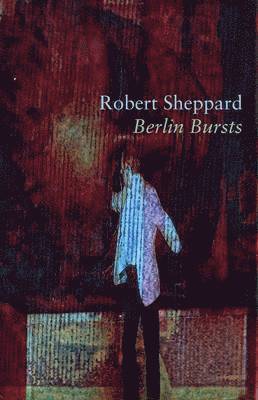
These new poems use tense couplets and other 'centrifugal' forms to centre their energies in nodes of impacted attention. They feature territories as dispersed as Sheppard's local City of Culture and the global city of division and political murder of the title poem. The scar of history is drawn across the face of time, as in tragic Riga where we find reflections on artefacts of survival. Yet a series of metapoems brings agency and wonder to the idea of the poem, always seeing the world as well as itself, in perceptual double-takes that tease away at the meaning of the poetic act: "You'll never finish reading/ the poem in the book with reality pulling itself/ inside out before your eyes."
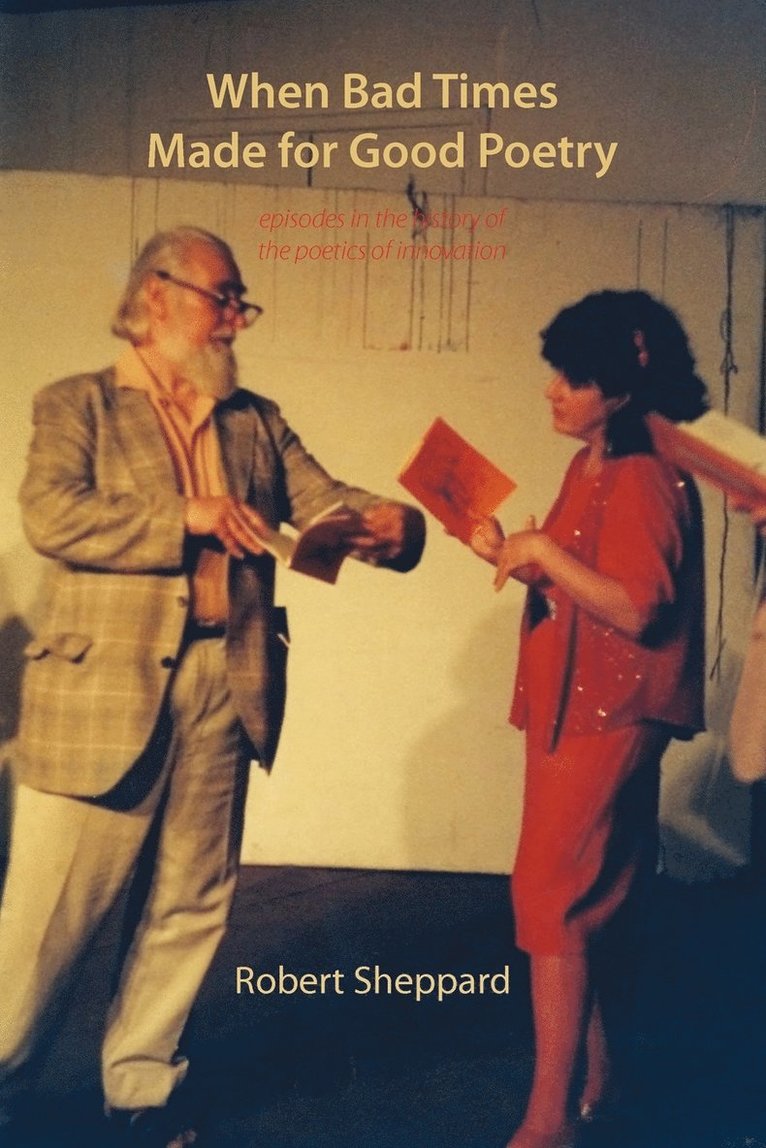
When Bad Times Made for Good Poetry
Episodes in the History of the Poetics of Innovation
Häftad, Engelska, 2011
207 kr
Skickas inom 5-8 vardagar
This study presents an episodic history of an epic period in British poetry, when bad times forced political subversion and textual impaction upon its central figures and provisional institutions. In the episodes which cover the Poetry Wars of the 1970s; the centrality of Bob Cobbing as poetry activist and the SubVoicive poetry scene in 1980s London; and the cultural poetics of Iain Sinclair in the 1990s and since; the focus is upon poetic community rather than individuals.
219 kr
Skickas inom 5-8 vardagar
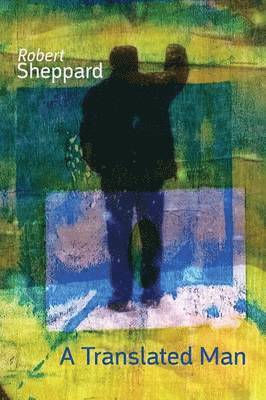
Robert Sheppard has given this book over to his own invention, the fictional Belgian poet Rene Van Valckenborch. Apparently writing in both Flemish and Walloon, and translated and edited by entities as shadowy (and dodgy) as himself, Van Valckenborch's split oeuvre derives from the linguistic and cultural divide within contemporary Belgium. By the time Van Valckenborch disappears into poetic silence he seems an enigma of his own making, a comic figure with tragic attributes, a mystery to all swept up in his apparition. When his story is finished he leaves behind the deliberately discontinuous evidence of a dual poetic adventure - one half siding with history and opting for a breathlessly recurring triplet verse, the other obsessing over place and space and restlessly and increasingly playing with experimental forms. Behind and within them all, Sheppard is extending his formal and referential range: from homages to film-makers to Twitterodes, from accounts of tribal masks to cuboid quennets, and poems about Belgium of course. Above all, he is exploring the limits of the author-function. This is an imaginary collection with real poems in it.
219 kr
Skickas inom 5-8 vardagar
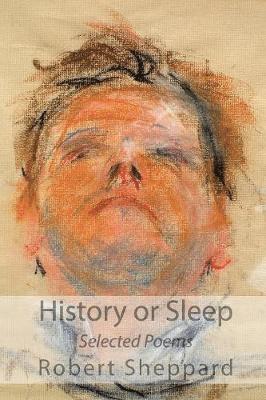
Robert Sheppard's selection draws on every book of his poetry since Returns (1985) through to Words Out of Time (2015), and is designed to sample both the recurring and developing themes of his work and their restlessly changing forms. Ian Davidson in Poetry Wales called Sheppard's Complete Twentieth Century Blues 'a major poem of serious intent'. Of his recent Shearsman collections, Alan Baker in Litter called Warrant Error, 'political poetry of the first order'; Ben Hickman, in PN Review, wrote 'Berlin Bursts perhaps makes one of the biggest claims for the inherent politics of language and art in recent British poetry.' A Translated Man, a sequence of 'fictional poems', was described by Tom Jenks in Tears in the Fence, as 'a compendious work, a vademecum for innovative writing' and as 'a book which, whilst in keeping stylistically and thematically with Sheppard's other work, exhibits a degree of playfulness not always so obvious there...It is, above all, a deeply pleasurable work.' Kelvin Corcoran wrote about Words Out of Time: 'There you are characteristically free of flash or reserve and it increases the sum of what can be written about, I think. And it's funny.'
219 kr
Skickas inom 5-8 vardagar
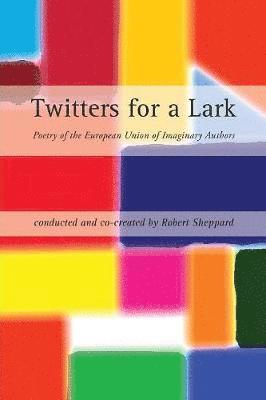
The EUOIA is the brainchild of Belgian poet Rene Van Valckenborch. For his last project before his disappearance around 2010, Van Valckenborch supposedly asked one poet from each of the EU states to write him a poem. Of course, he wrote them himself ... Each poem was then supposedly translated into Flemish (or occasionally French) via robot (online) translators and the resultant poem `finalised' by Van Valckenborch before presentation on this website. The poems that follow are best thought of as collaborations between Van Valckenborch and the 25 imaginary poets and the robot translator. (As the EU expanded so did the Union: there are now 27 `members'.)We have, as usual, been accused of making these translations ourselves, or even of making the poets up (many of them might take exception, a few might be rather tickled by that suggestion). Firstly our expertise does not extend to all the languages encountered. Secondly, our professional pride as translators would have prohibited the use of electronic translation devices and we have only been forced to enter into a secondary relationship with this medium by Van Valckenborch's engagement with it, which we rather regret. -Annemie and Martin Krol-Dupuis (Brussels).
181 kr
Skickas inom 5-8 vardagar
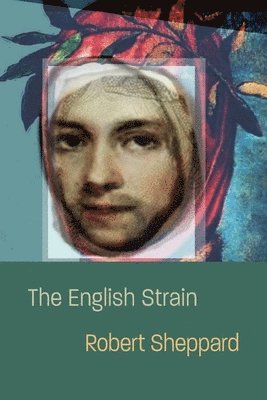
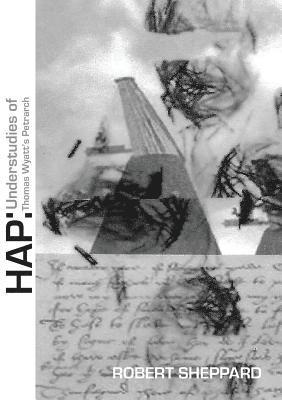
'Enraptured by the versioning bug,' Robert Sheppard confesses of his virtuosic variations of Petrarch's third sonnet, 'I was off on one.' With comic verve, he deftly refunctions some of the finest sonneteers, Petrarch himself, and those of 'The English Strain': Wyatt and Surrey, 'the first reformers' of English poetry, and John Milton, exemplary political poet. None is safe from Sheppard's comedic appropriations of their works and days. Wyatt spies for a British foreign office that fluxes between the Henrician court and Tory high command. Surrey is a chinless wonder of aristocratic chivalry, the marvel of the French killing fields (and Norfolk dogging sites). Mordant humour and irony continue in Sheppard's 'trans translations': of Charlotte Smith, the Petrarch of Petworth, witnessing strange happenings on the Downs, and Barrett Browning, Mistress Elizabeth of her Wimpole Street penthouse and the clued-up 'mistress' of a clownish politician. The dominant satirical theme, the national strain surrounding that once novel word 'Brexit', is almost picked up casually in the sequence 'It's Nothing', where Sheppard delicately and deliberately fails the attempt to speak in his own voice. He's more at home in his homemade 100-word sonnets, as he nails Brexit in a neat couplet: 'they've got our country back for us/ and now they want it for themselves'. As you read this book, be warned: between poetic worlds, between sonnet and transposition, big laughs and little truths are lying in wait for you.Tom Jenks wrote of some of the sequences in this book: 'Sheppard here expands further the boundaries of translation, the transposition of historical events to contemporary circumstances being not just incidental to the translation process, but an act of translation itself.' Geraldine Monk in The Robert Sheppard Companion informs us: 'Sheppard's writing is rough, rude, quirky, serious, learned, and never afraid to be humorous. In short it is as irreverent as it is relevant.'
446 kr
Skickas inom 5-8 vardagar
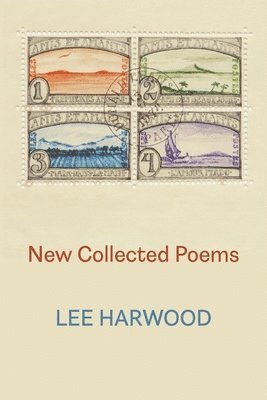
Lee Harwood's work defines the poetry of an era that saw poetry itself at its most exciting, expansive and innovative. His achievement runs through the very core of these qualities and has enriched the possibilities of poetry through to the present. As a leading British poet well known for his unique but flexible voice, speaking in a variety of forms, from direct lyric to elaborate fictions, from notebook poems to conceptual found texts, from complex cut-ups to assembled fragments. A restless innovator across the decades he delighted in working in such a multiplicity of forms and with a disarming directness that appeared to escape whatever poetic rules may have been favoured on occasion. His voice is by turns gentle and erudite, erotic and funny, moving and even faux-sentimental. Discussions of contemporary poetry are left incomplete without recognition of his considerable achievements.From his earliest pamphlet 'title illegible' (1965) to his last collection 'The Orchid Boat' (2014), 'New Collected Poems' assembles all the poems (and creative prose) Harwood published in pamphlet or book form, in broadly chronological order, fashioned upon the ordering of Harwood's own 2004 'Collected Poems'. Some excised poems have been restored and fugitive texts that appeared in an exclusive edition have been included. Brief uncollected material from the end of his career completes this rich body of work.'This new collection is a generously considered gathering of resistant and supple fragments, hard evidence of a life truly lived. We are the beneficiaries of these dazzling transfusions of personality and circumstance. Of remembered and newly encountered detonations of affect. "The clarity of such moments," Harwood confesses, can never stay still, even when that seems to be the required task. Love moves and shifts. Through repeated acts of making, it coheres and continues.' -Iain Sinclair'Lee Harwood's English is like American English in that it lacks a strong sense of possession. At the same time it has a pearly, soft-focus quality one rarely sees in American poetry [...] The "great" poetry I like best has this elf-effacing, translucent quality. Self-effacing not from modesty but because it is going somewhere and has no time to consider itself.' -John Ashbery'Harwood's work returns to local habitations and names, the lives of family, elegies for friends, to direct communication among intimates. These vividly rendered, plain-style evocations, intercut with speculation and emotion, construct improvised holding environments where the home world and the safety of loved ones is primary' -Peter Robinson, Times Literary Supplement
219 kr
Skickas inom 5-8 vardagar
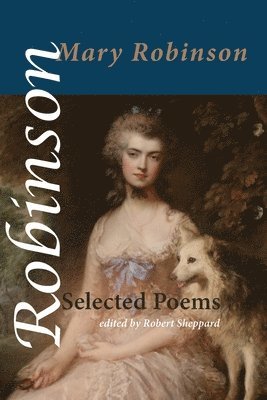
The range of Robinson's poetic work is astonishing: from impassioned lyrics to 'Lyrical Tales', from sonnets to odes, from political poetry, reacting both for and against the French Revolution, to representations of various outsider figures (slaves, madmen and political exiles), from jocular parodies of contemporary 'Grub Street' writers to satires on the callousness of the rich, fashionable and famous. Whether speaking or writing in her own voice (serially bidding farewell to her lover Tarleton) or in the voice of others (dramatising the distress of Marie Antoinette, for instance) she was a poetic innovator, as capable as handling Popean couplets as the freshest blank verse. Robert Sheppard selects the best of Mary Robinson's poetry for a general audience, while attempting to demonstrate the range of her work. He includes the complete text of Sappho and Phaon (1796), which was the first sonnet sequence to be published in English since the Renaissance. He relates her late work, particularly the forceful political blank verse epic 'The Progress of Liberty', to the emergence of the first generation of Romantics, upon whom she was a notable influence. He also briefly narrates her extraordinary life and introduces the work in his selection.
308 kr
Skickas inom 3-6 vardagar
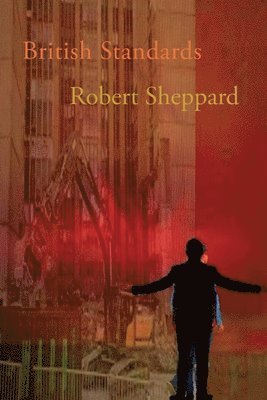
At one level, the poems in British Standards are transpositions of Romantic era sonnets that pay homage to the exuberance and variety of that tradition, whether through examples of well-known poets, from Wordsworth to Clare, or through those of lesser-known practitioners, Mary Robinson to Hartley Coleridge. At another level, these transpositions chart the recent national banana-skin slippage from the hubris of Brexit to the mismanagement of Covid (including the privations and solitudes of lockdown). At both levels, they are satirical and funny, whether British Standard dogging sites are introduced as the sole Brexit benefit, or 'our' hapless prime minister stumbles from indiscretion to disgrace. Between the levels, they vibrate with implication, rock with savage laughter. Comments on earlier parts of 'The English Strain' project:'Among contemporary poets, only Sheppard could have achieved this unlikely synthesis; his poetry is learned, scholarly, satirical, outrageous and innovative as well as - most importantly - political.' Alan Baker, Litter'This book is the sound a man of enlightenment and renaissance makes as he sees the long rich curve of knowledge - our real 'heritage' - being flushed clean down a political shitter...It is utterly brilliant.' Steve Hanson, Manchester Review of Books'Sheppard is able to form activist responses to the times through which we live without sacrificing his linguistic range.' James Byrne, The Robert Sheppard Companion'Sheppard posits ... a translational mode that is open, fluid, permissive, voracious and, above all, creative.' Tom Jenks, The Robert Sheppard Companion
225 kr
Skickas inom 5-8 vardagar
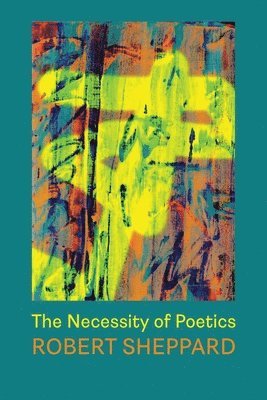
The Necessity of Poetics marks the moves Robert Sheppard has made as a poet-critic around the notion of poetics in general, and the poetics of linguistically innovative poetry in particular, and his own poetics as an outcome of those. It traces those moves, but offers them to fellow poets, critics, and even to literary historians. It incites and ignites and invites readers to identify poetics, to read poetics (as poetics, not as an impoverished literary criticism), to share poetics and, where appropriate, for readers who are also writers, to create poetics of their own.Also contained here is Sheppard's experimental essay on poetic rhythm. Addressing the contemporary lack of discussion of the subject, 'Pulse' presents a new way of conceiving of metrical and non-metrical shape, rhythm as a form of consciousness, bringing together suggestive theory and the experiences of poets themselves. Abruptly changing gear from critic to poet, via poetics, Sheppard's poetic thinking is alive to the notion that poetic form is cognitive, that form knows something.There are insights into the poetry and poetics of Christopher Middleton, Adrian Clarke, Pierre Joris, Maggie O'Sullivan, Allen Fisher, Lee Harwood, and Veronica Forrest-Thomson. He also digs into the processes of his own poems to come up with generalized truths about poetics and poesis, experimenting with new modes of creative-critical writing, as a seasoned practitioner and pedagogue of Creative Writing, in quite personal practice-led research. From a 'radio-talk with no station to transmit it' about radio as an analogy for poetry, to an 'undelivered talk' on photographic ekphrasis; from recent takes on his recent 'English Strain' sonnet project to rare documents that take the reader back to the emerging linguistically innovative practices of the late 1980s, this rich volume presents a relentless and repeated advocacy for poetics as a genuine mode of thinking and writing. And poetics as an object of study in its own right.
118 kr
Skickas inom 5-8 vardagar
188 kr
Skickas inom 5-8 vardagar
176 kr
Skickas inom 5-8 vardagar
589 kr
Skickas inom 10-15 vardagar
This study engages the life of form in contemporary innovative poetries through both an introduction to the latest theories and close readings of leading North American and British innovative poets.
589 kr
Skickas inom 10-15 vardagar
This study engages the life of form in contemporary innovative poetries through both an introduction to the latest theories and close readings of leading North American and British innovative poets.