Robert Turcan - Böcker
Visar alla böcker från författaren Robert Turcan. Handla med fri frakt och snabb leverans.
12 produkter
12 produkter
The Gods of Ancient Rome
Religion in Everyday Life from Archaic to Imperial Times
Inbunden, Engelska, 2000
2 325 kr
Skickas inom 11-20 vardagar
1 499 kr
Skickas inom 7-10 vardagar
This book is about the multiplicity of gods and religions that characterized the Roman world before Constantine. It was not the noble gods such as Jove, Apollo and Diana, who were crucial to the lives of the common people in the empire, bur gods of an altogether more earthly, earth level, whose rituals and observances may now seem bizarre. As well as being of wide general interest, this book will appeal to students of the Roman Empire and of the history of religion.
456 kr
Skickas inom 7-10 vardagar
This book is about the multiplicity of gods and religions that characterized the Roman world before Constantine. It was not the noble gods such as Jove, Apollo and Diana, who were crucial to the lives of the common people in the empire, bur gods of an altogether more earthly, earth level, whose rituals and observances may now seem bizarre. As well as being of wide general interest, this book will appeal to students of the Roman Empire and of the history of religion.
705 kr
Skickas inom 3-6 vardagar
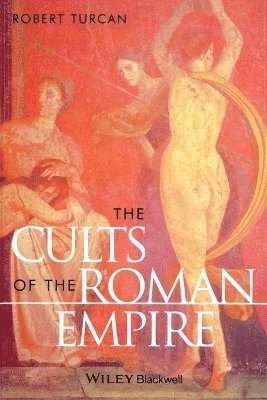
This is a vivid account of what their gods meant to the Romans from archaic times to late antiquity, and of the rites and rituals connected with them. After an introduction into the nature of classical religion, the book is divided into three parts: religions of the family and land; religions of the city; and religions of the empire. The book ends with a discussion of the rise and impact of Christianity.For the Romans, the author argues, religion was almost as much a form of insurance as it was a question of belief. The gods were valued according to the degree of protection they afforded against natural hazards and occult powers. They were a crucial source of tactical information in time of war and their approval was vital to the success of agriculture, marriage and childbirth. Appeasing the gods and enlisting their help involved ritual and sacrifice which required the arcane knoweldge of the priesthood. Because there were so many gods, it might be hard to know which one to invoke and perilous to get it wrong. The Romasn took their gods extremely seriously, there was nothing more complicated than a Roman sacrifice or more precise than the preparation of the meal offered to the god; the slightest infringement of the priestly recipe would spoil the feast and might jeopardise the affairs of Rome itself. Robert Turcan shows that Roman attitudes towards the gods continued to be pragmatic throughout the millennium coverd by the book. Useful gods discovered among conquered peoples of the Empire were adopted without rejecting any from the old pantheon. Traditional worship remained strong long after the emperors converted to Christianity, and many of the early Roman Christians maintained a tactful respect for older deities. Up-to-date in its archaeological and epigraphic evidence, and drawing extensively on a wide range of relevant literary material this book is ideally suited for undergraduate courses in the history of Romand and its religions. Its urbane style and l
178 kr
Skickas inom 11-20 vardagar
The history of Deal has been shaped by its position on the extreme eastern coastline of Kent. Close to France, it was of such significant naval importance that Henry VIII chose to erect a castle here on the concentric circle plan. Revolutionary at the time, it is beautifully preserved today. Barracks were established here from 1861. This corps of the British Army was infamously bombed by the IRA in 1989, and the School of Music departed seven years later. Many literary references to Deal refer to its villainous populace, which was often associated with smuggling. Today, chic cafes, shops and holiday cottages reveal an atmosphere of quiet prosperity. Pepys' and Cobette's derogatory terms of 'pitiful' and 'detestable' are a world away from modern Deal. Instead, as the images collected here show, through time the town has become a hidden gem of idyllic existence.
178 kr
Skickas
Disgusted of Tunbridge Wells' is a well worn cliche, however, it does encapsulate the genteel character of this Kentish spa. Before the popularity of sea bathing, holidaymakers gathered here to drink the waters for medicinal purposes. The town grew to accommodate visitors with smart hotels and attractive terraces of Georgian and Victorian houses. The area's sandstone geology is revealed at Wellington and High Rocks and there is also evidence of Roman occupation in the town's roots. Today a low crime rate, relatively full employment, attractive open spaces, good transport links to London and a vibrant retail sector have created a contented community. Changes to the townscape over the past century have been mostly sympathetic, but still very important. The photographs in this book provide a fleeting view of Tunbridge Wells through time, and provide the reader with a fascinating tour of this Kentish spa's eclectic past and present.
178 kr
Skickas inom 11-20 vardagar
Tonbridge is a thriving market town, situated on the upper reaches of the River Medway in the heart of Kent. Having expanded with the coming of the railway, today it is a popular commuter town. Also notable are the town's architectural features: the remnants of its ancient castle, the great public school buildings, and the beautiful period homes, which are dotted around the adjacent countryside, known for the production of hops and fruit. Amid the surrounding beauty, sport also plays a part in Tonbridge. Cricket has strong roots here; the area is remarkably close to the epicentre of the sport's genesis. Tonbridge & Around Through Time shows the changes the town and the nearby villages of East Peckham, Hildenborough, Penshurst, Leigh, Hadlow and Tudeley have seen, from the impact of the motor car to the expansion of homes, in this captivating contrast of old and new photographs.
178 kr
Skickas inom 11-20 vardagar
Broadstairs is rightly known as ‘the jewel in Thanet’s crown’. This most easterly, quintessentially English seaside resort exudes much charm. Its sandy beaches provide wonderful opportunities for family bathing. Late Regency and more predominantly Victorian or Edwardian buildings reflect growth following railway expansion. Historically, the town’s name was linked to broad stairs which were cut into steep cliffs above its shoreline, leading to an ancient religious shrine.A fishing village with smuggling activities is all that existed in Georgian times. By 1815 it was here that the exultant news of victory at Waterloo first reached our country. Later in the nineteenth century Charles Dickens frequented the borough. There are two museums relating to his life and great works. Festivals marking his visits along with food fêtes enliven summer gaiety. All these vivid scenes are pictured within this collection of scenes, past and present. They are a colourful illustration of how time has kindly preserved and simply enhanced this Kentish gem.
163 kr
Skickas inom 11-20 vardagar
Sittingbourne’s steady growth from mid-Victorian times began with the construction of a railway line linking London to east Kent port, bisecting the town. Sittingbourne was renowned for its brick and cement manufacture, although papermaking subsequently predominated the town’s industry. Workers for these trades often moved from the countryside. Terraces of houses accommodating them arose either side of the main Watling Street thoroughfare. Economic growth continues apace today, with a far greater range of commercial enterprises.This fantastic selection of old postcards provides an interesting insight into mainly Edwardian times – a vital stage in this town’s development. They are fascinating too because of their universal usage; as commonplace as emails, yet just as revolutionary in their heyday.
163 kr
Skickas inom 11-20 vardagar
Faversham has always been a hard-working town. Its very name, which was derived from Latin and Old English, means ‘the metal workers’ village’, and in Saxon times the area was a centre for the manufacture of jewellery. Its town market has been in continuous use for over 900 years and when King Steven established a huge abbey here it became, for a while, capital of the kingdom. With a navigable creek leading to the Swale seaway, fishermen have always plied their trade here; in fact the Faversham Oyster Fisheries Co. is recorded in the Guinness Book of Records as being the oldest. Shepherd Neame’s Brewery, which was established here, also claims to be Britain’s oldest, and many surrounding farms supply the essential raw material: hops. Faversham is best known, though, for its explosives industry, which has been based here since the seventeenth century. Faversham gunpowder blasted through rocks and tunnels to allow faster growth of the railways. They also aided extraction of vital ores and minerals from mines. An increase in demand led to enlarged works at two different sites until an accidental explosion in 1916 brought about decline.Faversham at Work explores the working life of this charming Kent market town nestled in the heart of the ‘Garden of England’. In a fascinating series of contemporary photographs and illustrations, it looks at the rise and fall of the explosives industry, the town’s long association with shipbuilding, the influence of brick making during the Victorian era and the continuing importance of fruit growing on the local economy.
178 kr
Skickas inom 11-20 vardagar
Faversham's many natural advantages attracted settlers from earliest times. The surrounding farmland is most productive with fruit and hops grown in vast quantities. Both crops are still significant and the town is proud to be the centre of Kent's brewing industry. Of national importance is a collection of over 4,000 fruit varieties at Bogdale. Brick making is another local speciality, though albeit on a much smaller scale than a century ago. Haulage of these heavy loads to mainly London markets was by Thames sailing barges. Today a galaxy of fine country houses lie hidden close by in scenic countryside. While in the town centre the main streets are fine examples of effective conservation. Much credit goes to the townspeople who resisted town planners' inappropriate schemes with a true appreciation of their valuable heritage.
178 kr
Skickas inom 11-20 vardagar
Rochester lends the Medway towns a degree of class. It is the ancient core of Kent's largest conurbation. Instantly recognisable by its splendid Norman castle and beautiful cathedral, its shops abound with references to Charles Dickens - who lived and worked nearby. Historically the town was established at the lowest covenient crossing point of the river Medway. The Romans built the first bridge on their vital Watling Street route between Dover and London. Strategically important from a naval point of view Rochester was the target for an embarrassing raid by Dutch marauders in the late seventeenth century. Accordingly an expansive dockyard base was constructed at the adjacent fishing village of Chatham. Today Rochester is a thriving town. Its bustling high street is renowned for many specialist shops while the passageways are often enlivened by revellers celebrating Dickens festivals.