Robert Wiesenberger – författare
Visar alla böcker från författaren Robert Wiesenberger. Handla med fri frakt och snabb leverans.
7 produkter
7 produkter
589 kr
Tillfälligt slut
453 kr
Tillfälligt slut
222 kr
Skickas inom 5-8 vardagar
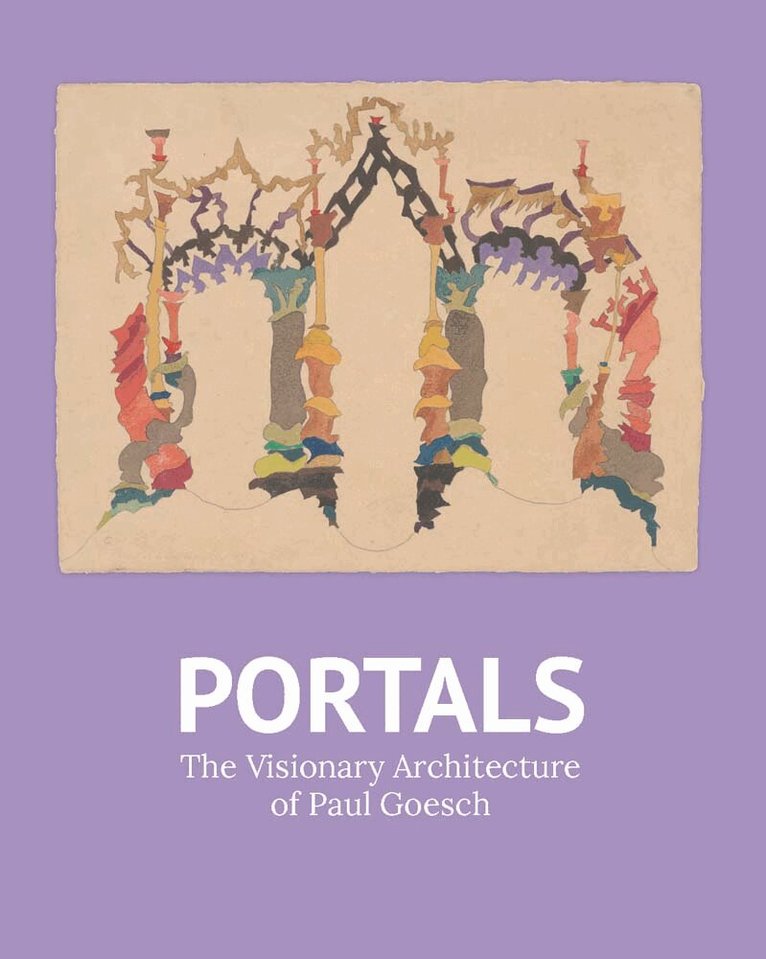
The first monographic publication in English on German Expressionist artist and architect Paul Goesch, who long struggled with—and was persecuted and ultimately murdered for—his schizophreniaPaul Goesch (1885–1940) produced one of the most inventive, peculiar, and poignant bodies of work to emerge from Weimar Germany. An artist and architect, he made both fanciful figurative drawings and visionary architectural designs. The latter, from the extensive holdings of the Centre for Canadian Architecture in Montreal, are the focus of this publication, the first in English dedicated to Goesch. Amid the aftermath of First World War, a generation of young architects sketched their visions for utopia. Goesch stands out among them for his formal range, his kaleidoscopic color sense, and his playful and pluralistic embrace of architectural history, as well as for his long struggles with schizophrenia, a condition for which he was institutionalized and ultimately murdered by the Nazis. This publication highlights the decorative portals and archways that predominate in Goesch’s work. These represent the artist’s metaphysical passages, as a spiritualist steeped in diverse religious and esoteric beliefs, and his altered psychological states. They also suggest Goesch’s liminal status between art and architecture, “sanity” and “madness,” the trained insider and the institutionalized “outsider.” Celebrated in his time and since forgotten, Goesch is presented here in the context of period discussions on art, architecture, and mental health.Distributed for the Clark Art institute Exhibition Schedule:Clark Art Institute, Williamstown, MA(March 18–June 11, 2023)
259 kr
Skickas inom 5-8 vardagar
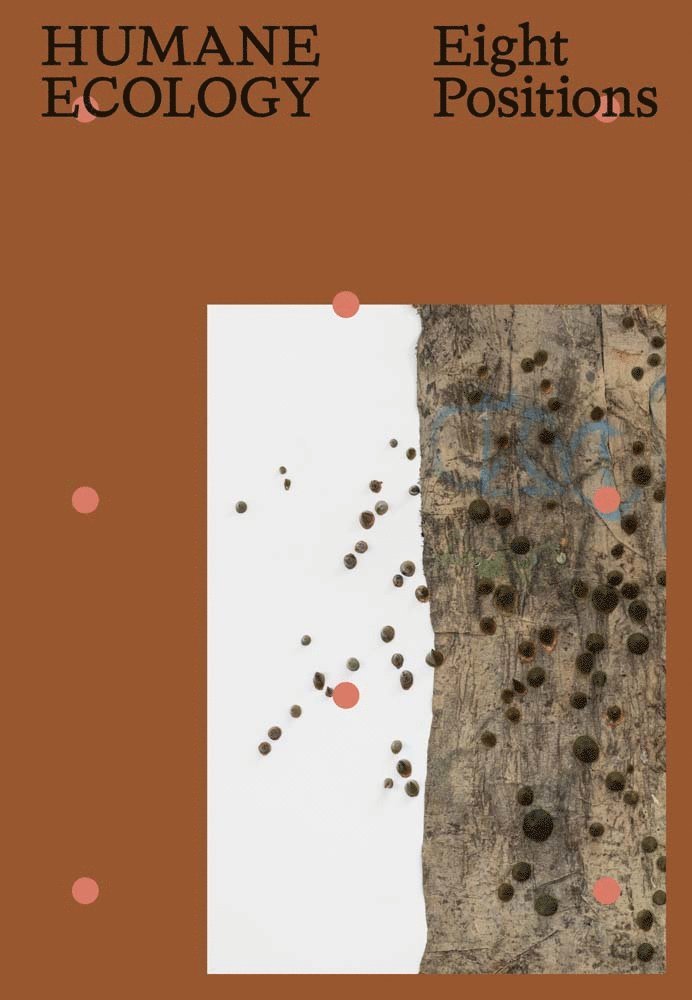
A presentation of eight contemporary artists whose work considers environmental questions in terms of their social and political implications Humane Ecology: Eight Positions features a group of contemporary artists who consider the intertwined natural and social dimensions of environmental questions: Eddie Rodolfo Aparicio, Korakrit Arunanondchai, Carolina Caycedo, Allison Janae Hamilton, Juan Antonio Olivares, Christine Howard Sandoval, Pallavi Sen, and Kandis Williams. These artists—through their work in sculpture, video, sound installation, and plantings—think in the relational terms implied by ecology, the study of how organisms relate to one another and their environment. They explore themes such as the extraction and exploitation of both places and people, kinships with the more-than-human world, and ancient traditions of relation to the land that take on new urgency and form. Against posthumanist tendencies to “decenter” the human, these artists center different humans, ones routinely excluded from dominant discourses of environmentalism. The publication presents entries on each artist in addition to scholarly essays on the exhibition concept, genealogies of land art, and settler colonial histories of the Berkshires. Distributed for the Clark Art Institute Exhibition Schedule: Clark Art Institute, Williamstown, MA(July 15–October 29, 2023)
238 kr
Skickas inom 5-8 vardagar
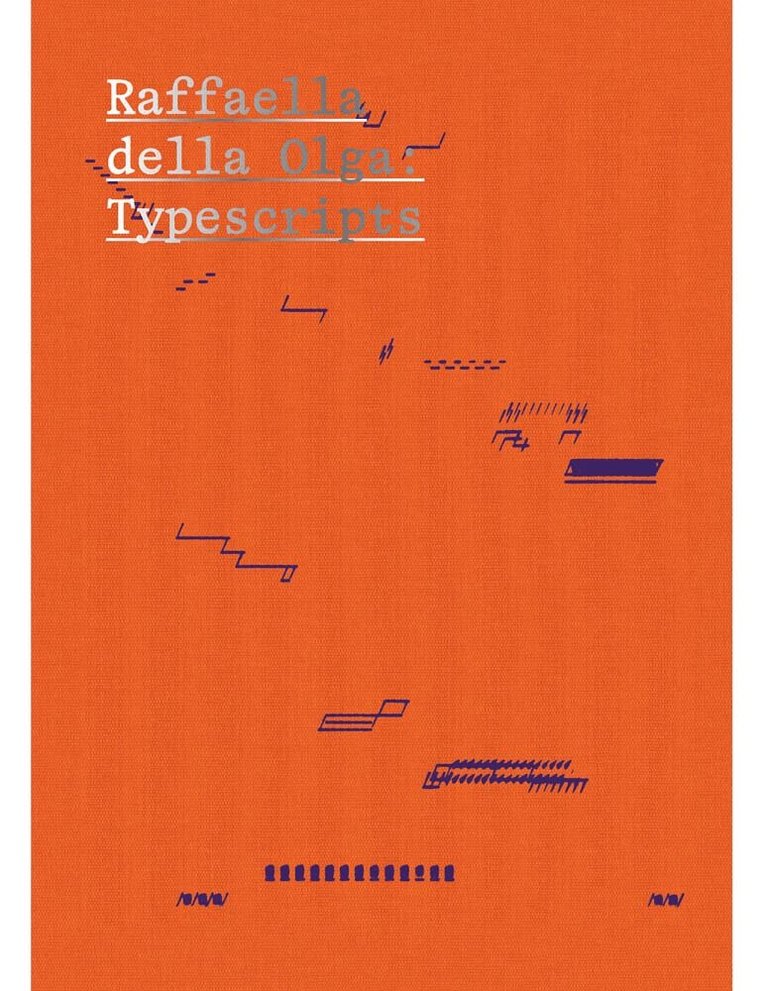
The first book on an innovative artist who uses modified typewriters to create abstract and colorful bookworks and paintings Raffaella della Olga makes unique artist’s books using modified typewriters and multicolor ink ribbons on a range of materials—from tracing paper to photo paper to sandpaper. Della Olga (b. 1967, Italy; lives and works in France) worked briefly as an attorney before becoming an artist; now, seeking refuge from the limitations of language, she grinds down the characters on her machines and communicates through form, color, texture, and rhythm. Della Olga plays her typewriters like instruments, following a script in some cases and improvising freely in others. Her output includes artist’s books, typed paintings, and cut fabric works.The first monograph on della Olga, this book features photographic documentation of her singular studio practice; two scholarly essays on her work in relation to conceptual and minimalist art, as well as typewriter art, concrete poetry, and experimental music; a conversation with the artist; and color plates of her work. Distributed for the Clark Art Institute Exhibition Schedule: Clark Art Institute, Williamstown, MA(November 22, 2025–May 31, 2026)
453 kr
Kommande
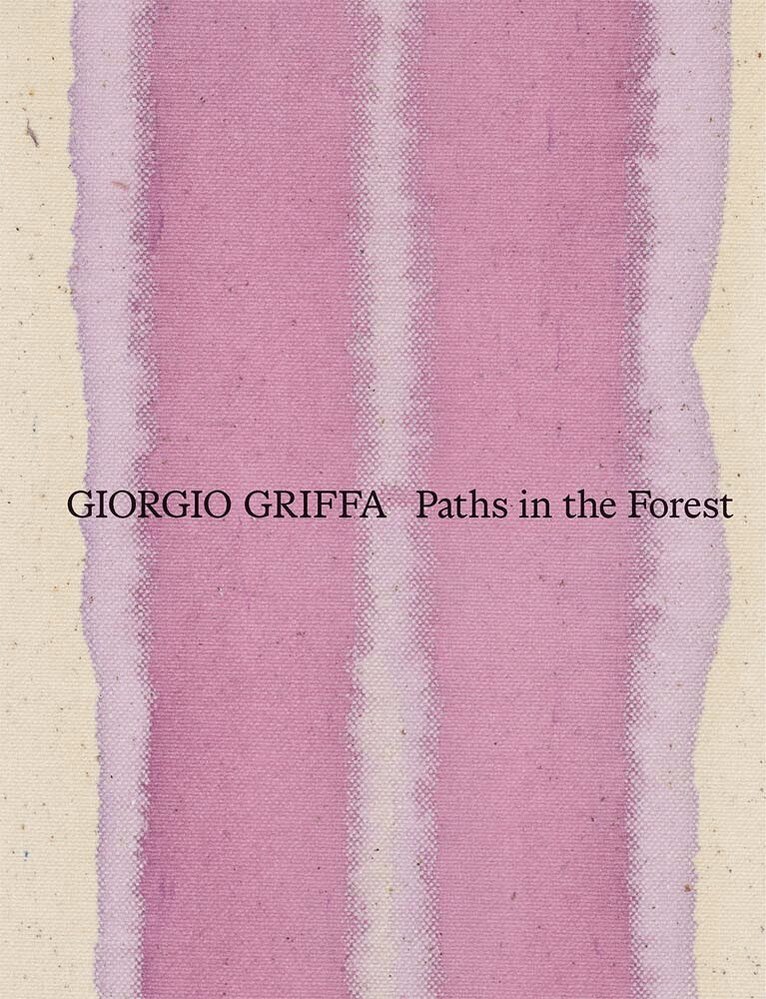
A vividly illustrated catalogue accompanying legendary painter Giorgio Griffa’s first museum exhibition in the United States Giorgio Griffa (b. 1936) has been a vital figure in Italian art for more than half a century. In a signature palette of pastel colors, the artist records lines, letters, and numbers with acrylic paint on unstretched, unprimed canvas. At once methodical and lyrical, his painting tests the capacities of his materials and the limits of representation. In 2026, coinciding with the artist’s 90th birthday, the Clark Art Institute presents his first solo museum exhibition in the United States. Griffa’s references range from poetry and mathematics to music, but he has consistently turned to the natural world, and trees in particular, to articulate his interest in relationality, materiality, difference, and growth. As he explains of his various bodies of work: “There is no progress in my cycles. They are different paths in the same forest.” Giorgio Griffa: Paths in the Forest presents a selection from almost sixty years of the artist’s work, with some paintings published for the first time. Scholarly essays offer context on different aspects of Griffa’s career and are accompanied by an original text by the artist. Distributed for the Clark Art Institute Exhibition Schedule: Clark Art Institute, Williamstown, MA(June 13–October 12, 2026)
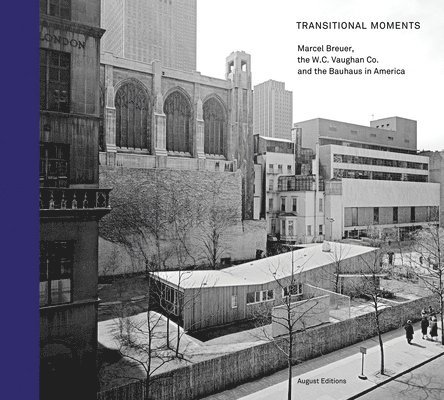
Transitional Moments
Marcel Breuer, W.C. Vaughan & Co. and the Bauhaus in America
Inbunden, Engelska, 2019
452 kr
Skickas inom 5-8 vardagar
Architect Marcel Breuer’s House in the Museum Garden, now considered one of the most influential architecture exhibitions of the 20th century, was commissioned by the Museum of Modern Art and built in their garden in 1949. Exhibited to record attendance, the house featured the updated Bauhaus prescriptions for modern living—an airy, informal combination living room/dining room and a pass-through kitchen—and was intended to inspire the future of American housing.The project featured custom hardware produced by W.C. Vaughan in collaboration with Breuer, which included everything from mahogany door knobs to cabinet hinges. Vaughan also supplied hardware for Breuer’s iconic Frank House, the Geller House, Breuer’s own houses in Massachusetts and Connecticut plus houses by Walter Gropius, Philip Johnson and other modernist masters.An essay by historian Robert Wiesenberger, historical black-and-white and color photographs by Ezra Stoller plus shop drawings by Vaughan of the hardware complete this deeply engaging and important architectural publication.