Robert Zaretsky - Böcker
Visar alla böcker från författaren Robert Zaretsky. Handla med fri frakt och snabb leverans.
13 produkter
13 produkter
621 kr
Skickas inom 5-8 vardagar
Providing an up-to-date synthesis of the history of an extraordinary nation--one that has been shrouded in myths, many of its own making--France and Its Empire Since 1870 seeks both to understand these myths and to uncover the complicated and often contradictory realities that underpin them. It situates modern French history in transnational and global contexts and also integrates the themes of imperialism and immigration into the traditional narrative.Authors Alice L. Conklin, Sarah Fishman, and Robert Zaretsky begin with the premise that while France and the U.S. are sister republics, they also exhibit profound differences that are as compelling as their apparent similarities. The authors frame the book around the contested emergence of the French Republic--a form of government that finally appears to have a permanent status in France--but whose birth pangs were much more protracted than those of the American Republic. Presenting a lively and coherent narrative of the major developments in France's tumultuous history since 1870, the authors organize the chapters around the country's many turning points and confrontations. They also offer detailed analyses of politics, society, and culture, considering the diverse viewpoints of men and women from every background including the working class and the bourgeoisie, immigrants, Catholics, Jews and Muslims, Bretons and Algerians, rebellious youth, and gays and lesbians.
599 kr
Skickas inom 5-8 vardagar
A new history of modern France built around five innovative features that reviewers strongly support. The text will maintain the 'traditional' narrative that students need and integrate the themes of imperialism and immigration into the narrative, while situatiing French history in both transnational and global contexts. It will also integrate recent work in social, intellectual, and cultural history, which, as readers stressed, the three authors and their complementary strengths are ideally suited to accomplish. The book also includes ample illustrations, maps and vignettes that will make the book inviting to students and facilitate classroom discussion. There is no consensus concerning the text's chronology, owing to the fact that courses in modern French history do not have standard dates. Some courses cover 1789 to the present, others start in 1815, 1870, even 1914. The field of modern France is moving generally toward a greater emphasis on the twentieth century and on France's interaction with other parts of the globe.
200 kr
Skickas inom 7-10 vardagar
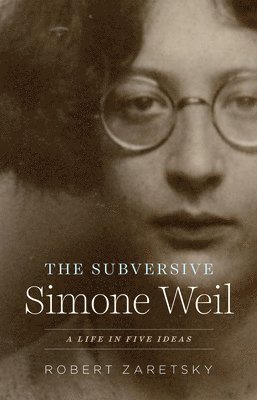
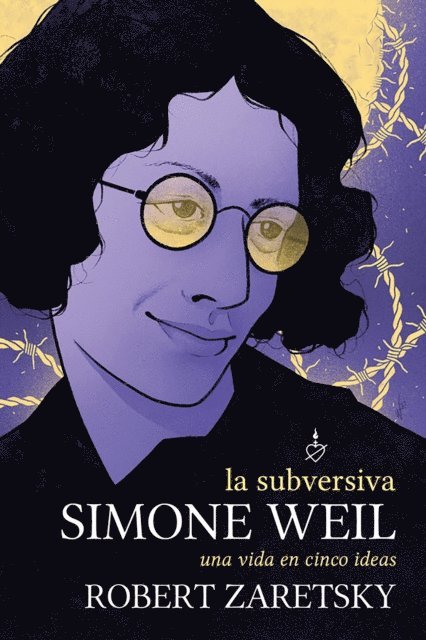
Known as the "patron saint of all outsiders," Simone Weil (1909-43) was one of the twentieth century's most remarkable thinkers, a philosopher who truly lived by her political and ethical ideals. In a short life framed by the two world wars, Weil taught philosophy to lycee students and organized union workers, fought alongside anarchists during the Spanish Civil War and labored alongside workers on assembly lines, joined the Free French movement in London and died in despair because she was not sent to France to help the Resistance.Though Weil published little during her life, after her death, thanks largely to the efforts of Albert Camus, hundreds of pages of her manuscripts were published to critical and popular acclaim. While many seekers have been attracted to Weil's religious thought, Robert Zaretsky gives us a different Weil, exploring her insights into politics and ethics, and showing us a new side of Weil that balances her contradictions-the rigorous rationalist who also had her own brand of Catholic mysticism; the revolutionary with a soft spot for anarchism yet who believed in the hierarchy of labor; and the humanitarian who emphasized human needs and obligations over human rights. Reflecting on the relationship between thought and action in Weil's life, The Subversive Simone Weil honors the complexity of Weil's thought and speaks to why it matters and continues to fascinate readers today.
196 kr
Skickas inom 7-10 vardagar
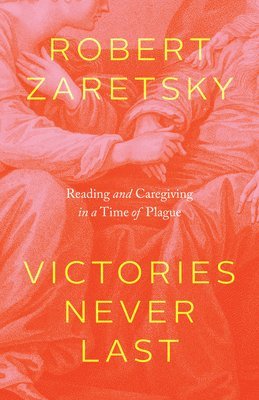
A timely and nuanced book that sets the author's experience as a nursing home volunteer during the pandemic alongside the wisdom of five great thinkers who confronted their own plagues.In any time of disruption, grief, or uncertainty, many of us seek comfort or wisdom in the work of great writers who endured similar circumstances. During the first year of the COVID-19 pandemic, historian and biographer Robert Zaretsky did much the same while also working as a volunteer in a nursing home in south Texas. When not caring for those isolated by the health crisis, he turned to great novelists, essayists, and historians of the past to help him make sense of his experiences at the residence and the emotional and physical enormity of the pandemic. In Victories Never Last Zaretsky weaves his reflections on the pandemic siege of his nursing home with the experiences of six writers during their own times of plague: Thucydides, Marcus Aurelius, Michel de Montaigne, Daniel Defoe, Mary Shelley, and Albert Camus, whose The Plague provides the title of this book. Zaretsky delves into these writers to uncover lessons that can provide deeper insight into our pandemic era. At the same time, he goes beyond the literature to invoke his own experience of the tragedy that enveloped his Texas nursing home, one which first took the form of chronic loneliness and then, inevitably, the deaths of many residents whom we come to know through Zaretsky's stories. In doing so, Zaretsky shows the power of great literature to connect directly to one's own life in a different moment and time. For all of us still struggling to comprehend this pandemic and its toll, Zaretsky serves as a thoughtful and down-to-earth guide to the many ways we can come to know and make peace with human suffering.
121 kr
Skickas inom 7-10 vardagar
Known as the “patron saint of all outsiders,” Simone Weil (1909–43) was one of the twentieth century’s most remarkable thinkers, a philosopher who truly lived by her political and ethical ideals. In a short life framed by the two world wars, Weil taught philosophy to lycée students and organized union workers, fought alongside anarchists during the Spanish Civil War and labored alongside workers on assembly lines, joined the Free French movement in London and died in despair because she was not sent to France to help the Resistance.Though Weil published little during her life, after her death, thanks largely to the efforts of Albert Camus, hundreds of pages of her manuscripts were published to critical and popular acclaim. While many seekers have been attracted to Weil’s religious thought, Robert Zaretsky gives us a different Weil, exploring her insights into politics and ethics, and showing us a new side of Weil that balances her contradictions—the rigorous rationalist who also had her own brand of Catholic mysticism; the revolutionary with a soft spot for anarchism yet who believed in the hierarchy of labor; and the humanitarian who emphasized human needs and obligations over human rights. Reflecting on the relationship between thought and action in Weil’s life, The Subversive Simone Weil honors the complexity of Weil’s thought and speaks to why it matters and continues to fascinate readers today.
517 kr
Skickas inom 5-8 vardagar
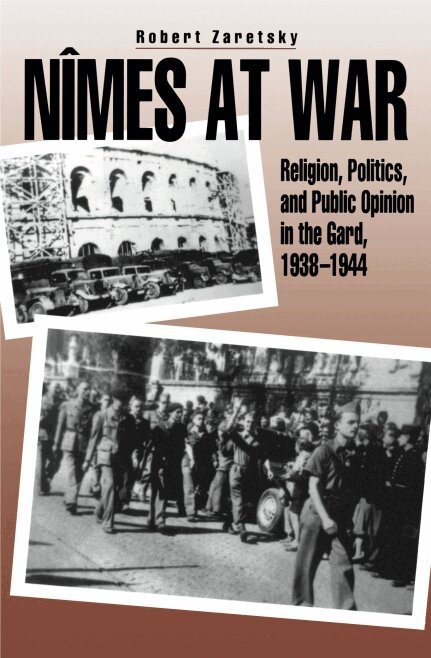
"Vichy will not go away. As I write, France is in the throes of the Paul Touvier affair. . . . The Touvier affair is just the most recent expression of what Henry Rousso has called the Vichy syndrome." So begins Robert Zaretsky's timely study of everyday life in France during the "dark years" of Vichy. While many studies of Vichy France have either focused on specific lives or ideas or covered the period in broad and synthetic terms, local studies such as this promise to nuance our understanding of wartime France. By concentrating on the city of Nîmes and the department of the Gard, Zaretsky moves beyond generalizations concerning resistance and collaboration to consider issues of historical continuity and change within a specific local context. In the words and acts of local French men and women, he finds the character of "mentalities" in the heart of our own century.The Gard is well chosen as the focus of this study. From the sixteenth century onward, the region had been a flash point between warring Catholics and Protestants. By the early twentieth century, that tension had eased but not disappeared. Zaretsky examines the dynamics between local Protestant, Catholic, and Jewish communities, arguing that with the advent of Vichy—a regime that, if not clerical, was deeply deferential to the Catholic Church—tension and conflict resurfaced in the Gard. Nîmes at War is based on a wealth of archival materials—police and prefectoral reports, official departmental documents, local secular and religious newspapers, and letters intercepted by the regime's security apparatus—much of which has only recently been opened to researchers. Zaretsky's detailed narrative will undoubtedly provoke further reconsideration of the complex and ambiguous world of Vichy.
468 kr
Skickas inom 5-8 vardagar
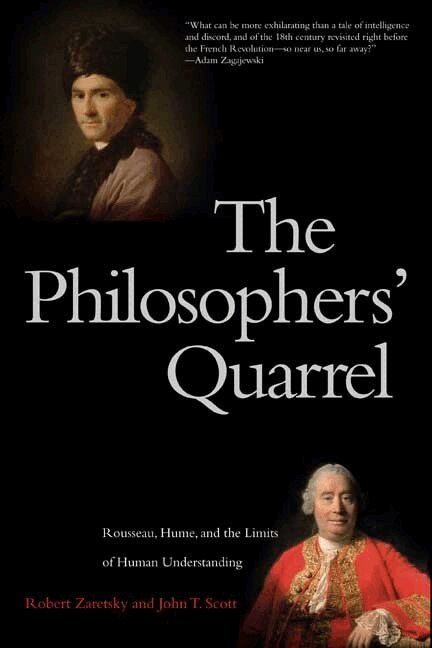
The dramatic collapse of the friendship between Rousseau and Hume, in the context of their grand intellectual quest to conquer the limits of human understanding.The rise and spectacular fall of the friendship between the two great philosophers of the eighteenth century, barely six months after they first met, reverberated on both sides of the Channel. As the relationship between Jean-Jacques Rousseau and David Hume unraveled, a volley of rancorous letters was fired off, then quickly published and devoured by aristocrats, intellectuals, and common readers alike. Everyone took sides in this momentous dispute between the greatest of Enlightenment thinkers.In this lively and revealing book, Robert Zaretsky and John T. Scott explore the unfolding rift between Rousseau and Hume. The authors are particularly fascinated by the connection between the thinkers’ lives and thought, especially the way that the failure of each to understand the other—and himself—illuminates the limits of human understanding. In addition, they situate the philosophers’ quarrel in the social, political, and intellectual milieu that informed their actions, as well as the actions of the other participants in the dispute, such as James Boswell, Adam Smith, and Voltaire. By examining the conflict through the prism of each philosopher’s contribution to Western thought, Zaretsky and Scott reveal the implications for the two men as individuals and philosophers as well as for the contemporary world.
421 kr
Skickas inom 10-15 vardagar
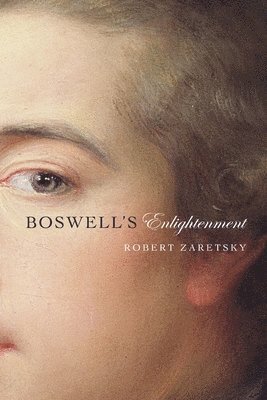
Throughout his life, James Boswell struggled to fashion a clear account of himself, but try as he might, he could not reconcile the truths of his era with those of his religious upbringing. Boswell’s Enlightenment examines the conflicting credos of reason and faith, progress and tradition that pulled Boswell, like so many eighteenth-century Europeans, in opposing directions. In the end, the life of the man best known for writing Samuel Johnson’s biography was something of a patchwork affair. As Johnson himself understood: “That creature was its own tormentor, and I believe its name was BOSWELL.”Few periods in Boswell’s life better crystallize this internal turmoil than 1763–1765, the years of his Grand Tour and the focus of Robert Zaretsky’s thrilling intellectual adventure. From the moment Boswell sailed for Holland from the port of Harwich, leaving behind on the beach his newly made friend Dr. Johnson, to his return to Dover from Calais a year and a half later, the young Scot was intent on not just touring historic and religious sites but also canvassing the views of the greatest thinkers of the age. In his relentless quizzing of Voltaire and Rousseau, Hume and Johnson, Paoli and Wilkes on topics concerning faith, the soul, and death, he was not merely a celebrity-seeker but—for want of a better term—a truth-seeker. Zaretsky reveals a life more complex and compelling than suggested by the label “Johnson’s biographer,” and one that 250 years later registers our own variations of mind.
Catherine & Diderot
The Empress, the Philosopher, and the Fate of the Enlightenment
Inbunden, Engelska, 2019
266 kr
Skickas inom 10-15 vardagar
A dual biography crafted around the famous encounter between the French philosopher who wrote about power and the Russian empress who wielded it with great aplomb.In October 1773, after a grueling trek from Paris, the aged and ailing Denis Diderot stumbled from a carriage in wintery St. Petersburg. The century’s most subversive thinker, Diderot arrived as the guest of its most ambitious and admired ruler, Empress Catherine of Russia. What followed was unprecedented: more than forty private meetings, stretching over nearly four months, between these two extraordinary figures. Diderot had come from Paris in order to guide—or so he thought—the woman who had become the continent’s last great hope for an enlightened ruler. But as it soon became clear, Catherine had a very different understanding not just of her role but of his as well. Philosophers, she claimed, had the luxury of writing on unfeeling paper. Rulers had the task of writing on human skin, sensitive to the slightest touch.Diderot and Catherine’s series of meetings, held in her private chambers at the Hermitage, captured the imagination of their contemporaries. While heads of state like Frederick of Prussia feared the consequences of these conversations, intellectuals like Voltaire hoped they would further the goals of the Enlightenment.In Catherine & Diderot, Robert Zaretsky traces the lives of these two remarkable figures, inviting us to reflect on the fraught relationship between politics and philosophy, and between a man of thought and a woman of action.
192 kr
Skickas inom 7-10 vardagar
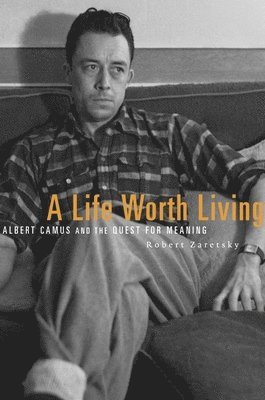
In his Nobel Prize acceptance speech, Albert Camus declared that a writer's duty is twofold: "the refusal to lie about what one knows and the resistance against oppression." These twin obsessions help explain something of Camus' remarkable character, which is the overarching subject of this sympathetic and lively book. Through an exploration of themes that preoccupied Camus--absurdity, silence, revolt, fidelity, and moderation--Robert Zaretsky portrays a moralist who refused to be fooled by the nobler names we assign to our actions, and who pushed himself, and those about him, to challenge the status quo.Though we do not face the same dangers that threatened Europe when Camus wrote The Myth of Sisyphus and The Stranger, we confront other alarms. Herein lies Camus' abiding significance. Reading his work, we become more thoughtful observers of our own lives. For Camus, rebellion is an eternal human condition, a timeless struggle against injustice that makes life worth living. But rebellion is also bounded by self-imposed constraints--it is a noble if impossible ideal. Such a contradiction suggests that if there is no reason for hope, there is also no occasion for despair--a sentiment perhaps better suited for the ancient tragedians than modern political theorists but one whose wisdom abides. Yet we must not venerate suffering, Camus cautions: the world's beauty demands our attention no less than life's train of injustices. That recognition permits him to declare: "It was the middle of winter, I finally realized that, within me, summer was inextinguishable."
221 kr
Skickas inom 10-15 vardagar
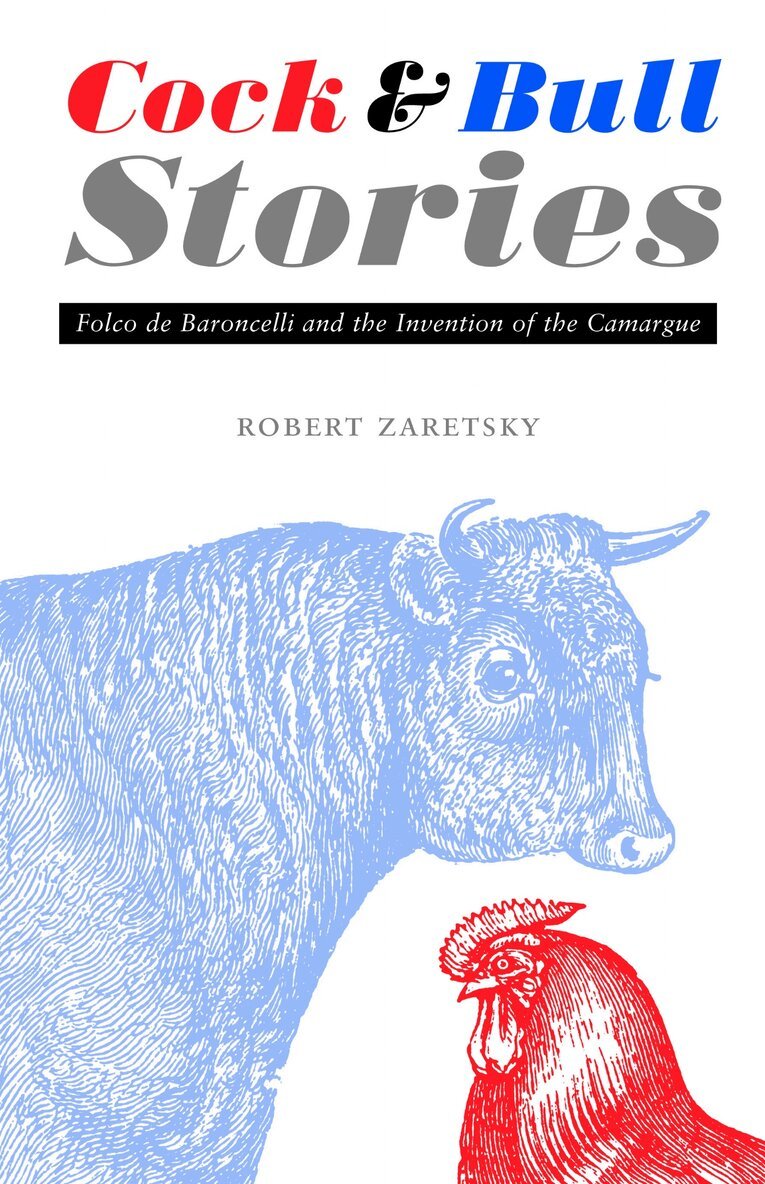
In the French Camargue—the delta surrounding the mouth of the Rhone River and part of the southern "nation" of Occitania—the bull is a powerful icon of nationalism, literature, and culture. How this came to be—how the Camargue bull came to confront the French cock, venerable symbol of a unified and republican France—is the story told in this ingenious study. Robert Zaretsky considers how in fin-de-siècle France the young writer Folco de Baroncelli, inspired by the history of the American West, in particular the fate of the Oglala Sioux and other Native American peoples, reinvented the history of Occitania. Galvanized by the example set by Buffalo Bill Cody, Baroncelli recast the Camargue as "le far-west" of France, creating the "immemorial" traditions he battled to protect. Zaretsky's study examines the creative tension between center and periphery in the making of modern France: just as the political and intellectual elite of the Third Republic "invented" a certain kind of France, so too did a coterie of southern writers, including Baroncelli, "invent" a certain kind of Camargue. The story of how the Camargue bull challenged the French cock in this ideological and cultural Wild West deepens our appreciation of the complex dynamic that has created contemporary France.
2 022 kr
Skickas inom 10-15 vardagar
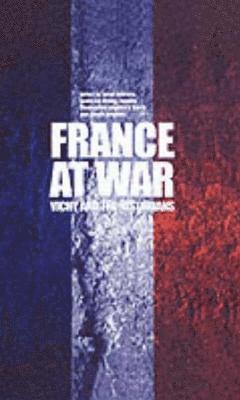
This volume about the Vichy years and the German Occupation of 1940-1944 uses as a starting point Robert Paxton's Vichy France: Old Guard and New Order, which provided a meticulously documented portrait of a nation consumed by indecision and self-doubt. The essays by the foremost scholars in the field place the Occupation of France in the context of other episodes in French history, and in the context of other occupied countries during World War II. They consider communities of belief during the Vichy years, examine how the experience of war and occupation shaped the everyday lives of people, and look at the ongoing reconstruction of the memory of the Vichy years.This collection of essays takes up where Paxton left off and shows how the last twenty-five years of scholarship have made problematic the tidy categories used to describe behaviour during the Vichy years. The authors point to new directions in the field and address both the myth of the 'nation of forty million resisters' that Paxton demolished and the creation of a new myth -- that the French have failed or refused to confront their past.
337 kr
Skickas inom 3-6 vardagar