Robin Blaetz - Böcker
Visar alla böcker från författaren Robin Blaetz. Handla med fri frakt och snabb leverans.
4 produkter
4 produkter
1 212 kr
Skickas inom 3-6 vardagar
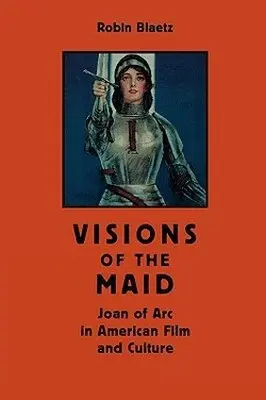
Representations of Joan of Arc have been used in the United States for the past 200 years, appearing in advertizing, cartoons, popular song, art, criticism and propaganda. The presence of the 15th-century French heroine in the cinema is particularly intriguing in relation to the role of women during wartime. Robin Blaetz argues that a mythic Joan of Arc was used during the First World War to cast a mediaeval glow over an unpopular war, but that she only appeared after the Second World War to encourage women to abandon their wartime jobs and return to the home. In ""Visions of the Maid"", Blaetz examines three pivotal films - Cecil B. DeMille's 1916 ""Joan the Woman"", Victor Fleming's 1948 ""Joan of Arc"", and Otto Preminger's 1957 ""Saint Joan"" - along with every other film about the heroine made or distributed in the United States, as well as a broad array of popular culture references. Blaetz is particularly concerned with issues of gender and the ways in which Joan of Arc's androgyny, virginity and sacrificial victimhood were evoked in relation to the evolving roles of women during war throughout the 20th century.
309 kr
Skickas inom 10-15 vardagar
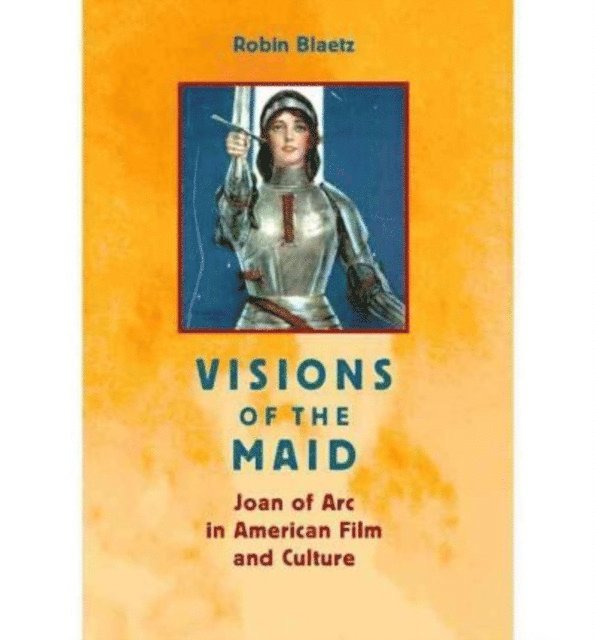
Representations of Joan of Arc have been used in the United States for the past 200 years, appearing in advertizing, cartoons, popular song, art, criticism and propaganda. The presence of the 15th-century French heroine in the cinema is particularly intriguing in relation to the role of women during wartime. Robin Blaetz argues that a mythic Joan of Arc was used during the First World War to cast a mediaeval glow over an unpopular war, but that she only appeared after the Second World War to encourage women to abandon their wartime jobs and return to the home. In ""Visions of the Maid"", Blaetz examines three pivotal films - Cecil B. DeMille's 1916 ""Joan the Woman"", Victor Fleming's 1948 ""Joan of Arc"", and Otto Preminger's 1957 ""Saint Joan"" - along with every other film about the heroine made or distributed in the United States, as well as a broad array of popular culture references. Blaetz is particularly concerned with issues of gender and the ways in which Joan of Arc's androgyny, virginity and sacrificial victimhood were evoked in relation to the evolving roles of women during war throughout the 20th century.
1 372 kr
Skickas inom 7-10 vardagar
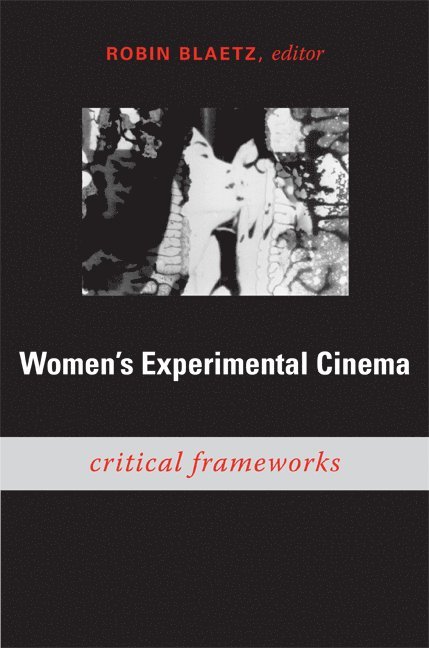
Women’s Experimental Cinema provides lively introductions to the work of fifteen avant-garde women filmmakers, some of whom worked as early as the 1950s and many of whom are still working today. In each essay in this collection, a leading film scholar considers a single filmmaker, supplying biographical information, analyzing various influences on her work, examining the development of her corpus, and interpreting a significant number of individual films. The essays rescue the work of critically neglected but influential women filmmakers for teaching, further study, and, hopefully, restoration and preservation. Just as importantly, they enrich the understanding of feminism in cinema and expand the terrain of film history, particularly the history of the American avant-garde.The contributors examine the work of Marie Menken, Joyce Wieland, Gunvor Nelson, Yvonne Rainer, Carolee Schneemann, Barbara Rubin, Amy Greenfield, Barbara Hammer, Chick Strand, Marjorie Keller, Leslie Thornton, Abigail Child, Peggy Ahwesh, Su Friedrich, and Cheryl Dunye. The essays highlight the diversity in these filmmakers’ forms and methods, covering topics such as how Menken used film as a way to rethink the transition from abstract expressionism to Pop Art in the 1950s and 1960s, how Rubin both objectified the body and investigated the filmic apparatus that enabled that objectification in her film Christmas on Earth (1963), and how Dunye uses film to explore her own identity as a black lesbian artist. At the same time, the essays reveal commonalities, including a tendency toward documentary rather than fiction and a commitment to nonhierarchical, collaborative production practices. The volume’s final essay focuses explicitly on teaching women’s experimental films, addressing logistical concerns (how to acquire the films and secure proper viewing spaces) and extending the range of the book by suggesting alternative films for classroom use.Contributors. Paul Arthur, Robin Blaetz, NoËl Carroll, Janet Cutler, Mary Ann Doane, Robert A. Haller, Chris Holmlund, Chuck Kleinhans, Scott MacDonald, Kathleen McHugh, Ara Osterweil, Maria Pramaggiore, Melissa Ragona, Kathryn Ramey, M. M. Serra, Maureen Turim, William C. Wees
414 kr
Skickas inom 7-10 vardagar
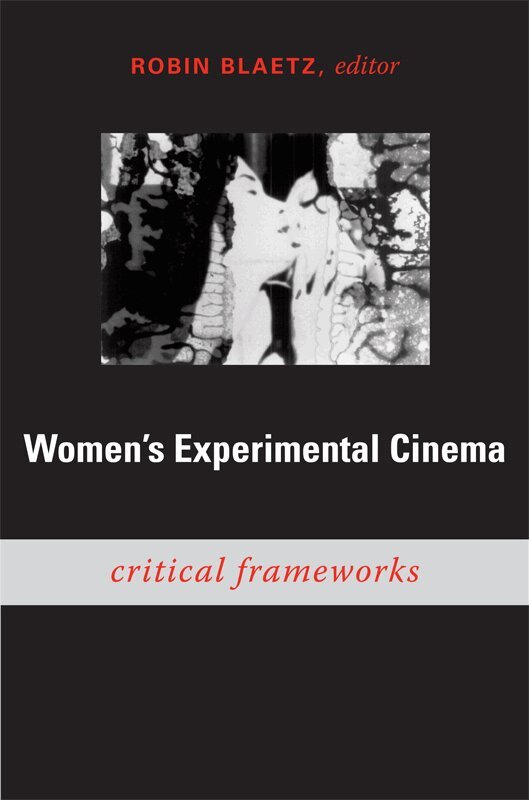
Women’s Experimental Cinema provides lively introductions to the work of fifteen avant-garde women filmmakers, some of whom worked as early as the 1950s and many of whom are still working today. In each essay in this collection, a leading film scholar considers a single filmmaker, supplying biographical information, analyzing various influences on her work, examining the development of her corpus, and interpreting a significant number of individual films. The essays rescue the work of critically neglected but influential women filmmakers for teaching, further study, and, hopefully, restoration and preservation. Just as importantly, they enrich the understanding of feminism in cinema and expand the terrain of film history, particularly the history of the American avant-garde.The contributors examine the work of Marie Menken, Joyce Wieland, Gunvor Nelson, Yvonne Rainer, Carolee Schneemann, Barbara Rubin, Amy Greenfield, Barbara Hammer, Chick Strand, Marjorie Keller, Leslie Thornton, Abigail Child, Peggy Ahwesh, Su Friedrich, and Cheryl Dunye. The essays highlight the diversity in these filmmakers’ forms and methods, covering topics such as how Menken used film as a way to rethink the transition from abstract expressionism to Pop Art in the 1950s and 1960s, how Rubin both objectified the body and investigated the filmic apparatus that enabled that objectification in her film Christmas on Earth (1963), and how Dunye uses film to explore her own identity as a black lesbian artist. At the same time, the essays reveal commonalities, including a tendency toward documentary rather than fiction and a commitment to nonhierarchical, collaborative production practices. The volume’s final essay focuses explicitly on teaching women’s experimental films, addressing logistical concerns (how to acquire the films and secure proper viewing spaces) and extending the range of the book by suggesting alternative films for classroom use.Contributors. Paul Arthur, Robin Blaetz, NoËl Carroll, Janet Cutler, Mary Ann Doane, Robert A. Haller, Chris Holmlund, Chuck Kleinhans, Scott MacDonald, Kathleen McHugh, Ara Osterweil, Maria Pramaggiore, Melissa Ragona, Kathryn Ramey, M. M. Serra, Maureen Turim, William C. Wees