Robin Hastings - Böcker
Visar alla böcker från författaren Robin Hastings. Handla med fri frakt och snabb leverans.
4 produkter
4 produkter
Making the Most of the Cloud
How to Choose and Implement the Best Services for Your Library
Häftad, Engelska, 2013
731 kr
Skickas inom 10-15 vardagar
Cloud computing can be confusing - the number and types of services that are available through “the cloud” are growing by the day. Making the Most of the Cloud: How to Choose and Implement the Best Services for Your Library takes you through some of the more popular cloud services in libraries and breaks down what you need to know to pick the best one for your library. Some of the cloud services covered are:EmailIntegrated Library Systems (ILS)BackupsProject ManagementGraphics Softwareand much more...With chapters covering cloud topics from the definition of a “cloud” to security in the cloud, this book will be beneficial for any library which is thinking of moving their services outside their organization.
1 060 kr
Skickas inom 10-15 vardagar
Here, acclaimed technology author and speaker Robin Hastings brings both her own experience as a library’s IT manager with outsourcing technical functions—including email and network backups as well as basic hardware maintenance—and that of others in her network of library techies to round out the book to help libraries of all types and sizes save money and expand services. Outsourced functions covered here range from using an outside firm to assist in creating a new library website to outsourcing basic computer maintenance and network administration. Outsourcing Technology: A Practical Guide for Librarians has something for every size and type of library:Libraries with no IT people at all will learn how to create and manage an IT department made up of outside contractors and providers;Libraries with small IT departments will learn how to supplement their existing skills and offload staff-intensive but non-essential functions to outsourced providers in order to focus on mission critical functions in-house; and,Libraries with large IT departments will learn how to use consultants and vendors to get the most bang for their technology bucks. The care and maintenance of technology is a specialized field requiring a diverse set of skills to perform properly. Many libraries find it difficult to attract skilled people because of a lack of personnel budgets, because of a location that is rural enough to have a limited applicant pool, or because the library lacks enough technological savvy to make effective hiring decisions. Regardless of the reason for the lack of technological skill in a library’s staff, there are ways to outsource major technological functions of the library so that even very small libraries can have the same access to technology as the big libraries - and big libraries can manage huge technological projects with the same resources and skills as multinational companies. Outsourcing Technology: A Practical Guide for Librarians will provide the information and guidance needed for both the smallest libraries to embrace technology and the largest libraries to get the most from their technology investments with tips and tricks for libraries of size between as well. Checklists and forms make this both a great source of information as well as a hands-on tool!
681 kr
Skickas inom 7-10 vardagar
Foreword by Maurice Coleman Technology infuses every aspect of every day in every library, and thus basic technology skills are a prerequisite for everyone who works in a library. Providing a one-stop overview of all technologies used in libraries today, this comprehensive primer belongs at the top of the reading list for any current or future library professional looking to stay at the forefront of technological advancement. Representing a complete update of the book under a new author, this seventh edition of the guide is bolstered with fresh insights gleaned from librarians and library staff members sharing how they work with a given technology in their library settings. Readers will learn about how technologies have historically impacted libraries; electronic resources including e-books, full-text articles, and streaming media; the crucial role of free web information in supporting library research; discovery layers and other systems for organizing information to make it easier to find; desktops, laptops, tablets, and mobile devices; library websites, web services, screencasts, distance learning, and learning management systems; social networking and patron participation, with newly crafted guidelines; makerspaces and other possibilities for adding creative activities and technologies to libraries such as virtual reality and augmented reality; a comprehensive examination of how to build and maintain the library technology environment, with advice on crafting an effective plan, purchasing equipment, putting systems into operation, and preservation issues stemming from dead and dying technologies; Universal Design (UX) and adaptive/assistive technologies; protecting technology and technology users by securing collections, enhancing computer security, and safeguarding privacy; and possible future developments in library technology, with suggested resources for staying informed.
656 kr
Kommande
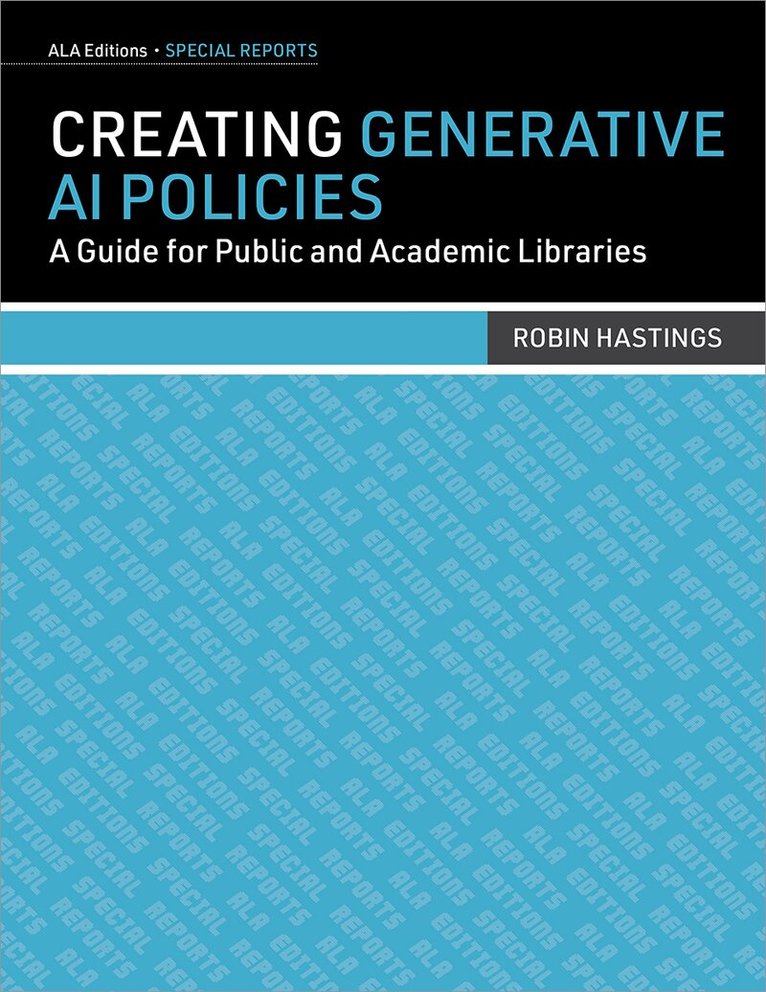
Though it's challenging to set policies for a technology that is so young and still in flux, the need is urgent. Because usage of AI presents both opportunities and risks, libraries must be proactive. The WEF (World Economic Forum) predicts that while there may be a loss of 92 million jobs to various AI tools, they see 170 million new jobs and roles emerging from the use of this new technology. Whether or not this proves correct, there are already digital literacy skills, including a basic understanding of the technology around AI, that libraries can help their patrons master; and because of data privacy, security, and ethics issues, library workers require clear AI policies too. Technology expert Hastings highlights the first attempts of libraries across the country to set up policies for the use of AI in their organizations, as well as policies created by cities and other similar institutions, to guide stakeholders in creating their own smart, forward-thinking course of action. Succinct and pragmatic, this timely resource provides a short overview of Generative AI history, basic technical knowledge, and the key arguments put forth by those in favor and those opposed to this technology;offers advice on discovering how library staff encounter AI in their day-to-day work, both in their own usage and by patrons, to inform what policies the library needs and which policies to consider adjusting for particular use cases;includes separate chapters focusing on staff-side policy and patron/public-facing policy, delving into essential considerations like staff training, privacy and data protection, security, AI usage for reference, patron education and AI literacy, and setting limits and boundaries on patron AI use;suggests useful approaches to ensure that AI policies are easy to follow and understand by library workers, patrons, and the wider community; discusses how to craft flexible procedures that can be updated as AI continues to change, drawing on technology management best practices; andoffers links to additional resources like sample policy documents and a curated reading list for understanding the environment around AI.