Robin Kelsey - Böcker
Visar alla böcker från författaren Robin Kelsey. Handla med fri frakt och snabb leverans.
4 produkter
4 produkter
255 kr
Tillfälligt slut
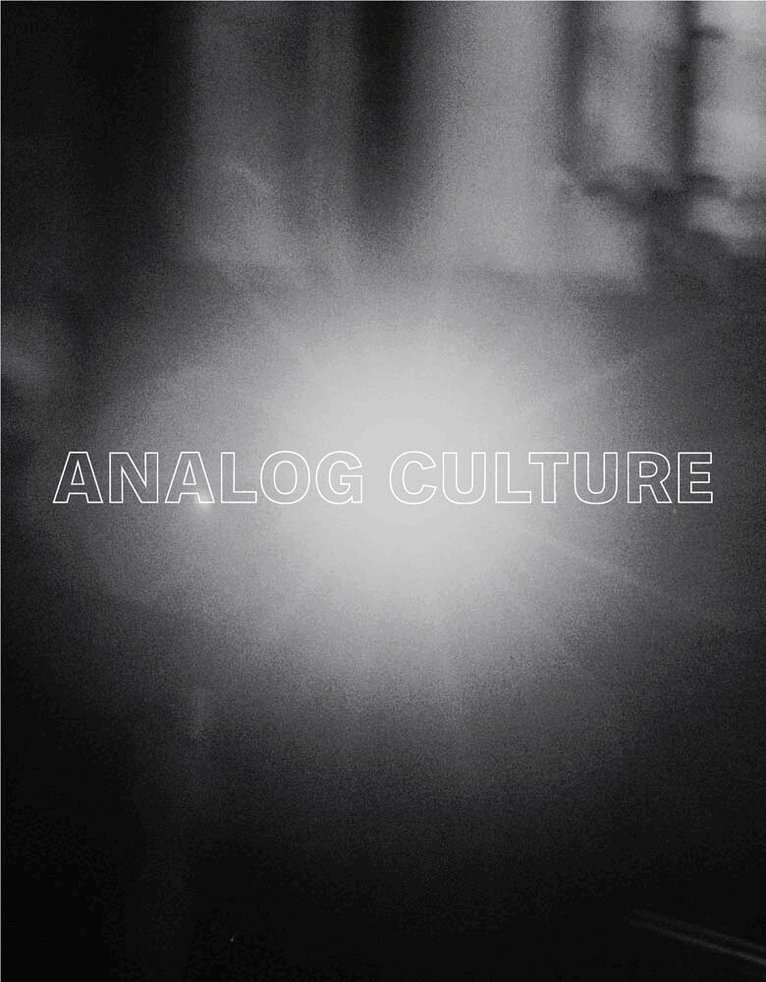
Analog Culture
Printer's Proofs from the Schneider/Erdman Photography Lab, 1981–2001
Inbunden, Engelska, 2018
535 kr
Tillfälligt slut
Providing an expansive and revelatory look at the collaborative artistic relationship between photographers and printers, this book focuses on the work and practice of Schneider/Erdman, Inc., a Manhattan-based printing business owned by Gary Schneider and John Erdman from 1981 to 2001. Well-known within the booming New York photography scene, Schneider and Erdman printed works by artists such as Richard Avedon, Matthew Barney, and Nan Goldin. In addition to a thorough overview of Schneider and Erdman’s technical mastery of printing methods and materials, Analog Culture also sheds light on the importance of the close personal relationship between photographers and printers within the art-making process. The striking works reproduced in the volume are enhanced by exclusive interviews with Schneider, Erdman, and their collaborators, offering an unparalleled behind-the-scenes view of New York’s photographic culture in the late 20th century. Distributed for the Harvard Art MuseumsExhibition Schedule:Harvard Art Museums(05/19/18–08/12/18)
274 kr
Skickas inom 7-10 vardagar
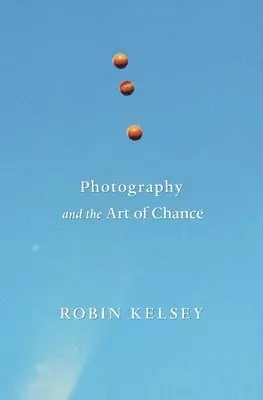
Photography has a unique relationship to chance. Anyone who has wielded a camera has taken a picture ruined by an ill-timed blink or enhanced by an unexpected gesture or expression. Although this proneness to chance may amuse the casual photographer, Robin Kelsey points out that historically it has been a mixed blessing for those seeking to make photographic art. On the one hand, it has weakened the bond between maker and picture, calling into question what a photograph can be said to say. On the other hand, it has given photography an extraordinary capacity to represent the unpredictable dynamism of modern life. By delving into these matters, Photography and the Art of Chance transforms our understanding of photography and the work of some of its most brilliant practitioners.The effort to make photographic art has involved a call and response across generations. From the introduction of photography in 1839 to the end of the analog era, practitioners such as William Henry Fox Talbot, Julia Margaret Cameron, Alfred Stieglitz, Frederick Sommer, and John Baldessari built upon and critiqued one another’s work in their struggle to reconcile aesthetic aspiration and mechanical process. The root problem was the technology’s indifference, its insistence on giving a bucket the same attention as a bishop and capturing whatever wandered before the lens. Could such an automatic mechanism accommodate imagination? Could it make art? Photography and the Art of Chance reveals how daring innovators expanded the aesthetic limits of photography to create art for a modern world.
215 kr
Skickas inom 7-10 vardagar
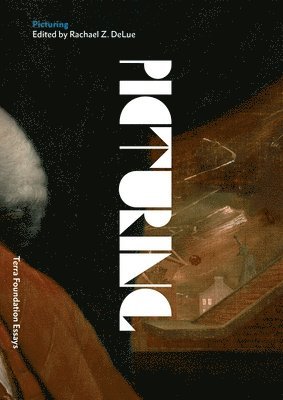
The history of American art is a history of objects, but it is also a history of ideas about how we create and consume these objects. As Picturing convincingly shows, the critical tradition in American art has given rise to profound thinking about the nature and capacity of images and formed responses to some of most pressing problems of picturing: What is an image, and why make one? What do images do? The first volume in a new series on critical concerns in the history of American art, Picturing brings together essays by a distinguished international group of scholars who discuss the creation and consumption of images from the early modern period through the end of the twentieth century. Some of the contributions focus on art critical texts, like Gertrude Stein’s portrait of Cézanne, while others have as their point of departure particular artworks, from a portrait of Benjamin Franklin to Eadweard Muybridge’s nineteenth-century photographs of the California Coast. Works that addressed images and image making were not confined to the academy; they spilled out into poetry, literature, theater, and philosophy, and the essays’ considerations likewise range freely, from painting to natural history illustrations, travel narratives, and popular fiction. Together, the contributions demonstrate a rich deliberation that thoroughly debunks the notion that American art is merely derivative of a European tradition.With a wealth of new research and full-color illustrations, Picturing significantly expands the terrain of scholarship on American art.