Robin M. LeBlanc – författare
Visar alla böcker från författaren Robin M. LeBlanc. Handla med fri frakt och snabb leverans.
5 produkter
5 produkter
1 540 kr
Skickas inom 5-8 vardagar
An engaging and accessible introduction to the subject, Comparative Politics: Integrating Theories, Methods, and Cases gives students the methodological tools they need to answer the "big questions" in the field. The authors introduce methods early in the text and integrate them throughout, in Thinking Comparatively features, to help students develop a systematic way of thinking about comparative politics. Offering a hybrid format, the text's unique structure offers the best of thematic and country-by-country approaches. Sixteen succinct thematic chapters--organized around the "big questions" in the field--are followed by a separate section at the end of the book offering full-length profiles and case studies for twelve countries. Examples of some of the "big picture questions discussed in the thematic chapters are, "Why do countries have different institutions and forms of government? Why do some social revolutions succeed and endure while others fail? Why are some societies subjected to terrorism and not others?" Each chapter integrates several standalone country case studies in Case in Context features; these features tie into the narrative, pose questions, and point students to the full case discussions in the country profiles section of the book.
Del 1 - Asia: Local Studies / Global Themes
Bicycle Citizens
The Political World of the Japanese Housewife
Häftad, Engelska, 1999
260 kr
Skickas inom 5-8 vardagar
While the typical Japanese male politician glides through his district in air-conditioned taxis, the typical female voter trundles along the side streets on a simple bicycle. In this first ethnographic study of the politics of the average female citizen in Japan, Robin LeBlanc argues that this taxi-bicycle contrast reaches deeply into Japanese society. To study the relationship between gender and liberal democratic citizenship, LeBlanc conducted extensive ethnographic fieldwork in suburban Tokyo among housewives, volunteer groups, consumer cooperative movements, and the members of a committee to reelect a female Diet member who used her own housewife status as the key to victory. LeBlanc argues that contrary to popular perception, Japanese housewives are ultimately not without a political world. Full of new and stimulating material, engagingly written, and deft in its weaving of theoretical perspectives with field research, this study will not only open up new dialogues between gender theory and broader social science concerns but also provide a superb introduction to politics in Japan as a whole.
284 kr
Skickas inom 5-8 vardagar
This beautifully written ethnography follows the lives of two very different Japanese men entering political life in two very different communities. One is the rural leader of a citizens' referendum movement, while the other hopes to succeed his father in a Tokyo ward assembly. Fast-paced and engrossing, "The Art of the Gut" puts the reader behind the scenes to hear speeches, attend campaign functions, and eavesdrop on late-night strategy sessions and one-on-one conversations. In her groundbreaking analysis, Robin M. Le Blanc explores the two men's differing notions of what is expected of a 'good' man and demonstrates how the fundamental desire to be good men constrains their political choices even as it encourages both to become ethical agents. The result is a vibrant and up-to-date picture of politics in Japan today that also addresses masculine gender expectations in a male-dominated political world, the connection between gendered identity and ethical being, and the process by which men who are neither dominant nor marginal to their communities assert themselves both with and against power.
1 220 kr
Kommande
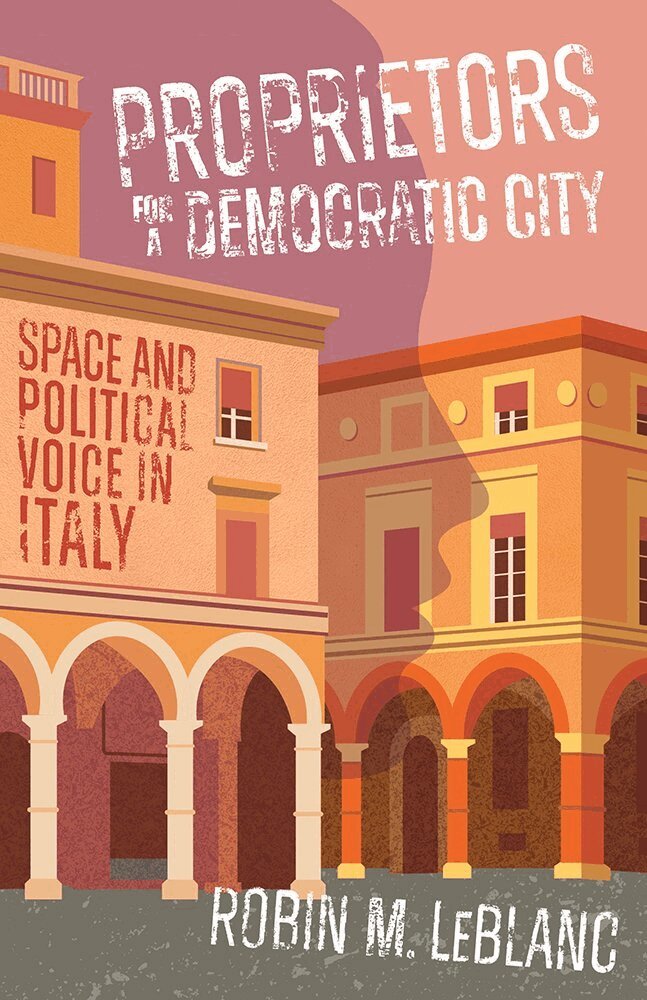
Lessons from Bologna on how ordinary people take charge of urban spaces and make their cities more democraticProprietors for a Democratic City examines how nonelite individuals politically engage with urban spaces – even when they do not formally own them. Drawing on more than a decade of fieldwork throughout Bologna, Italy, Robin M. LeBlanc presents valuable models of democratic community-making through imaginative occupation, curation, and coalition-building projects, with critical implications for the study of cities and democracy.Once a standard-bearer of progressive governance, contemporary Bologna now faces globally emergent challenges to its democratic functioning, from a lack of affordable housing to the rise of an authoritarian and xenophobic Far Right. But amid this precarity, everyday citizens employ the spaces around them to influence the political life of the city. Through interviews with a wide range of Bolognese, from urban planners and real estate developers to housing office staff, retirees in public gardening plots, and members of immigrant and youth squatter collectives, LeBlanc illuminates the humble origins of coalitional work that can meaningfully address today's urban economic, environmental, and demographic crises.Challenging both capitalistic and Marxist conventional wisdom, Proprietors for a Democratic City is a vivid portrait of the urban landscape and an inspiring call to empower regular people to create vibrant democratic spaces.Retail e-book files for this title are screen-reader friendly with images accompanied by short alt text and/or extended descriptions.
270 kr
Kommande
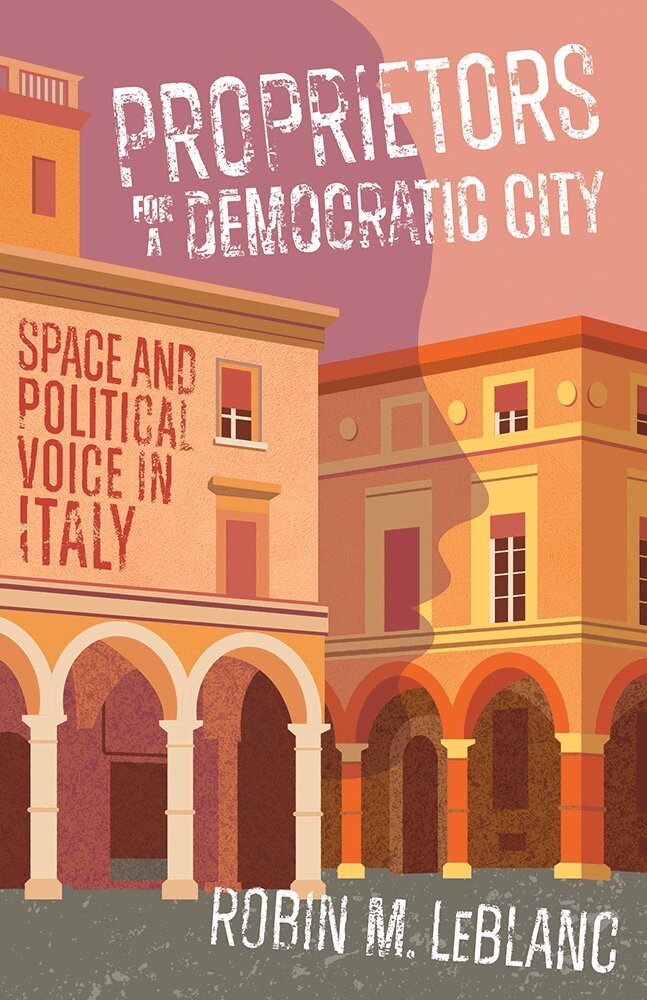
Lessons from Bologna on how ordinary people take charge of urban spaces and make their cities more democraticProprietors for a Democratic City examines how nonelite individuals politically engage with urban spaces – even when they do not formally own them. Drawing on more than a decade of fieldwork throughout Bologna, Italy, Robin M. LeBlanc presents valuable models of democratic community-making through imaginative occupation, curation, and coalition-building projects, with critical implications for the study of cities and democracy.Once a standard-bearer of progressive governance, contemporary Bologna now faces globally emergent challenges to its democratic functioning, from a lack of affordable housing to the rise of an authoritarian and xenophobic Far Right. But amid this precarity, everyday citizens employ the spaces around them to influence the political life of the city. Through interviews with a wide range of Bolognese, from urban planners and real estate developers to housing office staff, retirees in public gardening plots, and members of immigrant and youth squatter collectives, LeBlanc illuminates the humble origins of coalitional work that can meaningfully address today's urban economic, environmental, and demographic crises.Challenging both capitalistic and Marxist conventional wisdom, Proprietors for a Democratic City is a vivid portrait of the urban landscape and an inspiring call to empower regular people to create vibrant democratic spaces.Retail e-book files for this title are screen-reader friendly with images accompanied by short alt text and/or extended descriptions.