Robin McKenna - Böcker
Visar alla böcker från författaren Robin McKenna. Handla med fri frakt och snabb leverans.
6 produkter
6 produkter
861 kr
Skickas inom 5-8 vardagar
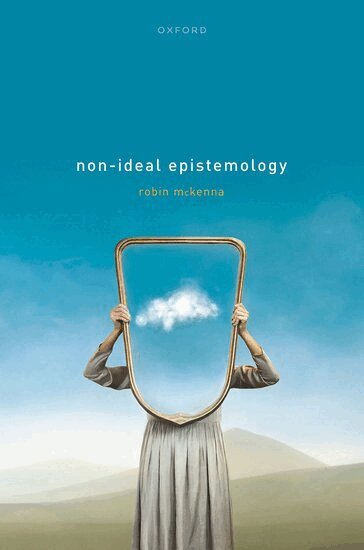
Epistemologists often work with idealized pictures of what inquirers are like, how they interact with each other, and the social institutions and environment in which they do the interacting. These idealizations might be appropriate for the more foundational issues in epistemology, such as the theory of knowledge. However they become problematic when epistemologists address applied and practical topics, such as public ignorance about important political and scientific issues, or our obligations and responsibilities as inquirers. A solution to a problem like public ignorance that might work in an ideal world could be disastrous in the real world. Ways of interacting that would yield epistemic benefits in an epistemically just world might not be so beneficial in an epistemically unjust world. Author Robin McKenna argues that, to avoid these problems, we need to make space for non-ideal epistemology-a way of doing epistemology that eschews the idealizations typical in much contemporary epistemology. However Non-Ideal Epistemology is not just an exercise in philosophical methodology. McKenna also develops distinctive approaches to a range of important topics in applied and social epistemology, such as what to do about science denial, whether we should try to be intellectually autonomous, and what our obligations are to other inquirers. The result is an illustration of why we need non-ideal epistemology and what it can do for us.
2 100 kr
Skickas inom 10-15 vardagar
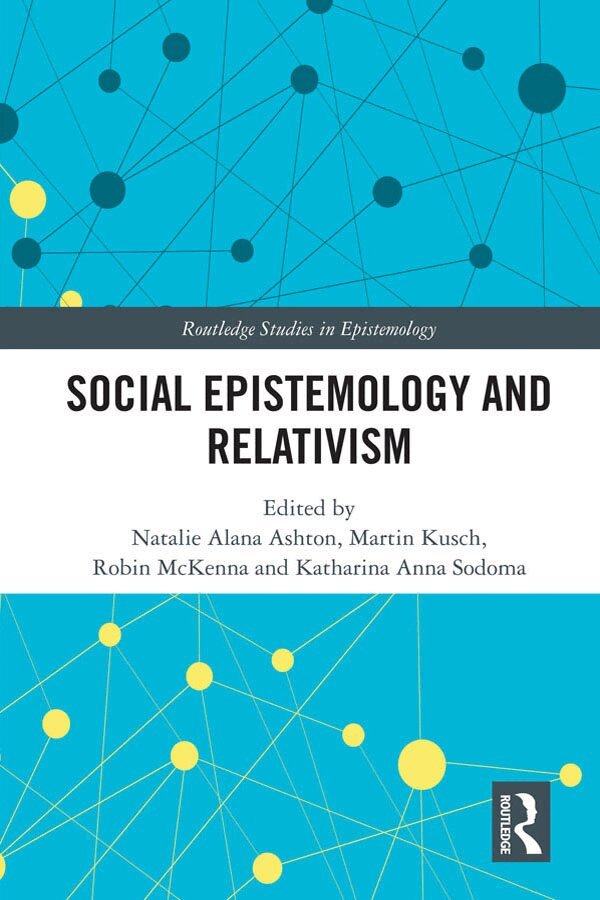
This is the first book to explore the connections and interactions between social epistemology and epistemic relativism. The essays in the volume are organized around three distinct philosophical approaches to this topic: 1) foundational questions concerning deep disagreement, the variability of epistemic norms, and the relationship between relativism and reliabilism; 2) the role of relativistic themes in feminist social epistemology; and 3) the relationship between the sociology of knowledge, philosophy of science, and social epistemology.Recent trends in social epistemology seek to rectify earlier work that conceptualized cognitive achievements primarily on the level of isolated individuals. Relativism insists that epistemic judgements or beliefs are justified or unjustified only relative to systems of standards—there is not neutral way of adjudicating between them. By bringing together these two strands of epistemology, this volume offers unique perspectives on a number of central epistemological questions.Social Epistemology and Relativism will be of interest to researchers working in epistemology, feminist philosophy, and the sociology of knowledge.
628 kr
Skickas inom 10-15 vardagar
This is the first book to explore the connections and interactions between social epistemology and epistemic relativism. The essays in the volume are organized around three distinct philosophical approaches to this topic: 1) foundational questions concerning deep disagreement, the variability of epistemic norms, and the relationship between relativism and reliabilism; 2) the role of relativistic themes in feminist social epistemology; and 3) the relationship between the sociology of knowledge, philosophy of science, and social epistemology.Recent trends in social epistemology seek to rectify earlier work that conceptualized cognitive achievements primarily on the level of isolated individuals. Relativism insists that epistemic judgements or beliefs are justified or unjustified only relative to systems of standards—there is not neutral way of adjudicating between them. By bringing together these two strands of epistemology, this volume offers unique perspectives on a number of central epistemological questions.Social Epistemology and Relativism will be of interest to researchers working in epistemology, feminist philosophy, and the sociology of knowledge.
1 482 kr
Skickas inom 10-15 vardagar
Epistemic realists think that epistemic facts (such as the fact that you ought to believe what your evidence supports) exist independently of human judgements and practices, and that they have authority over our judgements and practices.
1 923 kr
Kommande
This book provides an indispensable and pioneering expansion of political epistemology beyond its traditional Anglo-American focus. With sixteen chapters from leading and up-and-coming European political epistemologists, the volume focuses on multi-partisan political environments, the legacy of different historical systems, and case studies from frequently underrepresented European countries.The book’s chapters explore how epistemic agents form and revise beliefs about European political actors, institutions, and political phenomena. The European Face of Political Epistemology provides an epistemological analysis of political parochialism, political multi-partisanship, the European Union, European governments, polarisation, corruption, and political coalitions.A necessary first step in encouraging further research on this topic by philosophers from a wider range of countries, this book is essential reading for all scholars, researchers and advanced students of political epistemology.
1 482 kr
Skickas inom 10-15 vardagar
Epistemic realists think that epistemic facts (such as the fact that you ought to believe what your evidence supports) exist independently of human judgements and practices, and that they have authority over our judgements and practices.