Robin Torrence - Böcker
Visar alla böcker från författaren Robin Torrence. Handla med fri frakt och snabb leverans.
13 produkter
13 produkter
580 kr
Skickas inom 10-15 vardagar
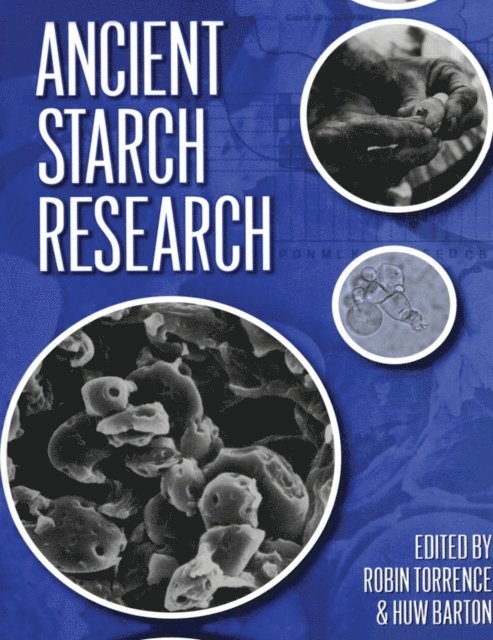
What role did plant resources have in the evolution of the human species? Why and how have plants been managed and transported to new environments? Where, how, and why were plants domesticated, and why do the patterns vary in different parts of the world? What is the relationship between the intensification of food production and the rise of complex societies? Numerous new studies are using starch granules discovered in archaeological contexts to answer these questions and improve our knowledge of past human behavior and environmental variation. Given the substantial body of successful research, the time has clearly come for a comprehensive description of ancient starch research and its potential for archaeologists. This book fills these roles by describing the fundamental principles underlying starch research, guiding researchers through the methodology, reviewing the results of significant case studies, and pointing the way to future avenues for research. The joint product of over two dozen archaeological scientists, Ancient Starch Research aims to bring the important new field of ancient starch analysis to the attention of a wider range of scholars and to provide them with the information needed to embark on their own research.
2 088 kr
Skickas inom 10-15 vardagar
The Archaeology of Difference presents a new and radically different perspective on the archaeology of cross-cultural contact and engagement. The authors move away from acculturation or domination and resistance and concentrate on interaction and negotiation by using a wide variety of case studies which take a crucially indigenous rather than colonial standpoint.
2 088 kr
Skickas inom 10-15 vardagar
Human cultures have been interacting with natural hazards since the dawn of time. This book explores these interactions in detail and revisits some famous catastrophes including the eruptions of Thera and Vesuvius. These studies demonstrate that diverse human cultures had well-developed strategies which facilitated their response to extreme natural events.
831 kr
Skickas inom 10-15 vardagar
Human cultures have been interacting with natural hazards since the dawn of time. This book explores these interactions in detail and revisits some famous catastrophes including the eruptions of Thera and Vesuvius. These studies demonstrate that diverse human cultures had well-developed strategies which facilitated their response to extreme natural events.
441 kr
Skickas inom 7-10 vardagar
Originally published in 1986, the aim of this important study was to develop methods for reconstructing the processes of prehistoric exchange. Previous archaeological work had concentrated on mapping obsidian finds relative to source areas using trace-element analysis and on investigating the effect of trade on particular cultural groups. Dr Torrence, in contrast, drew extensively on ethnographic analogy to develop an approach that uses differences in the level of efficiency for the acquisition of raw materials and the production of goods to infer the type of exchange. Regional patterns of tool manufacture, specialist craft production at central places and quarrying are analysed in detail in the context of the prehistoric Aegean and previous ideas about the importance of trade in the growth of civilisations are re-assessed. The methodology developed will be applicable to a wide range of artefact types and the book will therefore be of value to archaeologists working in many different places and periods.
441 kr
Skickas inom 7-10 vardagar
Time, Energy and Stone Tools aims to refocus archaeological and anthropological interest in technology by demonstrating that theory-building is possible if tool manufacture and use are conceived as products of both environmental factors and social needs. Drawing particularly on optimisation theory in ecology, the eleven contributors examine within a broad spatial and temporal framework a wide range of variable including time, energy, raw materials, risk management and information flow and its place in social relationships. Most concentrate on hunter-gatherer adaptation but key papers examining the impact of agriculture and growing social complexity are also included. A challenging overview by Michael Jochim stresses at once the key role of theory in aiding our understanding of early technology and the embeddedness of tool use in the wider behavioural setting.
1 598 kr
Skickas inom 10-15 vardagar
First published in 1989, What’s New? puts innovation firmly back on the agenda of archaeological interpretation. This book revives interest in the process of innovation and reinterprets it by drawing on original work done in a variety of disciplines. It demonstrates that the study of the components of innovation—invention, acceptance, and the context in which they occur—is essential if social change is to be better understood.The book contains detailed case studies that cover a broad geographical range in the prehistoric, historic, and modern world. It simulates and analyses the conditions of innovation and provides the necessary theoretical framework. The technologies involved are diverse: herding, fishing, pottery-making, metalworking, and land management. Several important issues emerge from this diversity: it is the context of innovation that determines whether change will take place; within hierarchical societies, ideology can both stimulate and deny innovation; and the potential for innovation, experimentation, and change in traditional societies is systematically underrated by the Western world, which is dominated by a narrow, technological perspective. The contributors also study innovation in social and applied anthropology, industrial planning, and the natural sciences.What’s New? will provoke renewed discussion throughout the archaeological community about the process of innovation. Anthropologists, human geographers, and other social scientists will find it fascinating because it provides a time dimension for the study of the conditions of human and social change.
766 kr
Skickas inom 10-15 vardagar
The Archaeology of Difference presents a new and radically different perspective on the archaeology of cross-cultural contact and engagement. The authors move away from acculturation or domination and resistance and concentrate on interaction and negotiation by using a wide variety of case studies which take a crucially indigenous rather than colonial standpoint.
Unpacking the Collection
Networks of Material and Social Agency in the Museum
Inbunden, Engelska, 2011
551 kr
Skickas inom 10-15 vardagar
Museum collections are often perceived as static entities hidden away in storerooms or trapped behind glass cases. By focusing on the dynamic histories of museum collections, new research reveals their pivotal role in shaping a wide range of social relations. Over time and across space the interactions between these artefacts and the people and institutions who made, traded, collected, researched and exhibited them have generated complex networks of material and social agency. In this innovative volume, the contributors draw on a broad range of source materials to explore the cross-cultural interactions which have created museum collections. These case studies contribute significantly to the development of new theoretical frameworks to examine broader questions of materiality, agency, and identity in the past and present. Grounded in case studies from individual objects and museum collections from North America, Europe, Africa, the Pacific Islands, and Australia, this truly international volume juxtaposes historical, geographical, and cross-cultural studies. This work will be of great interest to archaeologists and anthropologists studying material culture, as well as researchers in museum studies and cultural heritage management.
551 kr
Skickas inom 10-15 vardagar
Museum collections are often perceived as static entities hidden away in storerooms or trapped behind glass cases. By focusing on the dynamic histories of museum collections, new research reveals their pivotal role in shaping a wide range of social relations. Over time and across space the interactions between these artefacts and the people and institutions who made, traded, collected, researched and exhibited them have generated complex networks of material and social agency. In this innovative volume, the contributors draw on a broad range of source materials to explore the cross-cultural interactions which have created museum collections. These case studies contribute significantly to the development of new theoretical frameworks to examine broader questions of materiality, agency, and identity in the past and present. Grounded in case studies from individual objects and museum collections from North America, Europe, Africa, the Pacific Islands, and Australia, this truly international volume juxtaposes historical, geographical, and cross-cultural studies. This work will be of great interest to archaeologists and anthropologists studying material culture, as well as researchers in museum studies and cultural heritage management.
2 427 kr
Skickas inom 10-15 vardagar
What role did plant resources have in the evolution of the human species? Why and how have plants been managed and transported to new environments? Where, how, and why were plants domesticated, and why do the patterns vary in different parts of the world? What is the relationship between the intensification of food production and the rise of complex societies? Numerous new studies are using starch granules discovered in archaeological contexts to answer these questions and improve our knowledge of past human behavior and environmental variation. Given the substantial body of successful research, the time has clearly come for a comprehensive description of ancient starch research and its potential for archaeologists. This book fills these roles by describing the fundamental principles underlying starch research, guiding researchers through the methodology, reviewing the results of significant case studies, and pointing the way to future avenues for research. The joint product of over two dozen archaeological scientists, Ancient Starch Research aims to bring the important new field of ancient starch analysis to the attention of a wider range of scholars and to provide them with the information needed to embark on their own research.
2 289 kr
Skickas inom 10-15 vardagar
Popularist treatments of ancient disasters like volcanic eruptions have grossly overstated their capacity for death, destruction, and societal collapse. Contributors to this volume—from anthropology, archaeology, environmental studies, geology, and biology—show that human societies have been incredibly resilient and, in the long run, have often recovered remarkably well from wide scale disruption and significant mortality. They have often used eruptions as a trigger for environmental enrichment, cultural change, and adaptation. These historical studies are relevant to modern hazard management because they provide records for a far wider range of events and responses than have been recorded in written records, yet are often closely datable and trackable using standard archaeological and geological techniques. Contributors also show the importance of traditional knowledge systems in creating a cultural memory of dangerous locations and community responses to disaster. The global and temporal coverage of the research reported is impressive, comprising studies from North and Central America, Europe, Asia, and the Pacific, and ranging in time from the Middle Palaeolithic to the modern day.
705 kr
Skickas inom 10-15 vardagar
Popularist treatments of ancient disasters like volcanic eruptions have grossly overstated their capacity for death, destruction, and societal collapse. Contributors to this volume—from anthropology, archaeology, environmental studies, geology, and biology—show that human societies have been incredibly resilient and, in the long run, have often recovered remarkably well from wide scale disruption and significant mortality. They have often used eruptions as a trigger for environmental enrichment, cultural change, and adaptation. These historical studies are relevant to modern hazard management because they provide records for a far wider range of events and responses than have been recorded in written records, yet are often closely datable and trackable using standard archaeological and geological techniques. Contributors also show the importance of traditional knowledge systems in creating a cultural memory of dangerous locations and community responses to disaster. The global and temporal coverage of the research reported is impressive, comprising studies from North and Central America, Europe, Asia, and the Pacific, and ranging in time from the Middle Palaeolithic to the modern day.