
Robin Wagner-Pacifici – författare
Visar alla böcker från författaren Robin Wagner-Pacifici. Handla med fri frakt och snabb leverans.
7 produkter
7 produkter
Häftad, Engelska, 2017
265 kr
Skickas inom 5-8 vardagar
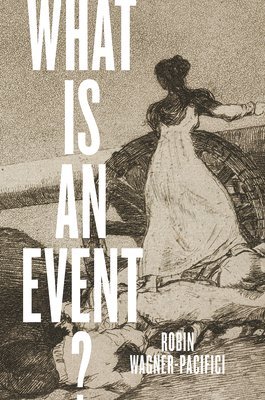
We live in a world of breaking news, where at almost any moment our everyday routine can be interrupted by a faraway event. Events are central to the way that individuals and societies experience life. Even life's inevitable moments birth, death, love, and war are almost always a surprise. Inspired by the cataclysmic events of September 11, Robin Wagner-Pacifici presents here a tour de force, an analysis of how events erupt and take off from the ground of ongoing, everyday life, and how they then move across time and landscape.What Is an Event? ranges across several disciplines, systematically analyzing the ways that events emerge, take shape, gain momentum, flow, and even get bogged down. As an exploration of how events are constructed out of ruptures, it provides a mechanism for understanding eventful forms and flows, from the micro-level of individual life events to the macro-level of historical revolutions, contemporary terrorist attacks, and financial crises.Wagner-Pacifici takes a close look at a number of cases, both real and imagined, through the reports, personal narratives, paintings, iconic images, political posters, sculptures, and novels they generate and through which they live on. What is ultimately at stake for individuals and societies in events, Wagner-Pacifici argues, are identities, loyalties, social relationships, and our very experiences of time and space. What Is an Event? provides a way for us all as social and political beings living through events, and as analysts reflecting upon them to better understand what is at stake in the formations and flows of the events that mark and shape our lives.

Inbunden, Engelska, 1994
1 152 kr
Skickas
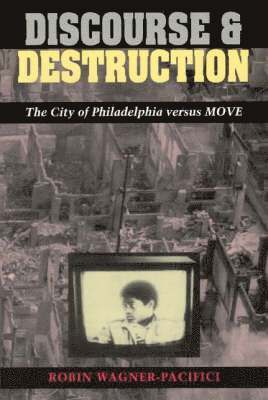
In the early 1980s the radical group MOVE settled into a rowhouse in a predominantly African-American neighborhood of west Philadelphia, beginning years of confrontations with neighbours and police over its anti-establishment ways and militant stance against all social and political institutions. On May 13, 1985, following a period of increased MOVE activity and threats by neighbours to take matters into their own hands, the city moved from bureaucratic involvement to violent intervention. Police bullhorned arrest warrants, hosed down the rowhouse, sprayed tear gas through its walls and dropped explosives from a helicopter. By the end of the day, eleven MOVE members were dead, an entire block of the neighbourhood was destroyed, and Mayor Wilson Goode was calling for an investigation. How did this struggle between the city and MOVE go from memos and meetings to tear gas and bombs? And how does the mandate to defend public order become a destructive force? Sifting through the hearings that followed the deadly encounter, Robin Wagner-Pacifici reconstructs the conflict between MOVE and the city of Philadelphia.Against this account, in which the participants - from the mayor and the police officers to members of MOVE and their neighbours - offer opposing versions of their aims, assumptions and strategies, Wagner-Pacifici develops an analysis of the relation between definition and action, between language and violence. Was MOVE simply a radical, black separatist group with an alternative way of life? Or was it a terrorist cult that held a neighbourhood and politicians hostage to its offensive language and bizarre behaviour? This book shows how competing definitions of MOVE led to different strategies for managing the conflict.
Häftad, Engelska, 1994
265 kr
Skickas inom 5-8 vardagar
In the early 1980s, the radical group MOVE settled into a rowhouse in a predominantly African-American neighborhood of west Philadelphia, beginning years of confrontations with neighbours and police over its anti-establishment ways and militant stance against all social and political institutions. On May 13, 1985, following a period of increased MOVE activity and threats by neighbours to take matters into their own hands, the city moved from bureaucratic involvement to violent intervention. Police bullhorned arrest warrants, hosed down the rowhouse, sprayed tear gas through its walls and dropped explosives from a helicopter. By the end of the day, eleven MOVE members were dead, an entire block of the neighbourhood was destroyed, and Mayor Wilson Goode was calling for an investigation. How did this struggle between the city and MOVE go from memos and meetings to tear gas and bombs? And how does the mandate to defend public order become a destructive force? Sifting through the hearings that followed the deadly encounter, Robin Wagner-Pacifici reconstructs the conflict between MOVE and the city of Philadelphia.Against this account, in which the participants - from the mayor and the police officers to members of MOVE and their neighbours - offer opposing versions of their aims, assumptions and strategies, Wagner-Pacifici develops an analysis of the relation between definition and action, between language and violence. Was MOVE simply a radical, black separatist group with an alternative way of life? Or was it a terrorist cult that held a neighbourhood and politicians hostage to its offensive language and bizarre behaviour? This book shows how competing definitions of MOVE led to different strategies for managing the conflict.

Inbunden, Engelska, 2005
830 kr
Skickas inom 5-8 vardagar
How do we know when a war ends? For many, the resolution of a conflict comes not with the last traces of smoke left on the battlefield, but with the formal ceremonies of surrender: possession and repossession, the signing of treaties, and the pomp and circumstance that mark them. Historically, most conflicts have ended with such rituals. But, as Robin Wagner-Pacifici reveals in "The Art of Surrender", they should not be seen as merely a matter of giving up. They also offer ways of holding back and signal early fault lines that give rise to later undoings and conflicts. "The Art of Surrender" explores these ritual concessions as acts of warfare, performances of submission, demonstrations of power, and representations of shifting, unstable worlds. Wagner-Pacifici analyzes three significant military surrenders in the history of warfare - the Thirty Years' War of the seventeenth century, the American Civil War, and World War II - through the use of period documents and forms, maps, literature, witness accounts, photographs, and paintings that were left as proof of victory and defeat.In her analyses of such archival material and iconic works of art, she considers the limits of sovereignty at conflict's end, showing how the ways we concede loss can be as important as the ways we claim victory.
Häftad, Engelska, 1986
306 kr
Skickas inom 5-8 vardagar
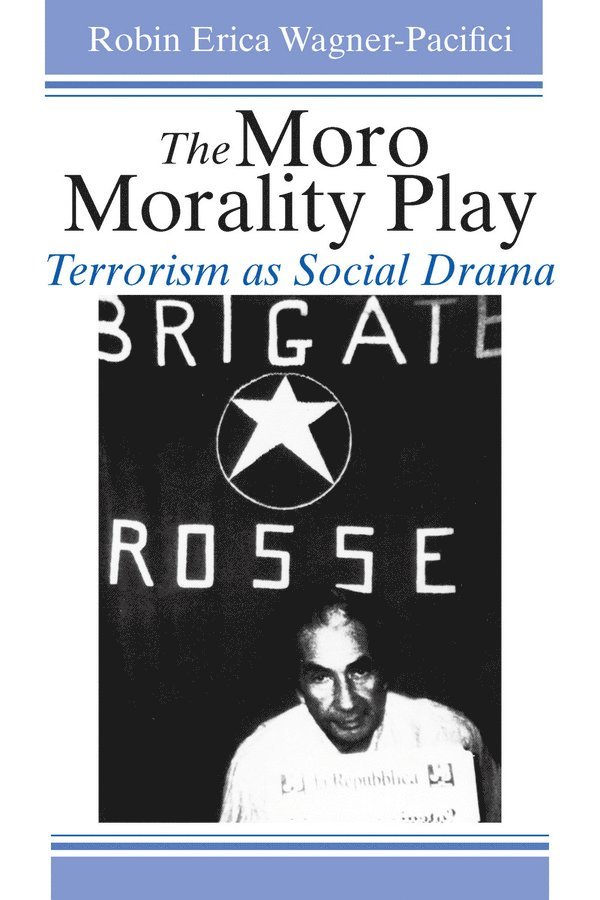
On March 16, 1978, the former prime minister of Italy, Aldo Moro, was kidnapped by the Red Brigades, and what followed—the fifty-five days of captivity that resulted in Moro's murder—constitutes one of the most striking social dramas of the twentieth century. In this compelling study of terrorism, Robin Wagner-Pacifici employs methods from sociology, symbolic anthropology, and literary criticism to decode the many social "texts" that shaped the event: political speeches, newspaper reports, television and radio news, editorials, photographs, Moro's letters, Red Brigade communiques, and appeals by various international figures. The analysis of these "texts" calls into question the function of politics, social drama, spectacle, and theater. Wagner-Pacifici provides a dramaturgic analysis of the Moro affair as a method for discussing the culture of politics in Italy.
Inbunden, Engelska, 2000
1 175 kr
Skickas inom 7-10 vardagar
This book combines original theoretical analysis with real life case studies to examine the nature of the standoff. Starting with the standoffs of Wounded Knee, MOVE, Ruby Ridge, Waco, Freeman of Montana, Tupac Amaru, Republic of Texas, the author explores the archetypal patterns of human action and cognition that move us into and out of these highly charged situations and seeks to theorize the contingency of all such moments. As an emergency situation where interaction is both frozen and continuing, the standoff evokes original ideas about time, space and appropriate or anticipated action and individuals and organisations often find their standard operating procedures and categories deflected and transformed. By tracking and analysing such impositions and deflections, this book aims to develop a theory of the fundamental existential indeterminacy of social life and the possible role that improvisation can play in navigating this indeterminacy and preventing a violent and destructive conclusion. Co-winner of the 2001 Best Book Award given by the Sociology of Culture Section of the American Sociological Association.
Häftad, Engelska, 2000
448 kr
Skickas inom 7-10 vardagar
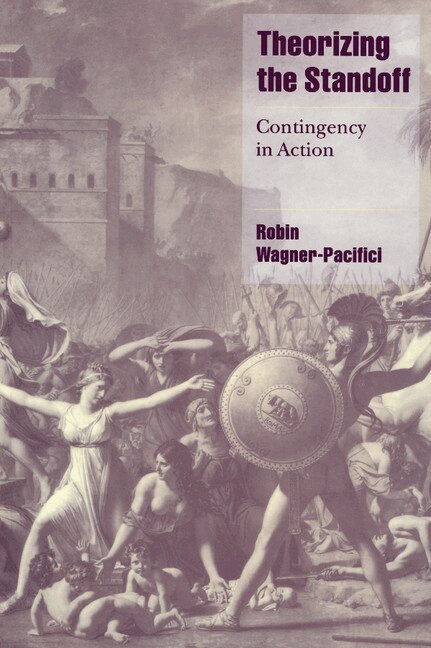
This book combines original theoretical analysis with real life case studies to examine the nature of the standoff. Starting with the standoffs of Wounded Knee, MOVE, Ruby Ridge, Waco, Freeman of Montana, Tupac Amaru, Republic of Texas, the author explores the archetypal patterns of human action and cognition that move us into and out of these highly charged situations and seeks to theorize the contingency of all such moments. As an emergency situation where interaction is both frozen and continuing, the standoff evokes original ideas about time, space and appropriate or anticipated action and individuals and organisations often find their standard operating procedures and categories deflected and transformed. By tracking and analysing such impositions and deflections, this book aims to develop a theory of the fundamental existential indeterminacy of social life and the possible role that improvisation can play in navigating this indeterminacy and preventing a violent and destructive conclusion. Co-winner of the 2001 Best Book Award given by the Sociology of Culture Section of the American Sociological Association.