Robin Whelan – författare
Visar alla böcker från författaren Robin Whelan. Handla med fri frakt och snabb leverans.
6 produkter
6 produkter
Del 59 - Transformation of the Classical Heritage
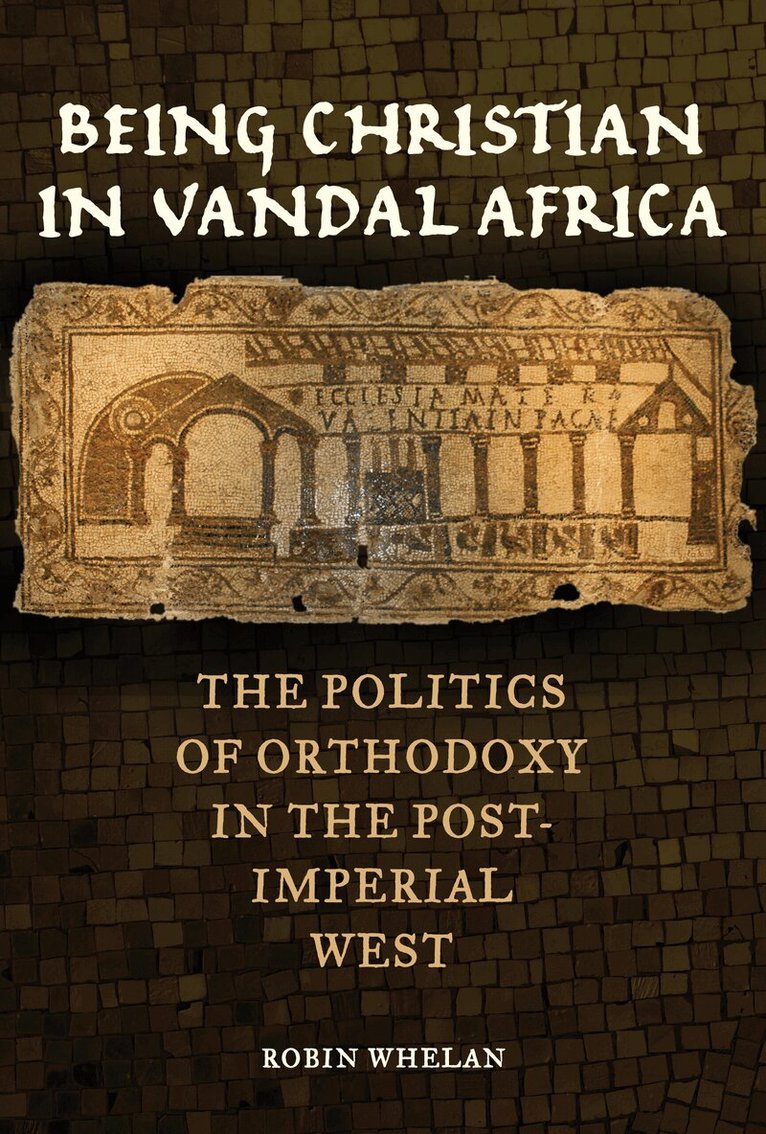
Being Christian in Vandal Africa
The Politics of Orthodoxy in the Post-Imperial West
Inbunden, Engelska, 2017
766 kr
Skickas inom 5-8 vardagar
Being Christian in Vandal Africa investigates conflicts over Christian orthodoxy in the Vandal kingdom-the successor to Roman rule in North Africa, ca. 439 to 533 CE. Exploiting neglected texts, author Robin Whelan exposes a sophisticated culture of disputation between Nicene ("Catholic") and Homoian ("Arian") Christians and explores their rival claims to political and religious legitimacy. These contests-sometimes violent-are key to understanding the wider and much-debated issues of identity and state formation in the post-imperial West.
Del 59 - Transformation of the Classical Heritage
Being Christian in Vandal Africa
The Politics of Orthodoxy in the Post-Imperial West
Häftad, Engelska, 2024
286 kr
Skickas inom 5-8 vardagar
Being Christian in Vandal Africa investigates conflicts over Christian orthodoxy in the Vandal kingdom, the successor to Roman rule in North Africa, ca. 439 to 533 c.e. Exploiting neglected texts, author Robin Whelan exposes a sophisticated culture of disputation between Nicene (“Catholic”) and Homoian (“Arian”) Christians and explores their rival claims to political and religious legitimacy. These contests—sometimes violent—are key to understanding the wider and much-debated issues of identity and state formation in the post-imperial West.
519 kr
Kommande
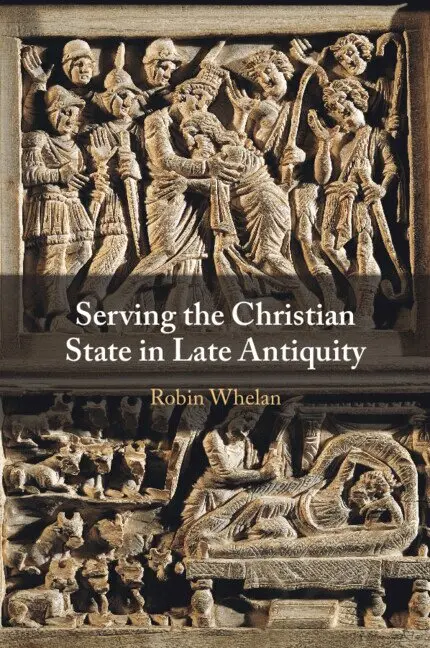
How did the state become Christian in late antiquity? Many scholars have traced the Christianization of the Roman world in the centuries following the conversion of the emperor Constantine in 312 CE. Robin Whelan, however, turns his attention away from the usual suspects in such accounts-emperors, empresses, bishops, ascetics, and other holy people-to consider a surprisingly understudied set of late ancient Christians: those who served the state as courtiers, bureaucrats, and governors. By tracing the requirements of regimes, the expectations of subjects, and patterns of engagement with churches and churchmen, he argues that that those who served the state in late antiquity could be seen-and indeed, could see themselves-as distinctly Christian authority figures-just as much as the emperors and kings whom they served, and the bishops and ascetics whom they governed. This title is also available as Open Access on Cambridge Core.
1 490 kr
Kommande
How did the state become Christian in late antiquity? Many scholars have traced the Christianization of the Roman world in the centuries following the conversion of the emperor Constantine in 312 CE. Robin Whelan, however, turns his attention away from the usual suspects in such accounts-emperors, empresses, bishops, ascetics, and other holy people-to consider a surprisingly understudied set of late ancient Christians: those who served the state as courtiers, bureaucrats, and governors. By tracing the requirements of regimes, the expectations of subjects, and patterns of engagement with churches and churchmen, he argues that that those who served the state in late antiquity could be seen-and indeed, could see themselves-as distinctly Christian authority figures-just as much as the emperors and kings whom they served, and the bishops and ascetics whom they governed. This title is also available as Open Access on Cambridge Core.
Del 4 - Translated Texts for Historians, Contexts
Christian Political Cultures in Late Antiquity
Inbunden, Engelska, 2026
1 895 kr
Kommande
An Open Access edition will be available on publication on the Liverpool University Press website, thanks to funding from the Arts and Humanities Research Council (AHRC).The last generation of work on late antiquity has transformed our understanding of how the Roman world became Christian. But in this push for a new social and cultural history of late ancient Christianity, perceptions and practical realities of politics and government have largely been left behind. *Christian Political Cultures *seeks to diversify and reinvigorate the study of Christian political thought in late antiquity by moving beyond contemporary theorisations of the ideal Christian polity and the traditional problems of ‘church and state’. Its eleven essays use rich and sometimes overlooked case studies to map out sophisticated approaches to key themes in late ancient political culture: ‘popular’ perceptions of rule; Roman masculinity; the relationship between orthodoxy and legitimacy; and the political uses of hagiography. Taken as a whole, the book provides a springboard for new thinking about the role of Christian cultural frameworks within the social history of governance in late antiquity.
Del 4 - Translated Texts for Historians, Contexts
Christian Political Cultures in Late Antiquity
Häftad, Engelska, 2028
912 kr
Kommande
An Open Access edition will be available on publication on the Liverpool University Press website, thanks to funding from the Arts and Humanities Research Council (AHRC).The last generation of work on late antiquity has transformed our understanding of how the Roman world became Christian. But in this push for a new social and cultural history of late ancient Christianity, perceptions and practical realities of politics and government have largely been left behind. *Christian Political Cultures *seeks to diversify and reinvigorate the study of Christian political thought in late antiquity by moving beyond contemporary theorisations of the ideal Christian polity and the traditional problems of ‘church and state’. Its eleven essays use rich and sometimes overlooked case studies to map out sophisticated approaches to key themes in late ancient political culture: ‘popular’ perceptions of rule; Roman masculinity; the relationship between orthodoxy and legitimacy; and the political uses of hagiography. Taken as a whole, the book provides a springboard for new thinking about the role of Christian cultural frameworks within the social history of governance in late antiquity.