Rod Edmond – författare
Visar alla böcker från författaren Rod Edmond. Handla med fri frakt och snabb leverans.
11 produkter
11 produkter
2 171 kr
Skickas inom 10-15 vardagar
This innovative collection of essays explores the ways in which islands have been used, imagined and theorised, both by island dwellers and continentals. This study considers how island dwellers conceived of themselves and their relation to proximate mainlands, and examines the fascination that islands have long held in the European imagination.The collection addresses the significance of islands in the Atlantic economy of the eighteenth century, the exploration of the Pacific, the important role played by islands in the process of decolonisation, and island-oriented developments in postcolonial writing.Islands were often seen as natural colonies or settings for ideal communities but they were also used as dumping grounds for the unwanted, a practice which has continued into the twentieth century. The collection argues the need for an island-based theory within postcolonial studies and suggests how this might be constructed. Covering a historical span from the eighteenth to the twentieth century, the contributors include literary and postcolonial critics, historians and geographers.
831 kr
Skickas inom 10-15 vardagar
This innovative collection of essays explores the ways in which islands have been used, imagined and theorised, both by island dwellers and continentals. This study considers how island dwellers conceived of themselves and their relation to proximate mainlands, and examines the fascination that islands have long held in the European imagination.The collection addresses the significance of islands in the Atlantic economy of the eighteenth century, the exploration of the Pacific, the important role played by islands in the process of decolonisation, and island-oriented developments in postcolonial writing.Islands were often seen as natural colonies or settings for ideal communities but they were also used as dumping grounds for the unwanted, a practice which has continued into the twentieth century. The collection argues the need for an island-based theory within postcolonial studies and suggests how this might be constructed. Covering a historical span from the eighteenth to the twentieth century, the contributors include literary and postcolonial critics, historians and geographers.
665 kr
Skickas inom 7-10 vardagar
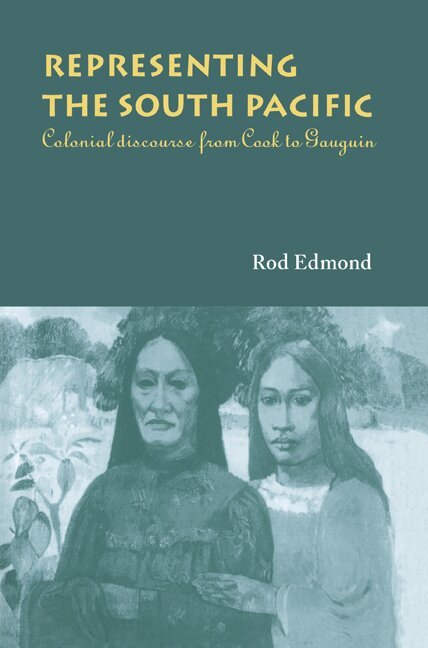
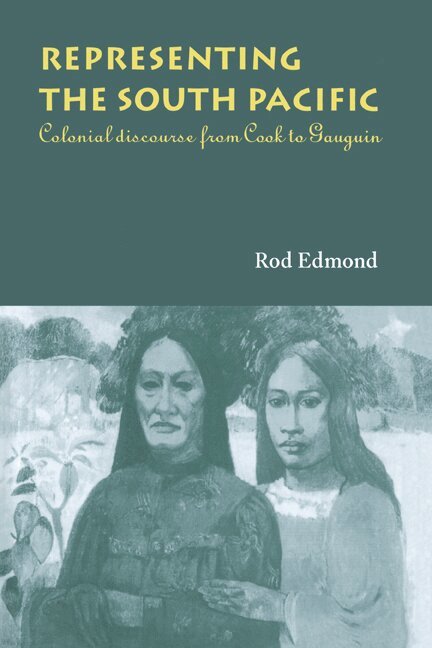
This book examines how the South Pacific was represented by explorers, missionaries, travellers, writers, and artists between 1767 and 1914 by drawing on history, literature, art history, and anthropology. Edmond engages with colonial texts and postcolonial theory, criticising both for their failure to acknowledge the historical specificity of colonial discourses and cultural encounters, and for continuing to see indigenous cultures in essentially passive or reactive terms. The book offers a detailed and grounded 'reading back' of these colonial discourses into the metropolitan centres which gave rise to them, while resisting the idea that all representations of other cultures are merely self-representations. Among its themes are the persistent myth-making around the figure of Cook, the western obsession with Polynesian sexuality, tattooing, cannibalism, and leprosy, and the Pacific as a theatre for adventure and as a setting for Europe's displaced fears of its own cultural extinction.
Del 8 - Cambridge Social and Cultural Histories
Leprosy and Empire
A Medical and Cultural History
Häftad, Engelska, 2009
520 kr
Skickas inom 7-10 vardagar
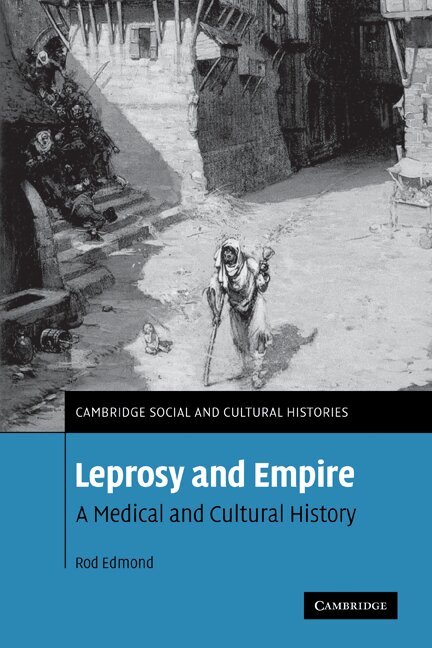
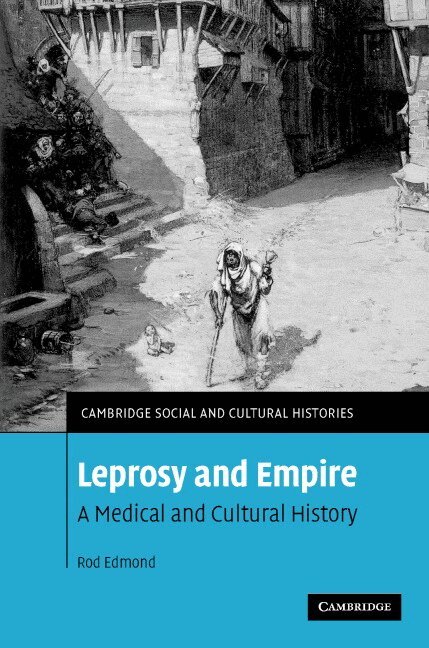
An innovative, interdisciplinary study of why leprosy, a disease with a very low level of infection, has repeatedly provoked revulsion and fear. Rod Edmond explores, in particular, how these reactions were refashioned in the modern colonial period. Beginning as a medical history, the book broadens into an examination of how Britain and its colonies responded to the believed spread of leprosy. Across the empire this involved isolating victims of the disease in 'colonies', often on offshore islands. Discussion of the segregation of lepers is then extended to analogous examples of this practice, which, it is argued, has been an essential part of the repertoire of colonialism in the modern period. The book also examines literary representations of leprosy in Romantic, Victorian and twentieth-century writing, and concludes with a discussion of traveller-writers such as R. L. Stevenson and Graham Greene who described and fictionalised their experience of staying in a leper colony.
1 499 kr
Skickas inom 7-10 vardagar
This book examines how the South Pacific was represented by explorers, missionaries, travellers, writers, and artists between 1767 and 1914 by drawing on history, literature, art history, and anthropology. Edmond engages with colonial texts and postcolonial theory, criticising both for their failure to acknowledge the historical specificity of colonial discourses and cultural encounters, and for continuing to see indigenous cultures in essentially passive or reactive terms. The book offers a detailed and grounded 'reading back' of these colonial discourses into the metropolitan centres which gave rise to them, while resisting the idea that all representations of other cultures are merely self-representations. Among its themes are the persistent myth-making around the figure of Cook, the western obsession with Polynesian sexuality, tattooing, cannibalism, and leprosy, and the Pacific as a theatre for adventure and as a setting for Europe's displaced fears of its own cultural extinction.
Del 8 - Cambridge Social and Cultural Histories
Leprosy and Empire
A Medical and Cultural History
Inbunden, Engelska, 2006
1 330 kr
Skickas inom 7-10 vardagar
An innovative, interdisciplinary study of why leprosy, a disease with a very low level of infection, has repeatedly provoked revulsion and fear. Rod Edmond explores, in particular, how these reactions were refashioned in the modern colonial period. Beginning as a medical history, the book broadens into an examination of how Britain and its colonies responded to the believed spread of leprosy. Across the empire this involved isolating victims of the disease in 'colonies', often on offshore islands. Discussion of the segregation of lepers is then extended to analogous examples of this practice, which, it is argued, has been an essential part of the repertoire of colonialism in the modern period. The book also examines literary representations of leprosy in Romantic, Victorian and twentieth-century writing, and concludes with a discussion of traveller-writers such as R. L. Stevenson and Graham Greene who described and fictionalised their experience of staying in a leper colony.
1 495 kr
Skickas inom 10-15 vardagar
First published in 1988, Affairs of the Hearth challenges many widely held assumptions about Victorian culture and shows that its poetry was far more innovative and experimental than it is often considered to be. The author argues that, far from being complacent about domesticity or reticent about sexuality, Victorian writers discussed these matters perceptively and in detail. He shows that the poems analyzed by Clough, Tennyson, Barrett Browning, Christina Rossetti, and Meredith are preoccupied with the stresses of marriage, sexuality, gender, the role of women, parent-child relationships, and adolescence. The same themes are explored as the author makes comparisons with contemporary painting, fiction, and diaries. He discovers a collection of unhappy homes and appalling families and finds the tensions of Victorian life in the very images of domestic comfort.In analysing the texts both closely and historically, Edmond draws accessibly on the theoretical work by Foucault, Williams, and Eagleton, and tests it against specific texts and a particular culture. He also contributes to the historical debate of the time about the history of the family and will be of interest to all students of Victorian literature, social history, women’s studies, and literary theory.
1 434 kr
Skickas inom 5-8 vardagar
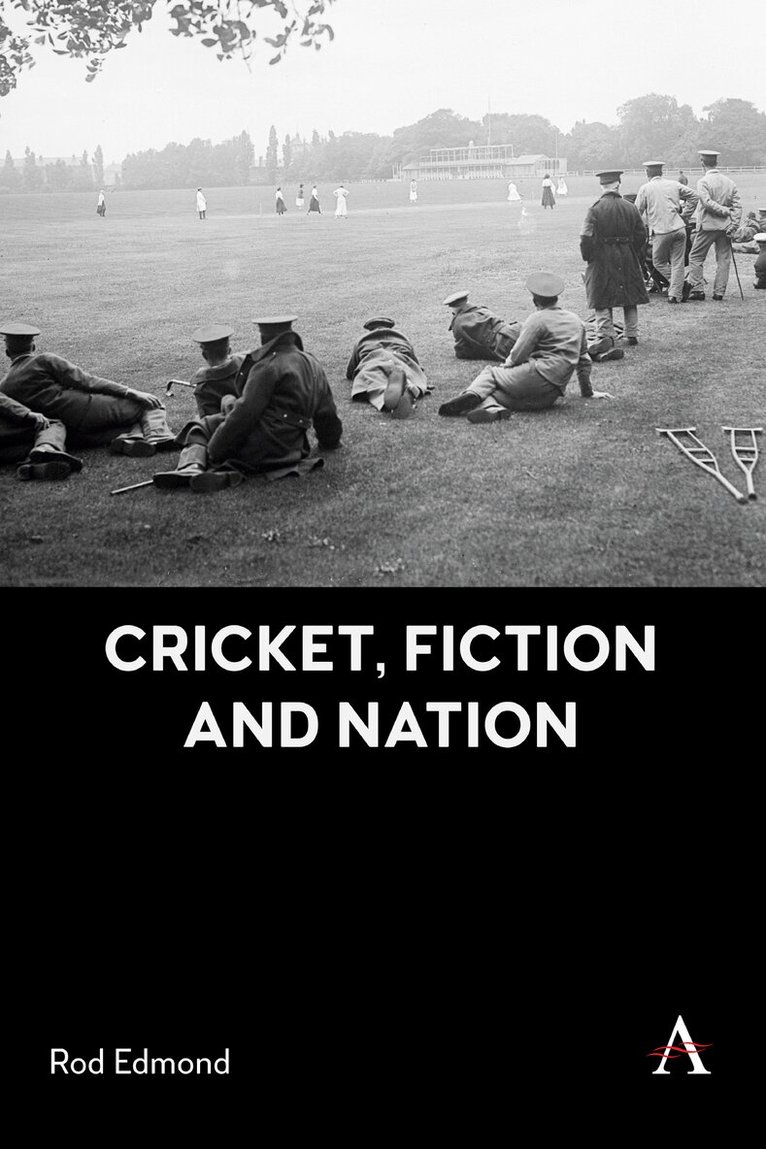
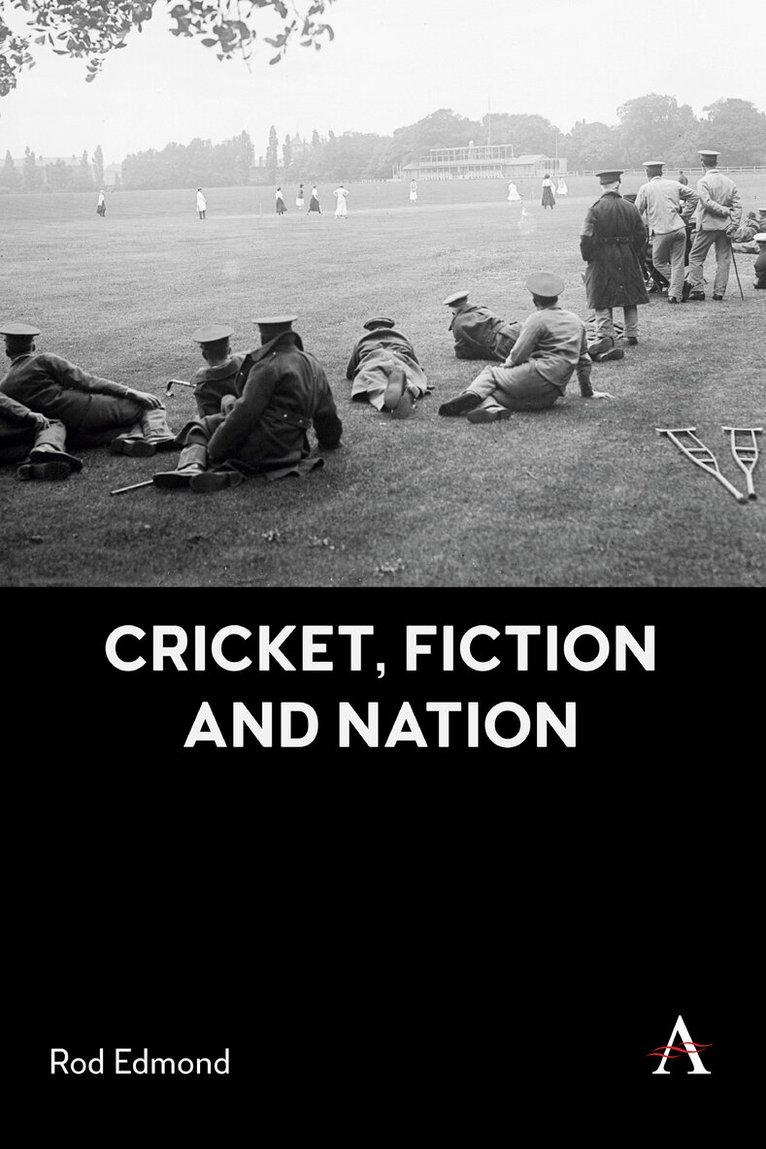
Cricket, Fiction and Nation traces the historic arc of fiction dealing with cricket from its beginnings in the early nineteenth century to its emergence in the early twentieth century as a form of serious literature, its subsequent decline into genre writing and its rejuvenation in the global world of the twenty-first century. The writers discussed include Mary Russell Mitford, Charles Dickens, H.G. Wells, P.G. Wodehouse, James Joyce, E.M. Forster, Robert Graves, Siegfried Sassoon, Dorothy L. Sayers, C. Day Lewis writing as Nicholas Blake, L.P. Hartley, Simon Raven, J.L. Carr, Mike Marqusee, Nancy Spain, Caryl Phillips, Romesh Gunesekera, Anthony Quinn and Shehan Karunatilaka. It also considers how cricket has featured in the TV series Inspector Morse and Midsomer Murders.
373 kr
Skickas inom 5-8 vardagar
Cricket, Fiction and Nation traces the historic arc of fiction dealing with cricket from its beginnings in the early nineteenth century to its emergence in the early twentieth century as a form of serious literature, its subsequent decline into genre writing and its rejuvenation in the global world of the twenty-first century. The writers discussed include Mary Russell Mitford, Charles Dickens, H.G. Wells, P.G. Wodehouse, James Joyce, E.M. Forster, Robert Graves, Siegfried Sassoon, Dorothy L. Sayers, C. Day Lewis writing as Nicholas Blake, L.P. Hartley, Simon Raven, J.L. Carr, Mike Marqusee, Nancy Spain, Caryl Phillips, Romesh Gunesekera, Anthony Quinn and Shehan Karunatilaka. It also considers how cricket has featured in the TV series Inspector Morse and Midsomer Murders.
411 kr
Tillfälligt slut
Explores how cricket has been portrayed in fiction from the 19th century to the 21st, examining shifts in the treatment of national, post-colonial and global themes.Following a short introduction, the book is arranged in seven chapters, each dealing with a specific genre and its main themes. The opening chapter considers how the village cricket story laid down the main tropes of cricket and fiction and established a defining relation between cricket, England s green and pleasant land and national identity, especially in times of war and its aftermath. The second chapter develops the cricket, war and nation theme in the public school cricket novel, especially in the period of the South African (Boer) and First World Wars when cricket and war were frequently dramatised in similar terms. It also discusses the recurring treatment of homosexuality in the public school cricket novel and how the language of cricket was used to write about same-sex attraction. The next chapter breaks new ground in discussing how cricket has featured in murder mysteries. It demonstrates how well suited to each other the sport and the genre are cricket providing a kind of open-air closed-room setting for a murder narrative and explores the formal similarities between the shape and structure of a game of cricket and the procedures of the novel.The following two chapters explore how amenable cricket fiction has proved as a medium for both comedy and tragedy. It discusses the inherent comic potential of cricket for fiction, the mishap and slapstick of a sport in which the box was introduced a century before the helmet. Cricket also has a long association with suicide as many observers of the game have noted. Fictional treatment of this tragic theme has focused on how a sport which is so time-consuming, both in the duration of a game and the extended career of those who play it, has made retirement difficult to manage and sometimes led to suicide.As the English cricket story declined into insularity and nostalgia, and cricket ceased to be a subject for serious literary fiction, the post-colonial cricket novel emerged. The penultimate chapter considers how contemporary post-colonial novelists have revived and expanded the fictional possibilities of cricket by extending its global range and replenishing its traditional narratives to include previously unspoken issues of migration and race, thereby creating new kinds of stories. The concluding chapter looks at several apocalyptic end-of-the-world cricket stories and develops into a discussion of how cricket is both contributing to and threatened by global heating, raising the question of its sustainability as a sport and as a subject for fiction.
411 kr
Tillfälligt slut
Explores how cricket has been portrayed in fiction from the 19th century to the 21st, examining shifts in the treatment of national, post-colonial and global themes.Following a short introduction, the book is arranged in seven chapters, each dealing with a specific genre and its main themes. The opening chapter considers how the village cricket story laid down the main tropes of cricket and fiction and established a defining relation between cricket, England s green and pleasant land and national identity, especially in times of war and its aftermath. The second chapter develops the cricket, war and nation theme in the public school cricket novel, especially in the period of the South African (Boer) and First World Wars when cricket and war were frequently dramatised in similar terms. It also discusses the recurring treatment of homosexuality in the public school cricket novel and how the language of cricket was used to write about same-sex attraction. The next chapter breaks new ground in discussing how cricket has featured in murder mysteries. It demonstrates how well suited to each other the sport and the genre are cricket providing a kind of open-air closed-room setting for a murder narrative and explores the formal similarities between the shape and structure of a game of cricket and the procedures of the novel.The following two chapters explore how amenable cricket fiction has proved as a medium for both comedy and tragedy. It discusses the inherent comic potential of cricket for fiction, the mishap and slapstick of a sport in which the box was introduced a century before the helmet. Cricket also has a long association with suicide as many observers of the game have noted. Fictional treatment of this tragic theme has focused on how a sport which is so time-consuming, both in the duration of a game and the extended career of those who play it, has made retirement difficult to manage and sometimes led to suicide.As the English cricket story declined into insularity and nostalgia, and cricket ceased to be a subject for serious literary fiction, the post-colonial cricket novel emerged. The penultimate chapter considers how contemporary post-colonial novelists have revived and expanded the fictional possibilities of cricket by extending its global range and replenishing its traditional narratives to include previously unspoken issues of migration and race, thereby creating new kinds of stories. The concluding chapter looks at several apocalyptic end-of-the-world cricket stories and develops into a discussion of how cricket is both contributing to and threatened by global heating, raising the question of its sustainability as a sport and as a subject for fiction.