Roger D. Abrahams - Böcker
Visar alla böcker från författaren Roger D. Abrahams. Handla med fri frakt och snabb leverans.
7 produkter
7 produkter
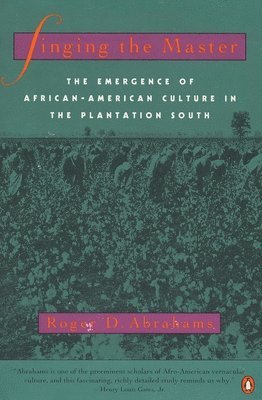
Singing the Master: The Emergence of African-American Culture in the Plantationsouth
Häftad, Engelska, 1994
333 kr
Skickas inom 3-6 vardagar
671 kr
Skickas inom 10-15 vardagar
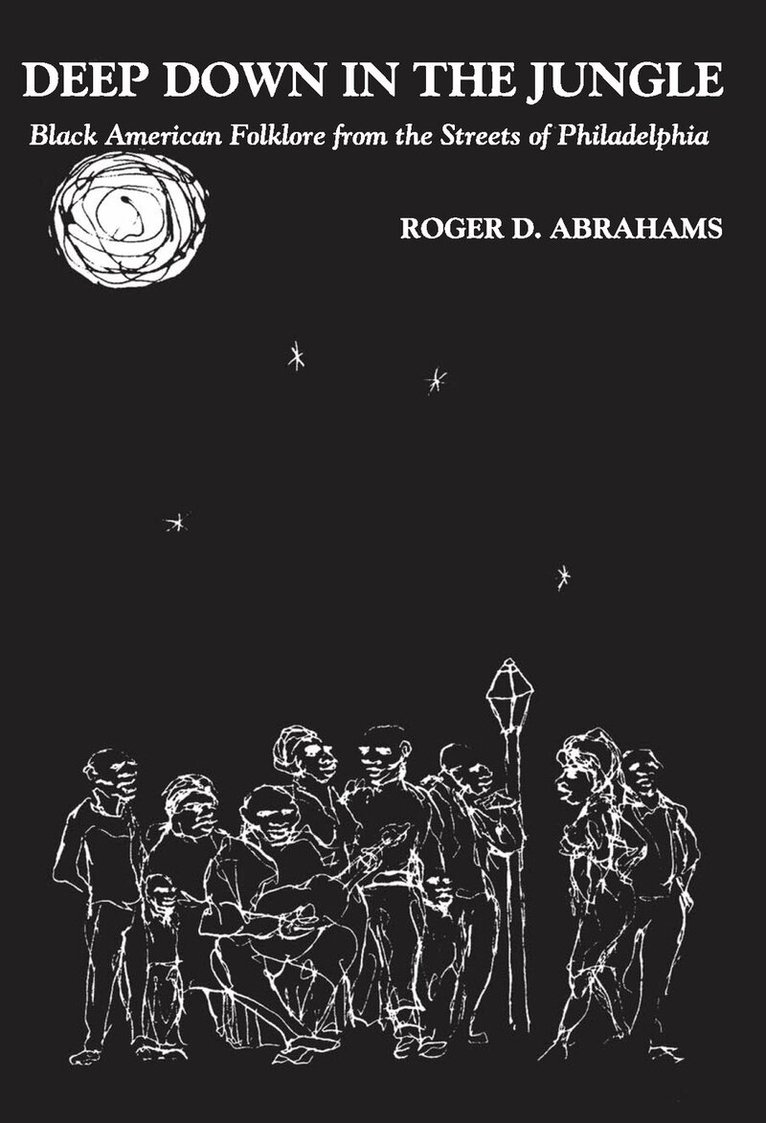
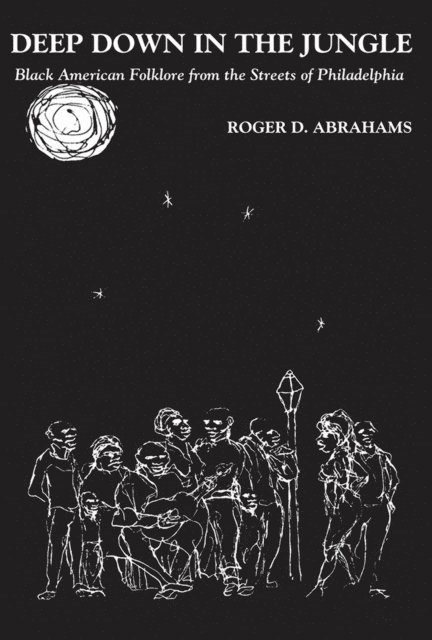
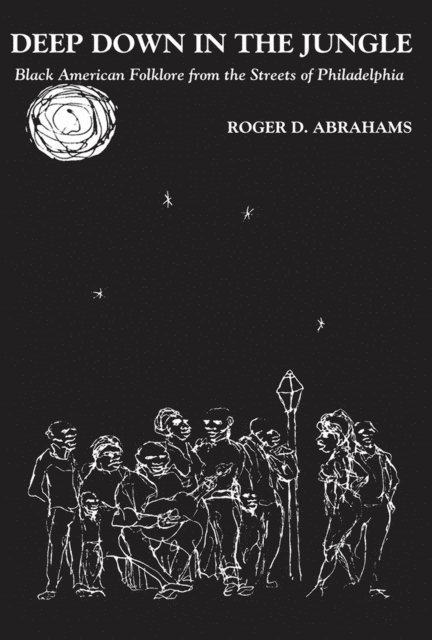
With the growth of interest in folklore, it becomes increasingly evident that the presentation of a collection needs some rationale more than the fact that traditional materials have been collected and properly annotated. Much has been gathered and is now accessible through journals, archives, and lists. If a corpus of lore is not presented in some way, which bears new light on the process of word-of-mouth transmission, on traditional forms or expressions, or on the group among whom the lore was encountered, there is little reason to present it to the public. This work represents an attempt to present a body of folklore collected among one small group of Black Americans in a neighborhood in South Philadelphia. The author's approach toward collection and presentation has been intensive. He has tried to collect "in depth," and to recreate in his presentation the social background in which the lore was found, and to relate the lore with the life and the values of the group. Abraham's work is a departure from any past methods of analyzing folklore, and therefore a description of the author's point of view and his method will be given first. The majority of this work was written before his methodology was actually formulated. However throughout the project û the object was to illuminate as fully as possible the lore of one small group of African Americans from urban Philadelphia. The methodology, which developed, did so because of this objective more than anything else. Though the formulation of this theory may seem ex post facto, it is included because it clarified much during the rewritings of this book, and more importantly, because it will clarify many matters for the lay reader and for the professional folklorist.
260 kr
Skickas inom 10-15 vardagar
I had a little brother.His name was Tiny Tim.I put him in the bathtubTo teach him how to swim.He drank all the water.He ate all the soap.He died last nightWith a bubble in his throat. Jump-rope rhymes, chanted to maintain the rhythm of the game, have other, equally entertaining uses: You can dispatch bothersome younger siblings instantly-and temporarily. You can learn the name of your boyfriend through the magic words "Ice cream soda, Delaware Punch, Tell me the initials of my honey-bunch." You can perform the series of tasks set forth in "Teddy Bear, Teddy Bear, turn around" and find out who, really, is the most nimble. You can even, with impunity, "conk your teacher on the bean with a rotten tangerine. " This collection of over six hundred jump-rope rhymes, originally published in 1969, is an introduction into the world of children-their attitudes, their concerns, their humor. Like other children's folklore, the rhymes are both richly inventive and innocently derivative, ranging from on-the-spot improvisations to old standards like "Bluebells, cockleshells," with a generous sprinkling of borrowings from other play activities-nursery rhymes, counting-out rhymes, and taunts. Even adult attitudes of the time are appropriated, but expressed with the artless candor of the child: Eeny, meeny, miny, moe.Catch Castro by the toe.If he hollers make him say"I surrender, U.S.A." Though aware that children's play serves social and psychological functions, folklorists had long neglected analytical study of children's lore because primary data was not available in organized form. Roger Abraham's Dictionary has provided such a bibliographical tool for one category of children's lore and a model for future compendia in other areas. The alphabetically arranged rhymes are accompanied by notes on sources, provenience, variants, and connection with other play activities.
350 kr
Skickas inom 10-15 vardagar
"And Other Neighborly Names"-the title is from a study by Americo Paredes of the names, complimentary and otherwise, exchanged across cultural boundaries by Anglos and Mexicans-is a collection of essays devoted to various aspects of folk tradition in Texas. The approach builds on the work of the folklorists who have helped give the study of folklore in Texas such high standing in the field-Mody Boatright, J. Frank Dobie, John Mason Brewer, the Lomaxes, and of course Paredes himself, to whom this book is dedicated. Focusing on the ways in which traditions arise and are maintained where diverse peoples come together, the editors and other essayists-John Holmes McDowell, Joe Graham, Alicia MarÍa GonzÁlez, Beverly J. Stoeltje, Archie Green, JosÉ E. LimÓn, Thomas A. Green, Rosan A. Jordan, Patrick B. Mullen, and Manuel H. PeÑa-examine conjunto music, the corrido, Gulf fishermen's stories, rodeo traditions, dog trading and dog-trading tales, Mexican bakers' lore, Austin's "cosmic cowboy" scene, and other fascinating aspects of folklore in Texas. Their emphasis is on the creative reaction to socially and culturally pluralistic situations, and in this they represent a distinctively Texan way of studying folklore, especially as illustrated in the performance-centered approach of Paredes, Boatright, and others who taught at the University of Texas at Austin. As an overview of this approach-its past, present, and future-"And Other Neighborly Names" makes a valuable contribution both to Texas folklore and to the discipline as a whole.
260 kr
Skickas inom 10-15 vardagar
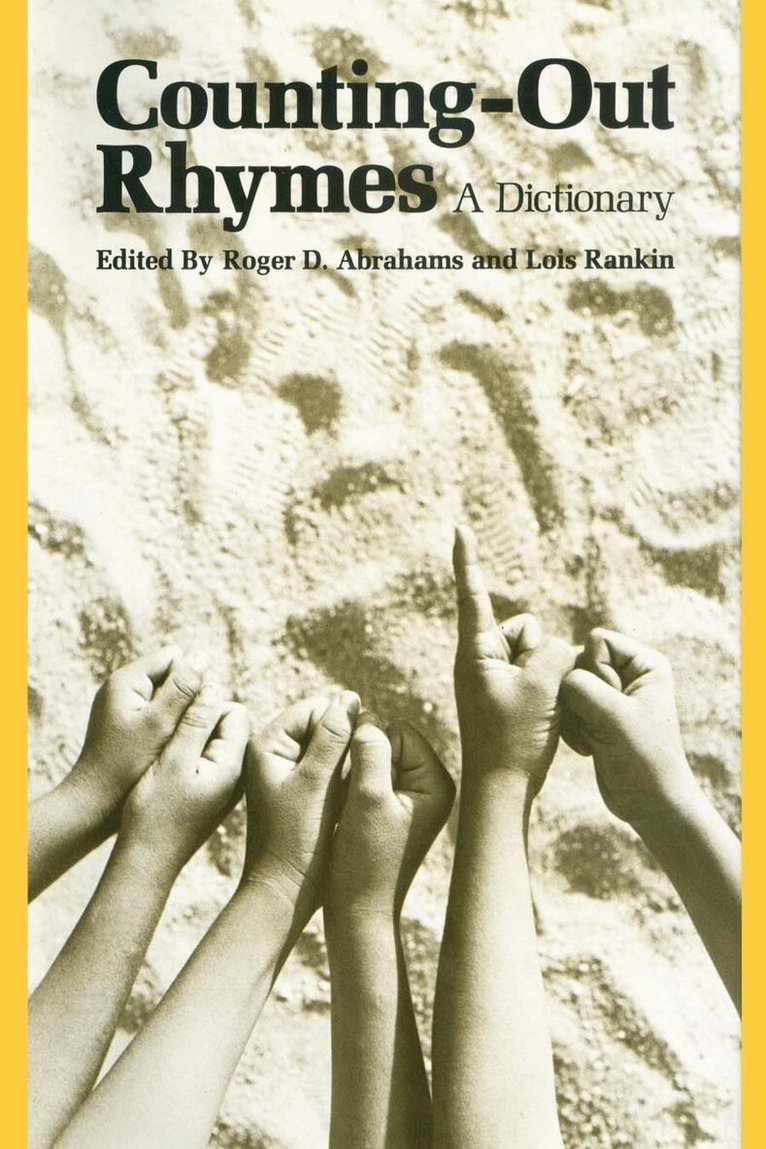
Eeny, meeny, figgledy, fig.Delia, dolia, dominig,Ozy, pozy doma-nozy,Tee, tau, tut,Uggeldy, buggedy, boo!Out goes you. (no. 129) You can stand,And you can sit,But, if you play,You must be it. (no. 577) Counting-out rhymes are used by children between the ages of six and eleven as a special way of choosing it and beginning play. They may be short and simple ("O-U-T spells out/And out goes you") or relatively long and complicated; they may be composed of ordinary words, arrant nonsense, or a mixture of the two. Roger D. Abrahams and Lois Rankin have gathered together a definitive compendium of counting-out rhymes in English reported to 1980. These they discovered in over two hundred sources from the nineteenth and twentieth centuries, including rhymes from England, Scotland, Ireland, Australia, New Zealand, and the United States. Representative texts are given for 582 separate rhymes, with a comprehensive listing of sources and variants for each one, as well as information on each rhyme's provenience, date, and use. Cross-references are provided for variants whose first lines differ from those of the representative texts. Abrahams's introduction discusses the significance of counting-out rhymes in children's play. Children's folklore and speech play have attracted increasing attention in recent years. Counting-Out Rhymes will be a valuable resource for researchers in this field.
171 kr
Skickas inom 5-8 vardagar
2 712 kr
Skickas inom 3-6 vardagar
With the growth of interest in folklore, it becomes increasingly evident that the presentation of a collection needs some rationale more than the fact that traditional materials have been collected and properly annotated. Much has been gathered and is now accessible through journals, archives, and lists. If a corpus of lore is not presented in some way, which bears new light on the process of word-of-mouth transmission, on traditional forms or expressions, or on the group among whom the lore was encountered, there is little reason to present it to the public. This work represents an attempt to present a body of folklore collected among one small group of Black Americans in a neighborhood in South Philadelphia. The author's approach toward collection and presentation has been intensive. He has tried to collect "in depth," and to recreate in his presentation the social background in which the lore was found, and to relate the lore with the life and the values of the group. Abraham's work is a departure from any past methods of analyzing folklore, and therefore a description of the author's point of view and his method will be given first. The majority of this work was written before his methodology was actually formulated. However throughout the project û the object was to illuminate as fully as possible the lore of one small group of African Americans from urban Philadelphia. The methodology, which developed, did so because of this objective more than anything else. Though the formulation of this theory may seem ex post facto, it is included because it clarified much during the rewritings of this book, and more importantly, because it will clarify many matters for the lay reader and for the professional folklorist.