Roger F. Butterworth - Böcker
Visar alla böcker från författaren Roger F. Butterworth. Handla med fri frakt och snabb leverans.
6 produkter
6 produkter
2 174 kr
Skickas inom 10-15 vardagar
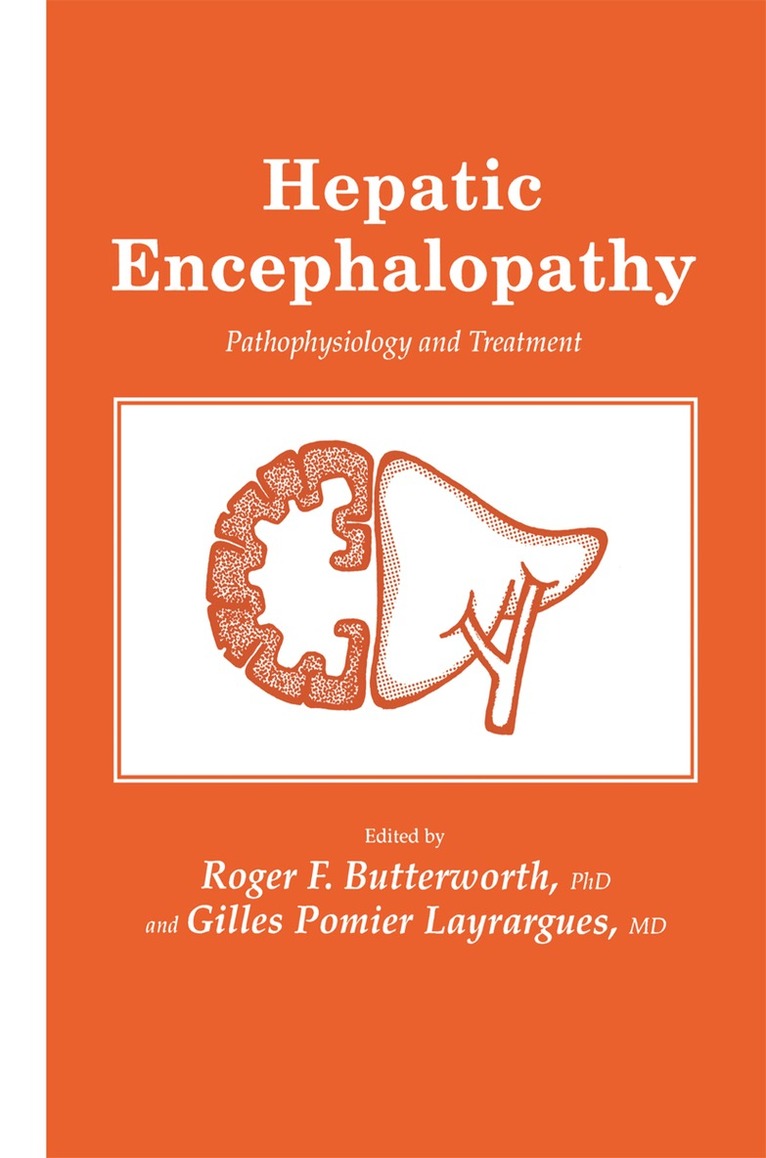
Hepatic Encephalopathy (HE) is a neuropsychiatric disorder resul t- ing from liver failure. HE may be associated with fulminant (acute) hepatic failure or chronic liver disease with portal-systemic shunting. The latter condition is characterized neuropathologically by astro- cytic rather than neuronal changes (Alzheimer Type II astrocytosis). The former is frequently accompanied by cerebral edema. Several hypotheses have been proposed to explain the pathogene- sis of HE. These include: 1. A toxic action of a substance (or substances) such as ammonia on brain function 2. A deficit of cerebral energy metabolism 3. Neurotransmitter changes, and, more recently 4. The role of "endogenous benzodiazepines. " This volume summarizes the results of a symposium held in Val David, Quebec from October 3D-November I, 1988, that was devoted to an evaluation of the evidence for and against the various hypothe- ses of HE. Data from studies in patients, in experimental (animal) models of HE, and in cultured cell preparations were discussed. In addition, a review of available approaches to the treatment and man- agement of HE was included.The therapeutic use of lactulose, anti- biotics, dietary treatment, and branched-chain amino acid treatments were included, as well as the results of preliminary studies of the therapeutic use of the benzodiazepine antagonist, flumazenil. Roger F. Butterworth, PhD Gilles Pomier Layrargues, MD v Acknowledgments The symposium was made possible by the generous financial assistance of: Hoffman-La Roche Ltd.
1 091 kr
Skickas inom 10-15 vardagar
The use of animal models continues to be the most reliable way of studying pathophysiologic mechanisms as well as treatments for neurological disorders. In two companion volumes, Animal Models of Neurological Disease highlights new information and techniques available in this rapidly growing area. This volume of Neuromethods focuses on commonly studied neurodegenerative diseases, highlighting the similarities and differences between the human condition and that obtained using animal models. Chapters are contributed by experts in the field and cover a variety of topics, including: the ethics of using animal models Alzheimer's disease Huntington's disease Parkinson s disease Lesch-Nyhan disease genetic and nongenetic demyelinating diseases cerebellar ataxias rodent and primate models surgical lesions neurotoxins. Boulton, Baker, and Butterworth's important new treatise on Animal Models of Neurological Disease is an outstanding guide for all researchers striving for a better understanding of neurological disease.
Animal Models of Neurological Disease, II
Metabolic Encephalopathies and Epilepsies
Inbunden, Engelska, 1992
1 632 kr
Skickas inom 10-15 vardagar
The use of animal models continues to be the most reliable way of studying pathophysiologic mechanisms as well as treatments for neurological disorders. In two companion volumes, Animal Models of Neurological Disease highlights new information and techniques available in this rapidly growing area. This volume of Neuromethods - the second of a two-volume set on Animal Models of Neurological Disease - presents forefront techniques for studying a variety of seizure disorders and metabolic diseases affecting the CNS. Contributions have been gleaned from a panel of experts in several areas, including: human stroke focal and global ischemia brain hypoxia in vivo and in vitro Wernicke-Korsakoff syndrome chemically induced and genetic-based seizures the kindling model of epilepsy hepatic encephalopathies vitamin deficiency syndromes hereditary hyperammonemias. Boulton, Baker, and Butterworth's important new set on Animal Models of Neurological Disease is an outstanding guide for all researchers striving to better understand neurological disease.
2 321 kr
Skickas inom 10-15 vardagar
Hepatic Encephalopathy (HE) is a neuropsychiatric disorder resul t- ing from liver failure. HE may be associated with fulminant (acute) hepatic failure or chronic liver disease with portal-systemic shunting. The latter condition is characterized neuropathologically by astro- cytic rather than neuronal changes (Alzheimer Type II astrocytosis). The former is frequently accompanied by cerebral edema. Several hypotheses have been proposed to explain the pathogene- sis of HE. These include: 1. A toxic action of a substance (or substances) such as ammonia on brain function 2. A deficit of cerebral energy metabolism 3. Neurotransmitter changes, and, more recently 4. The role of "endogenous benzodiazepines. " This volume summarizes the results of a symposium held in Val David, Quebec from October 3D-November I, 1988, that was devoted to an evaluation of the evidence for and against the various hypothe- ses of HE. Data from studies in patients, in experimental (animal) models of HE, and in cultured cell preparations were discussed. In addition, a review of available approaches to the treatment and man- agement of HE was included.The therapeutic use of lactulose, anti- biotics, dietary treatment, and branched-chain amino acid treatments were included, as well as the results of preliminary studies of the therapeutic use of the benzodiazepine antagonist, flumazenil. Roger F. Butterworth, PhD Gilles Pomier Layrargues, MD v Acknowledgments The symposium was made possible by the generous financial assistance of: Hoffman-La Roche Ltd.
1 059 kr
Skickas inom 10-15 vardagar
to the Animal Models Volumes This and several other volumes in the Neuromethods series will describe a number of animal models of neu- psychiatric disorders. Because of increasing public concern over the ethical treatment of animals in research, we felt it incumbent upon us to include this general preface to these volumes in order to indicate why we think further research using animals is necessary and why animal models of psychi- ric and neurologic disorders, in particular, are so important. We recognize that animals should only be used when suitable alternatives are not available. We think it self-e- dent, however, that humans can only be experimented upon in severely proscribed circumstances and alternative pro- dures using cell or tissue culture are inadequate in any models requiring assessments of behavioral change or of complex in vivo processes. However, when the distress, discomfort, or pain to the animals outweighs the anticipated gains for human welfare, then the research is not ethical and should not be carried out.
Animal Models of Neurological Disease, II
Metabolic Encephalopathies and Epilepsies
Häftad, Engelska, 2013
1 585 kr
Skickas inom 10-15 vardagar
to the Animal Models Volumes This and several other volumes in the Neuromethods series will describe a number of animal models of neuropsychiatric disorders. Because of increasing public concern over the ethical treatment of animals in research, we felt it incumbent upon us to include this general preface to these volumes in order to indicate why we think further - search using animals is necessary and why animal models of psychiatric disorders, in particular, are so important. We recognize that animals should only be used when suitable alternatives are not available. We think it self-e- dent, however, that humans can only be experimented upon in severely proscribed circumstances and alternative pro- dures using cell or tissue culture are inadequate in any models requiring assessments of behavioral change or of complex in vivo processes. However, when the distress, discomfort, or pain to the animals outweighs the anticipated gains for human welfare, then the research is not ethical and should not be carried out. It is imperative that each individual researcher examine his/her own research from a critical moral standpoint - fore engaging in it, taking into consideration the animals’ welfare as well as the anticipated gains. Furthermore, once a decision to proceed with research is made, it is the researcher’s responsibility to ensure that the animals’ w- fare is of prime concern in terms of appropriate housing, feeding, and maximum reduction of any uncomfortable or distressing effects of the experimental conditions, and that these conditions undergo frequent formalized monitoring.