Roger W. Fontaine – författare
Visar alla böcker från författaren Roger W. Fontaine. Handla med fri frakt och snabb leverans.
5 produkter
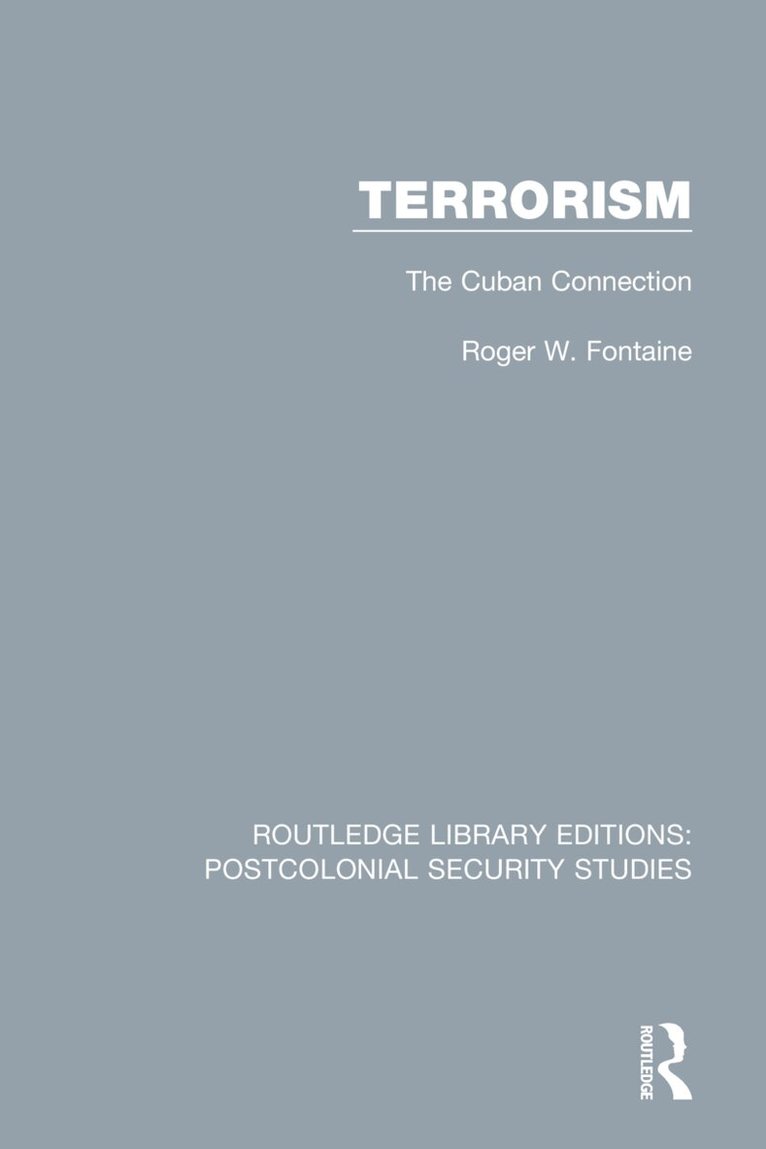
Terrorism
The Cuban Connection
Häftad, 2023
500 kr
Lägg i varukorg
First published in 1988, Terrorism: The Cuban Connection examines Cuba’s involvement in terrorism. With a focus on Havana, the book begins by looking at Cuba’s history and the origins of terrorism. As it progresses, the book traces the development of terrorism and explores Cuba’s connections with …
Terrorism
The Cuban Connection
Inbunden, 2021
1821 kr
Lägg i varukorg
First published in 1988, Terrorism: The Cuban Connection examines Cuba’s involvement in terrorism. With a focus on Havana, the book begins by looking at Cuba’s history and the origins of terrorism. As it progresses, the book traces the development of terrorism and explores Cuba’s connections with …
Terrorism
The Cuban Connection
E-bok, 2021
593 kr
Lägg i varukorg
First published in 1988, Terrorism: The Cuban Connection examines Cuba’s involvement in terrorism. With a focus on Havana, the book begins by looking at Cuba’s history and the origins of terrorism. As it progresses, the book traces the development of terrorism and explores Cuba’s connections …
Terrorism
The Cuban Connection
E-bok, 2021
593 kr
Lägg i varukorg
First published in 1988, Terrorism: The Cuban Connection examines Cuba’s involvement in terrorism. With a focus on Havana, the book begins by looking at Cuba’s history and the origins of terrorism. As it progresses, the book traces the development of terrorism and explores Cuba’s connections …
Foreign Policy Failures in China, Cuba, and Nicaragua
A Paradigm
Av Ray S. Cline, Roger W. Fontaine
Häftad, 1992
461 kr
Tillfälligt slut
This study describes the U.S. lack of support for Generalissimo Chiang Kai-shek during World War II, its abandonment of Fulgencio Batista in Cuba in the 1950s, and its disregard for Anastasio Somoza in the 1970s. The authors often say with conviction that American leaders usually have good …