Roger Waldinger - Böcker
Visar alla böcker från författaren Roger Waldinger. Handla med fri frakt och snabb leverans.
6 produkter
6 produkter
1 158 kr
Skickas inom 7-10 vardagar
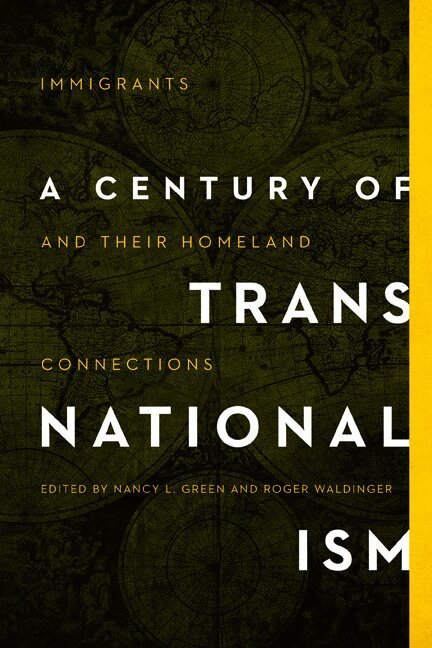
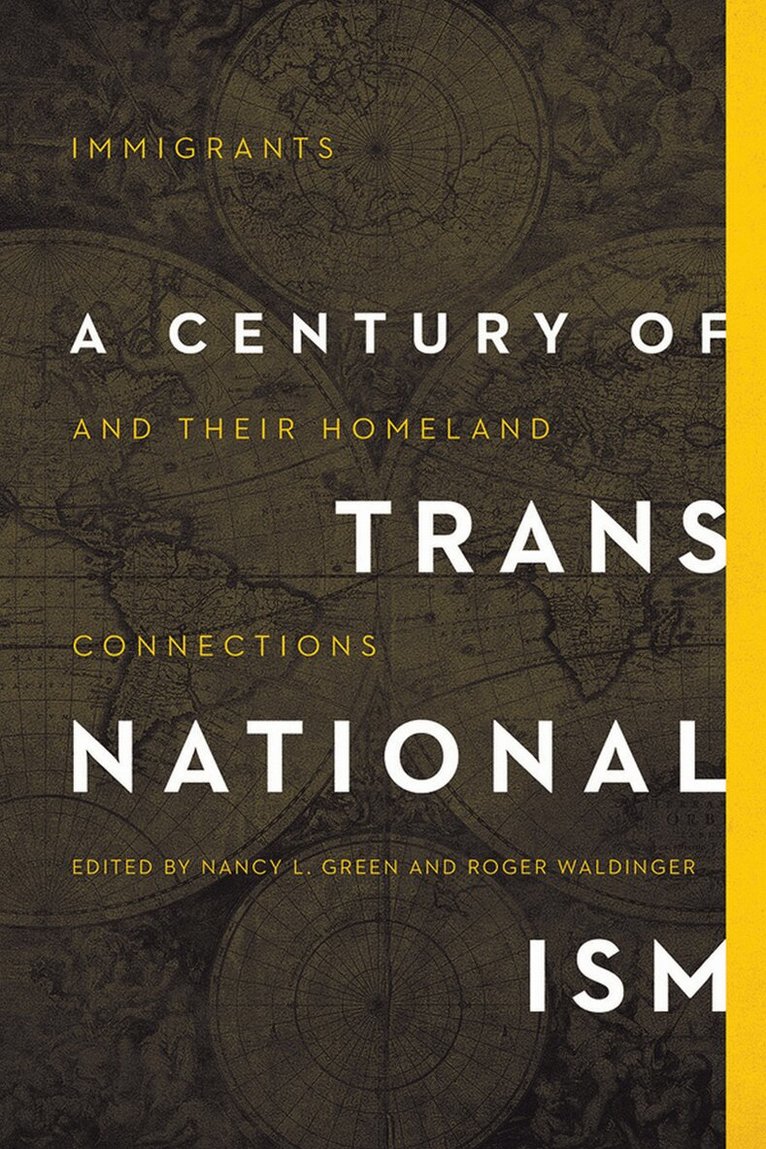
This collection of articles by sociologically minded historians and historically minded sociologists highlights both the long-term persistence and the continuing instability of home country connections. Encompassing societies of origin and destination from around the world, A Century of Transnationalism shows that while population movements across states recurrently produce homeland ties, those connections have varied across contexts and from one historical period to another, changing in unpredictable ways. Any number of factors shape the linkages between home and destination, including conditions in the society of immigration, policies of the state of emigration, and geopolitics worldwide. Contributors: Houda Asal, Marie-Claude Blanc-Chaléard, Caroline Douki, David FitzGerald, Nancy L. Green, Madeline Y. Hsu, Thomas Lacroix, Tony Michels, Victor Pereira, Mônica Raisa Schpun, and Roger Waldinger
308 kr
Skickas inom 7-10 vardagar
This collection of articles by sociologically minded historians and historically minded sociologists highlights both the long-term persistence and the continuing instability of home country connections. Encompassing societies of origin and destination from around the world, A Century of Transnationalism shows that while population movements across states recurrently produce homeland ties, those connections have varied across contexts and from one historical period to another, changing in unpredictable ways. Any number of factors shape the linkages between home and destination, including conditions in the society of immigration, policies of the state of emigration, and geopolitics worldwide. Contributors: Houda Asal, Marie-Claude Blanc-Chaléard, Caroline Douki, David FitzGerald, Nancy L. Green, Madeline Y. Hsu, Thomas Lacroix, Tony Michels, Victor Pereira, Mônica Raisa Schpun, and Roger Waldinger
518 kr
Skickas inom 3-6 vardagar
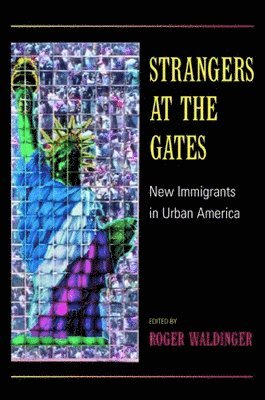
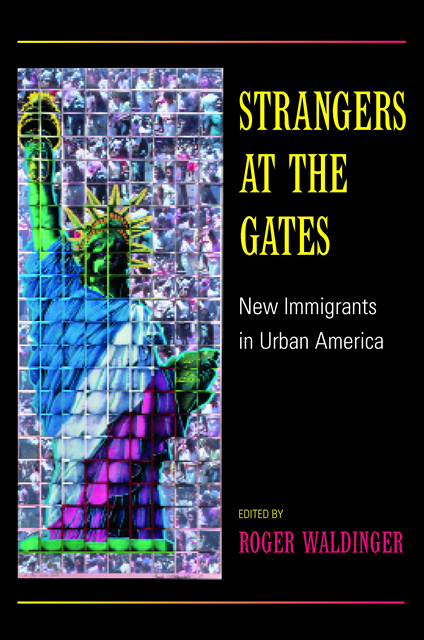
Immigration is remaking the United States. In New York, Los Angeles, Miami, San Francisco, and Chicago, the multiethnic society of tomorrow is already in place. Yet today's urban centers appear unlikely to provide newcomers with the same opportunities their predecessors found at the turn of the last century. Using the latest sources of information, this hard-hitting volume of original essays looks at the nexus between urban realities and immigrant destinies in these American cities. Strangers at the Gates tells the real story of immigrants' prospects for success today and delineates the conditions that will hinder or aid the newest Americans in their quest to get ahead. This book stresses the crucial importance of understanding that immigration today is fundamentally urban and the equally important fact that immigrants are now flocking to places where low-skilled workers--regardless of ethnic background--are in particular trouble. These two themes are at the heart of this book, which also covers a range of provocative topics, often with surprising findings.Among the essayists, Nelson Lim enters the controversy over whether and how immigrants affect the employment prospects for African Americans; Mark Ellis investigates whether low immigrant wages depress other workers' salaries; William A.V. Clark contends that immigrants seem to be experiencing downward mobility; and Min Zhou asserts that trends among second-generation immigrants are decidedly more optimistic. These well-integrated and well-organized essays sit squarely at the intersection of sociology and economics, and along the way they point out both the strengths and the weaknesses of these two disciplines in understanding immigration. Providing a theoretically and empirically comprehensive overview of the economic fate of immigrants in major American cities, this book will make a major contribution to debates over immigration and the American future.
258 kr
Skickas inom 7-10 vardagar
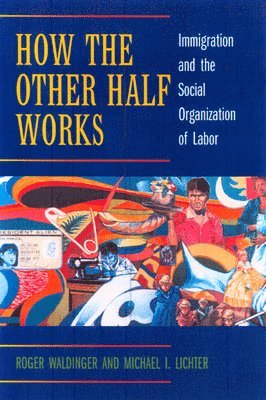
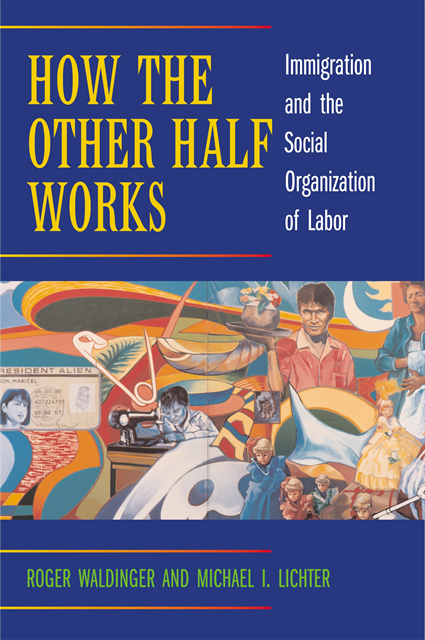
How the Other Half Works solves the riddle of America's contemporary immigration puzzle: why an increasingly high-tech society has use for so many immigrants who lack the basic skills that today's economy seems to demand. In clear and engaging style, Waldinger and Lichter isolate the key factors that explain the presence of unskilled immigrants in our midst. Focusing on Los Angeles, the capital of today's immigrant America, this hard-hitting book elucidates the other side of the new economy, showing that hiring is finding not so much "one's own kind" but rather the "right kind" to fit the demeaning, but indispensable, jobs many American workers disdain.
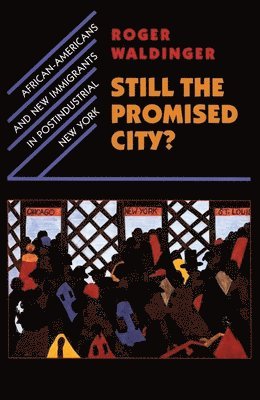
Still the Promised City?
African-Americans and New Immigrants in Postindustrial New York
Häftad, Engelska, 1999
381 kr
Skickas inom 10-15 vardagar
Still the Promised City? addresses the question of why African-Americans have fared so poorly in securing unskilled jobs in the postwar era and why new immigrants have done so well. Does the increase in immigration bear some responsibility for the failure of more blacks to rise, for their disappearance from many occupations, and for their failure to establish a presence in business?The two most popular explanations for the condition of blacks invoke the decline of manufacturing in New York and other major American cities: one claims that this decline has closed off job opportunities for blacks that were available for earlier immigrants who lacked skills and education; the other emphasizes "globalization"--the movement of manufacturing jobs offshore to areas with lower labor costs. But Roger Waldinger shows that these explanations do not fit the facts. Instead, he points out that a previously overlooked factor--population change--and the rapid exodus of white New Yorkers created vacancies for minority workers up and down the job ladder. Ethnic succession generated openings both in declining industries, where the outward seepage of whites outpaced the rate of job erosion, and in growth industries, where whites poured out of bottom-level positions even as demand for low-level workers increased. But this process yielded few dividends for blacks, who saw their share of the many low-skilled jobs steadily decline. Instead, advantage went to the immigrants, who exploited these opportunities by expanding their economic base.Waldinger explains these disturbing facts by viewing employment as a queuing process, with the good jobs at the top of the job ladder and the poor ones at the bottom. As economic growth pulls the topmost ethnic group up the ladder, lower-ranking groups seize the chance to fill the niches left vacant. Immigrants, remembering conditions in the societies they just left, are eager to take up the lower-level jobs that natives will no longer do. By contrast, African-Americans, who came to the city a generation ago, have job aspirations similar to those of whites. But the niches they have carved out, primarily in the public sector, require skills that the least educated members of their community do not have. Black networks no longer provide connections to the lower-level jobs, and relative to the newcomers, employers find unskilled blacks to be much less satisfactory recruits. The result is that a certain number of well-educated blacks have good middle-class jobs, but many of the less educated have fallen back into an underclass. Grim as this analysis is, it points to a deeper understanding of America's most serious social problem and offers fresh approaches to attacking it.
296 kr
Skickas inom 10-15 vardagar
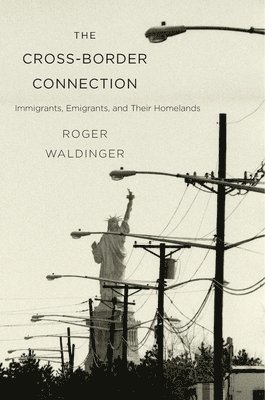
International migration presents the human face of globalization, with consequences that make headlines throughout the world. The Cross-Border Connection addresses a paradox at the core of this phenomenon: emigrants departing one society become immigrants in another, tying those two societies together in a variety of ways. In nontechnical language, Roger Waldinger explains how interconnections between place of origin and destination are built and maintained and why they eventually fall apart.“When are immigrants ‘us’? When are they ‘them’? Waldinger implores readers to reframe the debate from a before-after dichotomy to a new transnational approach, revealing migrants to be here, there, and in-between at all stages of their migration tenure…The book’s real strength is in the elegance of the author’s argument, supported by evidence that transnationalism itself is not static but an ongoing dialectic.”—R. A. Harper, Choice“The Cross-Border Connection is to be commended for putting substance into the black box of transnationalism, offering scholars a dynamic model to account for the ebb and flow of transnationalism in the real world and yielding testable propositions about the circumstances under which cross-border connections can be expected to expand or contract.”—Douglas S. Massey, American Journal of Sociology