Rogers M. Smith - Böcker
Visar alla böcker från författaren Rogers M. Smith. Handla med fri frakt och snabb leverans.
17 produkter
17 produkter
263 kr
Skickas inom 7-10 vardagar
For more than three decades, Rogers M. Smith has been one of the leading scholars of the role of ideas in American politics, policies, and history. Over time, he has developed the concept of "political peoples," a category that is much broader and more fluid than legal citizenship, enabling Smith to offer rich new analyses of political communities, governing institutions, public policies, and moral debates. This book gathers Smith's most important writings on peoplehood to build a coherent theoretical and historical account of what peoplehood has meant in American political life, informed by frequent comparisons to other political societies. From the revolutionary-era adoption of individual rights rhetoric to today's battles over the place of immigrants in a rapidly diversifying American society, Smith shows how modern America's growing embrace of overlapping identities is in tension with the providentialism and exceptionalism that continue to make up so much of what many believe it means to be an American.A major work that brings a lifetime of thought to bear on questions that are as urgent now as they have ever been, Political Peoplehood will be essential reading for social scientists, political philosophers, policy analysts, and historians alike.
399 kr
Skickas inom 7-10 vardagar
This work aims to disprove the idea that the United States has been on a "steady march" toward the end of racial discrimination. Rather, progress has been made only in brief periods, under special conditions, and it has always been followed by periods of stagnation and retrenchment. In this history of race relations, Philip Klinkner and Rogers Smith show that significant advances in racial justice have occurred only when three circumstances have converged: large-scale wars, which require extensive economic and military mobilization of African Americans; an enemy that inspires American leaders to advocate inclusive, egalitarian values in order to justify the war; and domestic political organizations that are able to pressure those leaders to follow through on their rhetoric. Klinkner and Smith's history demonstrates that substantial progress has not yet occurred without these factors working together, as they did during the Revolutionary War, Civil War and Cold War eras. With its insights into contemporary racial politics and its wealth of historical material, this book is a controversial analysis of race relations across two centuries.The fight for racial equality has not been won, the authors argue, nor will it be unless one recognizes the true factors behind progress and the extraordinary efforts required to achieve it.
279 kr
Skickas inom 7-10 vardagar
American life is filled with talk of progress and equality, especially when the issue is that of race. But has the history of race in America really been the continuous march toward equality we'd like to imagine it has? This sweeping history of race in America argues quite the opposite; that progress toward equality has been sporadic, isolated, and surrounded by long periods of stagnation and retrenchment.
927 kr
Skickas inom 7-10 vardagar
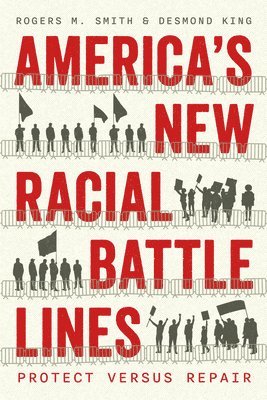
A sobering portrait of the United States’ divided racial politics.For nearly two decades, Rogers M. Smith and Desmond King have charted the shifting racial policy alliances that have shaped American politics across different eras. In America’s New Racial Battle Lines, they show that US racial policy debates are undergoing fundamental change. Disputes over colorblind versus race-conscious policies have given way to new lines of conflict. Today’s conservatives promise to protect traditionalist, predominantly white, Christian Americans against what they call the “radical” Left. Meanwhile, today’s progressives seek not just to integrate American institutions but to more fully transform and “repair” pervasive systemic racism. Drawing on interviews with activists, surveys, social network analyses, and comprehensive reviews of federal, state, and local policies and advocacy groups, Smith and King map the memberships and goals of two rival racial policy alliances and delineate the contrasting stories each side tells. They also show that these increasingly polarized racial policy alliances are substantially funded on both the Left and Right. Placing today’s conflicts in theoretical and historical perspectives, Smith and King analyze where these intensifying clashes may take the nation in the years ahead. They highlight the great potential for mounting violence, as well as the remaining possibilities for finding common ground.
247 kr
Skickas inom 7-10 vardagar
A sobering portrait of the United States’ divided racial politics.For nearly two decades, Rogers M. Smith and Desmond King have charted the shifting racial policy alliances that have shaped American politics across different eras. In America’s New Racial Battle Lines, they show that US racial policy debates are undergoing fundamental change. Disputes over colorblind versus race-conscious policies have given way to new lines of conflict. Today’s conservatives promise to protect traditionalist, predominantly white, Christian Americans against what they call the “radical” Left. Meanwhile, today’s progressives seek not just to integrate American institutions but to more fully transform and “repair” pervasive systemic racism. Drawing on interviews with activists, surveys, social network analyses, and comprehensive reviews of federal, state, and local policies and advocacy groups, Smith and King map the memberships and goals of two rival racial policy alliances and delineate the contrasting stories each side tells. They also show that these increasingly polarized racial policy alliances are substantially funded on both the Left and Right. Placing today’s conflicts in theoretical and historical perspectives, Smith and King analyze where these intensifying clashes may take the nation in the years ahead. They highlight the great potential for mounting violence, as well as the remaining possibilities for finding common ground.
966 kr
Skickas inom 5-8 vardagar
Is civic identity in the United States really defined by liberal, democratic political principles? Or is U.S. citizenship the product of multiple traditions—not only liberalism and republicanism but also white supremacy, Anglo-Saxon supremacy, Protestant supremacy, and male supremacy? In this powerful and disturbing book, Rogers Smith traces political struggles over U.S. citizenship laws from the colonial period through the Progressive era and shows that throughout this time, most adults were legally denied access to full citizenship, including political rights, solely because of their race, ethnicity, or gender. Basic conflicts over these denials have driven political development and civic membership in the U.S., Smith argues. These conflicts are what truly define U.S. civic identity up to this day.Others have claimed that nativist, racist, and sexist traditions have been marginal or that they are purely products of capitalist institutions. In contrast, Smith’s pathbreaking account explains why these traditions have been central to American political and economic life. He shows that in the politics of nation building, principles of democracy and liberty have often failed to foster a sense of shared "peoplehood" and have instead led many Americans to claim that they are a "chosen people," a "master race" or superior culture, with distinctive gender roles. Smith concludes that today the United States is in a period of reaction against the egalitarian civic reforms of the last generation, with nativist, racist, and sexist beliefs regaining influence. He suggests ways that proponents of liberal democracy should alter their view of U.S. citizenship in order to combat these developments more effectively.
309 kr
Skickas inom 7-10 vardagar
How can we build thriving political communities? In this provocative account of how societies are bound together, Rogers Smith examines the importance of 'stories of peoplehood', narratives that promise economic or political power and define political allegiances in religious, cultural, racial, ethnic and related terms. Smith argues that no nations are purely civic: all are bound in part by stories that seek to define elements intrinsic to their members' identities and worth. These types of stories can support valuable forms of political life but they also pose dangers that must be understood if they are to be confronted. In contrast to much contemporary writing, Stories of Peoplehood argues for community-building via robust contestation among sharply differing views. This original argument combines accessible theory with colourful examples of myths and stories from around the world and over 2,500 years of human history.
415 kr
Skickas inom 7-10 vardagar
The study of politics seems endlessly beset by debates about method. At the core of these debates is a single unifying concern: should political scientists view themselves primarily as scientists, developing ever more sophisticated tools and studying only those phenomena to which such tools may fruitfully be applied? Or should they instead try to illuminate the large, complicated, untidy problems thrown up in the world, even if the chance to offer definitive explanations is low? Is there necessarily a tension between these two endeavours? Are some domains of political inquiry more amenable to the building up of reliable, scientific knowledge than others, and if so, how should we deploy our efforts? In this book, some of the world's most prominent students of politics offer original discussions of these pressing questions, eschewing narrow methodological diatribes to explore what political science is and how political scientists should aspire to do their work.
1 245 kr
Skickas inom 7-10 vardagar
How can we build thriving political communities? In this provocative account of how societies are bound together, Rogers Smith examines the importance of 'stories of peoplehood', narratives that promise economic or political power and define political allegiances in religious, cultural, racial, ethnic and related terms. Smith argues that no nations are purely civic: all are bound in part by stories that seek to define elements intrinsic to their members' identities and worth. These types of stories can support valuable forms of political life but they also pose dangers that must be understood if they are to be confronted. In contrast to much contemporary writing, Stories of Peoplehood argues for community-building via robust contestation among sharply differing views. This original argument combines accessible theory with colourful examples of myths and stories from around the world and over 2,500 years of human history.
1 442 kr
Skickas inom 7-10 vardagar
The study of politics seems endlessly beset by debates about method. At the core of these debates is a single unifying concern: should political scientists view themselves primarily as scientists, developing ever more sophisticated tools and studying only those phenomena to which such tools may fruitfully be applied? Or should they instead try to illuminate the large, complicated, untidy problems thrown up in the world, even if the chance to offer definitive explanations is low? Is there necessarily a tension between these two endeavours? Are some domains of political inquiry more amenable to the building up of reliable, scientific knowledge than others, and if so, how should we deploy our efforts? In this book, some of the world's most prominent students of politics offer original discussions of these pressing questions, eschewing narrow methodological diatribes to explore what political science is and how political scientists should aspire to do their work.
386 kr
Skickas inom 10-15 vardagar
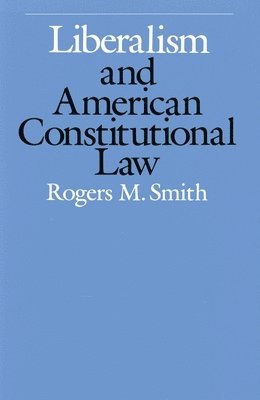
Rogers Smith describes the adverse influence of modern liberalism's governing ideas on the development of American constitutional law and offers a new, more purposive theory to suit contemporary needs. He begins with a fresh analysis of the liberal goals shared by America's constitutional framers and points out the weaknesses of their political thought. Examining vital constitutional doctrines of due process, free speech, voting apportionment, and economic welfare, he demonstrates how contemporary law is often an incoherent patchwork of principles drawn from different historic versions of liberalism.Smith considers and discards the major modern theories in political philosophy that bear on constitutional law: the democratic relativism of Alexander Bickel and John Hart Ely, the higher-law views inherited from America's religious traditions, and the neo-Kantian liberalism of Ronald Dworkin and John Rawls. Returning instead to the early liberalism of John Locke, he suggests how a theory centered on the Enlightenment commitment to promoting human capacities for reflective self-direction, or “rational liberty,” might better guide current constitutional debates.
431 kr
Skickas inom 7-10 vardagar
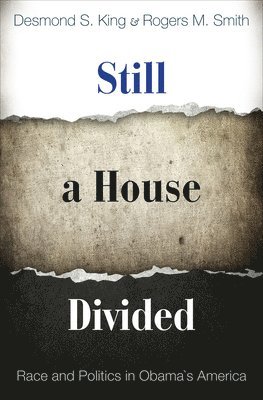
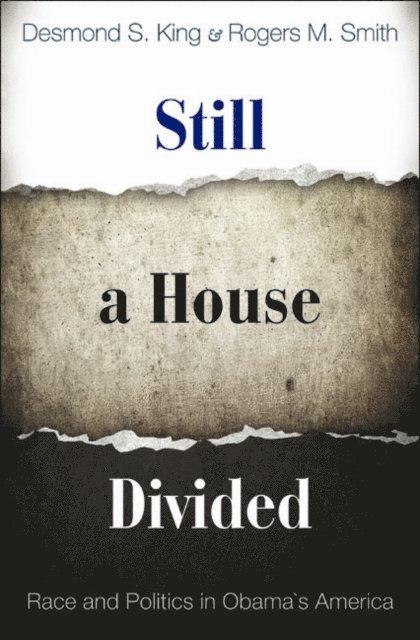
Why have American policies failed to reduce the racial inequalities still pervasive throughout the nation? Has President Barack Obama defined new political approaches to race that might spur unity and progress? "Still a House Divided" examines the enduring divisions of American racial politics and how these conflicts have been shaped by distinct political alliances and their competing race policies. Combining deep historical knowledge with a detailed exploration of such issues as housing, employment, criminal justice, multiracial census categories, immigration, voting in majority-minority districts, and school vouchers, Desmond King and Rogers Smith assess the significance of President Obama's election to the White House and the prospects for achieving constructive racial policies for America's future. Offering a fresh perspective on the networks of governing institutions, political groups, and political actors that influence the structure of American racial politics, King and Smith identify three distinct periods of opposing racial policy coalitions in American history.The authors investigate how today's alliances pit color-blind and race-conscious approaches against one another, contributing to political polarization and distorted policymaking. Contending that President Obama has so far inadequately confronted partisan divisions over race, the authors call for all sides to recognize the need for a balance of policy measures if America is to ever cease being a nation divided. Presenting a powerful account of American political alliances and their contending racial agendas, "Still a House Divided" sheds light on a policy path vital to the country's future.
247 kr
Skickas inom 7-10 vardagar
Why have American policies failed to reduce the racial inequalities still pervasive throughout the nation? Has President Barack Obama defined new political approaches to race that might spur unity and progress? Still a House Divided examines the enduring divisions of American racial politics and how these conflicts have been shaped by distinct political alliances and their competing race policies. Combining deep historical knowledge with a detailed exploration of such issues as housing, employment, criminal justice, multiracial census categories, immigration, voting in majority-minority districts, and school vouchers, Desmond King and Rogers Smith assess the significance of President Obama's election to the White House and the prospects for achieving constructive racial policies for America's future. Offering a fresh perspective on the networks of governing institutions, political groups, and political actors that influence the structure of American racial politics, King and Smith identify three distinct periods of opposing racial policy coalitions in American history.The authors investigate how today's alliances pit color-blind and race-conscious approaches against one another, contributing to political polarization and distorted policymaking. Contending that President Obama has so far inadequately confronted partisan divisions over race, the authors call for all sides to recognize the need for a balance of policy measures if America is to ever cease being a nation divided. Presenting a powerful account of American political alliances and their contending racial agendas, Still a House Divided sheds light on a policy path vital to the country's future.
476 kr
Skickas inom 10-15 vardagar
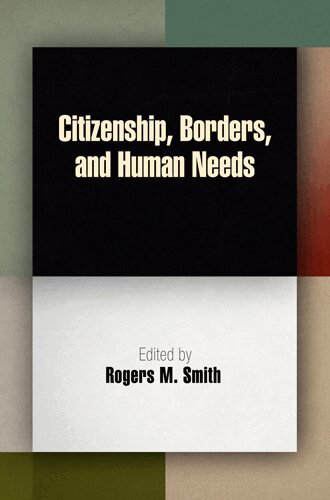
From anxiety about Muslim immigrants in Western Europe to concerns about undocumented workers and cross-border security threats in the United States, disputes over immigration have proliferated and intensified in recent years. These debates are among the most contentious facing constitutional democracies, and they show little sign of fading away.Edited and with an introduction by political scientist Rogers M. Smith, Citizenship, Borders, and Human Needs brings together essays by leading international scholars from a wide range of disciplines to explore the economic, cultural, political, and normative aspects of comparative immigration policies. In the first section, contributors go beyond familiar explanations of immigration's economic effects to explore whose needs are truly helped and harmed by current migration patterns. The concerns of receiving countries include but are not limited to their economic interests, and several essays weigh different models of managing cultural identity and conflict in democracies with large immigrant populations.Other essays consider the implications of immigration for politics and citizenship. In many nations, large-scale immigration challenges existing political institutions, which must struggle to foster political inclusion and accommodate changing ways of belonging to the polity. The volume concludes with contrasting reflections on the normative standards that should guide immigration policies in modern constitutional democracies.Citizenship, Borders, and Human Needs develops connections between thoughtful scholarship and public policy, thereby advancing public debate on these complex and divisive issues. Though most attention in the collection is devoted to the dilemmas facing immigrant-receiving countries in the West, the volume also explores policies and outcomes in immigrant-sending countries, as well as the situation of developing nations-such as India-that are net receivers of migrants.
847 kr
Skickas inom 10-15 vardagar
In Varieties of Sovereignty and Citizenship, scholars from a wide range of disciplines reflect on the transformation of the world away from the absolute sovereignty of independent nation-states and on the proliferation of varieties of plural citizenship. The emergence of possible new forms of allegiance and their effect on citizens and on political processes underlie the essays in this volume.The essays reflect widespread acceptance that we cannot grasp either the empirical realities or the important normative issues today by focusing only on sovereign states and their actions, interests, and aspirations. All the contributors accept that we need to take into account a great variety of globalizing forces, but they draw very different conclusions about those realities. For some, the challenges to the sovereignty of nation-states are on the whole to be regretted and resisted. These transformations are seen as endangering both state capacity and state willingness to promote stability and security internationally. Moreover, they worry that declining senses of national solidarity may lead to cutbacks in the social support systems many states provide to all those who reside legally within their national borders. Others view the system of sovereign nation-states as the aspiration of a particular historical epoch that always involved substantial problems and that is now appropriately giving way to new, more globally beneficial forms of political association. Some contributors to this volume display little sympathy for the claims on behalf of sovereign states, though they are just as wary of emerging forms of cosmopolitanism, which may perpetuate older practices of economic exploitation, displacement of indigenous communities, and military technologies of domination. Collectively, the contributors to this volume require us to rethink deeply entrenched assumptions about what varieties of sovereignty and citizenship are politically possible and desirable today, and they provide illuminating insights into the alternative directions we might choose to pursue.
1 014 kr
Skickas inom 7-10 vardagar
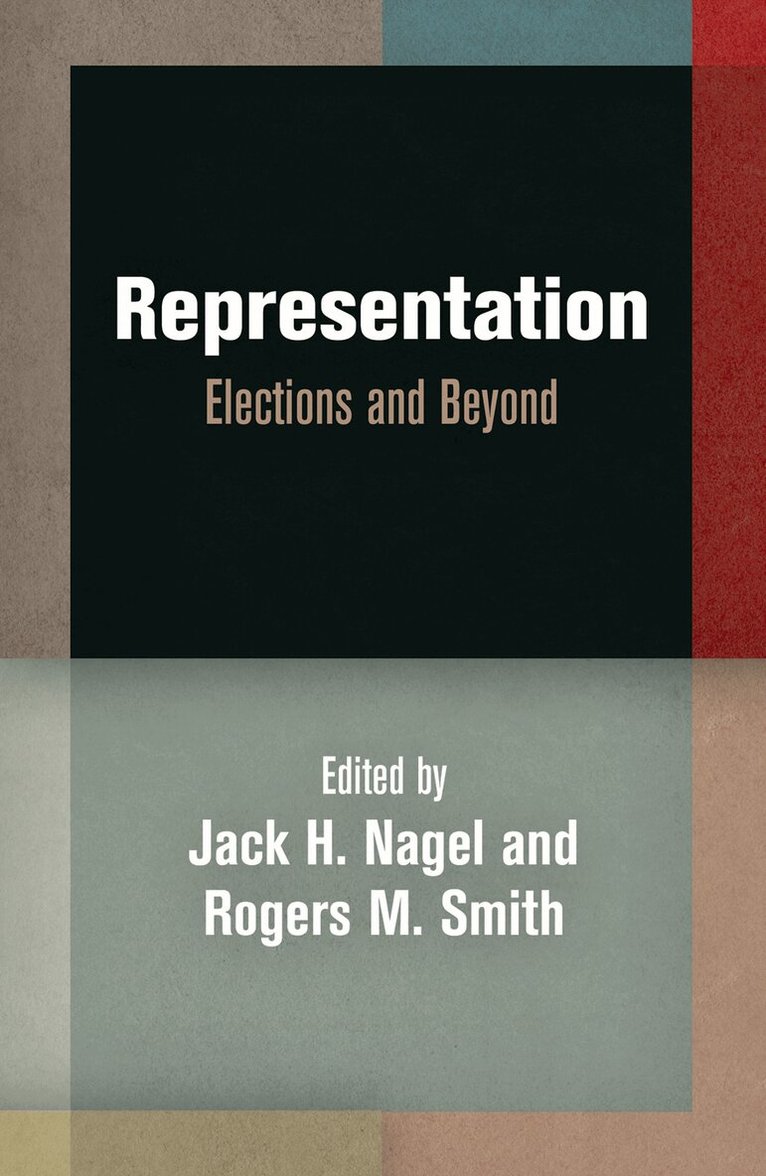
In any democracy, the central problem of governance is how to inform, organize, and represent the opinions of the public in order to advance three goals: popular control over leaders, equality among citizens, and competent governance. In most political analyses, voting is emphasized as the central and essential process in achieving these goals. Yet democratic representation encompasses a great deal more than voter beliefs and behavior and, indeed, involves much more than the machinery of elections. Democracy requires government agencies that respond to voter decisions, a civil society in which powerful organized interests do not dominate all others, and communication systems that permit divergent voices to be heard.Representation: Elections and Beyond brings together leading international scholars from a wide range of disciplines to explore the twenty-first-century innovations-in voting laws and practices, in electoral systems, in administrative, political, and civil organizations, and in communication processes and new technologies-that are altering how we understand democratic representation. Featuring twelve essays that engage with national, provincial, and municipal governments across three continents, this volume tackles traditional core elements of democratic representation, such as voting, electoral systems, and political parties, while also underscoring the ways in which beliefs and preferences of citizens are influenced, expressed, and aggregated and the effects of those methods and practices on political agendas and policy outcomes. In pinpointing deficiencies in contemporary democratic practices and possibilities for reform, Representation provides an invaluable roadmap to improve democratic representation in the twenty-first century.Contributors: AndrÉ Blais, Pradeep Chhibber, Archon Fung, Jacob Hacker, Zoltan Hajnal, Matthew Hindman, David Karpf, Georgia Kernell, Alexander Keyssar, Anthony McGann, Susan Ostermann, Paul Pierson, Dennis Thompson, Jessica Trounstine, Mark E. Warren.
782 kr
Skickas inom 10-15 vardagar
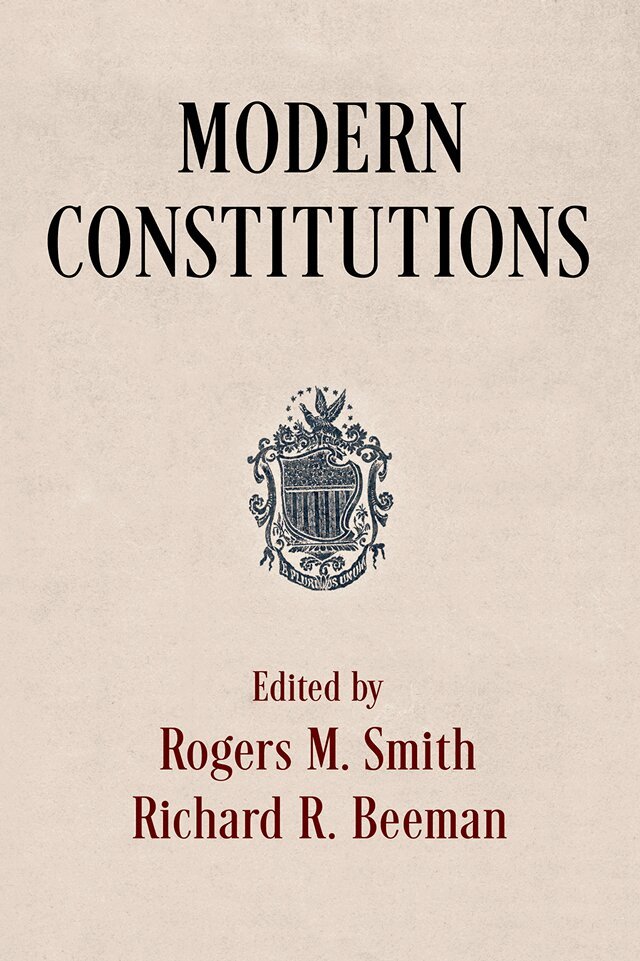
More than two millennia ago, Aristotle is said to have compiled a collection of ancient constitutions that informed his studies of politics. For Aristotle, constitutions largely distilled and described the varied and distinctive patterns of political life established over time. What constitutionalism has come to mean in the modern era, on the other hand, originates chiefly in the late eighteenth century and primarily with the U.S. Constitution-written in 1787 and made effective in 1789-and the various French constitutions that first appeared in 1791.In the last half century, more than 130 nations have adopted new constitutions, half of those within the last twenty years. These new constitutions are devoted to many of the same goals found in the U.S. Constitution: the rule of law, representative self-government, and protection of rights. But by canvassing constitutional developments at the national and state level in the United States alongside modern constitutions in Eastern and Western Europe, Africa, and Asia, the contributors to Modern Constitutions-all leading scholars of constitutionalism-show that modern constitutions often seek to protect social rights and to establish representative institutions, forms of federalism, and courts charged with constitutional review that depart from or go far beyond the seminal U.S. example. Partly because of their innovations, however, many modern constitutional systems now confront mounting authoritarian pressures that put fundamental commitments to the rule of law in jeopardy.The contributions in this volume collectively provide a measure of guidance for the challenges and prospects of modern constitutions in the rapidly changing political world of the twenty-first century.Contributors: Richard R. Beeman, Valerie Bunce, Tom Ginsburg, Heinz Klug, David S. Law, Sanford Levinson, Jaime Lluch, Christopher McCrudden, Kim Lane Scheppele, Rogers M. Smith, Mila Versteeg, Emily Zackin.