Roland Oliver – författare
Visar alla böcker från författaren Roland Oliver. Handla med fri frakt och snabb leverans.
20 produkter
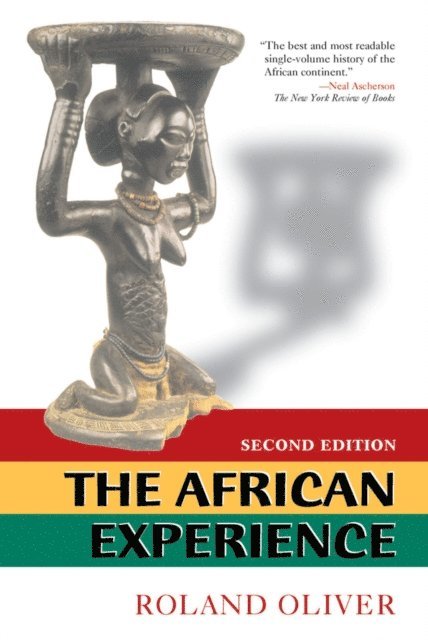
African Experience
From Olduvai Gorge To The 21st Century
Häftad, 2000
876 kr
Lägg i varukorg
This masterpiece of scholarship and compression, the second edition of The African Experience , covers the entire span of human history across the African continent, from the earliest emergence of hominids in eastern and southern Africa up to the present day. Drawing on more than forty years of …
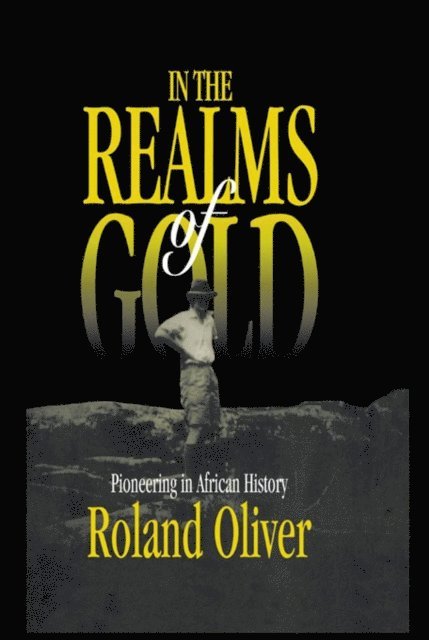
In the Realms of Gold
Pioneering in African History
Häftad, 1997
412 kr
Lägg i varukorg
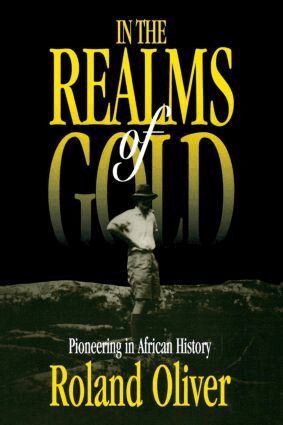
Over the last fifty years, Roland Oliver has been both a witness to the post-colonial history of Africa and a preeminent scholar of the continent’s pre-colonial history. Oliver was a young Cambridge graduate in 1947 when he took a newly created position at the University of London to research, and …
African Experience
From Olduvai Gorge To The 21st Century
Inbunden, 2019
2510 kr
Lägg i varukorg
This masterpiece of scholarship and compression, the second edition of The African Experience, covers the entire span of human history across the African continent, from the earliest emergence of hominids in eastern and southern Africa up to the present day. Drawing on more than forty years of …
African Experience
From Olduvai Gorge To The 21st Century
E-bok, 2018
1012 kr
Lägg i varukorg
This masterpiece of scholarship and compression, the second edition of The African Experience, covers the entire span of human history across the African continent, from the earliest emergence of hominids in eastern and southern Africa up to the present day. Drawing on more than forty years of …
African Experience
From Olduvai Gorge To The 21st Century
E-bok, 2018
1004 kr
Lägg i varukorg
This masterpiece of scholarship and compression, the second edition of The African Experience, covers the entire span of human history across the African continent, from the earliest emergence of hominids in eastern and southern Africa up to the present day. Drawing on more than forty years of …
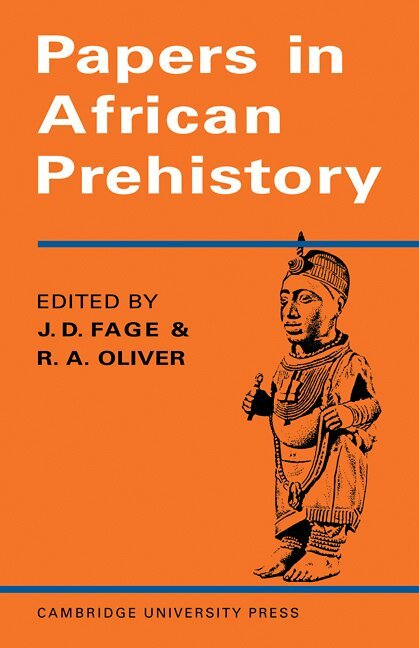
Papers in African Prehistory
Av J. D. Fage, Roland Oliver m. fl.
Häftad, 1970
586 kr
Lägg i varukorg
Professor Fage and Professor Oliver, the editors of this collection, are distinguished historians of Africa, and as founding editors of the Journal of African History they both established the journal and used it to mark out developing areas of the subject. In directing the journal they have …
Africa in the Iron Age
c.500 BC-1400 AD
Av Roland Oliver, Brian M. Fagan
Häftad, 1975
821 kr
Lägg i varukorg
Africa in the Iron Age is a comprehensive and authoritative introduction to African history between about 500 B.C. and A.D. 1400. The authors are not so much concerned with a particular technological revolution as the enormous changes - political, social and economic - that took place during the …
The Cambridge History of Africa
Inbunden, 1977
1610 kr
Lägg i varukorg
The five and a half centuries described in this volume were those in which Iron Age cultures passed from their early and experimental phases into stages of maturity characterized by long-distance trade and complex, many-tiered political systems. In Egypt and North Africa it was a period of …
The Cambridge History of Africa
Av Roland Oliver, G. N. Sanderson
Inbunden, 1985
1844 kr
Lägg i varukorg
Volume VI of The Cambridge History of Africa covers the period 1870-1905, when the European powers (Britain, France, Germany, Portugal and Italy) divided the continent into colonial territories and vied with each other for control over vast tracts of land and valuable mineral resources. At the same …
The African Middle Ages, 1400-1800
Av Roland Oliver, Anthony Atmore
Häftad, 1981
482 kr
Lägg i varukorg
The African Middle Ages covers the period of African history from 1400 to 1800. During this period Africa was influenced by external forces as the Islamic states of the north extended their sway and as maritime trade with Europe and Asia increased. The notorious slave-trade created the black …
Africa since 1800
Av Roland Oliver, Anthony Atmore
Häftad, 2005
586 kr
Lägg i varukorg
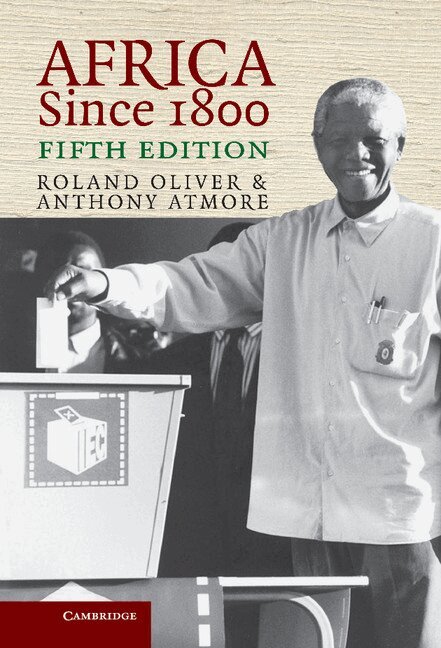
This book begins by looking at the peoples of Africa at the turn of the eighteenth and nineteenth centuries, and goes on to study the commercial and ideological penetration of Africa by the outside world. The partition and colonisation of Africa by the European powers are discussed, and there is …
Medieval Africa, 1250-1800
Av Roland Oliver, Anthony Atmore
Inbunden, 2001
1224 kr
Lägg i varukorg
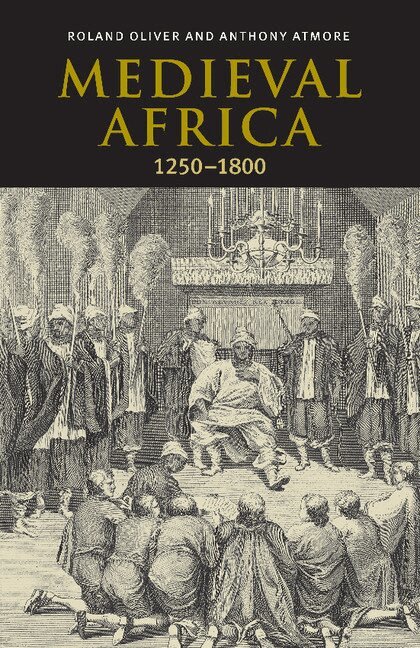
This is a radically revised version of The African Middle Ages 1400-1800, and the companion volume to the authors' well-known Africa since 1800. It follows the overall plan of the original, but now begins 150 years earlier, and considers recent literature in African historical studies. The earlier …
Medieval Africa, 1250-1800
Av Roland Oliver, Anthony Atmore
Häftad, 2001
653 kr
Lägg i varukorg
This is a radically revised version of The African Middle Ages 1400-1800, and the companion volume to the authors' well-known Africa since 1800. It follows the overall plan of the original, but now begins 150 years earlier, and considers recent literature in African historical studies. The earlier …
Africa since 1800
Av Roland Oliver, Anthony Atmore
Inbunden, 2005
1224 kr
Lägg i varukorg
This book begins by looking at the peoples of Africa at the turn of the eighteenth and nineteenth centuries, and goes on to study the commercial and ideological penetration of Africa by the outside world. The partition and colonisation of Africa by the European powers are discussed, and there is …
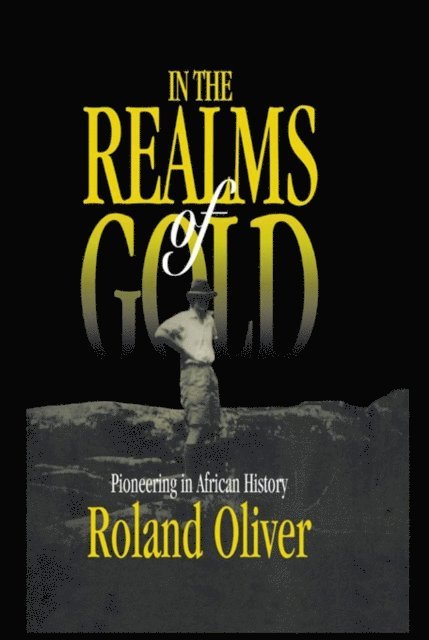
In the Realms of Gold
Pioneering in African History
Häftad, 1997
440 kr
Lägg i varukorg
The core of the book is Oliver's account of his research travels throughout tropical Africa from the 1940s to the 1980s; his efforts to train and foster African graduate students to teach in African universities; his role in establishing conferences and journals to bring together the work of …
In the Realms of Gold
Pioneering in African History
Inbunden, 1997
811 kr
Lägg i varukorg
The core of the book is Oliver's account of his research travels throughout tropical Africa from the 1940s to the 1980s; his efforts to train and foster African graduate students to teach in African universities; his role in establishing conferences and journals to bring together the work of …
In the Realms of Gold
Pioneering in African History
E-bok, 2013
515 kr
Lägg i varukorg
The core of the book is Oliver''s account of his research travels throughout tropical Africa from the 1940s to the 1980s; his efforts to train and foster African graduate students to teach in African universities; his role in establishing conferences and journals to bring together the work of …
In the Realms of Gold
Pioneering in African History
E-bok, 2013
515 kr
Lägg i varukorg
The core of the book is Oliver''s account of his research travels throughout tropical Africa from the 1940s to the 1980s; his efforts to train and foster African graduate students to teach in African universities; his role in establishing conferences and journals to bring together the work of …
In the Realms of Gold
Pioneering in African History
Inbunden, 1997
304 kr
Tillfälligt slut
Over the last 50 years, Roland Oliver has been both a witness to the post-colonial history of Africa and a pre-eminent scholar of the continent's precolonial history. Oliver was a young Cambridge graduate in 1947 when he took a groundbreaking new position at the University of London, which wanted …