Rolf Haenni – författare
Visar alla böcker från författaren Rolf Haenni. Handla med fri frakt och snabb leverans.
5 produkter
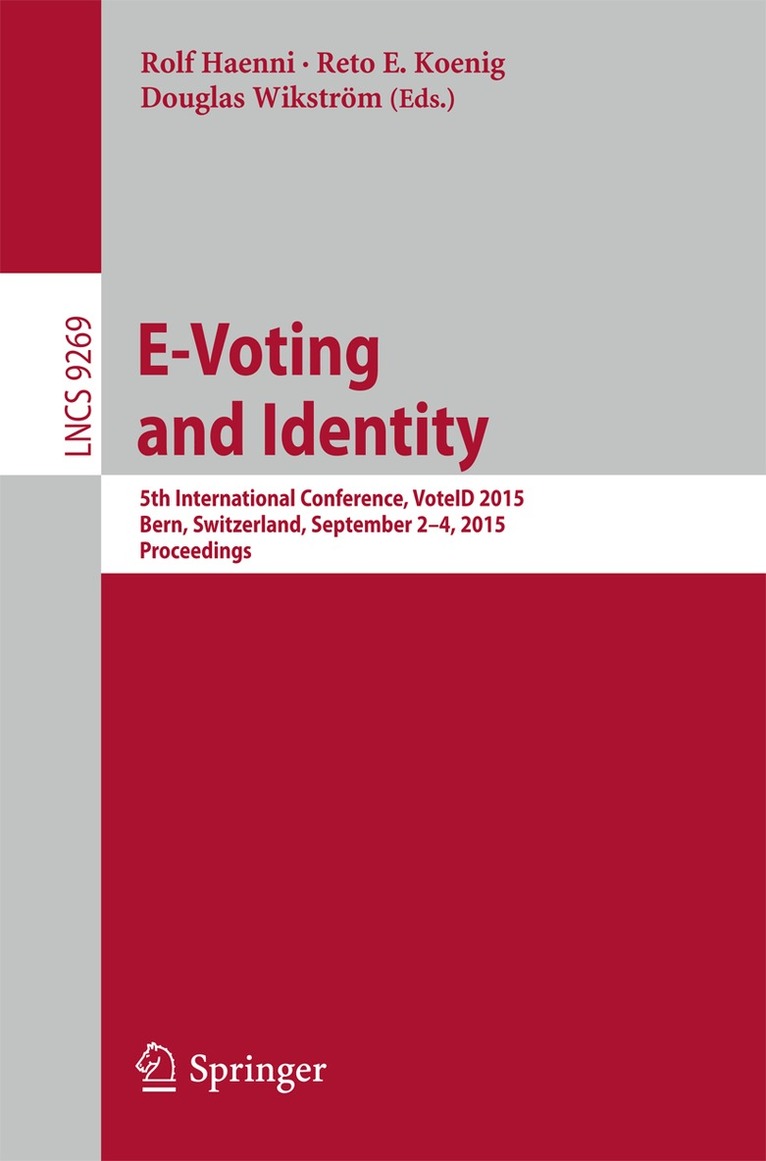
E-Voting and Identity
5th International Conference, VoteID 2015, Bern, Switzerland, September 2-4, 2015, Proceedings
Av Rolf Haenni, Reto E. Koenig m. fl.
Häftad, 2015
568 kr
Lägg i varukorg
This book constitutes the thoroughly refereed conference proceedings of the 5th International Conference on E-Voting and Identity, VoteID 2015, held in Bern, Switzerland, in September 2015. The 10 revised full papers presented, including one keynote and three invited talks, were carefully selected …
E-Voting and Identity
5th International Conference, VoteID 2015, Bern, Switzerland, September 2-4, 2015, Proceedings
Av Douglas Wikstrom, Reto E. Koenig m. fl.
E-bok, 2015
739 kr
Lägg i varukorg
This book constitutes the thoroughly refereed conference proceedings of the 5th International Conference on E-Voting and Identity, VoteID 2015, held in Bern, Switzerland, in September 2015. The 10 revised full papers presented, including one keynote and three invited talks, were carefully selected …
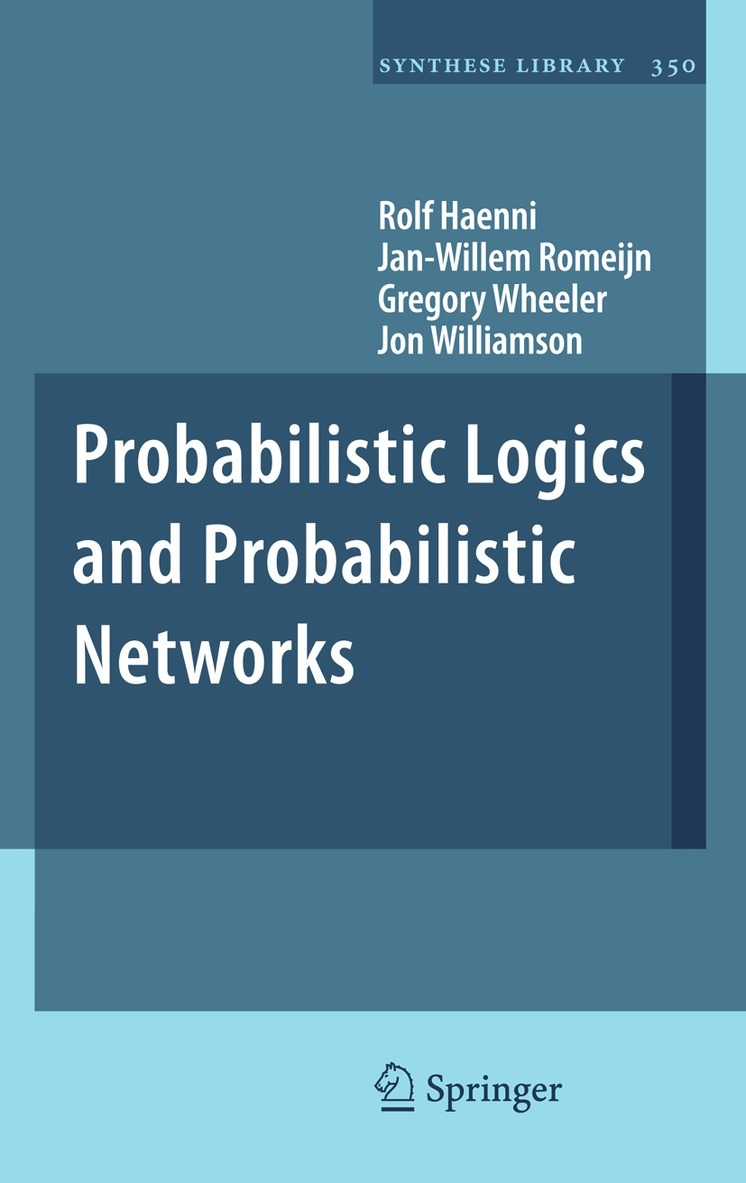
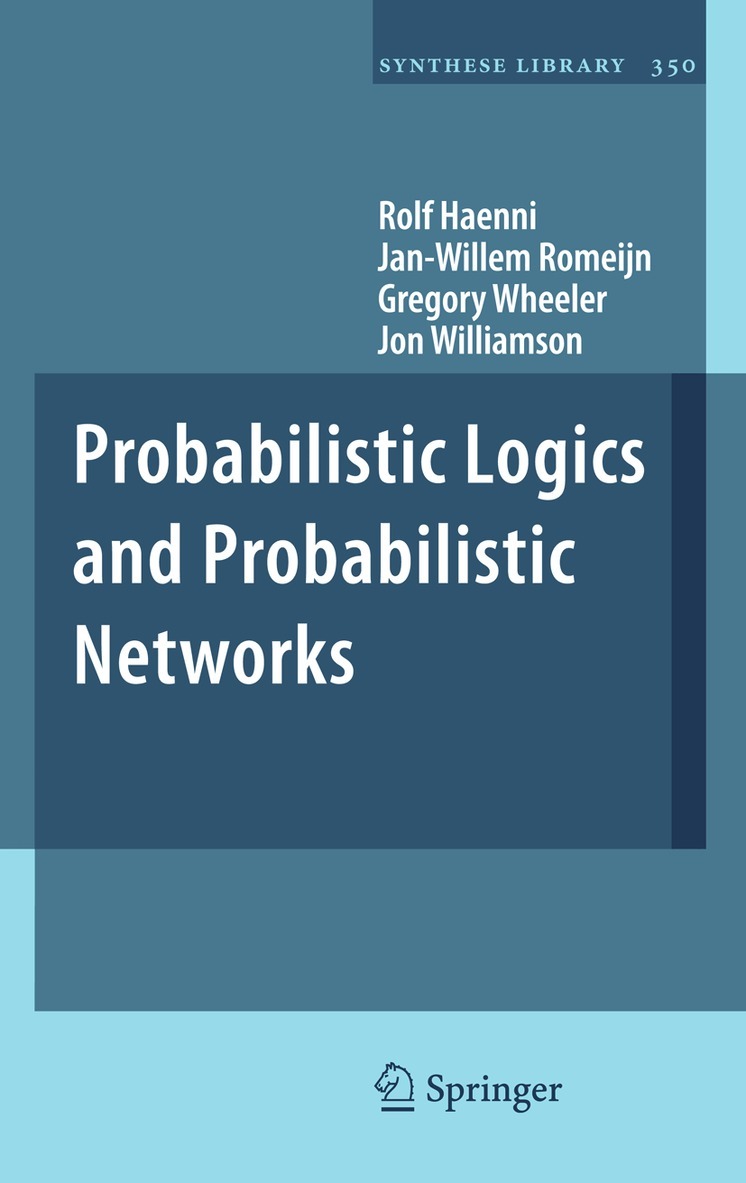
Probabilistic Logics and Probabilistic Networks
Av Rolf Haenni, Jan-Willem Romeijn m. fl.
Inbunden, 2010
552 kr
Lägg i varukorg
While probabilistic logics in principle might be applied to solve a range of problems, in practice they are rarely applied - perhaps because they seem disparate, complicated, and computationally intractable. This programmatic book argues that several approaches to probabilistic logic fit into a …
Probabilistic Logics and Probabilistic Networks
Av Jon Williamson, Gregory Wheeler m. fl.
E-bok, 2010
710 kr
Lägg i varukorg
While probabilistic logics in principle might be applied to solve a range of problems, in practice they are rarely applied - perhaps because they seem disparate, complicated, and computationally intractable. This programmatic book argues that several approaches to probabilistic logic fit into a …
Probabilistic Logics and Probabilistic Networks
Av Rolf Haenni, Jan-Willem Romeijn m. fl.
Häftad, 2013
551 kr
Lägg i varukorg
While probabilistic logics in principle might be applied to solve a range of problems, in practice they are rarely applied - perhaps because they seem disparate, complicated, and computationally intractable. This programmatic book argues that several approaches to probabilistic logic fit into a …