Romain Brette - Böcker
Visar alla böcker från författaren Romain Brette. Handla med fri frakt och snabb leverans.
3 produkter
3 produkter
1 245 kr
Skickas inom 7-10 vardagar
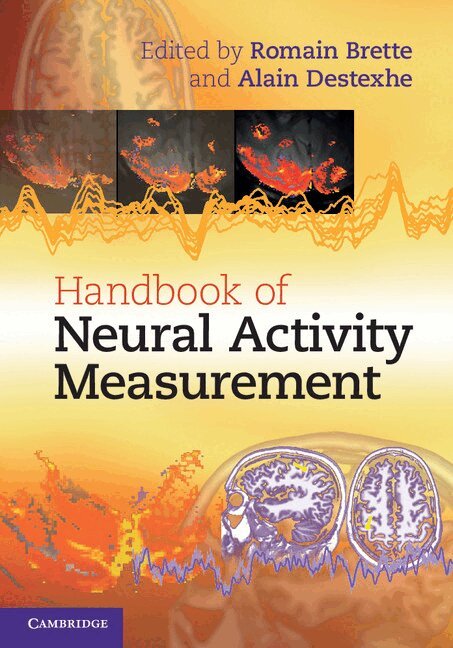
Neuroscientists employ many different techniques to observe the activity of the brain, from single-channel recording to functional imaging (fMRI). Many practical books explain how to use these techniques, but in order to extract meaningful information from the results it is necessary to understand the physical and mathematical principles underlying each measurement. This book covers an exhaustive range of techniques, with each chapter focusing on one in particular. Each author, a leading expert, explains exactly which quantity is being measured, the underlying principles at work, and most importantly the precise relationship between the signals measured and neural activity. The book is an important reference for neuroscientists who use these techniques in their own experimental protocols and need to interpret their results precisely, for computational neuroscientists who use such experimental results in their models, and for scientists who want to develop new measurement techniques or enhance existing ones.
1 908 kr
Skickas inom 3-6 vardagar
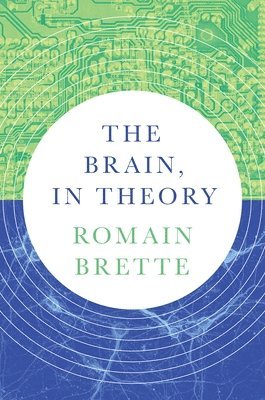
Why engineering and computational analogies are poorly suited to the study of biological cognitionMainstream theories of the brain are often expressed through engineering concepts—computation, code, control, reverse-engineering, optimization. These theories cast the living organism as a machine and the brain as a computer. The fact that cognition is a biological phenomenon seems merely anecdotal; biology is considered just “implementation.” In The Brain, In Theory, Romain Brette argues that the brain is not a “biological computer” because living organisms are not engineered. Engineering is the use of knowledge to solve technical problems, to build an artifact with a plan. But, Brette reminds us, Darwin’s insight is precisely that evolution is not a case of engineering. Unlike engineering, evolution has no predetermined goals, plans, or knowledge.Brette reviews the main theoretical frameworks for thinking about the brain, including computation, neural representations, information, and prediction, and finds them poorly suited to the study of biological cognition. He proposes understanding the brain as a self-organized, developing community of living entities rather than an optimized assembly of machine components. With this new perspective, Brette brings life back to the study of the brain and cognition.
373 kr
Skickas
Why engineering and computational analogies are poorly suited to the study of biological cognitionMainstream theories of the brain are often expressed through engineering concepts—computation, code, control, reverse-engineering, optimization. These theories cast the living organism as a machine and the brain as a computer. The fact that cognition is a biological phenomenon seems merely anecdotal; biology is considered just “implementation.” In The Brain, In Theory, Romain Brette argues that the brain is not a “biological computer” because living organisms are not engineered. Engineering is the use of knowledge to solve technical problems, to build an artifact with a plan. But, Brette reminds us, Darwin’s insight is precisely that evolution is not a case of engineering. Unlike engineering, evolution has no predetermined goals, plans, or knowledge.Brette reviews the main theoretical frameworks for thinking about the brain, including computation, neural representations, information, and prediction, and finds them poorly suited to the study of biological cognition. He proposes understanding the brain as a self-organized, developing community of living entities rather than an optimized assembly of machine components. With this new perspective, Brette brings life back to the study of the brain and cognition.