Romeo García - Böcker
Visar alla böcker från författaren Romeo García. Handla med fri frakt och snabb leverans.
6 produkter
6 produkter
427 kr
Skickas inom 7-10 vardagar
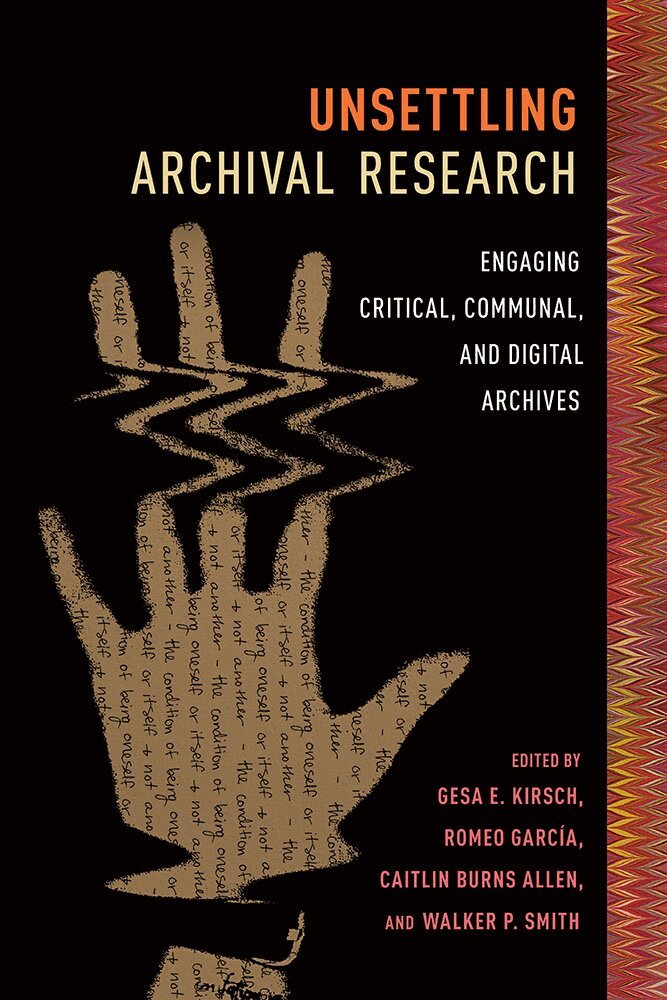
A collection of accessible, interdisciplinary essays that explore archival practices to unsettle traditional archival theories and methodologies.What would it mean to unsettle the archives? How can we better see the wounded and wounding places and histories that produce absence and silence in the name of progress and knowledge? Unsettling Archival Research sets out to answer these urgent questions and more, with essays that chart a more just path for archival work.Unsettling Archival Researchis one of the first publications in rhetoric and writing studies dedicated to scholarship that unsettles disciplinary knowledge of archival research by drawing on decolonial, Indigenous, antiracist, queer, and community perspectives. Written by established and emerging scholars, essays critique not only the practices, ideologies, and conventions of archiving, but also offer new tactics for engaging critical, communal, and digital archiving within and against systems of power. Contributors reflect on efforts to counteract, resist, and explore alternatives to racist, colonial histories and which approaches best support such work. They also confront the potentials and pitfalls of common archival theories and methodologies. Unsettling Archival Research intervenes in a critical issue: whether the discipline’s assumptions about the archives serve or fail the communities they aim to represent and what can be done to center missing voices and perspectives. The aim is to explore the ethos and praxis of bearing witness in unsettling ways, carried out as a project of queering and/or decolonizing the archives.Unsettling Archival Research takes seriously the rhetorical force of place and wrestles honestly with histories that still haunt our nation, including the legacies of slavery, colonial violence, and systemic racism.
Literacies of/from the Pluriversal
Tools for Perseverance and Livable Futures
Inbunden, Engelska, 2024
756 kr
Skickas inom 7-10 vardagar
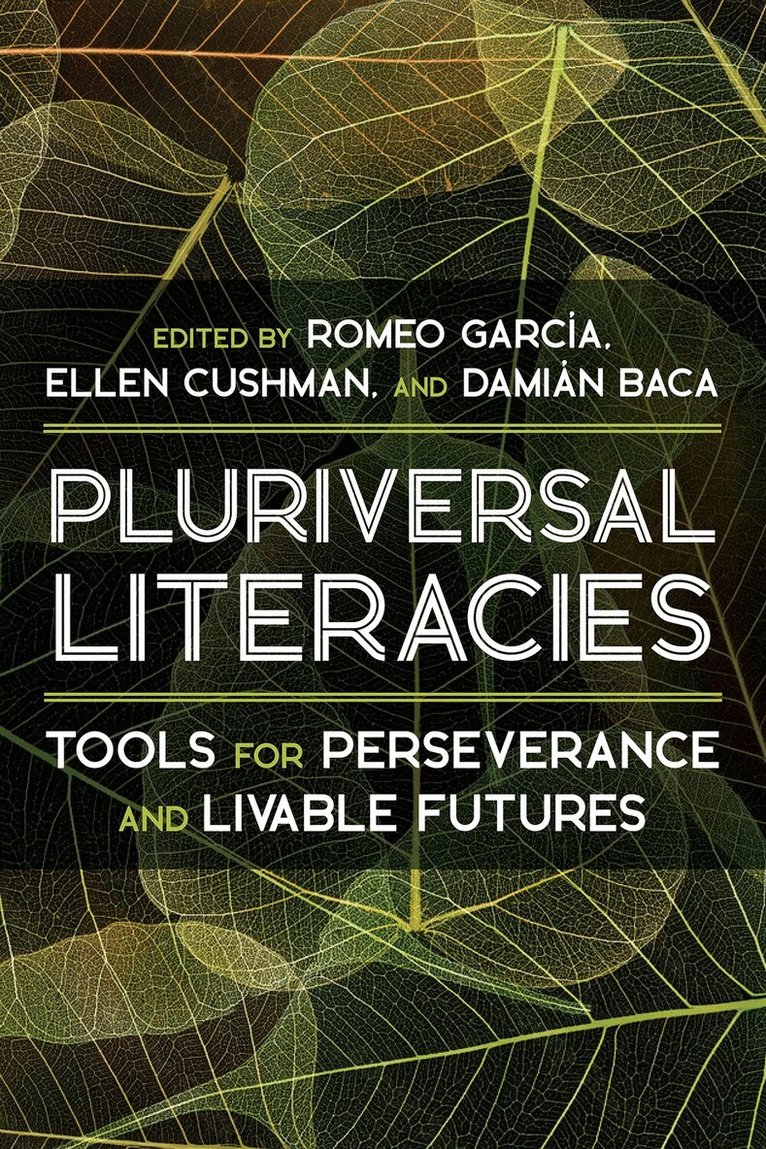
Decolonial projects can end up reinforcing dominant modes of thinking by shoehorning understandings of Indigenous and non-Western traditions within Eurocentric frameworks. The pluralization of literacies and the creation of so-called alternative rhetorics accepts that there is a totalizing reality of rhetoric and literacy. This volume seeks to decenter these theories and to engage Indigenous contexts on their own terms, starting with the very tools of representation. Language itself can disrupt normative structures and create pluriversal possibilities. The volume editors and contributors argue for epistemic change at the level of the language and media that people use to represent meaning. The range of topics covered includes American Indian and Indigenous representations, literacies, and rhetorics, critical revisionist historiography and comparative rhetorics, delinking colonial literacies of cartographic power and modernity, “northern” and “southern” hemispheric relations, and theorizations of/from oceanic border spaces.
364 kr
Skickas inom 5-8 vardagar
526 kr
Skickas inom 5-8 vardagar
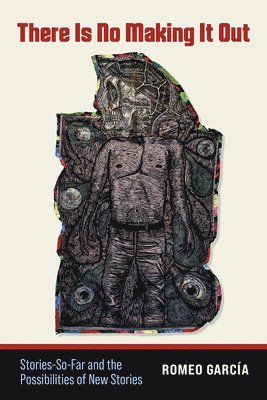
There Is No Making It Out
Stories-So-Far and the Possibilities of New Stories
Inbunden, Engelska, 2024
1 088 kr
Tillfälligt slut
There Is No Making It Out is an archival, revisionist rhetorical historiography and pedagogically informed conversation at the intersections of literacy, rhetorical, composition, and decolonial studies. Engaging with archival work of the past while extending it forward and pushing the boundaries of what we value as archival research, the book asks how do we reposition the contents of archives so that we can position ourselves in relation to it otherwise. It becomes the impetus for putting forth a theory of and politics for (decolonizing) archival impressions, which raises the prospect of researching and searching for hope in the archives, where the meaning of stories-so-far and the possibilities of new stories can be found. Romeo García grounds his investigation in data collected from settler archival research and classroom-based ethnography and ethnographic interviews from students enrolled at a Texas Hispanic-serving institution and a predominantly white institution in Utah. This research makes evident that while a decolonial analytic, put forth by the Modernity/Coloniality Research Program, is consequentially paramount, a decolonial prospective vision is at odds with the everyday lives of students. Though only reflecting a microcosm of the effects and consequences of hauntings and haunting situations, García argues the stories-so-far of students are most instructive, first, in underscoring how people are unable to contend with the vast complexities of their choices made under conditions out of their control and, second, in showing how what is good in theory does not always translate or bode well in practice. In three sections cohering in and around the agenda of decolonizing knowledge and being, García advances—through an archive/al approach and theory of archival impressions—an ethos of bearing witness in unsettling ways and a praxis of unsettling the settled. Returning to the book’s essential question, another option is considered in light of the demand for something else: a politics and theory of wor(l)ding enacted through (decolonizing) archival impressions and foregrounded in an epistemological framework for the haunted. There Is No Making It Out speaks to the history and the legacy of modern/colonial and settlerizing designs and their continued dominant and haunting e/affect(s) on the ways we walk and see the world, as well as how we interact and exchange meaning with others. García argues the project of decoloniality is conceptually, pedagogically, and emotionally complex, complicated, messy, and to some extent even impossible. García’s work is relevant to an interdisciplinary audience, including scholars in settler colonial, decolonial, literacies, rhetorical, writing, cultural, and critical archival studies, and is accessible for a wide range of readers, including advanced undergraduate and graduate students, educators, and archivists.
430 kr
Skickas inom 5-8 vardagar
There Is No Making It Out is an archival, revisionist rhetorical historiography and pedagogically informed conversation at the intersections of literacy, rhetorical, composition, and decolonial studies. Engaging with archival work of the past while extending it forward and pushing the boundaries of what we value as archival research, the book asks how do we reposition the contents of archives so that we can position ourselves in relation to it otherwise. It becomes the impetus for putting forth a theory of and politics for (decolonizing) archival impressions, which raises the prospect of researching and searching for hope in the archives, where the meaning of stories-so-far and the possibilities of new stories can be found. Romeo García grounds his investigation in data collected from settler archival research and classroom-based ethnography and ethnographic interviews from students enrolled at a Texas Hispanic-serving institution and a predominantly white institution in Utah. This research makes evident that while a decolonial analytic, put forth by the Modernity/Coloniality Research Program, is consequentially paramount, a decolonial prospective vision is at odds with the everyday lives of students. Though only reflecting a microcosm of the effects and consequences of hauntings and haunting situations, García argues the stories-so-far of students are most instructive, first, in underscoring how people are unable to contend with the vast complexities of their choices made under conditions out of their control and, second, in showing how what is good in theory does not always translate or bode well in practice. In three sections cohering in and around the agenda of decolonizing knowledge and being, García advances—through an archive/al approach and theory of archival impressions—an ethos of bearing witness in unsettling ways and a praxis of unsettling the settled. Returning to the book’s essential question, another option is considered in light of the demand for something else: a politics and theory of wor(l)ding enacted through (decolonizing) archival impressions and foregrounded in an epistemological framework for the haunted. There Is No Making It Out speaks to the history and the legacy of modern/colonial and settlerizing designs and their continued dominant and haunting e/affect(s) on the ways we walk and see the world, as well as how we interact and exchange meaning with others. García argues the project of decoloniality is conceptually, pedagogically, and emotionally complex, complicated, messy, and to some extent even impossible. García’s work is relevant to an interdisciplinary audience, including scholars in settler colonial, decolonial, literacies, rhetorical, writing, cultural, and critical archival studies, and is accessible for a wide range of readers, including advanced undergraduate and graduate students, educators, and archivists.