Inbunden, Engelska, 2024
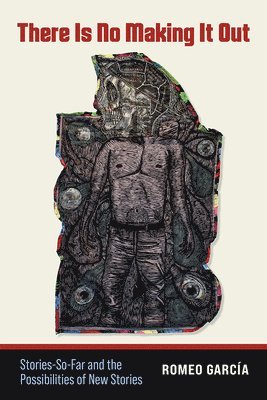
There Is No Making It Out
Av Romeo García
1108 kr
Tillfälligt slut i lager
Beskrivning
There Is No Making It Out is an archival, revisionist rhetorical historiography and pedagogically informed conversation at the intersections of literacy, rhetorical, composition, and decolonial studies. Engaging with archival work of the past while extending it forward and pushing the boundaries of what we value as archival research, the book asks how do we reposition the contents of archives so that we can position ourselves in relation to it otherwise. It becomes the impetus for putting forth a theory of and politics for (decolonizing) archival impressions, which raises the prospect of researching and searching for hope in the archives, where the meaning of stories-so-far and the possibilities of new stories can be found. Romeo García grounds his investigation in data collected from settler archival research and classroom-based ethnography and ethnographic interviews from students enrolled at a Texas Hispanic-serving institution and a predominantly white institution in Utah. This research makes evident that while a decolonial analytic, put forth by the Modernity/Coloniality Research Program, is consequentially paramount, a decolonial prospective vision is at odds with the everyday lives of students. Though only reflecting a microcosm of the effects and consequences of hauntings and haunting situations, García argues the stories-so-far of students are most instructive, first, in underscoring how people are unable to contend with the vast complexities of their choices made under conditions out of their control and, second, in showing how what is good in theory does not always translate or bode well in practice. In three sections cohering in and around the agenda of decolonizing knowledge and being, García advances—through an archive/al approach and theory of archival impressions—an ethos of bearing witness in unsettling ways and a praxis of unsettling the settled. Returning to the book’s essential question, another option is considered in light of the demand for something else: a politics and theory of wor(l)ding enacted through (decolonizing) archival impressions and foregrounded in an epistemological framework for the haunted. There Is No Making It Out speaks to the history and the legacy of modern/colonial and settlerizing designs and their continued dominant and haunting e/affect(s) on the ways we walk and see the world, as well as how we interact and exchange meaning with others. García argues the project of decoloniality is conceptually, pedagogically, and emotionally complex, complicated, messy, and to some extent even impossible. García’s work is relevant to an interdisciplinary audience, including scholars in settler colonial, decolonial, literacies, rhetorical, writing, cultural, and critical archival studies, and is accessible for a wide range of readers, including advanced undergraduate and graduate students, educators, and archivists.
Produktinformation
- Utgivningsdatum: 2024-12-16
- Mått: 152 x 229 x 14 mm
- Vikt: 454 g
- Format: Inbunden
- Språk: Engelska
- Antal sidor: 272
- Förlag: University Press of Colorado
- ISBN: 9781646426768
Utforska kategorier
Betyg & recensioner
0 recensioner
Inga recensioner tillgängliga.