
Ron Eglash – författare
Visar alla böcker från författaren Ron Eglash. Handla med fri frakt och snabb leverans.
3 produkter
3 produkter
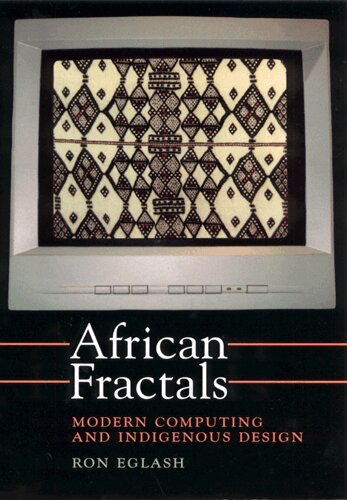
Häftad, Engelska, 1999
506 kr
Skickas inom 5-8 vardagar
Fractals are characterized by the repetition of similar patterns at ever-diminishing scales. Fractal geometry has emerged as one of the most exciting frontiers on the border between mathematics and information technology and can be seen in many of the swirling patterns produced by computer graphics. It has become a new tool for modeling in biology, geology, and other natural sciences. Anthropologists have observed that the patterns produced in different cultures can be characterized by specific design themes. In Europe and America, we often see cities laid out in a grid pattern of straight streets and right-angle corners. In contrast, traditional African settlements tend to use fractal structures-circles of circles of circular dwellings, rectangular walls enclosing ever-smaller rectangles, and streets in which broad avenues branch down to tiny footpaths with striking geometric repetition. These indigenous fractals are not limited to architecture; their recursive patterns echo throughout many disparate African designs and knowledge systems. Drawing on interviews with African designers, artists, and scientists, Ron Eglash investigates fractals in African architecture, traditional hairstyling, textiles, sculpture, painting, carving, metalwork, religion, games, practical craft, quantitative techniques, and symbolic systems. He also examines the political and social implications of the existence of African fractal geometry. His book makes a unique contribution to the study of mathematics, African culture, anthropology, and computer simulations.
Häftad, Engelska, 2004
276 kr
Skickas inom 5-8 vardagar
Contributors: Richard M. Benjamin, Miami U; Hank Bromley, SUNY, Buffalo; Massimiano Bucchi, U of Trento, Italy; Carmen M. Concepcion, U of Puerto Rico; Virginia Eubanks, Rensselaer Polytechnic Institute; Lisa Gitelman, Catholic U; David Albert Mhadi Goldberg, California College of Arts and Crafts; Samuel M. Hampton; Michael K. Heiman, Dickinson College; Linda Price King; Valerie Kuletz; Lisa Jean Moore, College of Staten Island, CUNY; Brian Martin Murphy, Niagra U; Paul Rosen, U of York; Michael Scarce, Peter Taylor, U of Massachusetts, Boston; Turtle Heart.
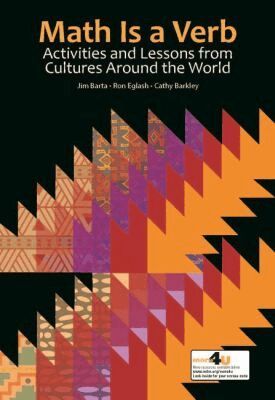
Häftad, Engelska, 2014
396 kr
Skickas inom 11-20 vardagar
For most people, the word mathematics is a noun. But for many people in different cultures, mathematics is not simply something they learn in school but something they do as an intrinsic part of their everyday lives.This book is a guide for teachers who would like to enhance their mathematics instruction by integrating it with examples and activities from cultures throughout the world. It provides culturally situated examples, each linked to Common Core objectives that show how mathematics can be so much more than a story problem or an exercise in a worksheet with little or no context.The eleven chapters provide a range of activities from around the world that teach students key math concepts while introducing them to a diversity of cultures.For example:In a Mayan village in Guatemala, students use math as a means to increase the traditional corn harvestTraditional symbols stamped on cloth in Ghana spark an exploration of geometry, measurement, and data analysisEmbroidery patterns from Bulgaria can help younger students learn about patterns, and introduce older students to fractal geometryKlappenspiel, a popular classroom game in Germany, provides a fun application of probability analysisEach chapter has activities for specific grade bands (K–3, 4–8, and 9–12), and all activities are designed to encourage students to discover connections among math concepts, world cultures, and their own daily lives and communities.