Ronagh McQuigg - Böcker
Visar alla böcker från författaren Ronagh McQuigg. Handla med fri frakt och snabb leverans.
5 produkter
5 produkter
619 kr
Skickas inom 10-15 vardagar
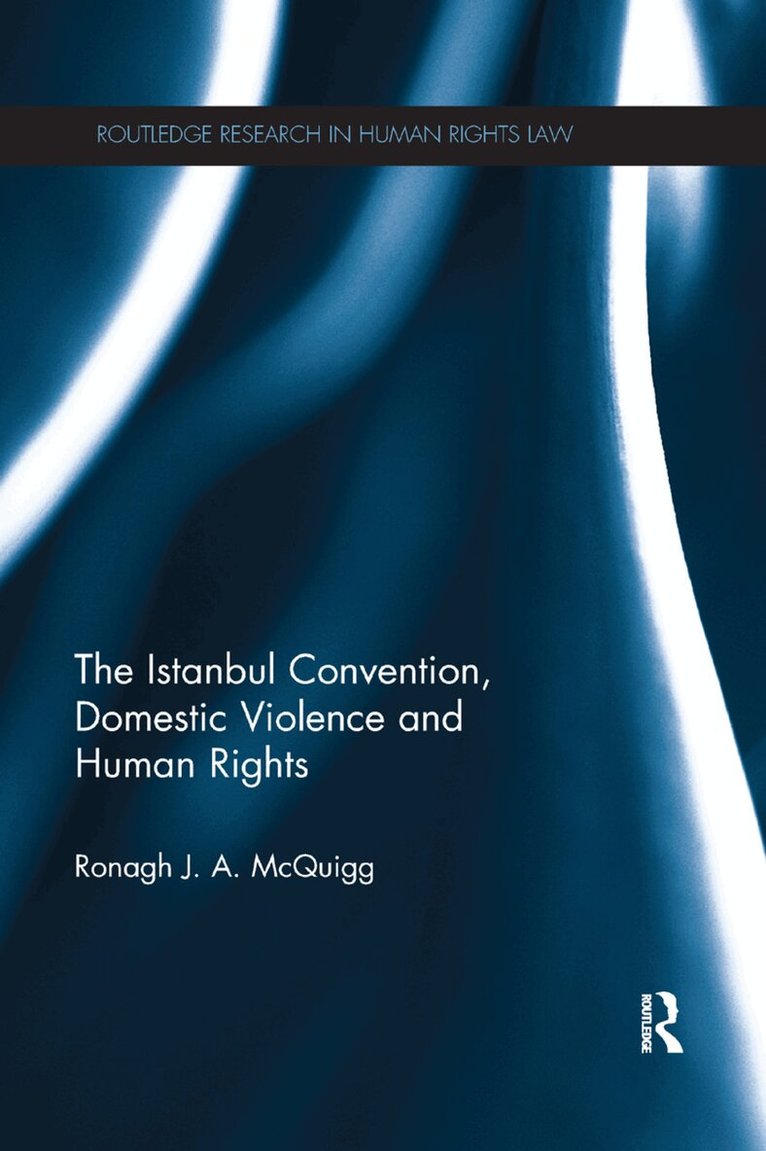
The Convention on Preventing and Combating Violence against Women and Domestic Violence (also known as the Istanbul Convention) was adopted by the Committee of Ministers of the Council of Europe on 7 April 2011. The Convention entered into force on 1 August 2014 and has currently been ratified by 22 states. This Convention constitutes a crucial development as regards the movement to combat gender-based violence, as it sets new legally binding standards in this area. This book provides a detailed analysis of the Convention and its potential to make an impact in relation to the specific issue of domestic violence. The book places the Istanbul Convention in context with regard to developments relating to domestic violence as a human rights issue. The background to the adoption of the Convention is examined, and the text of this instrument is analysed in detail. Comparative analysis is engaged in with reference to the duties that have been placed on states by other bodies such as the UN Committee on the Elimination of Discrimination against Women and the European Court of Human Rights. Comparisons are also drawn with the Inter-American Convention on the Prevention, Punishment, and Eradication of Violence against Women and with the relevant provisions of the Protocol to the African Charter on Human and Peoples’ Rights on the Rights of Women in Africa. An in-depth examination of the advantages of the adoption of the Istanbul Convention by the Council of Europe is provided along with a detailed analysis of the challenges faced by the Convention. The book concludes with a number of brief reflections in relation to the question of whether the adoption of a UN convention on violence against women may be a possible development, and the potential such an instrument holds, in the context of domestic violence.
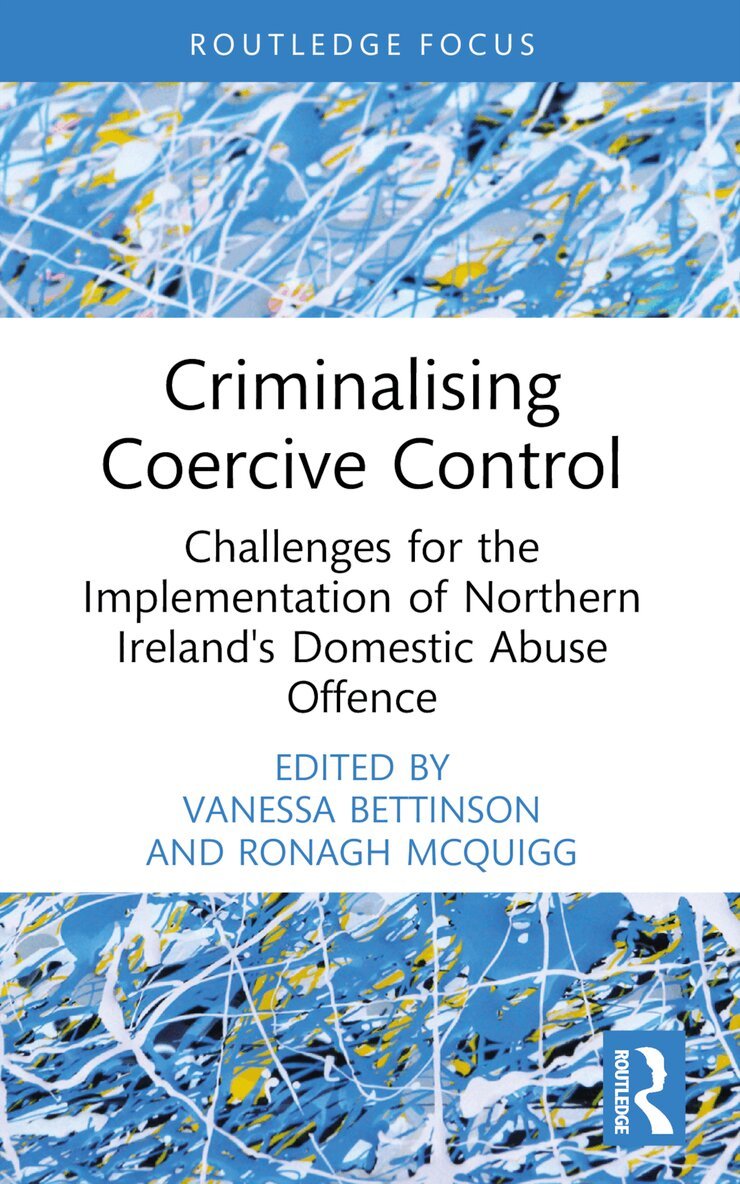
Criminalising Coercive Control
Challenges for the Implementation of Northern Ireland’s Domestic Abuse Offence
Inbunden, Engelska, 2023
731 kr
Skickas inom 10-15 vardagar
Drawing on experiences from other jurisdictions within the UK, Criminalising Coercive Control explores the challenges and potential successes which may be faced in implementing Northern Ireland’s new domestic abuse offence.A specific offence of domestic abuse was introduced in Northern Ireland in March 2021. This represents a crucial development in Northern Ireland’s response to domestic abuse. The new legislation has the effect of criminalising coercive and controlling behaviour, thereby bringing Northern Ireland into line with other jurisdictions within the UK, and also with relevant human rights standards in this regard. The book begins with a discussion regarding the offence itself and the underpinning domestic abuse policy in Northern Ireland. Subsequent chapters explore further measures which may be needed to respond effectively to domestic abuse in Northern Ireland, by drawing upon the experiences of other jurisdictions of criminalising coercive control. These reflections are considered through the lenses of policing, prosecutorial practice and frontline domestic abuse working.Criminalising Coercive Control will be of great interest to students and scholars in a variety of fields, such as criminal law, criminology, social policy, human rights, family law, gender studies and sociology. The book is also accessible beyond academia, including practitioners and those in the voluntary sector who are working in the area of combating domestic abuse.
Criminalising Coercive Control
Challenges for the Implementation of Northern Ireland’s Domestic Abuse Offence
Häftad, Engelska, 2024
269 kr
Skickas inom 10-15 vardagar
Drawing on experiences from other jurisdictions within the UK, Criminalising Coercive Control explores the challenges and potential successes which may be faced in implementing Northern Ireland’s new domestic abuse offence.A specific offence of domestic abuse was introduced in Northern Ireland in March 2021. This represents a crucial development in Northern Ireland’s response to domestic abuse. The new legislation has the effect of criminalising coercive and controlling behaviour, thereby bringing Northern Ireland into line with other jurisdictions within the UK, and also with relevant human rights standards in this regard. The book begins with a discussion regarding the offence itself and the underpinning domestic abuse policy in Northern Ireland. Subsequent chapters explore further measures which may be needed to respond effectively to domestic abuse in Northern Ireland, by drawing upon the experiences of other jurisdictions of criminalising coercive control. These reflections are considered through the lenses of policing, prosecutorial practice and frontline domestic abuse working.Criminalising Coercive Control will be of great interest to students and scholars in a variety of fields, such as criminal law, criminology, social policy, human rights, family law, gender studies and sociology. The book is also accessible beyond academia, including practitioners and those in the voluntary sector who are working in the area of combating domestic abuse.
2 131 kr
Skickas inom 10-15 vardagar
The Convention on Preventing and Combating Violence against Women and Domestic Violence (also known as the Istanbul Convention) was adopted by the Committee of Ministers of the Council of Europe on 7 April 2011. The Convention entered into force on 1 August 2014 and has currently been ratified by 22 states. This Convention constitutes a crucial development as regards the movement to combat gender-based violence, as it sets new legally binding standards in this area. This book provides a detailed analysis of the Convention and its potential to make an impact in relation to the specific issue of domestic violence. The book places the Istanbul Convention in context with regard to developments relating to domestic violence as a human rights issue. The background to the adoption of the Convention is examined, and the text of this instrument is analysed in detail. Comparative analysis is engaged in with reference to the duties that have been placed on states by other bodies such as the UN Committee on the Elimination of Discrimination against Women and the European Court of Human Rights. Comparisons are also drawn with the Inter-American Convention on the Prevention, Punishment, and Eradication of Violence against Women and with the relevant provisions of the Protocol to the African Charter on Human and Peoples’ Rights on the Rights of Women in Africa. An in-depth examination of the advantages of the adoption of the Istanbul Convention by the Council of Europe is provided along with a detailed analysis of the challenges faced by the Convention. The book concludes with a number of brief reflections in relation to the question of whether the adoption of a UN convention on violence against women may be a possible development, and the potential such an instrument holds, in the context of domestic violence.
797 kr
Tillfälligt slut
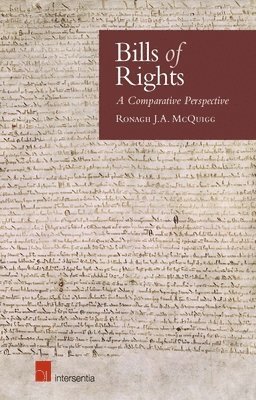
Bills of rights are currently a much debated topic in various jurisdictions throughout the world. Almost all democratic nations, with the exception of Australia, now have a bill of rights. These take a variety of forms, ranging from constitutionally entrenched bills of rights, such as those of the United States and South Africa, to non-binding statements of rights. Falling between these approaches are non-entrenched, statutory bills of rights. As regards the latter, a model which has become increasingly popular is that of bills of rights based on interpretative obligations, whereby duties are placed upon courts to interpret national legislation in accordance with human rights standards. The aim of this book is to provide a comparative analysis of the bills of rights of a number of jurisdictions which have chosen to adopt such an approach. The jurisdictions considered are New Zealand, the United Kingdom, the Australian Capital Territory and the Australian state of Victoria. There have been very few books published to date which contain detailed comparative analysis of the bills of rights which this book will address.The book adopts a unique thematic approach, whereby six aspects of the bills of rights in question have been selected for comparative analysis and a chapter is allocated to each aspect. This approach serves to facilitate the comparative discussion and emphasise the centrality of the comparative methodology. About the author The author is a lecturer in the School of Law, Queen's University Belfast. She was awarded a LL.B. with First Class Honours in 2002, a LL.M. in Human Rights Law with Distinction in 2003, and a Ph.D. in 2006, all by Queen's University Belfast. She qualified as a solicitor in 2008 and joined the School of Law at Queen's as a lecturer in 2009. The author's research interests lie in the area of international human rights law.