Ronald Borchardt – författare
Visar alla böcker från författaren Ronald Borchardt. Handla med fri frakt och snabb leverans.
7 produkter
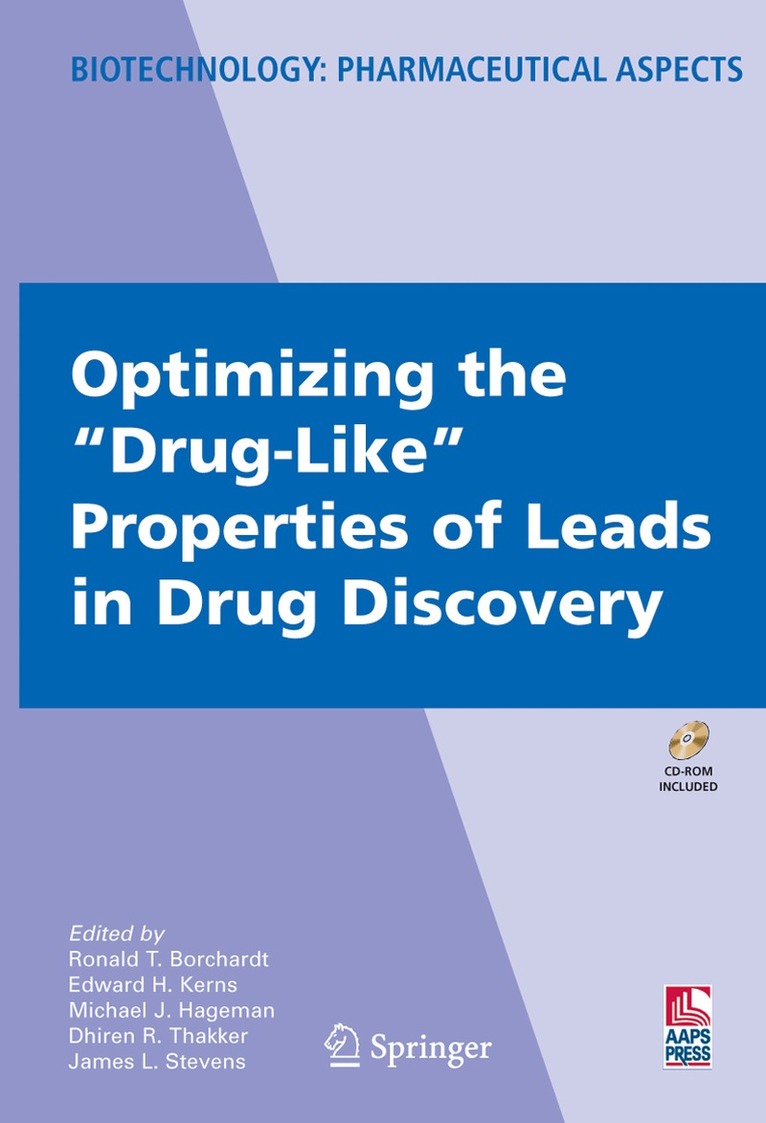
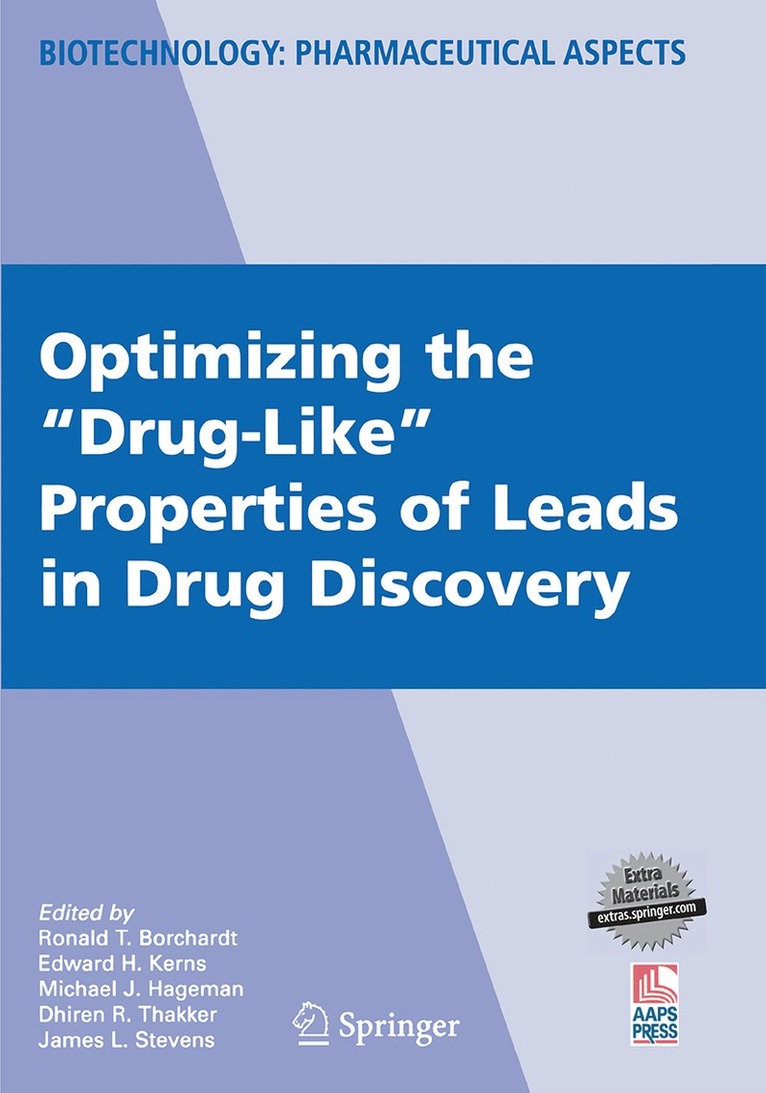
Optimizing the "Drug-Like" Properties of Leads in Drug Discovery
Av Ronald Borchardt, Edward Kerns m. fl.
Inbunden, 2006
2249 kr
Lägg i varukorg
Drug discovery and development is a very complex, costly, and ti- consuming process. Because of the uncertainties associated with predicting the pharmacological effects and the toxicity characteristics of new chemical entities in man, their clinical development is quite prone to failure. In recent …
Optimizing the "e;Drug-Like"e; Properties of Leads in Drug Discovery
Av James Stevens, Dhrien Thakker m. fl.
E-bok, 2007
2925 kr
Lägg i varukorg
Drug discovery and development is a very complex, costly, and ti- consuming process. Because of the uncertainties associated with predicting the pharmacological effects and the toxicity characteristics of new chemical entities in man, their clinical development is quite prone to failure. In recent …
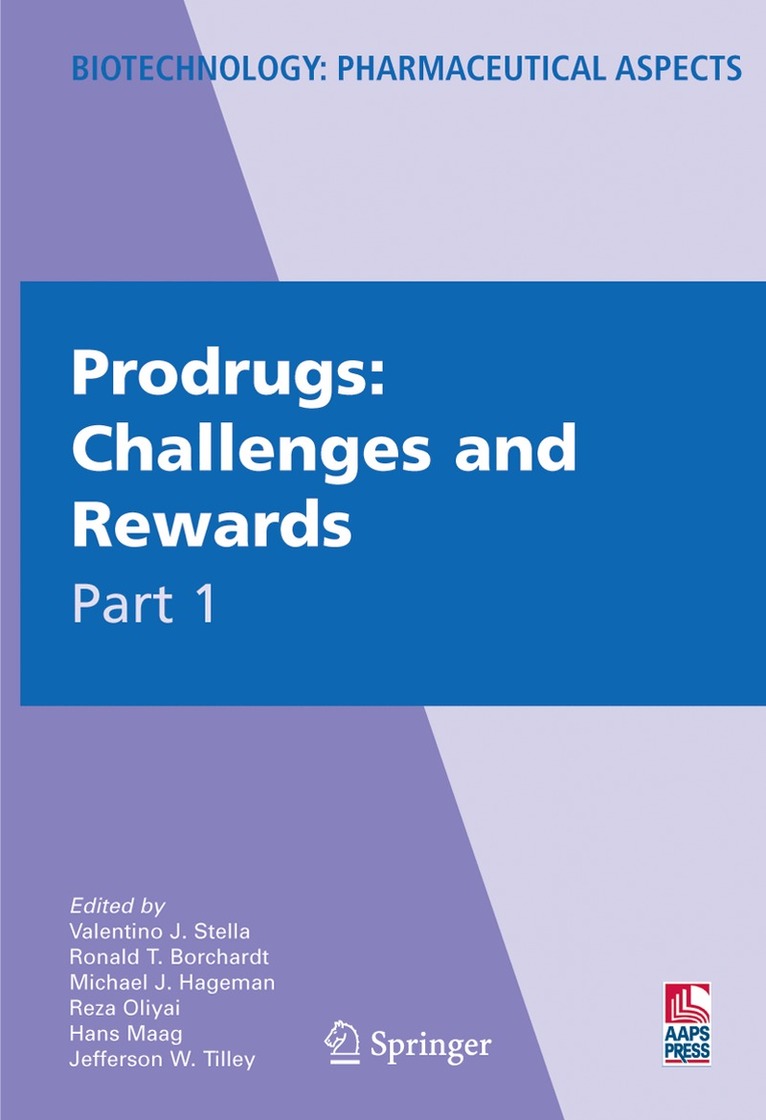
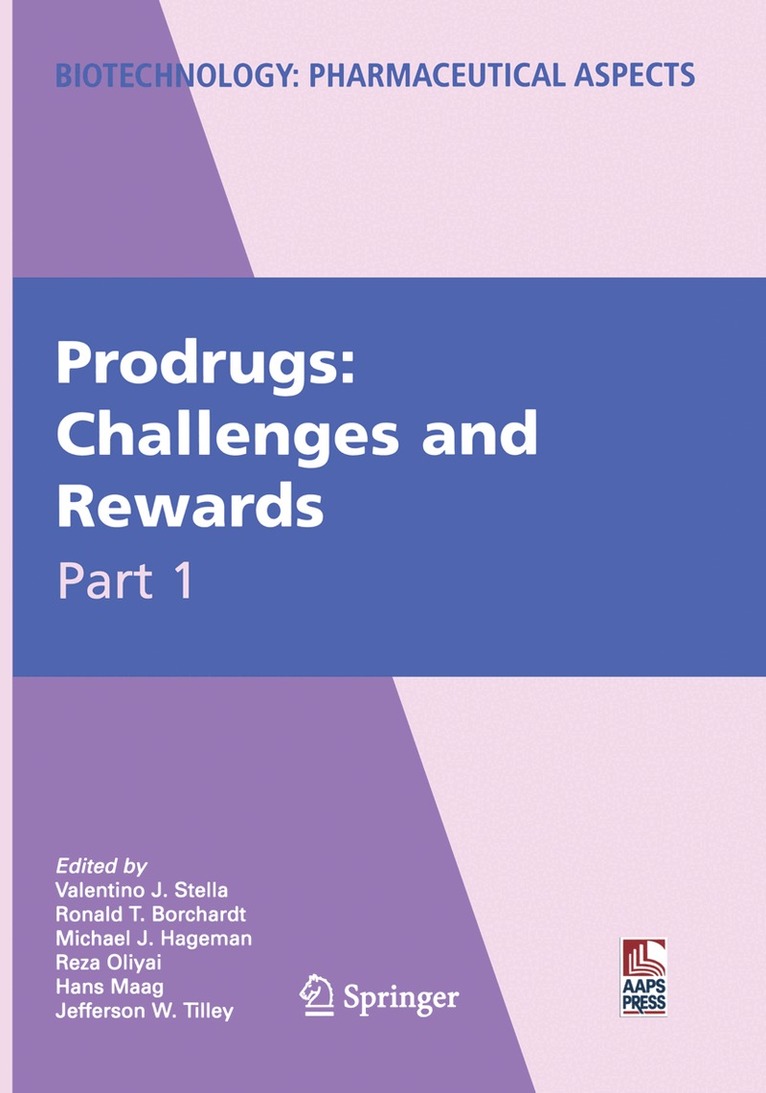
Prodrugs
Challenges and Rewards
Av Valentino Stella, Ronald Borchardt m. fl.
2007
6616 kr
Lägg i varukorg
Prodrugs are substances administered in an inactive form that is then metabolized in the body in vivo into the active compound. The rationale behind administering prodrugs is to optimize absorption, distribution, metabolism, and excretion of these drugs. Since first described in the 1950s, prodrugs …
Prodrugs
Challenges and Rewards
Av Jefferson Tilley, Hans Maag m. fl.
E-bok, 2007
5026 kr
Lägg i varukorg
Prodrugs are substances administered in an inactive form that is then metabolized in the body in vivo into the active compound. The rationale behind administering prodrugs is to optimize absorption, distribution, metabolism, and excretion of these drugs. Since first described in the 1950s, prodrugs …
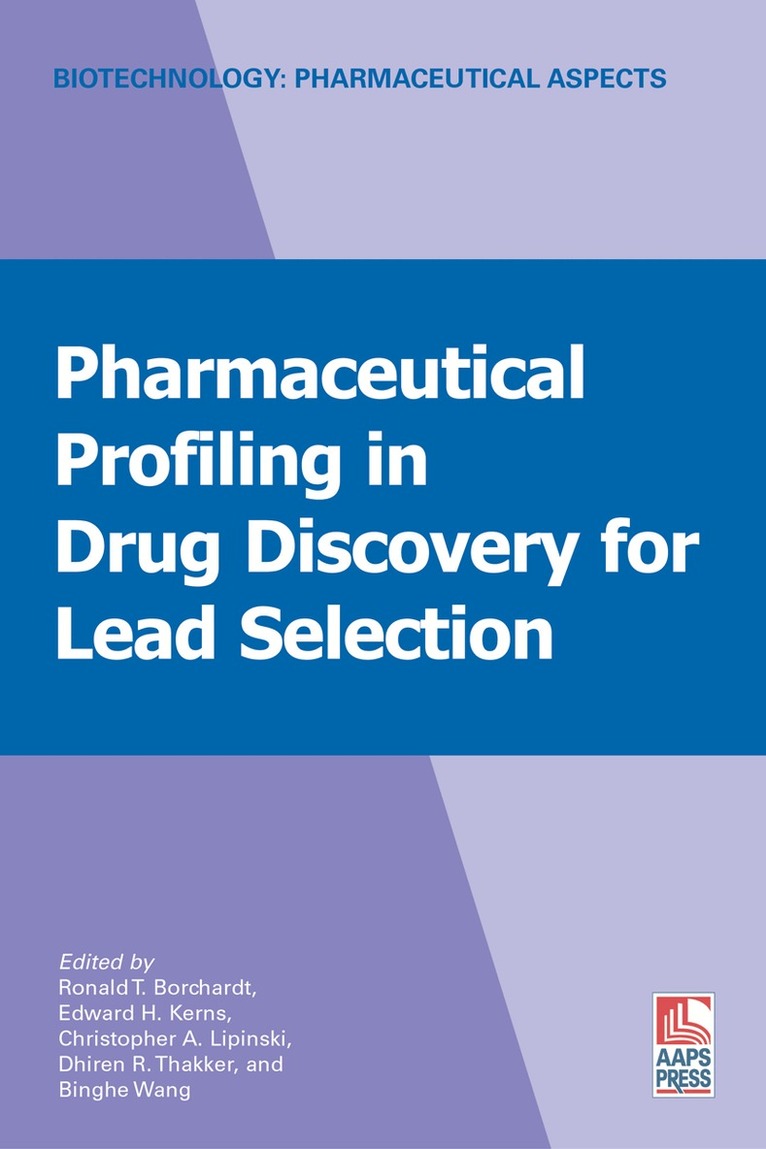
Pharmaceutical Profiling in Drug Discovery for Lead Selection
Av Ronald Borchardt, Edward Kerns m. fl.
Inbunden, 2005
2473 kr
Lägg i varukorg
At a time when pharmaceutical companies have limited resources to develop newer and better drugs, they must continually evaluate the effectiveness and efficiency of their research and development process. This volume focuses on how to increase the efficiency of drug discovery and development. …
Optimizing the "Drug-Like" Properties of Leads in Drug Discovery
Av Ronald Borchardt, Edward Kerns m. fl.
Häftad, 2016
2249 kr
Lägg i varukorg
Drug discovery and development is a very complex, costly, and ti- consuming process. Because of the uncertainties associated with predicting the pharmacological effects and the toxicity characteristics of new chemical entities in man, their clinical development is quite prone to failure. In recent …
Prodrugs
Challenges and Rewards
Av Valentino Stella, Ronald Borchardt m. fl.
2017
4753 kr
Lägg i varukorg
Prodrugs are substances administered in an inactive form that is then metabolized in the body in vivo into the active compound. The rationale behind administering prodrugs is to optimize absorption, distribution, metabolism, and excretion of these drugs. Since first described in the 1950s, prodrugs …