Ronald C. Po - Böcker
Visar alla böcker från författaren Ronald C. Po. Handla med fri frakt och snabb leverans.
7 produkter
7 produkter
1 477 kr
Kommande
The First Opium War is remembered as the defining conflict between Britain and China in the nineteenth century. In stark contrast, the Camphor War of 1868 has faded into obscurity. Lasting for only a few weeks, the clash arose from British interests in breaking the Qing monopoly over the lucrative trade in camphor, which was cultivated in Taiwan and widely used for medicinal purposes. Despite its small scale, the war brought to light shifting dynamics in China and Taiwan’s engagement with the world.Examining this little-known conflict, Ronald C. Po shows how the Qing and British empires evolved during a period of imperial reconfigurations and border realignments. The Qing adopted more active approaches to controlling their frontiers, regulating trade, and responding to foreign aggression. Situating the war in the early decades of the Self-Strengthening Movement, Po demonstrates how the Qing state reshaped Taiwan from a frontier into a political landscape of negotiation, as well as how camphor became both an object of intense commercial interest and a means for power contests. By centering on this seemingly peripheral war, the book shifts focus from grand confrontations to the subtler mechanisms through which empires adjusted, faltered, and realigned. Synthesizing maritime, commodity, environmental, and imperial history, The Camphor War complicates static notions of empire and reveals Taiwan’s importance in nineteenth-century East Asia.
384 kr
Kommande
The First Opium War is remembered as the defining conflict between Britain and China in the nineteenth century. In stark contrast, the Camphor War of 1868 has faded into obscurity. Lasting for only a few weeks, the clash arose from British interests in breaking the Qing monopoly over the lucrative trade in camphor, which was cultivated in Taiwan and widely used for medicinal purposes. Despite its small scale, the war brought to light shifting dynamics in China and Taiwan’s engagement with the world.Examining this little-known conflict, Ronald C. Po shows how the Qing and British empires evolved during a period of imperial reconfigurations and border realignments. The Qing adopted more active approaches to controlling their frontiers, regulating trade, and responding to foreign aggression. Situating the war in the early decades of the Self-Strengthening Movement, Po demonstrates how the Qing state reshaped Taiwan from a frontier into a political landscape of negotiation, as well as how camphor became both an object of intense commercial interest and a means for power contests. By centering on this seemingly peripheral war, the book shifts focus from grand confrontations to the subtler mechanisms through which empires adjusted, faltered, and realigned. Synthesizing maritime, commodity, environmental, and imperial history, The Camphor War complicates static notions of empire and reveals Taiwan’s importance in nineteenth-century East Asia.
Del 489 - Harvard East Asian Monographs
Silver Thread of the Deep
A Cultural History of Shark Fin in China and Beyond
Inbunden, Engelska, 2026
760 kr
Kommande
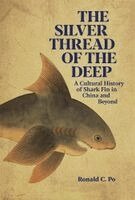
Often gracing the tables of weddings and banquets, shark fin symbolizes opulence and prestige in China and beyond. Yet its rise from offcut to delicacy reveals a complex history of how value is constructed and transformed. Drawing on sources in Chinese and English, as well as materials in French, Japanese, Spanish, and Italian, The Silver Thread tracks how this oceanic product came to have symbolic and material value, particularly during the Ming and Qing periods when domestic affluence deepened and became entangled with transregional commerce. Each chapter revolves around a question, such as: How did shark fin make its way from sea to banquet hall? Who advocated for its classification as a delicacy? How were taste, medicine, and ethics intertwined in its consumption?The Silver Thread explores taste, not as a sensation but as a vocabulary of social and moral difference. Shark fin is both an object and an idea at the crossroads of nature and culture, where ritual and economy are mutually implicated, and where excess and moderation coincide. This book is not an apologia for shark fin consumption. It is, in part, a use of history to revisit tradition. Beyond cuisine, Ronald C. Po reconsiders “maritime China” not merely as a sphere of trade, war, or navigation, but as a porous cultural space shaped by meaning and identity.
Del 489 - Harvard East Asian Monographs
Silver Thread of the Deep
A Cultural History of Shark Fin in China and Beyond
Häftad, Engelska, 2026
478 kr
Kommande
Often gracing the tables of weddings and banquets, shark fin symbolizes opulence and prestige in China and beyond. Yet its rise from offcut to delicacy reveals a complex history of how value is constructed and transformed. Drawing on sources in Chinese and English, as well as materials in French, Japanese, Spanish, and Italian, The Silver Thread tracks how this oceanic product came to have symbolic and material value, particularly during the Ming and Qing periods when domestic affluence deepened and became entangled with transregional commerce. Each chapter revolves around a question, such as: How did shark fin make its way from sea to banquet hall? Who advocated for its classification as a delicacy? How were taste, medicine, and ethics intertwined in its consumption?The Silver Thread explores taste, not as a sensation but as a vocabulary of social and moral difference. Shark fin is both an object and an idea at the crossroads of nature and culture, where ritual and economy are mutually implicated, and where excess and moderation coincide. This book is not an apologia for shark fin consumption. It is, in part, a use of history to revisit tradition. Beyond cuisine, Ronald C. Po reconsiders “maritime China” not merely as a sphere of trade, war, or navigation, but as a porous cultural space shaped by meaning and identity.
1 282 kr
Skickas inom 7-10 vardagar
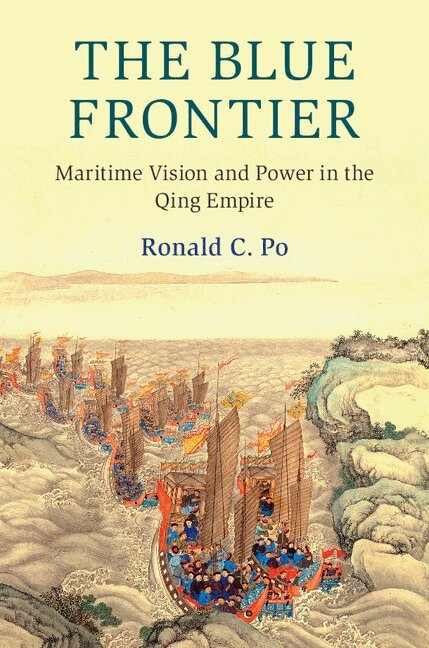
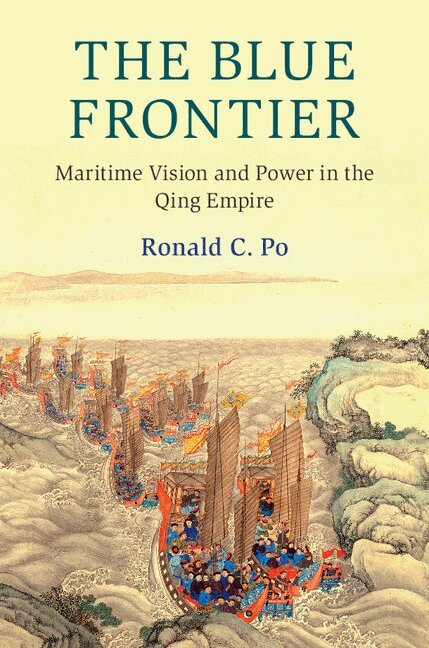
In this revisionist history of the eighteenth-century Qing Empire from a maritime perspective, Ronald C. Po argues that it is reductive to view China over this period exclusively as a continental power with little interest in the sea. With a coastline of almost 14,500 kilometers, the Qing was not a landlocked state. Although it came to be known as an inward-looking empire, Po suggests that the Qing was integrated into the maritime world through its naval development and customs institutionalization. In contrast to our orthodox perception, the Manchu court, in fact, deliberately engaged with the ocean politically, militarily, and even conceptually. The Blue Frontier offers a much broader picture of the Qing as an Asian giant responding flexibly to challenges and extensive interaction on all frontiers - both land and sea - in the long eighteenth century.
496 kr
Skickas inom 7-10 vardagar
In this revisionist history of the eighteenth-century Qing Empire from a maritime perspective, Ronald C. Po argues that it is reductive to view China over this period exclusively as a continental power with little interest in the sea. With a coastline of almost 14,500 kilometers, the Qing was not a landlocked state. Although it came to be known as an inward-looking empire, Po suggests that the Qing was integrated into the maritime world through its naval development and customs institutionalization. In contrast to our orthodox perception, the Manchu court, in fact, deliberately engaged with the ocean politically, militarily, and even conceptually. The Blue Frontier offers a much broader picture of the Qing as an Asian giant responding flexibly to challenges and extensive interaction on all frontiers - both land and sea - in the long eighteenth century.
757 kr
Skickas inom 7-10 vardagar
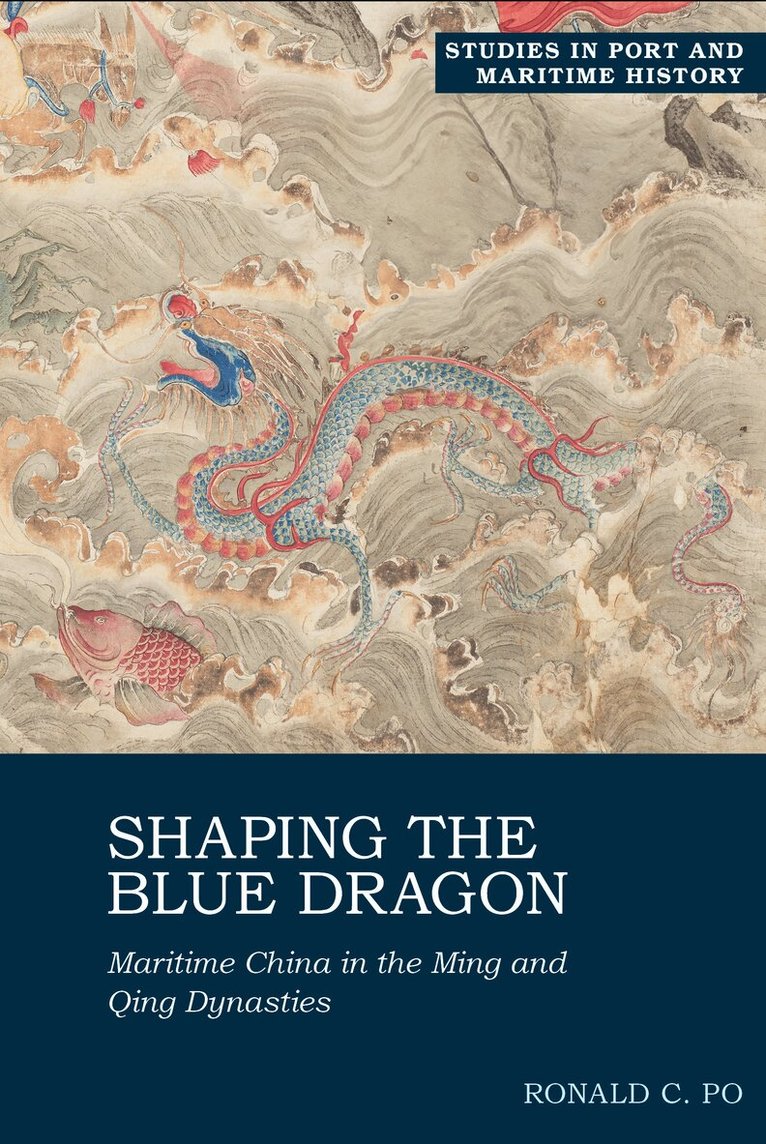
An Open Access edition of this book is available on the Liverpool University Press website and through Knowledge Unlatched.Throughout much of history, imperial China has exhibited a seemingly capricious relationship with the sea. At times, it has welcomed commerce and travel across its vast waters with open arms, yet at others, it has sought to completely cordon off the littoral and the waters beyond. This intermittent approach has fostered a maritime community that, over time, has become increasingly estranged from the dominating Confucian society. Consequently, this has led to behaviours among the coastal residents that pose challenges for those attempting to govern them, with each influencing the other in turn.In Shaping the Blue Dragon, Ronald Po examines China’s relationship with the maritime world from the Ming through the Qing by following the stories of ordinary and extraordinary people engaging with the blue domain. Pirates, cartographers, administrators, naval generals, maritime writers, emperors, visionaries, and travellers. Most of their stories are unheard in the Anglophone community. Despite the range of their backgrounds and expertise, their cumulative lives were all bounded to the sea. They bared their own souls and mirrored their own logics and reflections in their actions, yet in doing so their characters, identities, and life histories were largely shaped by a maritime China that was in transition between the fourteenth and early nineteenth centuries.