Ronald de Sousa - Böcker
Visar alla böcker från författaren Ronald de Sousa. Handla med fri frakt och snabb leverans.
7 produkter
7 produkter
1 147 kr
Skickas inom 5-8 vardagar
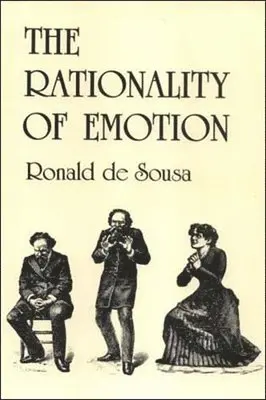
The word "truth" retains, in common use, traces of origins that link it to trust, troth, and truce, connoting ideas of fidelity, loyalty, and authenticity. The word has become, in contemporary philosophy, encased in a web of technicalities, but we know that a true image is a faithful portrait; a true friend a loyal one. In a novel or a poem, too, we have a feel for what is emotionally true, though we are not concerned with the actuality of events and characters depicted. To have emotions is to care about certain things: we can wonder whether those things are really worth caring about. We can wonder whether our passions reflect who we are, and whether they constitute fitting responses to the vicissitudes of life. So there are two aspects to emotional truth: how well an emotion reflects the threats and promises of the world, and how well it reflects our own individual nature. That is the starting point of this book, which looks first at the analogies and disanalogies between strict propositional truth and a looser, "generic" sense of truth. As applied to emotions, generic truth is closer to those original meanings: as in a portrait's fidelity or friend's loyalty. Taken in this sense, the notion of emotional truth opens up large vistas on areas of life essential to our existence as social beings, and to our concerns with beauty, morality, love, death, sex, knowledge, desire, coherence, and happiness. Each of those topics illustrates some facet of the dominant theme of the book: the crucial but often ambivalent role of our emotions in grounding and yet also sometimes undermining our values. Emotions act, in holistic perspective, as ultimate arbiters of values where different and independently justified standards of value compete.
494 kr
Skickas inom 5-8 vardagar
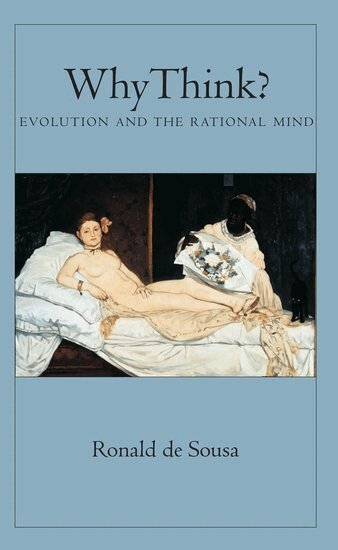
In a world where natural selection has shaped adaptations of astonishing ingenuity, what is the scope and unique power of rational thinking? In this short but wide-ranging book, philosopher Ronald de Sousa looks at the twin set of issues surrounding the power of natural selection to mimic rational design, and rational thinking as itself a product of natural selection. While we commonly deem ourselves superior to other species, the logic of natural selection should not lead us to expect that nature does everything for the best. Similarly, rational action does not always promote the best possible outcomes. So what is the difference? Is the pursuit of rationality actually an effective strategy? Part of the answer lies in language, including mathematics and science. Language is the most striking device by which we have made ourselves smarter than our nearest primate cousins. Sometimes the purely instinctual responses we share with other animals put explicit reasoning to shame: the movements of a trained athlete are faster and more accurate than anything she could explicitly calculate. Language, however, with its power to abstract from concrete experience and to range over all aspects of nature, enables breathtakingly precise calculations, which have taken us to the moon and beyond. Most importantly, however, language enables us to formulate an endless multiplicity of values, in potential conflict with one another as well as with instinctual imperatives. In short, this sophisticated and entertaining book shows how our rationality and our irrationality are inextricably intertwined. Ranging over a wide array of evidence, it explores the true ramifications of being human in the natural world.
108 kr
Skickas inom 5-8 vardagar
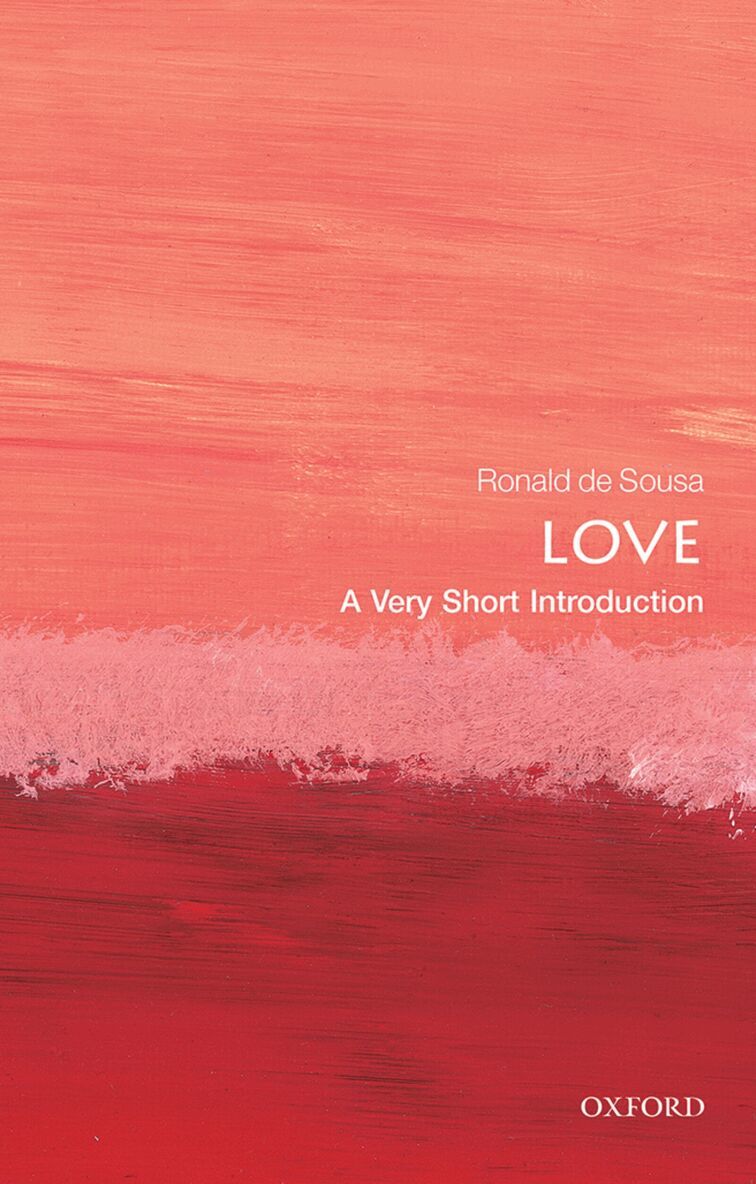
Although there are many kinds of love, erotic love has been celebrated in art and poetry as life's most rewarding and exalting experience, worth living and dying for and bringing out the best in ourselves. And yet it has excused, and even been thought to justify, the most reprehensible crimes. Why should this be? This Very Short Introduction explores this and other puzzling questions. Do we love someone for their virtue, their beauty, or their moral or other qualities? Are love's characteristic desires altruistic or selfish? Are there duties of love? What do the sciences - neuroscience, evolutionary and social psychology, and anthropology - tell us about love?Many of the answers we give to such questions are determined not so much by the facts of human nature as by the ideology of love. Ronald de Sousa considers some of the many paradoxes raised by love, looking at the different kinds of love - affections, affiliation, philia, storage, agape, but focusses on eros, or romantic love. He considers whether our conventional beliefs about love and sex are deeply irrational and argues that alternative conceptions of love and sex, although hard to formulate and live by, may be worth striving for. ABOUT THE SERIES: The Very Short Introductions series from Oxford University Press contains hundreds of titles in almost every subject area. These pocket-sized books are the perfect way to get ahead in a new subject quickly. Our expert authors combine facts, analysis, perspective, new ideas, and enthusiasm to make interesting and challenging topics highly readable.
309 kr
Skickas inom 5-8 vardagar
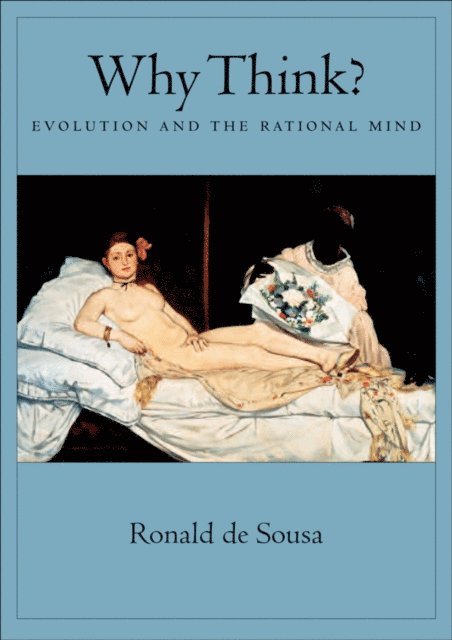
In a world where natural selection has shaped adaptations of astonishing ingenuity, what is the scope and unique power of rational thinking?In this short but wide-ranging book, philosopher Ronald de Sousa looks at the twin set of issues surrounding the power of natural selection to mimic rational design, and rational thinking as itself a product of natural selection.While we commonly deem ourselves superior to other species, the logic of natural selection should not lead us to expect that nature does everything for the best. Similarly, rational action does not always promote the best possible outcomes. So what is the difference? Is the pursuit of rationality actually an effective strategy?Part of the answer lies in language, including mathematics and science. Language is the most striking device by which we have made ourselves smarter than our nearest primate cousins. Sometimes the purely instinctual responses we share with other animals put explicit reasoning to shame: the movements of a trained athlete are faster and more accurate than anything she could explicitly calculate. Language, however, with its power to abstract from concrete experience and to range over all aspects of nature, enables breathtakingly precise calculations, which have taken us to the moon and beyond. Most importantly, however, language enables us to formulate an endless multiplicity of values, in potential conflict with one another as well as with instinctual imperatives.In short, this sophisticated and entertaining book shows how our rationality and our irrationality are inextricably intertwined. Ranging over a wide array of evidence, it explores the true ramifications of being human in the natural world."This is a delightful book, in which de Sousa articulates some challenging convictions concerning the role of rationality in human thought, while also retaining and making deft use of some of his longest held views.... Why Think? is an important touchstone in helping us to understand how we can approach rationality as a phenomenon that must ultimately be part of a successful theory of mind."--Craig DeLancy, Notre Dame Philosophical Reviews"De Sousa remarks: 'When enough people share a delusion, it loses its status as a psychosis and gets a religious tax exemption instead.' At that point, I knew I was going to love this book--and it is indeed a lot of fun. Why Think? is also good and clever. I have always said that the reason why philosophers are so disliked on university campuses is that we are brighter than anyone else and have trouble concealing the fact. Ronnie de Sousa does nothing to change this perception.... This is a great little book that should be read by many people." --Michael Ruse, Florida State University, Literary Review of Canada"Why Think? is Ronnie de Sousa at his brilliant best-- immensely learned, witty, bold, and a model of clarity. This book is a timely balance to the weight of data emphasizing the emotions and nonconscious processing in decision-making. It weaves coherent story out of a lot of bits and pieces lying about in loose confusion." --Patricia Smith Churchland, President's Professor of Philosophy, University of California, San Diego"This book is a tour de force of scholarly insights on one of the most subtle puzzles in cognitive science--the relation between rationality and evolution." --Keith E. Stanovich, author of The Robot's Rebellion: Finding Meaning in the Age of Darwin
564 kr
Skickas inom 5-8 vardagar
264 kr
Skickas inom 10-15 vardagar
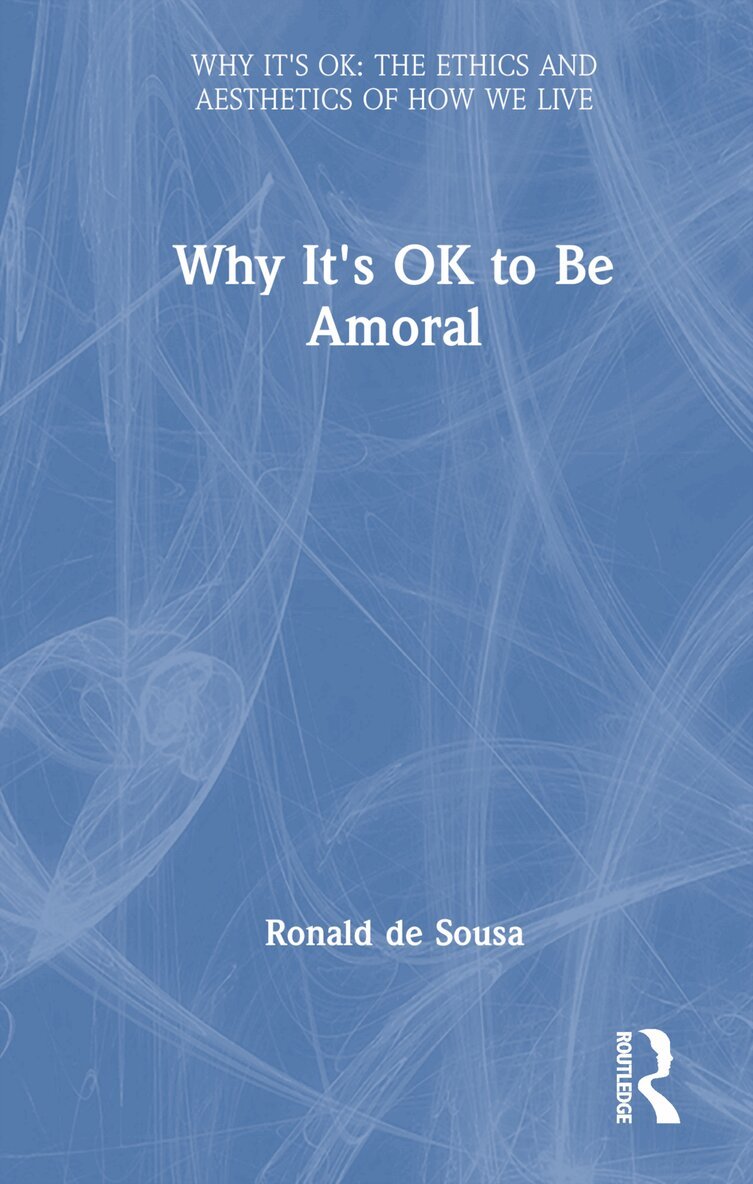
Why It’s OK to Be Amoral argues that self-righteous moralism has replaced religion as a source of embattled and gratuitous certainties. High-minded moral convictions invoke the authority of sacred moral truths, but there are no such truths. In reality, moral passions are rooted in atavistic emotional dispositions and arbitrary social conventions.While public and private discourse is saturated with guilt, shame and righteous indignation, professional philosophers, under cover of clever argumentation, promote the utopian idea that all practical questions have uniquely right answers—providing that you adopt the right moral principles. But their justifications for those principles appeal to contested ‘foundations’, among which no rational adjudication is possible. Moreover, because there are two discrepant ways of understanding motivation, our access to agents’ true reasons is never sufficiently reliable to warrant moral praise or blame. Finally, every agent has a wide diversity of reasons for action, yet moralists claim that some reasons trump all others, because they are ‘moral’ reasons. Since these too must be grounded in facts, that amounts to double counting some reasons.Having exposed these aspects of the institution of morality, this book suggests that if we cannot abstain altogether from moralising, we can at least try to use it against itself.Key FeaturesDescribes and criticises seven approaches to the question, Why should I do or not do X? Develops an original objection to the idea of identifying a domain of moral reasons: namely, that it amounts to the unwarranted double counting of a subset of our reasons.Describes two ways of thinking about reasons and choices, and explains how the discrepancy between them makes it impossible to assess an agent’s motivation reliably enough to warrant moral praise or blame.Outlines the subtle changes in attitude involved in espousing amoralism, without giving up on rational choices and honest political commitments.
1 766 kr
Skickas inom 10-15 vardagar
Why It’s OK to Be Amoral argues that self-righteous moralism has replaced religion as a source of embattled and gratuitous certainties. High-minded moral convictions invoke the authority of sacred moral truths, but there are no such truths. In reality, moral passions are rooted in atavistic emotional dispositions and arbitrary social conventions.While public and private discourse is saturated with guilt, shame and righteous indignation, professional philosophers, under cover of clever argumentation, promote the utopian idea that all practical questions have uniquely right answers—providing that you adopt the right moral principles. But their justifications for those principles appeal to contested ‘foundations’, among which no rational adjudication is possible. Moreover, because there are two discrepant ways of understanding motivation, our access to agents’ true reasons is never sufficiently reliable to warrant moral praise or blame. Finally, every agent has a wide diversity of reasons for action, yet moralists claim that some reasons trump all others, because they are ‘moral’ reasons. Since these too must be grounded in facts, that amounts to double counting some reasons.Having exposed these aspects of the institution of morality, this book suggests that if we cannot abstain altogether from moralising, we can at least try to use it against itself.Key FeaturesDescribes and criticises seven approaches to the question, Why should I do or not do X? Develops an original objection to the idea of identifying a domain of moral reasons: namely, that it amounts to the unwarranted double counting of a subset of our reasons.Describes two ways of thinking about reasons and choices, and explains how the discrepancy between them makes it impossible to assess an agent’s motivation reliably enough to warrant moral praise or blame.Outlines the subtle changes in attitude involved in espousing amoralism, without giving up on rational choices and honest political commitments.