Ronald Graham – författare
Visar alla böcker från författaren Ronald Graham. Handla med fri frakt och snabb leverans.
10 produkter
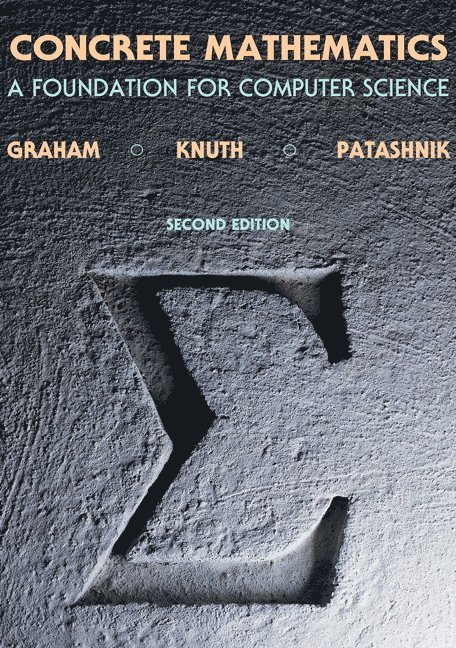
Concrete Mathematics: A Foundation for Computer Science
Av Ronald Graham, Donald Knuth
Inbunden, 1994
4,0 utav 5 stjärnor. Totalt antal röster: (2)
1148 kr
Lägg i varukorg
Weight of Stillness
The Still Here Chronicles
E-bok, 2026
18 kr
Lägg i varukorg
Jake came home from war. He just didn't come back whole. After years of service, Jake returns to a life that no longer fits — a house that feels foreign, relationships strained beyond recognition, and a silence inside him louder than anything he faced overseas. The weight he carries isn't visible. …
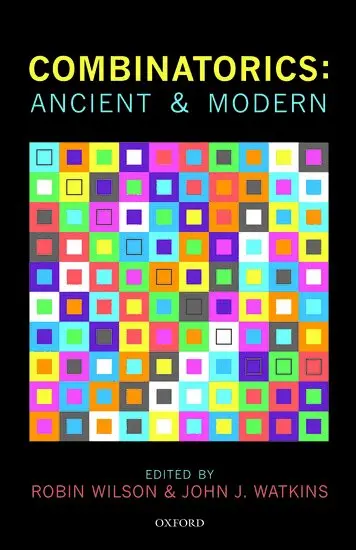
Combinatorics: Ancient & Modern
Av Ronald Graham, Robin Wilson m. fl.
Inbunden, 2013
1896 kr
Lägg i varukorg
Who first presented Pascal's triangle? (It was not Pascal.)Who first presented Hamiltonian graphs? (It was not Hamilton.)Who first presented Steiner triple systems? (It was not Steiner.) The history of mathematics is a well-studied and vibrant area of research, with books and scholarly articles …
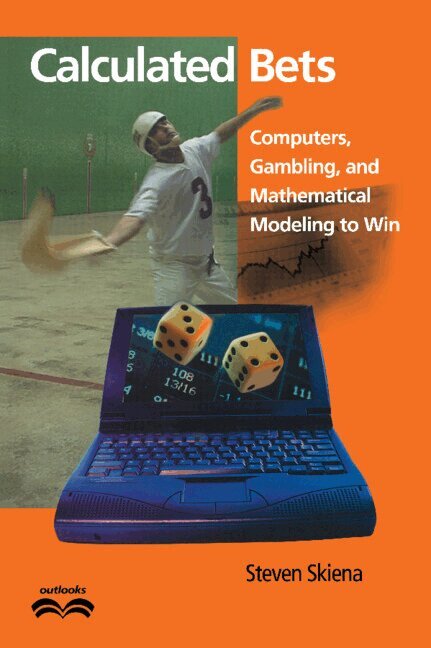
Calculated Bets
Computers, Gambling, and Mathematical Modeling to Win
Av Steven S. Skiena, Ronald Graham m. fl.
Häftad, 2001
487 kr
Lägg i varukorg
This is a book about a gambling system that works. It tells the story of how the author used computer simulations and mathematical modeling techniques to predict the outcome of jai-alai matches and bet on them successfully - increasing his initial stake by over 500% in one year! His results can …
When Topology Meets Chemistry
A Topological Look at Molecular Chirality
Av Erica Flapan, Ronald Graham
Häftad, 2000
621 kr
Lägg i varukorg
The applications of topological techniques for understanding molecular structures have become increasingly important over the past thirty years. In this topology text, the reader will learn about knot theory, 3-dimensional manifolds, and the topology of embedded graphs, while learning the role …
Social Choice and the Mathematics of Manipulation
Av Alan D. Taylor, Ronald Graham m. fl.
Inbunden, 2005
1710 kr
Lägg i varukorg
Honesty in voting, it turns out, is not always the best policy. Indeed, in the early 1970s, Allan Gibbard and Mark Satterthwaite, building on the seminal work of Nobel laureate Kenneth Arrow, proved that with three or more alternatives there is no reasonable voting system that is non-manipulable; …
Quiet Fracture
The Still Here Chronicles
Av Tonia Graham, Ronald Graham
E-bok, 2026
18 kr
Lägg i varukorg
She did everything right. The institution didn't.Amber Clark came home from the Army with an honorable discharge, a structured life, and a fracture so quiet she had nearly convinced herself it wasn't there. She had served with distinction. She had filed a report. She had watched it disappear into a …
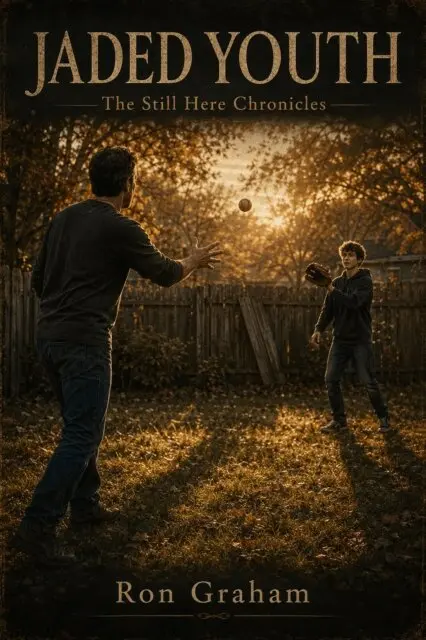
Jaded Youth
The Still Here Chronicles
E-bok, 2026
18 kr
Lägg i varukorg
Jimmy and Kyle didn't serve. They didn't have to — the war came home to them. Raised in households shaped by deployment, trauma, and the particular silence of parents who couldn't talk about what they'd seen, these two young men are navigating adulthood with maps drawn from someone else's damage. …
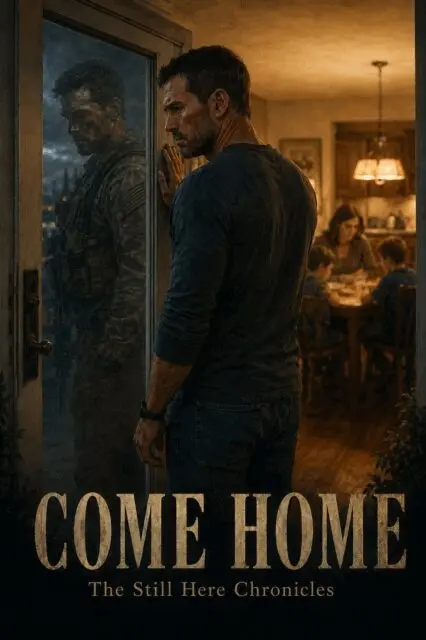
Come Home
The Still Here Chronicles
E-bok, 2026
18 kr
Lägg i varukorg
Some distances can't be measured in miles. Mike is back. Physically, he never left — not for long, anyway. But the man his family needed has been somewhere else for years, unreachable behind walls built from duty, suppression, and the kind of exhaustion that sleep doesn't fix. His marriage is …
Badge and Cross
A Peace Officer's Guide to Faith, Integrity, and Survival
Häftad, 2026
175 kr
Lägg i varukorg