Ronald J. Granieri – författare
Visar alla böcker från författaren Ronald J. Granieri. Handla med fri frakt och snabb leverans.
10 produkter
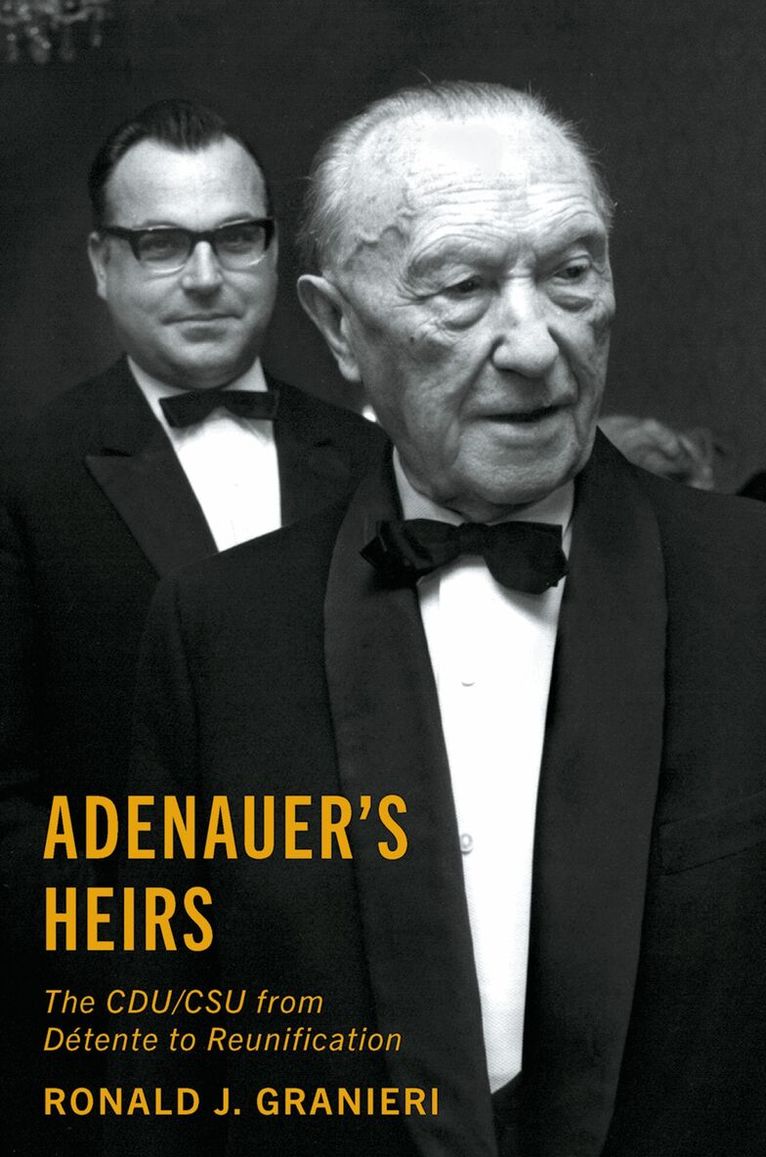
Adenauer's Heirs
The CDU/CSU from Détente to Reunification
Inbunden, 2026
947 kr
Lägg i varukorg
The 1960s in Europe saw the emergence of social protest, newly confident center-left parties, Cold War détente, and frustrations with the pace and direction of European integration. The Federal Republic of Germany experienced these upheavals from a special position: on the front line of the Cold …
Adenauer's Heirs
The CDU/CSU from Detente to Reunification
E-bok, 2026
1007 kr
Lägg i varukorg
The 1960s in Europe saw the emergence of social protest, newly confident center-left parties, Cold War detente, and frustrations with the pace and direction of European integration. The Federal Republic of Germany experienced these upheavals from a special position: on the front line of the Cold …
Adenauer's Heirs
The CDU/CSU from Detente to Reunification
E-bok, 2026
1007 kr
Lägg i varukorg
The 1960s in Europe saw the emergence of social protest, newly confident center-left parties, Cold War detente, and frustrations with the pace and direction of European integration. The Federal Republic of Germany experienced these upheavals from a special position: on the front line of the Cold …
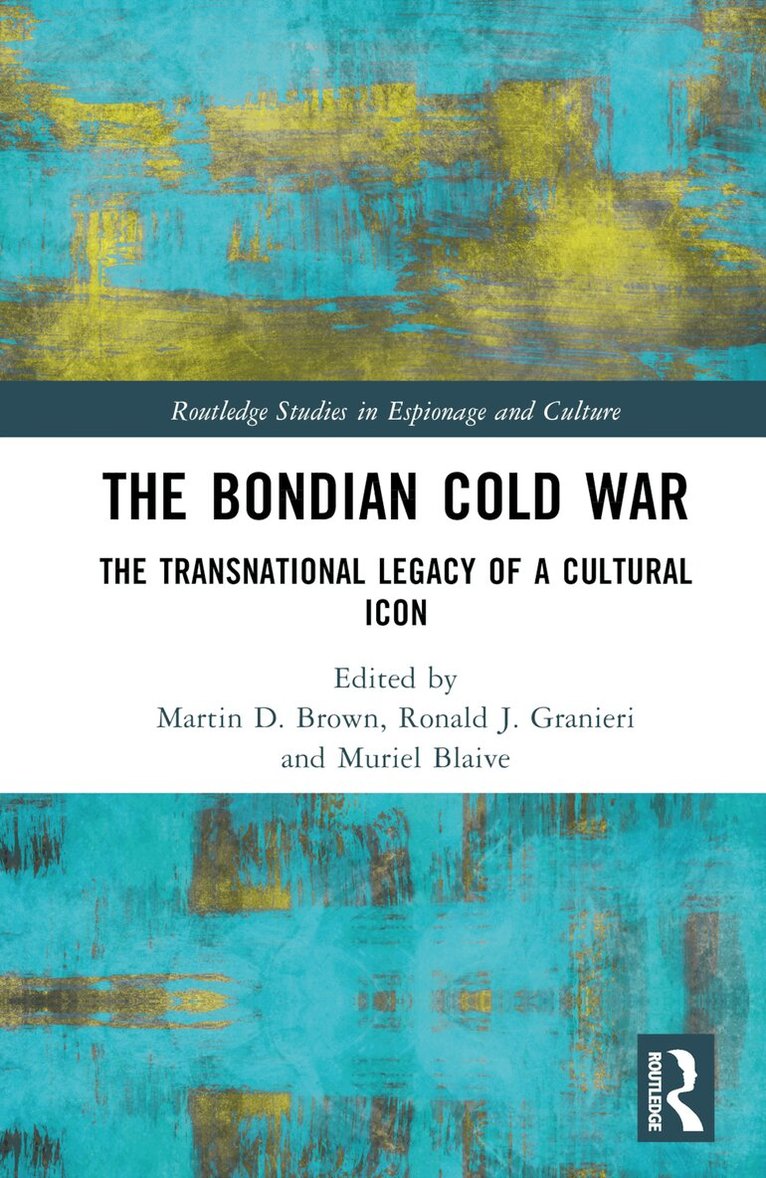
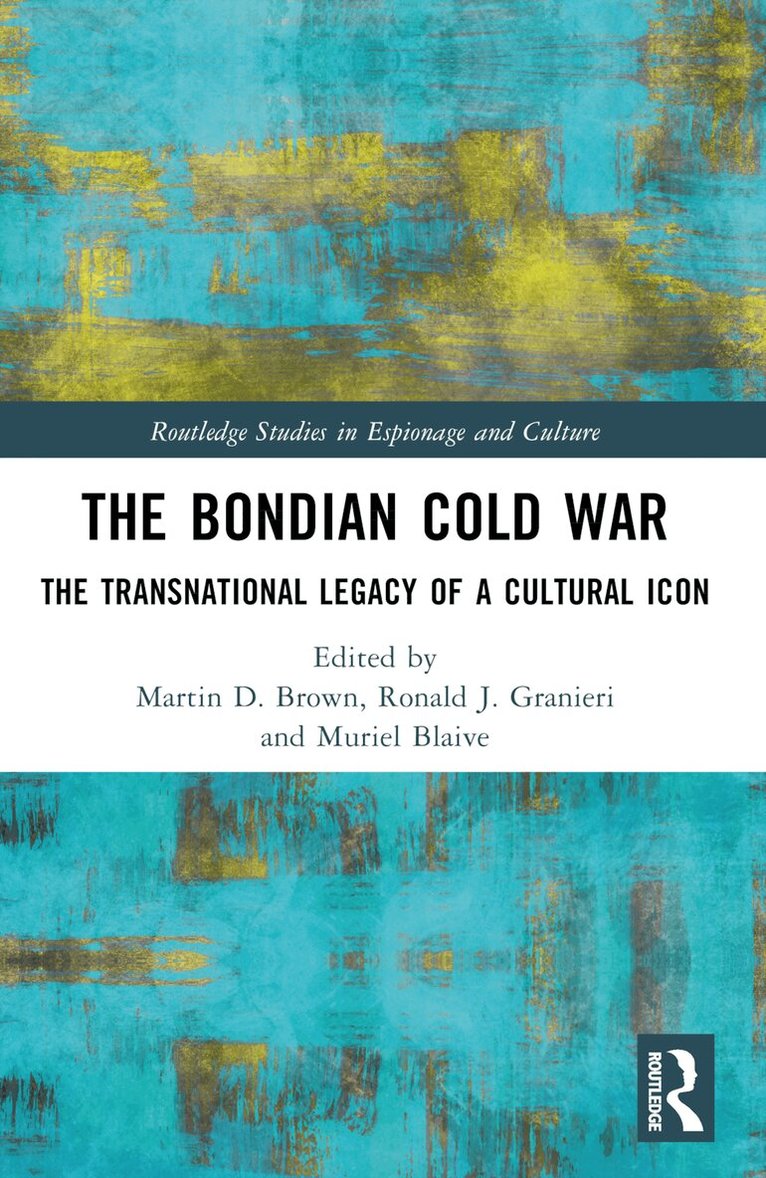
Bondian Cold War
The Transnational Legacy of a Cultural Icon
Av Martin D. Brown, Ronald J. Granieri m. fl.
Inbunden, 2023
2504 kr
Lägg i varukorg
James Bond, Ian Fleming’s irrepressible and ubiquitous ‘spy,’ is often understood as a Cold Warrior, but James Bond’s Cold War diverged from the actual global conflict in subtle but significant ways.That tension between the real and fictional provides perspectives into Cold War culture transcending …
Bondian Cold War
The Transnational Legacy of a Cultural Icon
Av Martin D. Brown, Ronald J. Granieri m. fl.
Häftad, 2024
646 kr
Lägg i varukorg
James Bond, Ian Fleming’s irrepressible and ubiquitous ‘spy,’ is often understood as a Cold Warrior, but James Bond’s Cold War diverged from the actual global conflict in subtle but significant ways.That tension between the real and fictional provides perspectives into Cold War culture transcending …
Bondian Cold War
The Transnational Legacy of a Cultural Icon
Av Muriel Blaive, Ronald J. Granieri m. fl.
E-bok, 2023
762 kr
Lägg i varukorg
James Bond, Ian Fleming’s irrepressible and ubiquitous ‘spy,’ is often understood as a Cold Warrior, but James Bond’s Cold War diverged from the actual global conflict in subtle but significant ways. That tension between the real and fictional provides perspectives into Cold War culture …
Bondian Cold War
The Transnational Legacy of a Cultural Icon
Av Muriel Blaive, Ronald J. Granieri m. fl.
E-bok, 2023
746 kr
Lägg i varukorg
James Bond, Ian Fleming’s irrepressible and ubiquitous ‘spy,’ is often understood as a Cold Warrior, but James Bond’s Cold War diverged from the actual global conflict in subtle but significant ways. That tension between the real and fictional provides perspectives into Cold War culture …
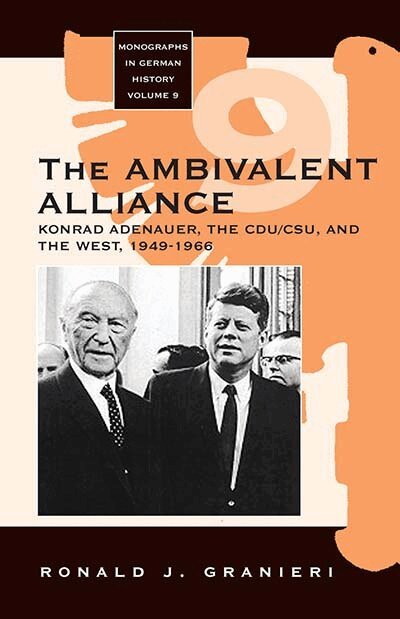
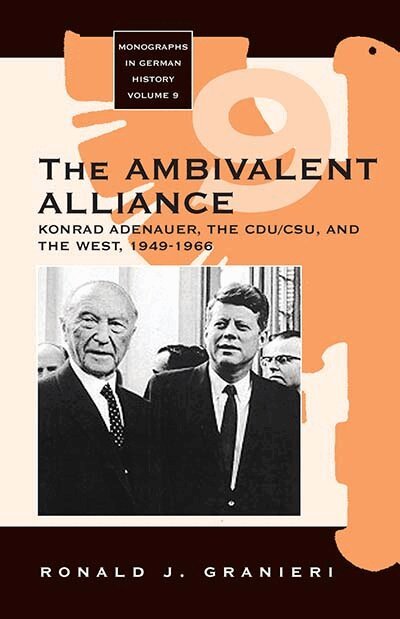
Ambivalent Alliance
Konrad Adenauer, the CDU/CSU, and the West, 1949-1966
Inbunden, 2003
1916 kr
Lägg i varukorg
Whenever asked to name his most significant accomplishment as West Germany's first Chancellor, Konrad Adenauer would invariably reply: "The alliance with the free West." Scholars have echoed his assessment, citing the Federal Republic of Germany's successful integration into the American-led West …
Ambivalent Alliance
Konrad Adenauer, the CDU/CSU, and the West, 1949-1966
Häftad, 2004
511 kr
Lägg i varukorg
Whenever asked to name his most significant accomplishment as West Germany's first Chancellor, Konrad Adenauer would invariably reply: "The alliance with the free West." Scholars have echoed his assessment, citing the Federal Republic of Germany's successful integration into the American-led West …
Ambivalent Alliance
Konrad Adenauer, the CDU/CSU, and the West, 1949-1966
E-bok, 2004
335 kr
Lägg i varukorg
Whenever asked to name his most significant accomplishment as West Germany''s first Chancellor, Konrad Adenauer would invariably reply: "The alliance with the free West." Scholars have echoed his assessment, citing the Federal Republic of Germany''s successful integration into the American-led West …