Ronald L. Trosper - Böcker
Visar alla böcker från författaren Ronald L. Trosper. Handla med fri frakt och snabb leverans.
5 produkter
5 produkter
383 kr
Skickas inom 11-20 vardagar
Aboriginal people in Canada have long struggled to regain control over their traditional forest lands. There have been significant gains in the quest for Aboriginal self-determination over the past few decades, including the historic signing of the Nisga'a Treaty in 1998. Aboriginal participation in resource management is on the rise in both British Columbia and other Canadian provinces, with some Aboriginal communities starting their own forestry companies.Aboriginal Peoples and Forest Lands in Canada brings together the diverse perspectives of Aboriginal and non-Aboriginal scholars to address the political, cultural, environmental, and economic implications of forest use. This book discusses the need for professionals working in forestry and conservation to understand the context of Aboriginal participation in resource management. It also addresses the importance of considering traditional knowledge and traditional land use and examines the development of co-management initiatives and joint ventures between government, forestry companies, and native communities.
322 kr
Skickas inom 7-10 vardagar
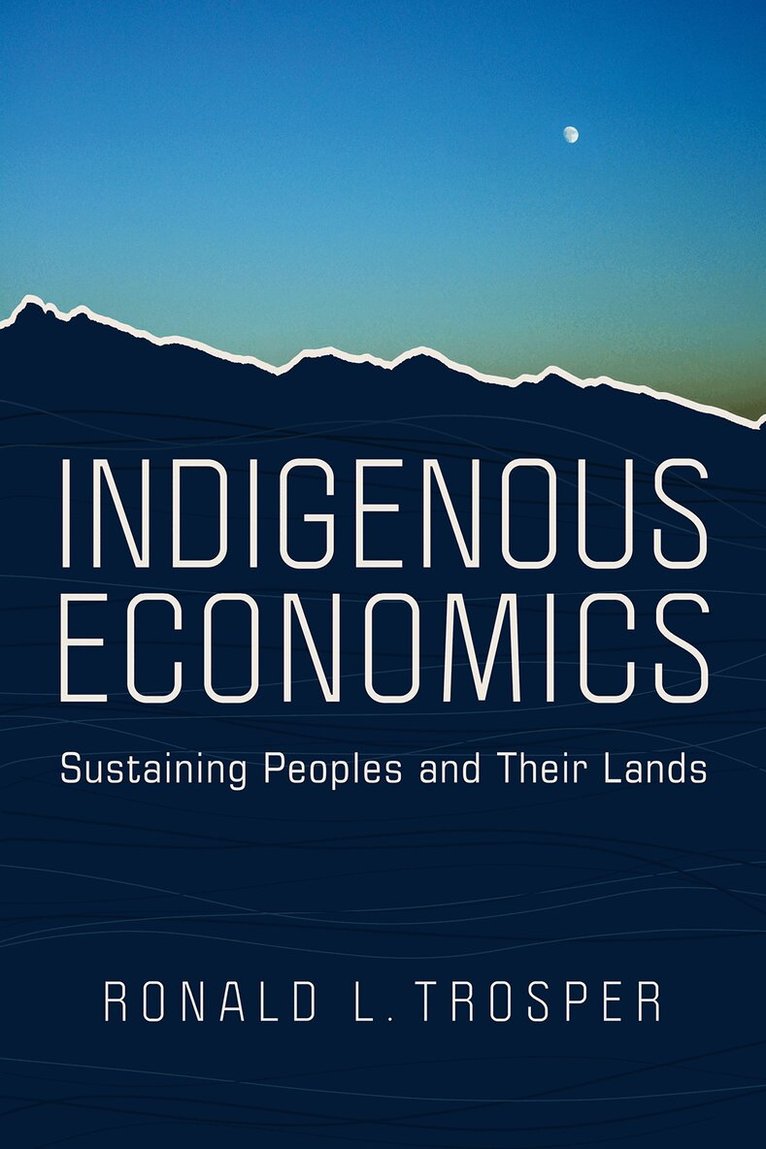
What does “development” mean for Indigenous peoples? Indigenous Economics lays out an alternative path showing that conscious attention to relationships among humans and the natural world creates flourishing social-ecological economies.Economist Ronald L. Trosper draws on examples from North and South America, Aotearoa/New Zealand, and Australia to argue that Indigenous worldviews centering care and good relationships provide critical and sustainable economic models in a world under increasing pressure from biodiversity loss and climate change. He explains the structure of relational Indigenous economic theory, providing principles based on his own and others’ work with tribal nations and Indigenous communities. Trosper explains how sustainability is created at every level when relational Indigenous economic theory is applied—micro, meso, and macro.Good relationships support personal and community autonomy, replacing the individualism/collectivism dichotomy with relational leadership and entrepreneurship. Basing economies on relationships requires changing governance from the top-down approaches of nation-states and international corporations; instead, each community creates its own territorial relationships, creating plurinational relational states. This book offers an important alternative to classic economic theory. In Indigenous Economics, support for Indigenous communities’ development and Indigenous peoples’ well-being go hand-in-hand.
1 083 kr
Skickas inom 7-10 vardagar
What does “development” mean for Indigenous peoples? Indigenous Economics lays out an alternative path showing that conscious attention to relationships among humans and the natural world creates flourishing social-ecological economies.Economist Ronald L. Trosper draws on examples from North and South America, Aotearoa/New Zealand, and Australia to argue that Indigenous worldviews centering care and good relationships provide critical and sustainable economic models in a world under increasing pressure from biodiversity loss and climate change. He explains the structure of relational Indigenous economic theory, providing principles based on his own and others’ work with tribal nations and Indigenous communities. Trosper explains how sustainability is created at every level when relational Indigenous economic theory is applied—micro, meso, and macro.Good relationships support personal and community autonomy, replacing the individualism/collectivism dichotomy with relational leadership and entrepreneurship. Basing economies on relationships requires changing governance from the top-down approaches of nation-states and international corporations; instead, each community creates its own territorial relationships, creating plurinational relational states. This book offers an important alternative to classic economic theory. In Indigenous Economics, support for Indigenous communities’ development and Indigenous peoples’ well-being go hand-in-hand.
Traditional Forest-Related Knowledge
Sustaining Communities, Ecosystems and Biocultural Diversity
Inbunden, Engelska, 2011
2 121 kr
Skickas inom 10-15 vardagar
Exploring a topic of vital and ongoing importance, Traditional Forest Knowledge examines the history, current status and trends in the development and application of traditional forest knowledge by local and indigenous communities worldwide. It considers the interplay between traditional beliefs and practices and formal forest science and interrogates the often uneasy relationship between these different knowledge systems.The contents also highlight efforts to conserve and promote traditional forest management practices that balance the environmental, economic and social objectives of forest management. It places these efforts in the context of recent trends towards the devolution of forest management authority in many parts of the world.The book includes regional chapters covering North America, South America, Africa, Europe, Asia and the Australia-Pacific region. As well as relating the general factors mentioned above to these specific areas, these chapters cover issues of special regional significance, such as the importance of traditional knowledge and practices for food security, economic development and cultural identity. Other chapters examine topics ranging from key policy issues to the significant programs of regional and international organisations, and from research ethics and best practices for scientific study of traditional knowledge to the adaptation of traditional forest knowledge to climate change and globalisation.
Traditional Forest-Related Knowledge
Sustaining Communities, Ecosystems and Biocultural Diversity
Häftad, Engelska, 2013
2 121 kr
Skickas inom 10-15 vardagar
Exploring a topic of vital and ongoing importance, Traditional Forest Knowledge examines the history, current status and trends in the development and application of traditional forest knowledge by local and indigenous communities worldwide. It considers the interplay between traditional beliefs and practices and formal forest science and interrogates the often uneasy relationship between these different knowledge systems.The contents also highlight efforts to conserve and promote traditional forest management practices that balance the environmental, economic and social objectives of forest management. It places these efforts in the context of recent trends towards the devolution of forest management authority in many parts of the world.The book includes regional chapters covering North America, South America, Africa, Europe, Asia and the Australia-Pacific region. As well as relating the general factors mentioned above to these specific areas, these chapters cover issues of special regional significance, such as the importance of traditional knowledge and practices for food security, economic development and cultural identity. Other chapters examine topics ranging from key policy issues to the significant programs of regional and international organisations, and from research ethics and best practices for scientific study of traditional knowledge to the adaptation of traditional forest knowledge to climate change and globalisation.