John A. Parrotta - Böcker
Visar alla böcker från författaren John A. Parrotta. Handla med fri frakt och snabb leverans.
6 produkter
6 produkter
11 650 kr
Skickas inom 10-15 vardagar
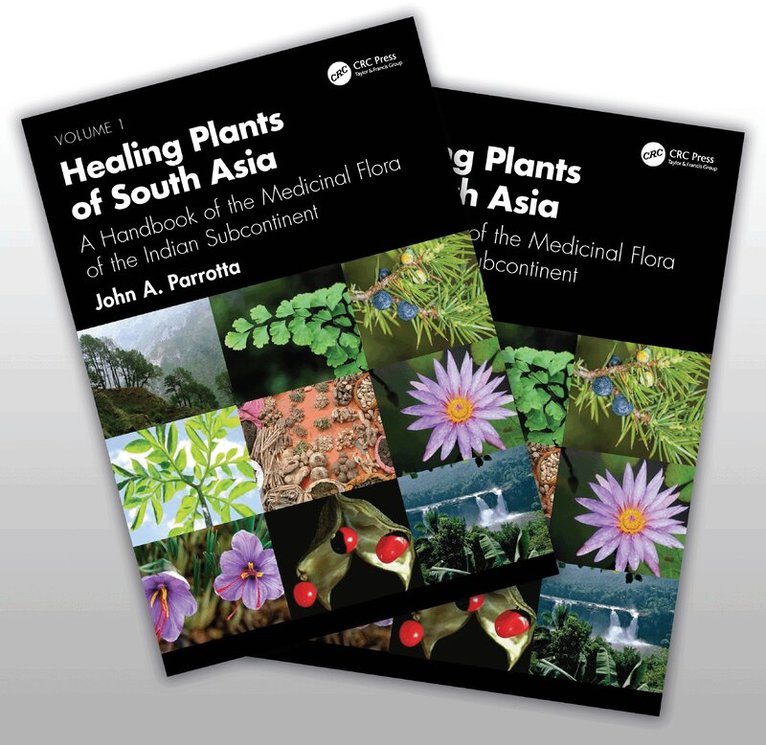
South Asia, a region of outstanding biological diversity, is home to approximately 2.1 billion people whose rich cultural traditions include sophisticated knowledge of the properties and uses of thousands of native and introduced plant species. Plant-based drugs, integral to the traditional medical systems of India and neighboring countries, play a central role in health care throughout the region and beyond, as regional and global demand for therapeutically valuable plants continues to grow.However, the ongoing transformation and degradation of forests and other natural ecosystems in this region due to rapid environmental and socioeconomic changes, poses serious challenges for the conservation and sustainable utilization of its medicinal plant wealth. Efforts to conserve the region’s rich biodiversity and associated traditional knowledge require up-to-date information on the status and trends of these resources and their importance for health care and livelihoods. Healing Plants of South Asia: A Handbook of the Medicinal Flora of the Indian Subcontinent helps to address this need.The work’s introduction provides overviews of South Asia’s diverse systems of traditional medicine, as well as the region’s biogeography, ecosystem and plant species diversity and associated conservation challenges. Subsequent chapters focus on nearly 2,000 species of plants most commonly used in traditional medicine within the region. In chapters devoted to ferns and lycophytes (including 59 species), conifers (20 species) and flowering plants (1849 species), the information provided draws upon a wide variety of authoritative published sources as well as reliable online databases. Entries for each species include: currently accepted scientific names and common synonyms; vernacular names in the major regional languages; a complete botanical description; information on the species’ ecology and conservation status; traditional therapeutic uses in Ayurveda, Unani, Siddha, Tibetan medicine, and more localized folk medical systems; and key references. The majority of these species are also beautifully illustrated with photos and/or botanical drawings.Healing Plants of South Asia: A Handbook of the Medicinal Flora of the Indian Subcontinent will be of value to students, scientists and professionals in a number of fields, including pharmacology, pharmaceutics, food chemistry and nutrition, natural products chemistry, ethnobotany and ethnomedicine. It should also appeal to conservationists, community development practitioners, industry, and policy makers, among a host of those involved in the world of medicinal plants and traditional medicine in South Asia.
Healing Plants of South Asia
A Handbook of the Medicinal Flora of the Indian Subcontinent. Two-volume set
Häftad, Engelska, 2024
9 218 kr
Kommande
South Asia, a region of outstanding biological diversity, is home to approximately 2.1 billion people whose rich cultural traditions include sophisticated knowledge of the properties and uses of thousands of native and introduced plant species. Plant-based drugs, integral to the traditional medical systems of India and neighboring countries, play a central role in health care throughout the region and beyond, as regional and global demand for therapeutically valuable plants continues to grow.However, the ongoing transformation and degradation of forests and other natural ecosystems in this region due to rapid environmental and socioeconomic changes, poses serious challenges for the conservation and sustainable utilization of its medicinal plant wealth. Efforts to conserve the region’s rich biodiversity and associated traditional knowledge require up-to-date information on the status and trends of these resources and their importance for health care and livelihoods. Healing Plants of South Asia: A Handbook of the Medicinal Flora of the Indian Subcontinent helps to address this need.The work’s introduction provides overviews of South Asia’s diverse systems of traditional medicine, as well as the region’s biogeography, ecosystem and plant species diversity and associated conservation challenges. Subsequent chapters focus on nearly 2,000 species of plants most commonly used in traditional medicine within the region. In chapters devoted to ferns and lycophytes (including 59 species), conifers (20 species) and flowering plants (1849 species), the information provided draws upon a wide variety of authoritative published sources as well as reliable online databases. Entries for each species include: currently accepted scientific names and common synonyms; vernacular names in the major regional languages; a complete botanical description; information on the species’ ecology and conservation status; traditional therapeutic uses in Ayurveda, Unani, Siddha, Tibetan medicine, and more localized folk medical systems; and key references. The majority of these species are also beautifully illustrated with photos and/or botanical drawings.Healing Plants of South Asia: A Handbook of the Medicinal Flora of the Indian Subcontinent will be of value to students, scientists and professionals in a number of fields, including pharmacology, pharmaceutics, food chemistry and nutrition, natural products chemistry, ethnobotany and ethnomedicine. It should also appeal to conservationists, community development practitioners, industry, and policy makers, among a host of those involved in the world of medicinal plants and traditional medicine in South Asia.
1 593 kr
Skickas inom 10-15 vardagar
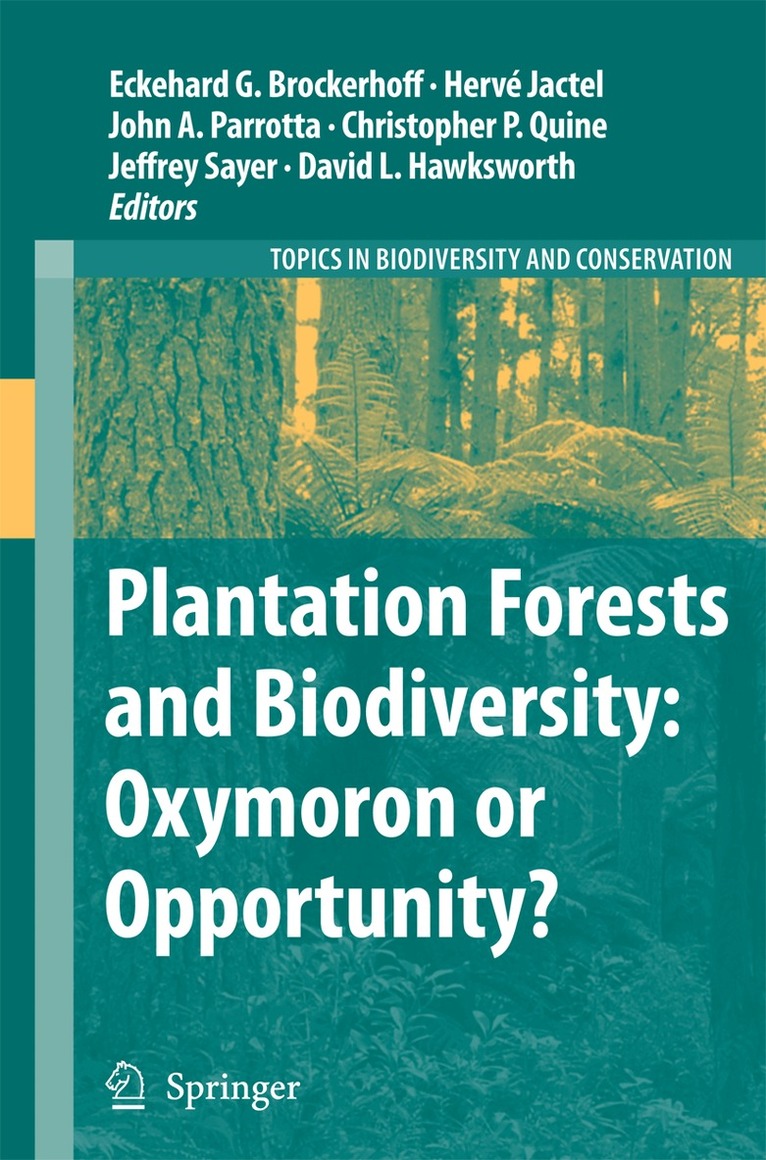
1 Plantation forests and biodiversity: Oxymoron or opportunity? Forests form the natural vegetation over much of the Earth’s land, and they are critical for the survival of innumerable organisms. The ongoing loss of natural forests, which in some regions may have taken many millennia to develop, is one of the main reasons for the decline of biodiversity. Preventing the further destruction of forests and protecting species and ecosystems within forests have become central issues for environmental agencies, forest managers, and gove- ments. In this di?cult task science has an important role in informing policy and management as to how to go about this. So how do industrial and other pl- tation forests ?t into this? Plantation forests, comprised of rows of planted trees that may be destined for pulp or sawmills after only a few years of growth, appear to have little to c- tribute to the conservation of biodiversity. Yet there is more to this than meets the eye (of the casual observer), and there are indeed numerous opportunities, and often untapped potential, for biodiversity conservation in plantation forestry. With plantation forests expanding at a rate of approximately three million hectares per year, it is crucial to understand how plantations can make a positive contribution to biodiversity conservation and how the potentially negative impacts of this land use can be minimised. That is the topic of this book.
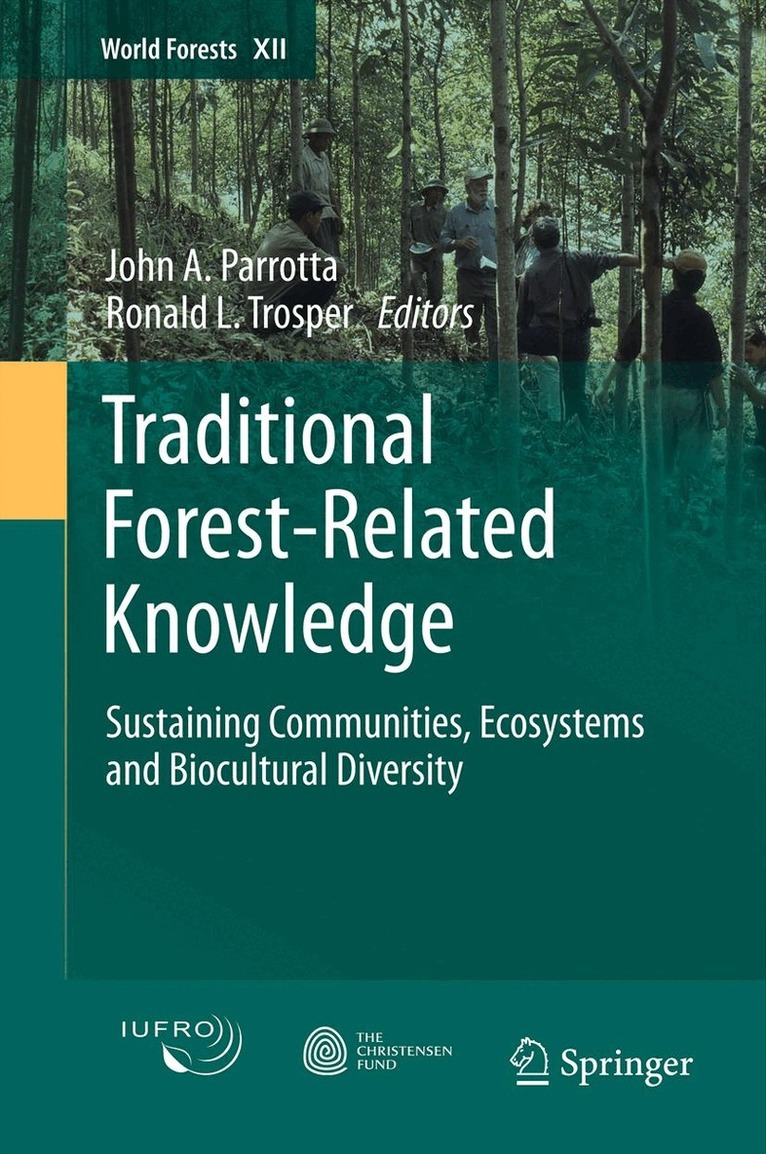
Traditional Forest-Related Knowledge
Sustaining Communities, Ecosystems and Biocultural Diversity
Inbunden, Engelska, 2011
2 121 kr
Skickas inom 10-15 vardagar
Exploring a topic of vital and ongoing importance, Traditional Forest Knowledge examines the history, current status and trends in the development and application of traditional forest knowledge by local and indigenous communities worldwide. It considers the interplay between traditional beliefs and practices and formal forest science and interrogates the often uneasy relationship between these different knowledge systems.The contents also highlight efforts to conserve and promote traditional forest management practices that balance the environmental, economic and social objectives of forest management. It places these efforts in the context of recent trends towards the devolution of forest management authority in many parts of the world.The book includes regional chapters covering North America, South America, Africa, Europe, Asia and the Australia-Pacific region. As well as relating the general factors mentioned above to these specific areas, these chapters cover issues of special regional significance, such as the importance of traditional knowledge and practices for food security, economic development and cultural identity. Other chapters examine topics ranging from key policy issues to the significant programs of regional and international organisations, and from research ethics and best practices for scientific study of traditional knowledge to the adaptation of traditional forest knowledge to climate change and globalisation.
1 593 kr
Skickas inom 10-15 vardagar
1 Plantation forests and biodiversity: Oxymoron or opportunity? Forests form the natural vegetation over much of the Earth’s land, and they are critical for the survival of innumerable organisms. The ongoing loss of natural forests, which in some regions may have taken many millennia to develop, is one of the main reasons for the decline of biodiversity. Preventing the further destruction of forests and protecting species and ecosystems within forests have become central issues for environmental agencies, forest managers, and gove- ments. In this di?cult task science has an important role in informing policy and management as to how to go about this. So how do industrial and other pl- tation forests ?t into this? Plantation forests, comprised of rows of planted trees that may be destined for pulp or sawmills after only a few years of growth, appear to have little to c- tribute to the conservation of biodiversity. Yet there is more to this than meets the eye (of the casual observer), and there are indeed numerous opportunities, and often untapped potential, for biodiversity conservation in plantation forestry. With plantation forests expanding at a rate of approximately three million hectares per year, it is crucial to understand how plantations can make a positive contribution to biodiversity conservation and how the potentially negative impacts of this land use can be minimised. That is the topic of this book.
Traditional Forest-Related Knowledge
Sustaining Communities, Ecosystems and Biocultural Diversity
Häftad, Engelska, 2013
2 121 kr
Skickas inom 10-15 vardagar
Exploring a topic of vital and ongoing importance, Traditional Forest Knowledge examines the history, current status and trends in the development and application of traditional forest knowledge by local and indigenous communities worldwide. It considers the interplay between traditional beliefs and practices and formal forest science and interrogates the often uneasy relationship between these different knowledge systems.The contents also highlight efforts to conserve and promote traditional forest management practices that balance the environmental, economic and social objectives of forest management. It places these efforts in the context of recent trends towards the devolution of forest management authority in many parts of the world.The book includes regional chapters covering North America, South America, Africa, Europe, Asia and the Australia-Pacific region. As well as relating the general factors mentioned above to these specific areas, these chapters cover issues of special regional significance, such as the importance of traditional knowledge and practices for food security, economic development and cultural identity. Other chapters examine topics ranging from key policy issues to the significant programs of regional and international organisations, and from research ethics and best practices for scientific study of traditional knowledge to the adaptation of traditional forest knowledge to climate change and globalisation.