• Fri frakt över 249 kr
  • •
  • Snabba leveranser
  • •
  • Billiga böcker
Kundservice

Du är på sajten för privatpersoner.

Företag, bibliotek eller offentlig verksamhet?

Du handlar på classic.bokus.com, där alla dina funktioner finns intakta.
Till classic.bokus.com
Bokus logotyp. Gå till startsidan.
  • Erbjudanden
  • Nyheter
  • Student
  • Topplistor
  • Barn & ungdom
  • Bokus Play
  • E-böcker
  • Pocketböcker
  • Spel & pussel

10% rabatt på allt med kod: NYSTART10 →

Sidfot

Mina sidor

    Hjälp

    • Kundservice
    • Vanliga frågor och svar
    • Frakt och leverans
    • Retur vid ångerrätt
    • Reklamera vara
    • Betalning
    • Köpvillkor
    • Allmänna villkor
    • Information om webbplatsens tillgänglighet

    Om Bokus

    • Om oss
    • Pressrum
    • För studenter
    • För företag
    • För bibliotek och offentlig verksamhet
    • För leverantörer
    • Hållbarhet

    Populärt

    • Aktuella erbjudanden
    • Presentkort
    • Studentlitteratur
    • Nya böcker
    • Topplistor
    • Signerade böcker
    • Engelska böcker

    Inspiration

    • Boktips
    • BookTok
    • Populära bokserier
    • Barnbokskaraktärer
    • Populära författare
    Logotyp för Bokus
    Följ oss på Facebook (extern länk)Följ oss på Instagram (extern länk)Följ oss på YouTube (extern länk)Följ oss på TikTok (extern länk)
    bokus @ CookiesAnpassa cookiesIntegritetspolicyKöpvillkor
    Till Citymail hemsida (extern länk)Till Budbee hemsida (extern länk)Till Postnord hemsida (extern länk)Till Schenker hemsida (extern länk)Till Early Bird hemsida (extern länk)Till Walleys hemsida (extern länk)
    1. Djur och Natur
    2. Naturböcker
    3. Växtböcker

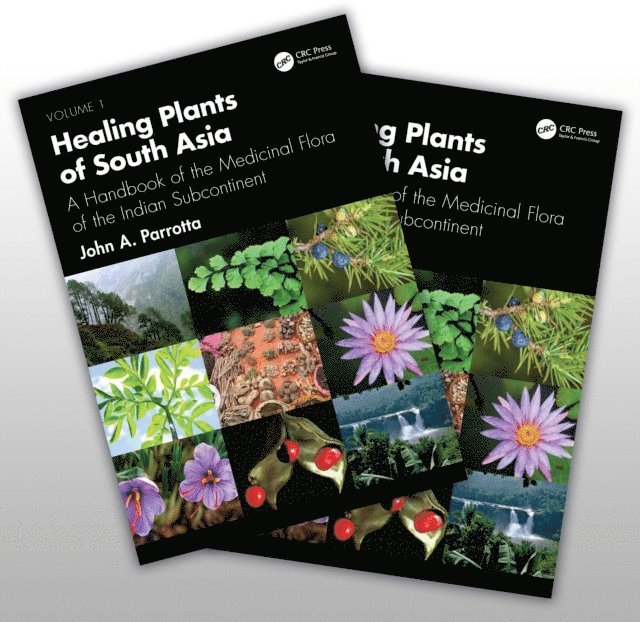
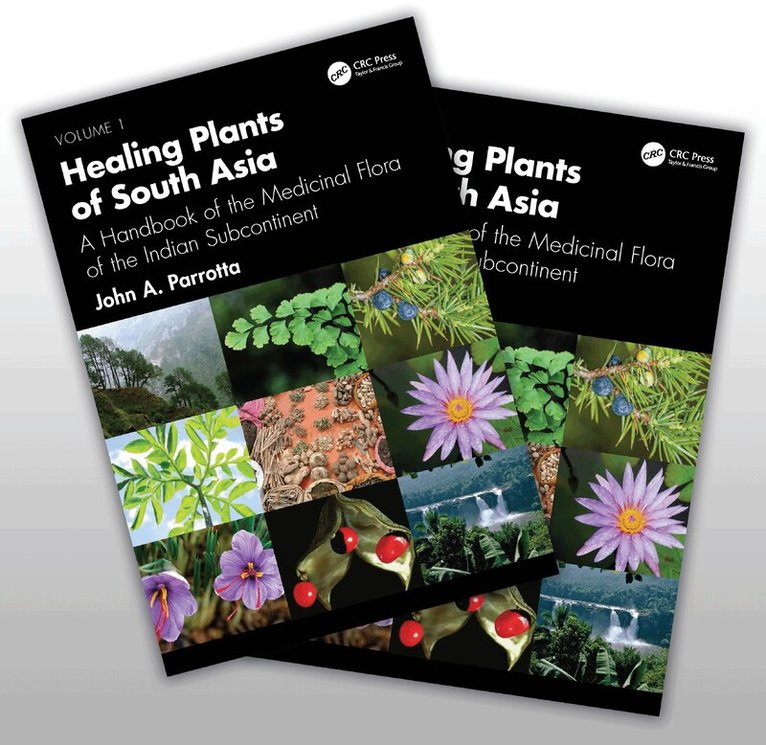
    Healing Plants of South Asia

    A Handbook of the Medicinal Flora of the Indian Subcontinent. Two-volume set

    AvJohn A. Parrotta

    Taylor & Francis Ltd

    2024

    12 089 kr

    Beställningsvara. Skickas inom 10-15 vardagar. Fri frakt över 249 kr.

    Fler format och utgåvor

    Häftad

    Kommande

    E-bok

    8 460 kr

    Beskrivning

    South Asia, a region of outstanding biological diversity, is home to approximately 2.1 billion people whose rich cultural traditions include sophisticated knowledge of the properties and uses of thousands of native and introduced plant species. Plant-based drugs, integral to the traditional medical systems of India and neighboring countries, play a central role in health care throughout the region and beyond, as regional and global demand for therapeutically valuable plants continues to grow.However, the ongoing transformation and degradation of forests and other natural ecosystems in this region due to rapid environmental and socioeconomic changes, poses serious challenges for the conservation and sustainable utilization of its medicinal plant wealth. Efforts to conserve the region’s rich biodiversity and associated traditional knowledge require up-to-date information on the status and trends of these resources and their importance for health care and livelihoods. Healing Plants of South Asia: A Handbook of the Medicinal Flora of the Indian Subcontinent helps to address this need.The work’s introduction provides overviews of South Asia’s diverse systems of traditional medicine, as well as the region’s biogeography, ecosystem and plant species diversity and associated conservation challenges. Subsequent chapters focus on nearly 2,000 species of plants most commonly used in traditional medicine within the region. In chapters devoted to ferns and lycophytes (including 59 species), conifers (20 species) and flowering plants (1849 species), the information provided draws upon a wide variety of authoritative published sources as well as reliable online databases. Entries for each species include: currently accepted scientific names and common synonyms; vernacular names in the major regional languages; a complete botanical description; information on the species’ ecology and conservation status; traditional therapeutic uses in Ayurveda, Unani, Siddha, Tibetan medicine, and more localized folk medical systems; and key references. The majority of these species are also beautifully illustrated with photos and/or botanical drawings.Healing Plants of South Asia: A Handbook of the Medicinal Flora of the Indian Subcontinent will be of value to students, scientists and professionals in a number of fields, including pharmacology, pharmaceutics, food chemistry and nutrition, natural products chemistry, ethnobotany and ethnomedicine. It should also appeal to conservationists, community development practitioners, industry, and policy makers, among a host of those involved in the world of medicinal plants and traditional medicine in South Asia.

    Produktinformation

    • Märke:Taylor & Francis Ltd
    • Utgivningsdatum:2024-10-02
    • Höjd:210 x 280 x undefined mm
    • Vikt:4 040 g
    • Språk:Engelska
    • Antal sidor:1 956
    • Förlag:Taylor & Francis Ltd
    • EAN:9781032896151

    Utforska kategorier

    • Växtböcker inom Djur och Natur
    • Alternativa terapier, healing och hälsa inom Ande, kropp och själ
    • Botanik inom Naturvetenskap och teknik

    Mer om författaren

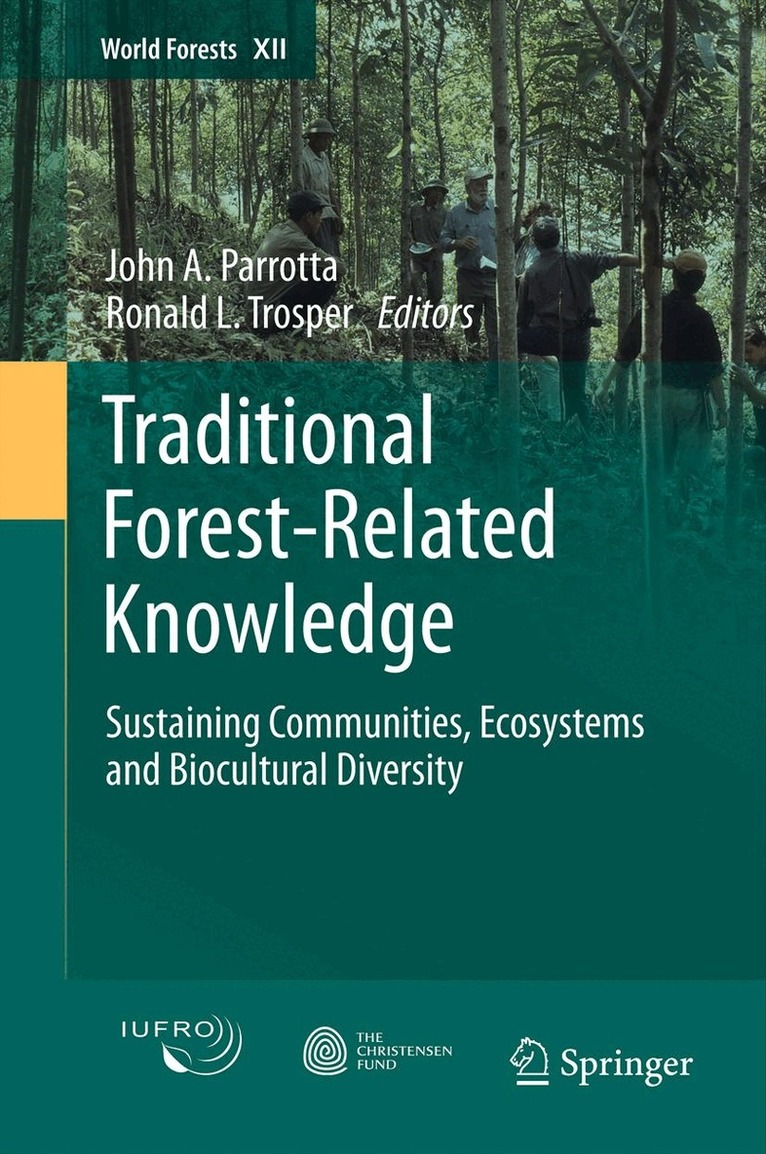
    John Parrotta, Ph.D., is a forest scientist engaged in research for over 40 years, in Puerto Rico, Brazil, India and other countries worldwide. His areas of interest and expertise include tropical forest ecology, biodiversity conservation, ecology and management of planted forests, forest landscape restoration, forest history, and traditional forest-related knowledge. He is the author of nearly 200 scientific publications, including two books in the fields of traditional forest knowledge and medicinal plants, Healing Plants of Peninsular India (CABI: 2001), and Traditional Forest Knowledge: Sustaining Communities, Ecosystems and Biocultural Diversity (Springer: 2012).He holds a B.A. in Biology and B.S. in Chemistry from Merrimack College (in Massachusetts, USA), an M.Sc. in Ecology from the University of Aberdeen (Scotland, UK), and a Ph.D. from Yale University. A career scientist and national research program leader for international science issues with the USDA Forest Service, his current work focuses on the conservation, restoration and sustainable management of forests worldwide. Dr. Parrotta also serves as the president (2019-2024) of the International Union of Forest Research Organizations (IUFRO) in which he has held many leadership positions since 1993, He also serves as an editorial board member for several scientific journals, including Restoration Ecology, Ecosystems and People, and Forest Ecology and Management.

    Recensioner i media

    “The American Botanical Council’s staff, Board of Trustees, and the ABC Duke Award Committee bestowed the 2026 ABC James A. Duke Excellence in Botanical Literature Award in the reference/technical category to John A. Parrotta’s Healing Plants of South Asia: A Handbook of the Medicinal Flora of the Indian Subcontinent. The Duke Award was created in 2006 to honor the economic botanist, ethnobotanist, author, and ABC co-founding Trustee James A. Duke, PhD. ABC gives the award annually to books that contribute significantly to the medicinal plant-related literature and the fields of botany, taxonomy, ethnobotany, phytomedicine, phytochemistry, and related disciplines. This year, ABC chose Healing Plants of South Asia due to its in-depth, authoritative exploration of the incredible world of Indian flora. ABC truly believes that this book will become a key reference work in this field for years to come.”“The depth and breadth in Healing Plants of South Asia is a testament to the years of work that went into its compilation. Parrotta has created a reference that includes both codified and folk traditions as well as the names of the plants in the many languages used on the Indian subcontinent. This is a set that will be referenced for years to come.” HerbalGram Associate Editor Hannah Bauman, commenting on the American Botanical Council's 2026 James Duke Award for this book."Healing Plants of South Asia will be of value to plant scientists, forestry researchers and professionals, ethnobotanical and ethnomedical researchers, taxonomists, conservationists, community development practitioners, industry, and policy makers, among a host of those involved in the world of medicinal plants and traditional medicine in South Asia." Gerard Bodeker, Green Templeton College, University of Oxford

    Innehållsförteckning

    • Chapter 1. Introduction: Plant Wealth and Human Health in South Asia Chapter 2. Pteridophytes (Ferns and Lycophytes) Chapter 3. Gymnosperms (Conifers, Cycads, Ginkgo, and Gnetophytes) Chapter 4. Angiosperms (Flowering Plants). Common Name Indexes (in 31 languages). Scientific Name Index. Index of Medicinal Uses.