Ronan Bouroullec – författare
Visar alla böcker från författaren Ronan Bouroullec. Handla med fri frakt och snabb leverans.
7 produkter
7 produkter
Inbunden, Engelska, 2023
420 kr
Skickas
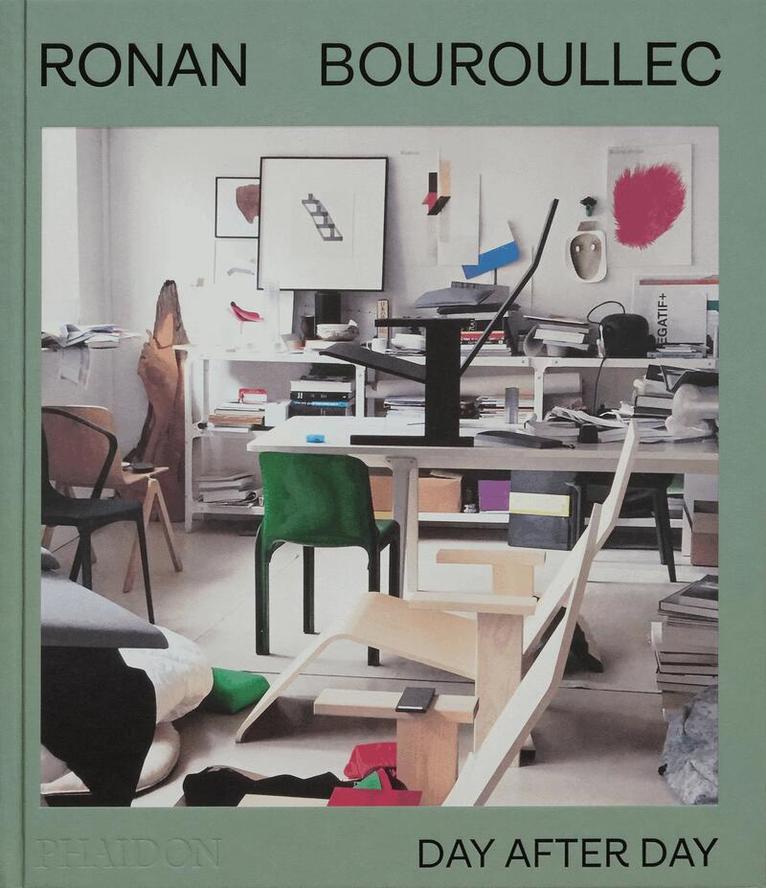
‘Each spread is a mosaic of people, places, products and artworks from a singular point of view.’ – New York TimesA stunning and inspiring visual inventory from one the most creative and popular designers working todayFrench designer Ronan Bouroullec works at the very forefront of design. Over his 30-year career he has used photography to document his process and communicate his unique perspective, amassing a vast archive of images in the process. He shares these images on Instagram, where he has a huge and loyal following. Thousands of images from the archive have been chronologically sequenced to illustrate his work and life in a fresh, new way.Part visual diary, part catalog of his work, and with captions in both English and French, Ronan Bouroullec: Day After Day presents these images to a wider readership and offers an intimate and fascinating look into his life, vision, and creative process, offering a unique and vibrant insight into the work, perspective, and creative process of one of the most celebrated and creative design minds working today
Inbunden, Engelska, 2017
605 kr
Skickas inom 5-8 vardagar
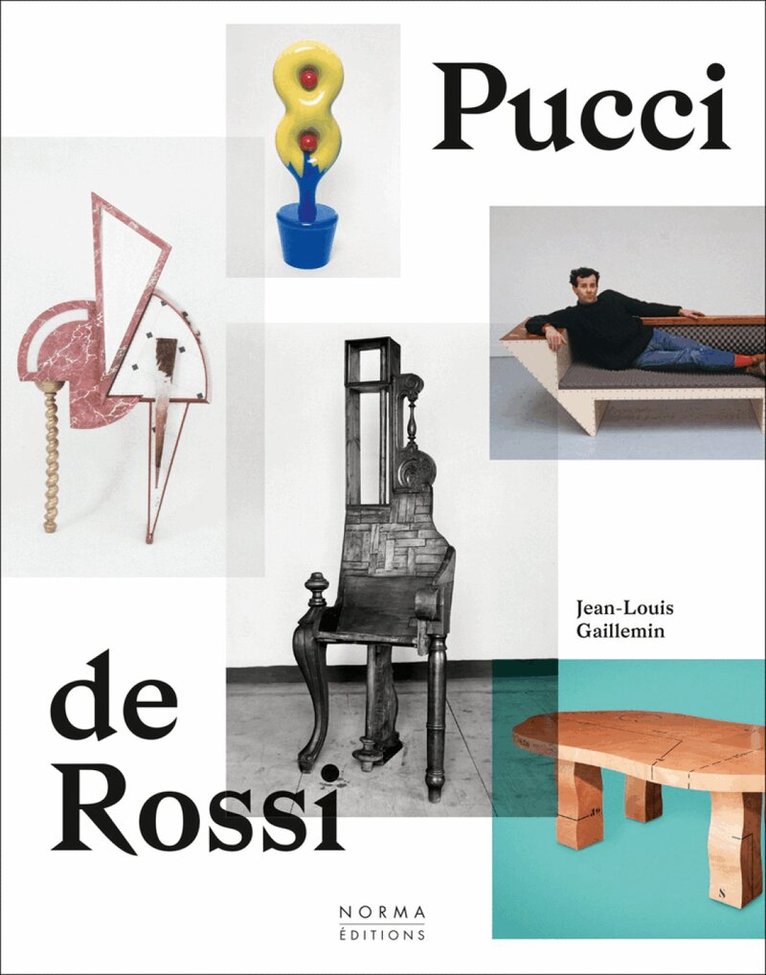
An artist-designer who defies classification, Pucci de Rossi (1947-2013) was a pillar of the European art scene in the 1980s. Originally from Verona, and trained by the American sculptor H. B. Walker, Pucci de Rossi created his first pieces by assembling wooden furniture to make some rather odd-looking and unstable forms, somewhere between thrones and time machines. "My profession was a game to me," he once remarked. "I was cutting, I was making, I was inventing." His first designs, steeped in poetry and humour, recalled the minimalism of Arte Povera as much as Studio Memphis' neobaroque. Jewellery, furniture, sculpture, painting: Pucci's universe knew no limits except those of his own imagination. In his hands, even the most modest materials transcended themselves to become works of great visual and functional power. This was soon recognised; after 1985 he regularly exhibited in Paris, and in New York at the gallery Néotù, founded by Pierre Staudenmeyer. Some of his most notable accomplishments involve designing the layout for the Barbara Bui boutique in Paris, and the palace of the auctioneer Jean-Claude Binoche in Venice. In the 1990s his work was on display at the Downtown Gallery, and in 1994-1995 he collaborated with the CIRVA in Marseille. Shortly prior to his death, Jacques-Antoine Granjon, one of his most faithful collectors, commissioned a sketch for the frontage of the VentePrivée.com building in La Plaine-Saint-Denis. Baptized 'Vérona', the metallic skin covering the façade, which was inspired by that drawing, pays tribute to him today. Pucci de Rossi created more than 900 pieces during his lifetime; this book gives him the commemoration he deserves. Text in English and French.
Häftad, Engelska, 2022
162 kr
Skickas
We could look at Ronan Bouroullec’s ceramic bas-reliefs and see traces of a language we recognize: the silhouettes of familiar objects, the contours of known landscapes. We might be tempted to look at the work as an alphabet of mere things, think of the pieces “objectively. ” But as tableaux, the reliefs are not quite right: one has an edge that goes too far, another a circle that’s off-center and about to roll, and still another, a pinkish mass that could topple over. Bouroullec’s work is most rewarding if we listen as it asks for a new language altogether. Languages have always been born from clay (one thinks of cuneiform seals); it’s easy to believe that Bouroullec is developing his own. At the very least, these pieces – somewhere at the intersection between painting, sculpture, and design – demand new verbs, words like “bevel” and “disintegrate. ” (And it’s possible, the works say, that there is nothing so lovely as a beveled edge: the way they taper is like a caress. The way they dissolve onto a background feels digital and also deeply analogue. These effects are both visual and tactile, as in: we see them and we want to touch them. )The compositions can speak because they are alive, masses of ceramic breathing in a metal atmosphere, on a planet that is strange but inviting. Like other languages, Bouroullec’s seems to have a grammar. Forms repeat and the palette is consistent, like a dialect. Where there are slight variations, the works prove the rule. Some compositions get repeated and flipped upside down. Bouroullec’s process is also inherently syntactical: while the finished works have the appearance of precise composition, they’re arranged ex post facto from separately formed elements. Bouroullec assembles the reliefs only after the individual elements are fired; some inevitably break in the kiln. Like sentences, Bouroullec’s compositions are sequences of fixed parts. Like poetry, they’re subject to randomness. In a photo from Bouroullec’s studio, he leans over a makeshift table on which he’s rolled out a thick slab of clay. It’s dark; he’s holding a kitchen knife – later it will be caked with residue from the material he’s using it to carve. To his left is a pile of thin scraps that have been trimmed from the larger whole; the ceramic retains a feeling of paperiness in the finished works. This has something to do with figure and ground, the glazed ceramic forms (marked with cracks, bubbles, and the traces of tools) buoyed by contrast with the flatness and sharpness of the synthetic surface on which they’ve been arranged. The sense of découpage – careful composition with paper cutouts – goes deeper than the formal similarity with Bouroullec’s earlier drawings and design. Bouroullec has other precursors. Artists longing for new alphabets in abstraction, or those preoccupied with simple forms and chance operations. At its core, though, this work seems to carry out an older project – the Suprematist project of Kazimir Malevich. In Malevich’s manifesto on Suprematism, Malevich writes of “a ‘desert,’ where nothing is real except feeling. ” Malevich believed that he had discovered the grammar of this non-objective world. Bouroullec has re-discovered it – and renewed it for our time. This is why the works seem to have a primal resonance. They short circuit our hard-wired symbolic understanding, whisper of other landscapes. They remind us that mass and atmosphere are forms of pleasure, and ask us to be pleased. Josh Ascherman
Häftad, 2020
135 kr
Tillfälligt slut
Häftad, 2021
135 kr
Tillfälligt slut
Häftad, 2021
136 kr
Tillfälligt slut
Häftad, Engelska, 2023
161 kr
Tillfälligt slut
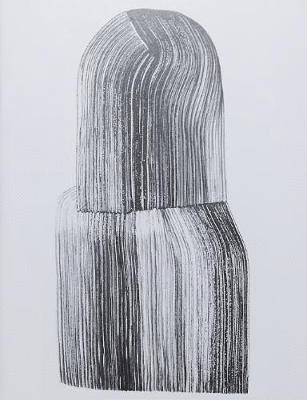
Ronan Bouroullec has always drawn daily. A pure artistic practice that he considers autonomous from the profession for which he is internationally recognized. But if there is a porosity between these two sides of his activity which feed each other, Ronan Bouroullec considers drawing as essential to his balance. Fièvre coincides with the exhibition Dessins Quotidiens at l’Hôtel des Arts in Toulon, France. With nearly 300 works (drawings, bas-reliefs and notebooks) presented in the exhibition, he reveals a small part, still little known, of his creative talent. A tiny part compared to the thousands of drawings he all keeps, but rich enough to illuminate this very intimate facet of the personality of one of the most talented French designers of his generation. Ronan Bouroullec (born 1971) and Erwan Bouroullec (born 1976) have been working together for more than twenty years now. Their collaboration is a permanent dialogue nourished by their distinct personalities and a shared notion of diligence with the intention to reach more balance and fineness. Their work has covered many fields ranging from the design of small objects as jewellery to spatial arrangements and architecture, from craftsmanship to industrial scale, from drawings to videos and photography. They have collaborated with leading companies such as Vitra, Cappellini, Issey Miyake, Magis, Ligne Roset, Habitat and Kréo Gallery. Ronan and Erwan Bouroullec’s designs are part of the permanent museum collections of the Museum of Modern Art in New York, Centre Pompidou in Paris, the London Design Museum, the Lisbon Design Museum and the Boijmans van Beuningen Museum of Rotterdam.