Rory Sullivan – författare
Visar alla böcker från författaren Rory Sullivan. Handla med fri frakt och snabb leverans.
16 produkter
16 produkter
Inbunden, Engelska, 2020
253 kr
Skickas
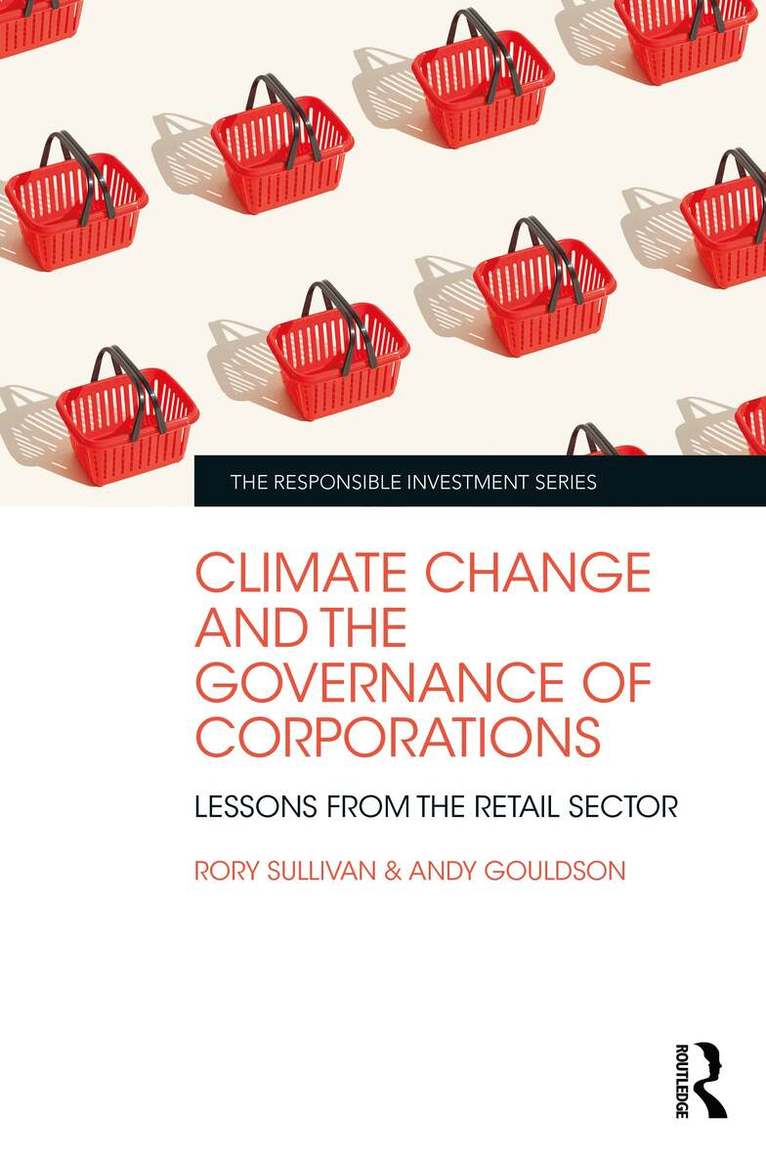
Climate change represents the most important environmental challenge of our time. Organisations are responding by implementing governance processes and taking action to reduce their own emissions and the emissions from their supply chains and value chains. Yet very little is known about how these efforts contribute to reducing greenhouse gas emissions (if, indeed, they make any substantive contribution at all) or about how they might be harnessed to deliver more ambitious reductions in emissions. This book explains when and where particular forms of governance intervention – including internal governance processes and external governance pressures – are likely to impact climate change. From this analysis, it offers practical proposals on the climate policy frameworks that need to be in place to facilitate or accelerate changes in corporate behaviour. The book is truly global: it focuses on the world’s 25 largest retailers (including Walmart, Tesco, Carrefour, Sears and Aldi) and is based on detailed interviews with senior managers from these corporations, and with key global and national NGOs, corporate responsibility experts, politicians and regulators. These interviews provide clear insights into how external governance pressures and actions (public opinion, regulation, incentives) interact with internal governance conditions (management systems and processes, corporate policies, board/CEO leadership) to change and shape corporate actions on climate change and, in turn, the climate change impacts of these corporations. This book can be used as a core reference for any courses dealing with corporate governance and business strategy, in particular those relating to climate change and to environmental management more generally. It is also of relevance to business practitioners, public policy makers, investors and NGOs interested in ensuring that companies play a constructive role in the transition to a low-carbon economy.
Häftad, Engelska, 2026
479 kr
Kommande
Climate change represents the most important environmental challenge of our time. Organisations are responding by implementing governance processes and taking action to reduce their own emissions and the emissions from their supply chains and value chains. Yet very little is known about how these efforts contribute to reducing greenhouse gas emissions (if, indeed, they make any substantive contribution at all) or about how they might be harnessed to deliver more ambitious reductions in emissions. This book explains when and where particular forms of governance intervention – including internal governance processes and external governance pressures – are likely to impact climate change. From this analysis, it offers practical proposals on the climate policy frameworks that need to be in place to facilitate or accelerate changes in corporate behaviour. The book is truly global: it focuses on the world’s 25 largest retailers (including Walmart, Tesco, Carrefour, Sears and Aldi) and is based on detailed interviews with senior managers from these corporations, and with key global and national NGOs, corporate responsibility experts, politicians and regulators. These interviews provide clear insights into how external governance pressures and actions (public opinion, regulation, incentives) interact with internal governance conditions (management systems and processes, corporate policies, board/CEO leadership) to change and shape corporate actions on climate change and, in turn, the climate change impacts of these corporations. This book can be used as a core reference for any courses dealing with corporate governance and business strategy, in particular those relating to climate change and to environmental management more generally. It is also of relevance to business practitioners, public policy makers, investors and NGOs interested in ensuring that companies play a constructive role in the transition to a low-carbon economy.
Inbunden, Engelska, 2022
1 989 kr
Skickas inom 10-15 vardagar
This book provides the world’s first comprehensive account of responsible investment for fixed income investors. It enables readers to understand the key characteristics of fixed income investments and the relevance of sustainability-related issues to fixed income markets.The expert contributors to this volume explain how sustainability-related issues can be taken into account in fixed income research and decision-making, in portfolio construction, and in active ownership (engagement). They provide a series of detailed case-studies from different parts of the fixed income market (corporate investment grade and high yield, emerging markets, sovereign and municipal debt), from a range of organisations with a variety of investment approaches. The contributors also provide in-depth critical analysis of key issues such as the role and influence of credit rating agencies, green bonds, data and public policy in shaping investment practice.For investors, this book provides practical guidance on how to improve the financial and the sustainability performance of their fixed income investments. For stakeholders such as companies, civil society organisations, and governments it allows them to understand the role that fixed income might play in delivering the Sustainable Development Goals (SDGs), and to understand how they might encourage fixed income investors to pay greater attention to sustainability-related issues in their investment practices and processes.
Häftad, Engelska, 2022
828 kr
Skickas inom 10-15 vardagar
This book provides the world’s first comprehensive account of responsible investment for fixed income investors. It enables readers to understand the key characteristics of fixed income investments and the relevance of sustainability-related issues to fixed income markets.The expert contributors to this volume explain how sustainability-related issues can be taken into account in fixed income research and decision-making, in portfolio construction, and in active ownership (engagement). They provide a series of detailed case-studies from different parts of the fixed income market (corporate investment grade and high yield, emerging markets, sovereign and municipal debt), from a range of organisations with a variety of investment approaches. The contributors also provide in-depth critical analysis of key issues such as the role and influence of credit rating agencies, green bonds, data and public policy in shaping investment practice.For investors, this book provides practical guidance on how to improve the financial and the sustainability performance of their fixed income investments. For stakeholders such as companies, civil society organisations, and governments it allows them to understand the role that fixed income might play in delivering the Sustainable Development Goals (SDGs), and to understand how they might encourage fixed income investors to pay greater attention to sustainability-related issues in their investment practices and processes.
Häftad, Engelska, 2026
832 kr
Skickas inom 10-15 vardagar
Many leading investment institutions, including asset managers, pension funds and insurance companies, have made commitments to sustainable investment or to the delivery of sustainability goals alongside their investment objectives.This mainstreaming of sustainable investment raises many important questions, such as the following: Do sustainable finance strategies lead to meaningful real-world change? Are fears about greenwashing justified? Does sustainable investment deliver better financial outcomes? And is it consistent with investors’ fiduciary duties? Can the sustainability data and ratings used in finance be trusted? Does sustainability information drive improved sustainability performance? How should sustainable investment be governed? What are the roles and responsibilities of public and private actors?This book unpacks the key terms, concepts and debates – both theoretical and applied – that underpin sustainable investment. Through evidence-based analysis, it cuts through the hype to critically explore sustainable finance’s transformative potential as well as its limitations. In doing so, the book enables public policymakers, financial institutions, companies, civil society organisations and academics to engage in a more informed discussion about the contribution that sustainable investment can make to sustainability goals.
Inbunden, Engelska, 2026
2 212 kr
Skickas inom 10-15 vardagar
Many leading investment institutions, including asset managers, pension funds and insurance companies, have made commitments to sustainable investment or to the delivery of sustainability goals alongside their investment objectives.This mainstreaming of sustainable investment raises many important questions, such as the following: Do sustainable finance strategies lead to meaningful real-world change? Are fears about greenwashing justified? Does sustainable investment deliver better financial outcomes? And is it consistent with investors’ fiduciary duties? Can the sustainability data and ratings used in finance be trusted? Does sustainability information drive improved sustainability performance? How should sustainable investment be governed? What are the roles and responsibilities of public and private actors?This book unpacks the key terms, concepts and debates – both theoretical and applied – that underpin sustainable investment. Through evidence-based analysis, it cuts through the hype to critically explore sustainable finance’s transformative potential as well as its limitations. In doing so, the book enables public policymakers, financial institutions, companies, civil society organisations and academics to engage in a more informed discussion about the contribution that sustainable investment can make to sustainability goals.
Inbunden, Engelska, 2017
1 734 kr
Skickas inom 10-15 vardagar
Globally, nearly 70 billion animals are farmed annually for meat, milk and eggs. Two-thirds of these are farmed intensively. The views held by food companies on animal stewardship, and the management practices and processes that they adopt are, therefore, of critical importance in determining the welfare of these animals.Yet, despite the scale of the food industry’s impact, farm animal welfare remains a relatively immature management issue. There is a lack of consensus around the specific responsibilities companies have for farm animal welfare, and around how companies should treat the animals in their or in their suppliers’ care.This book, The Business of Farm Animal Welfare, provides an extensive, authoritative analysis of current corporate practice on farm animal welfare. It critically reviews and assesses the ethical and business case for action. Through a series of practitioner case-studies, it describes how companies have addressed farm animal welfare in their operations and supply chains. It analyses the key barriers to companies adopting higher standards of farm animal welfare, and offers a series of practical recommendations to companies, consumers and policy makers on the role that they might play in raising farm animal welfare standards across the food industry. As the first comprehensive account of business and farm animal welfare, this book is an essential resource for researchers, practitioners and general readers looking to understand and influence corporate practice on farm animal welfare.
Häftad, Engelska, 2017
781 kr
Skickas inom 10-15 vardagar
Globally, nearly 70 billion animals are farmed annually for meat, milk and eggs. Two-thirds of these are farmed intensively. The views held by food companies on animal stewardship, and the management practices and processes that they adopt are, therefore, of critical importance in determining the welfare of these animals.Yet, despite the scale of the food industry’s impact, farm animal welfare remains a relatively immature management issue. There is a lack of consensus around the specific responsibilities companies have for farm animal welfare, and around how companies should treat the animals in their or in their suppliers’ care.This book, The Business of Farm Animal Welfare, provides an extensive, authoritative analysis of current corporate practice on farm animal welfare. It critically reviews and assesses the ethical and business case for action. Through a series of practitioner case-studies, it describes how companies have addressed farm animal welfare in their operations and supply chains. It analyses the key barriers to companies adopting higher standards of farm animal welfare, and offers a series of practical recommendations to companies, consumers and policy makers on the role that they might play in raising farm animal welfare standards across the food industry. As the first comprehensive account of business and farm animal welfare, this book is an essential resource for researchers, practitioners and general readers looking to understand and influence corporate practice on farm animal welfare.
Inbunden, Engelska, 2005
1 615 kr
Skickas inom 5-8 vardagar
Voluntary approaches, such as corporate codes of conduct, have been widely advocated as alternatives to traditional approaches to environmental regulation. Yet concern remains that companies cannot be trusted to police themselves and that many of the putative advantages of self regulation, such as reduced cost and increased flexibility, have not been realised in practice. The book systematically analyses three initiatives (environmental management systems, the Australian Greenhouse Challenge and the Australian mining industry's Code for Environmental Management) and their contribution to public environmental policy. By moving the debate away from narrow considerations of economic efficiency towards a broader framework that accounts for the multiple goals to which environmental policy needs to be directed, this book significantly enhances our understanding of the role that voluntary approaches can play in achieving environmental policy goals.The book is required reading for all those concerned with the design and implementation of modern environmental policy.
Inbunden, Engelska, 2006
946 kr
Skickas inom 10-15 vardagar
Most investment today is conducted by a relatively small number of institutional investors – pension funds and investment managers – who manage the pensions and saving funds of millions of ordinary people. The manner in which these institutional investors invest and discharge their responsibilities as the owners of companies is, therefore, of critical importance to society as a whole.In recent years, some of the biggest institutional investors have actively encouraged companies to improve their management of social, ethical and environmental issues. A number have also sought to explicitly analyse companies' performance on these issues and to incorporate this analysis into investment decision-making. These activities have contributed to important changes: a number of companies have committed to stabilising or reducing greenhouse gas emissions from their activities and operations, labour conditions in many retail supply chains have improved significantly, and many companies have significantly improved their governance of corporate responsibility issues.However, to date, there has been little systematic analysis of fundamental questions such as: Do responsible investment strategies systematically result in improvements in the social, ethical and environmental performance of companies? To what extent is it in investors' interest to encourage higher standards of corporate responsibility? Do responsible investment strategies enhance financial performance for investors?In this ground-breaking collection, Rory Sullivan and Craig Mackenzie have brought together some of the leading practitioners and commentators in the field of responsible investment to explore these questions. The contributors to this book present their views on the practicalities of implementing responsible investment strategies, the outcomes that have been achieved, the practical issues and barriers faced in implementing such strategies, and the challenges to be faced if responsible investment is to become a mainstream investment approach. The results are both unique and surprising.This book will be mandatory reading for all those involved in the field of social and environmentally responsible investment, corporate governance and corporate social responsibility whether they be academics, researchers or practitioners.
Inbunden, Engelska, 2003
1 714 kr
Skickas inom 10-15 vardagar
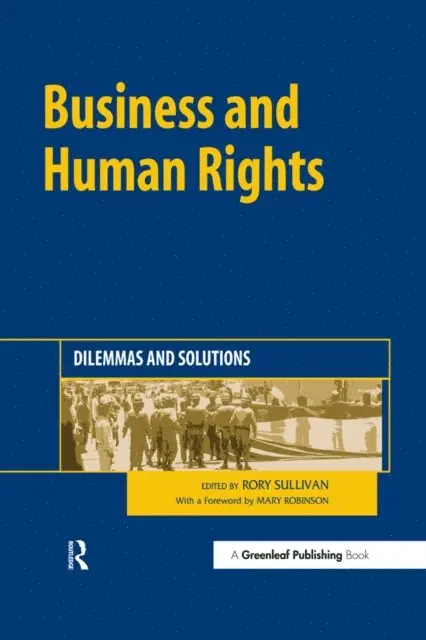
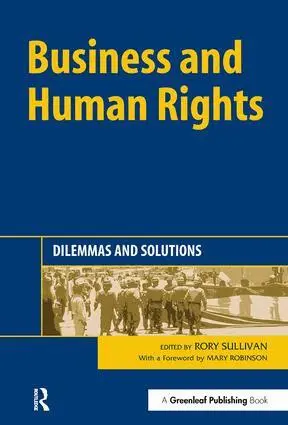
The end of the Cold War and the virtual disappearance of communism have completely altered the world economy. The supply chains of supermarkets and consumer goods industries have spread ever more widely and deeply into Asia, Africa and South America, while oil, mining and financial companies, among many others, have invested heavily in countries that were previously denied to them by political or ideological barriers.While companies have seized the opportunities presented by globalisation, they have in many cases been completely unprepared for the risks presented by their headlong rush into these new markets. Companies have found themselves and their business partners operating in countries where corruption, injustice, internal conflict and human rights violations are rife. An increasingly alert and critical world has acted as watchdog, highlighting corporate malpractice and the links between corporations and repressive regimes.It has increasingly been argued that companies have responsibilities for the protection and promotion of human rights. These arguments are, at least to some extent, accepted by companies. Yet, despite the increasing use of human rights language in public policy discourses, the expectations of companies remain unclear. That is, what are the ethical imperatives? What are the legal expectations? How far does responsibility extend? What can companies actually do in practice? The debate is further complicated by the range of actors (companies, governments, international institutions, local communities, non-governmental organisations [NGOs], trade unions, consumers) involved; by debates around free trade versus and fair trade; by the discussion of the specific role of governments; and by questions about the relative merits of regulation and self-regulation.Business and Human Rights provides an analysis of the relationship between companies and human rights in the context of globalisation. The analysis is in two parts. The first maps the reasons (financial, ethical, regulatory) why human rights have become a business issue. However, simply because there are reasons why companies should be concerned about human rights, this does not say what companies should or could do. Therefore, the second part of the book looks at the practical experiences of companies in responding to specific human rights issues in the context of their own operations, in their supply chains and in specific countries. These case studies, many of which have not been previously published or analysed from the perspective of human rights, provide important insights into questions such as: How do companies organise themselves to respond to human rights challenges? What have the experiences been-positive and negative? How have companies responded to specific situations? What are the roles and responsibilities of other actors: government, trade unions, NGOs? What are the limits to responsibility?In this outstanding collection, Rory Sullivan has drawn together leading thinkers and actors from the debate on business and human rights, to establish how far the business and human rights debate has evolved, and explore the many complex questions around roles, responsibilities and solutions that remain to be answered.
Inbunden, Engelska, 2004
919 kr
Skickas inom 10-15 vardagar
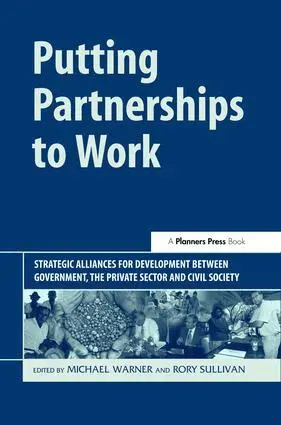
This text shares practical experiences in establishing and implementing partnerships for development between business, government and civil society. The focus is on the oil, gas and mining industries, who increasingly operate in regions characterized by poor communities and fragile environments.
Häftad, Engelska, 2003
605 kr
Skickas inom 10-15 vardagar
The end of the Cold War and the virtual disappearance of communism have completely altered the world economy. The supply chains of supermarkets and consumer goods industries have spread ever more widely and deeply into Asia, Africa and South America, while oil, mining and financial companies, among many others, have invested heavily in countries that were previously denied to them by political or ideological barriers.While companies have seized the opportunities presented by globalisation, they have in many cases been completely unprepared for the risks presented by their headlong rush into these new markets. Companies have found themselves and their business partners operating in countries where corruption, injustice, internal conflict and human rights violations are rife. An increasingly alert and critical world has acted as watchdog, highlighting corporate malpractice and the links between corporations and repressive regimes.It has increasingly been argued that companies have responsibilities for the protection and promotion of human rights. These arguments are, at least to some extent, accepted by companies. Yet, despite the increasing use of human rights language in public policy discourses, the expectations of companies remain unclear. That is, what are the ethical imperatives? What are the legal expectations? How far does responsibility extend? What can companies actually do in practice? The debate is further complicated by the range of actors (companies, governments, international institutions, local communities, non-governmental organisations [NGOs], trade unions, consumers) involved; by debates around free trade versus and fair trade; by the discussion of the specific role of governments; and by questions about the relative merits of regulation and self-regulation.Business and Human Rights provides an analysis of the relationship between companies and human rights in the context of globalisation. The analysis is in two parts. The first maps the reasons (financial, ethical, regulatory) why human rights have become a business issue. However, simply because there are reasons why companies should be concerned about human rights, this does not say what companies should or could do. Therefore, the second part of the book looks at the practical experiences of companies in responding to specific human rights issues in the context of their own operations, in their supply chains and in specific countries. These case studies, many of which have not been previously published or analysed from the perspective of human rights, provide important insights into questions such as: How do companies organise themselves to respond to human rights challenges? What have the experiences been-positive and negative? How have companies responded to specific situations? What are the roles and responsibilities of other actors: government, trade unions, NGOs? What are the limits to responsibility?In this outstanding collection, Rory Sullivan has drawn together leading thinkers and actors from the debate on business and human rights, to establish how far the business and human rights debate has evolved, and explore the many complex questions around roles, responsibilities and solutions that remain to be answered.
Inbunden, Engelska, 2008
832 kr
Skickas inom 10-15 vardagar
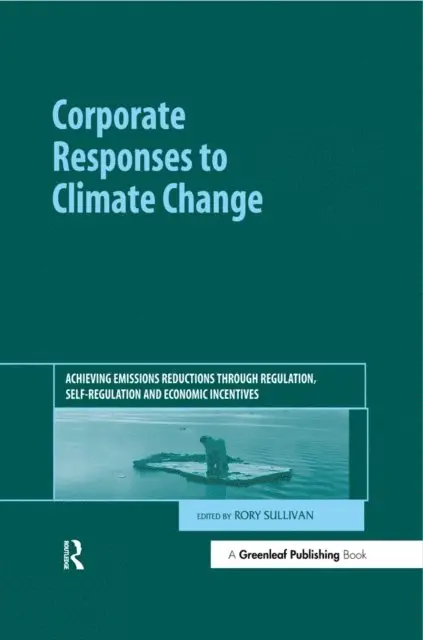
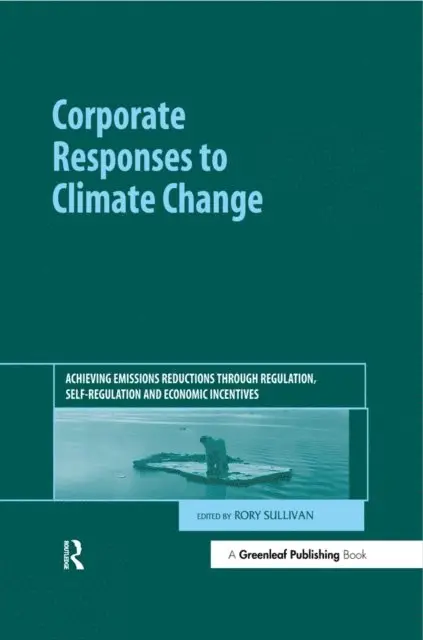
Given the scale of the greenhouse gas emissions reductions that are seen as necessary to avert the worst effects of climate change, policy action is likely to result in a complete reshaping of the world economy. The consequences are not confined to 'obvious' sectors such as power generation, transport and heavy industry; virtually every company's activities, business models and strategies will need to be completely rethought. In addition, beyond their core business activities, companies have the potential to make important contributions to reducing greenhouse gas emissions through the allocation of capital, through innovation and the development of new technologies, and through their influence on the actions taken by governments on climate change. Corporate Responses to Climate Change has been written at a crucial point in the climate change debate, with the issue now central to economic and energy policy in many countries. The book analyses current business practice and performance on climate change, in the light of the dramatic changes in the regulatory and policy environment over the last five years. More specifically, it examines how climate change-related policy development and implementation have influenced corporate performance, with the objective of using this information to consider how the next stage of climate change policy – regulation, incentives, voluntary initiatives – may be designed and implemented in a manner that delivers the real and substantial reductions in greenhouse gas emissions that will be required in a timely manner, while also addressing the inevitable dilemmas at the heart of climate change policy (e.g. how are concerns such as energy security to be squared with the need for drastic reductions in greenhouse gas emissions? Can economic growth be reconciled with greenhouse gas emissions? Can emissions reductions be delivered in an economically efficient manner?). The book focuses primarily on two areas. First, how have companies actually responded to the emerging regulatory framework and the growing political and broader public interest in climate change? Have companies reduced their greenhouse gas emissions and by how much? Have companies already started to position themselves for the transition to a low-carbon economy? Does corporate self-regulation – unilateral commitments and collective voluntary approaches – represent an appropriate response to the threat presented by climate change? What are the barriers to further action? Second, the book examines what the key drivers for corporate action on climate change have been: regulation, stakeholder pressure, investor pressure. Which policy instruments have been effective, which have not, and why? How have company actions influenced the strength of these pressures? Corporate Responses to Climate Change is a state-of-the-art analysis of corporate action on climate change and will be essential reading for businesses, policy-makers, academics, NGOs, investors and all those interested in how the business sector is and should be dealing with the most serious environmental threat faced by our planet.
Inbunden, Engelska, 2011
946 kr
Skickas inom 10-15 vardagar
Investors have taken a long time to pay attention to corporate responsibility. Despite the growing number of companies that were taking action to manage the social and environmental impacts of their activities and operations and that were reporting on their corporate responsibility performance, mainstream investors' interest in governance issues was, on the whole, piqued only in those situations where a major accident or scandal hit the headlines. This has changed dramatically. With over 600 large investment institutions, including asset managers, insurance companies and pension funds having signed the UN-backed Principles for Responsible Investment, it can now be plausibly argued that "responsible investment" has become mainstream. This change is potentially of huge significance, and the investment community is now widely seen as one of the key audiences for the thousands of corporate responsibility reports produced each year. Yet the reality is that there is a striking lack of understanding among companies of investors' interests. The consequence has been that, despite many companies identifying investors as one of the critical audiences for their corporate responsibility reports, most investors – even those that have made commitments to responsible investment – see these reports as irrelevant to their investment decision-making. The problem is compounded by the singularly poor job that investors do of explaining to companies what sort of information they are really interested in, and where corporate responsibility performance fits into their overall assessments of companies. This has led to frustrations on both sides. Investors have been accused of not paying sufficient attention to companies' corporate responsibility performance, and companies have been accused of producing information that not only has no immediate relevance to investors but, worse, seems to have no relevance to the key business challenges that these companies face. Valuing Corporate Responsibility aims to address the "dialogue of the deaf" that characterizes too many of the discussions between companies and their investors on corporate responsibility issues, through:1. Explaining to companies what responsible investment looks like in practice and, from this analysis, explaining what sort of corporate responsibility information investors are interested in and how this information is used in practice.2. Explaining to investors some of the practical difficulties faced by companies when preparing corporate responsibility reports and the implications for the quality and utility of the data provided in these reports.Valuing Corporate Responsibility also analyses how issues such as investors' views on materiality and investment time-frames influence the dialogue that investors have with companies on corporate responsibility matters. It concludes that there is a need for a major rethink of current approaches to responsible investment, as the manner in which most investors are implementing their responsible investment commitments is unlikely to see them making a substantial contribution to improving corporate responsibility performance or to the wider goals of sustainable development. Written by one of the world's leading experts on responsible investment, Valuing Corporate Responsibility is one of the most important books to be written on corporate responsibility over the past decade. It is of relevance not only to companies and to responsible investment professionals but to all those interested in really understanding how companies and their investors relate to each other and the implications of this relationship for sustainable development.
Häftad, Engelska, 2013
550 kr
Tillfälligt slut
There is huge investor interest in the growth and investment potential of emerging markets, and there has been a significant increase in the scale of the investments being made in these markets. While concerns have been raised about the potential negative consequences of such investments in the context of specific projects and at the macroeconomic level, investors have suggested that these are necessary, albeit painful, steps towards greater economic welfare over the longer term.In recent years, investors have argued that "responsible investment" allows investors to maximize the financial and social benefits of their activities, and, simultaneously, to mitigate the negative impacts of their investments. As yet, however, little has been written – in either the practitioner or in the academic literature – about the responsibilities of investors in emerging markets, about the practicalities of implementing responsible investment in emerging markets, or about the outcomes (financial and social) that result.This special issue addresses this gap in the literature by presenting a series of major articles that analyse the implications – for investors and for society – of investors seeking to take a more responsible approach to their investments.Dr Sullivan notes: “The journal also opens up wider questions around the implications of foreign investment for the stability of emerging markets. As we reflect on the causes and consequences of the global financial crisis, we need to be aware that the inflows of foreign investment into emerging markets may have the perverse effect of increasing their vulnerability to future financial shocks.”