E-bok, Engelska, 2017
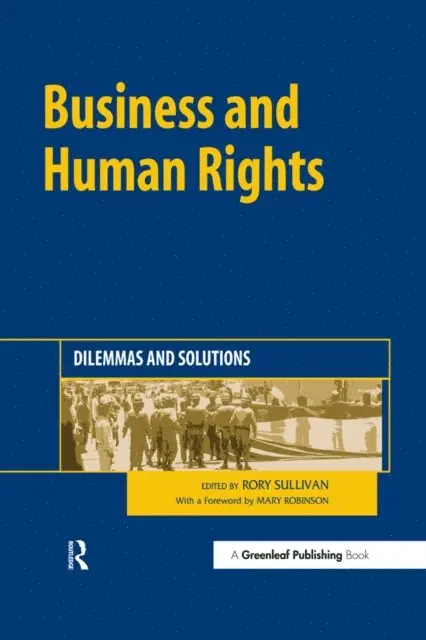
Business and Human Rights
Av Mary Robinson, Rory Sullivan
701 kr
Läs direkt i Bokus Reader – eller ladda ned till din enhet (PDF kräver ofta zoom och scroll på små skärmar).
Beskrivning
The end of the Cold War and the virtual disappearance of communism have completely altered the world economy. The supply chains of supermarkets and consumer goods industries have spread ever more widely and deeply into Asia, Africa and South America, while oil, mining and financial companies, among many others, have invested heavily in countries that were previously denied to them by political or ideological barriers.
While companies have seized the opportunities presented by globalisation, they have in many cases been completely unprepared for the risks presented by their headlong rush into these new markets. Companies have found themselves and their business partners operating in countries where corruption, injustice, internal conflict and human rights violations are rife. An increasingly alert and critical world has acted as watchdog, highlighting corporate malpractice and the links between corporations and repressive regimes.
It has increasingly been argued that companies have responsibilities for the protection and promotion of human rights. These arguments are, at least to some extent, accepted by companies. Yet, despite the increasing use of human rights language in public policy discourses, the expectations of companies remain unclear. That is, what are the ethical imperatives? What are the legal expectations? How far does responsibility extend? What can companies actually do in practice? The debate is further complicated by the range of actors (companies, governments, international institutions, local communities, non-governmental organisations [NGOs], trade unions, consumers) involved; by debates around free trade versus and fair trade; by the discussion of the specific role of governments; and by questions about the relative merits of regulation and self-regulation.
Business and Human Rights provides an analysis of the relationship between companies and human rights in the context of globalisation. The analysis is in two parts. The first maps the reasons (financial, ethical, regulatory) why human rights have become a business issue. However, simply because there are reasons why companies should be concerned about human rights, this does not say what companies should or could do. Therefore, the second part of the book looks at the practical experiences of companies in responding to specific human rights issues in the context of their own operations, in their supply chains and in specific countries. These case studies, many of which have not been previously published or analysed from the perspective of human rights, provide important insights into questions such as: How do companies organise themselves to respond to human rights challenges? What have the experiences been-positive and negative? How have companies responded to specific situations? What are the roles and responsibilities of other actors: government, trade unions, NGOs? What are the limits to responsibility?
In this outstanding collection, Rory Sullivan has drawn together leading thinkers and actors from the debate on business and human rights, to establish how far the business and human rights debate has evolved, and explore the many complex questions around roles, responsibilities and solutions that remain to be answered.
Produktinformation
- Utgivningsdatum: 2017-09-08
- Språk: Engelska
- Filformat: PDF
- Kopieringsskydd: LCP
- ISBN: 9781351281270
- Förlag: Taylor & Francis
Utforska kategorier
Betyg & recensioner
0 recensioner
Inga recensioner tillgängliga.